The Gold Curse: Scientist Tommy Thompson and the Legend of the Century's Greatest Shipwreck Treasure
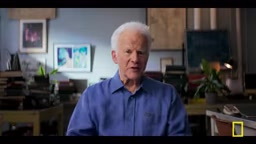
Engineer Tommy Thompson used math models to find America's greatest shipwreck gold, then became a federal fugitive.
Impossible Riches reconstructs engineer Tommy Thompson's three-decade quest to locate the 1857 wreck of the SS Central America, which carried six tons of Gold Rush gold and triggered a national banking panic when it sank. Rejecting guesswork, Thompson fed weather records, ocean currents, and eyewitness accounts into a mathematical probability model, raised $1.6 million from Ohio investors, and endured two failed seasons before confirming the wreck by its paddlewheel and a ship's bell inscription. The team's discovery of the "Garden of Gold" was a historic triumph — but investors never received their promised returns, and Thompson ultimately vanished as a nationally wanted fugitive, turning a story of scientific brilliance into a scandal of betrayal and greed.
National Geographic's documentary Impossible Riches tells a true ocean treasure-hunting story that spans more than thirty years. Its protagonist is not a traditional adventurer, but an engineer from a small town in Ohio — Tommy Thompson. He used scientific methods to locate the largest shipwreck treasure in American history, only to end up as a federal fugitive. It is a story about dreams, science, greed, and betrayal.
A "Ship of Gold" Worth Hundreds of Millions
At the heart of the story is the SS Central America. This sidewheel steamship was caught in a catastrophic storm in September 1857 while en route from Havana to New York. Survivors interviewed in the documentary described waves "as tall as an office building," with one massive swell dragging the entire ship into an underwater vortex. 425 people perished, making it one of the deadliest maritime disasters in American history.
The ship carried approximately six tons of gold, much of it belonging to the "49ers" — the prospectors of the California Gold Rush. Its sinking triggered a nationwide banking panic. According to the documentary's estimates, the gold was worth as much as $400 million, making it the most gold-laden shipwreck ever known. For treasure hunters, it was the "jackpot of jackpots" — but nobody knew exactly where it had sunk.
The banking crisis of 1857 is known historically as the Panic of 1857, America's first truly global financial crisis. The sinking of the Central America was only one of its triggers: the gold aboard was meant to replenish reserves at New York's major banks, and when news of its loss broke, depositors rushed to withdraw funds, banks collapsed in a chain reaction, and the crisis quickly spread to Britain and continental Europe. The panic exposed the overexpansion of the American railroad industry and a credit bubble, deepened the economic rift between North and South, and helped lay the groundwork for the Civil War just years later. The Central America, therefore, carried far more than material wealth — its sinking was itself an event that altered the course of history, which explains why, 130 years on, this treasure still held such enormous historical and commercial significance.
Using Algorithms to Find a Needle in the Ocean
What set Thompson apart was that he didn't see himself as a treasure hunter — he saw himself as a scientist. Most people assumed the Central America had sunk just a few thousand feet off the Carolina coast, but anyone who had done their research knew it was lying in deep water at least 100 to 200 miles offshore.
Faced with the challenge of finding "a grain of sand on the floor of an entire house," Thompson spent hundreds of dollars in coins each week making phone calls to experts across disciplines — sonar technicians, geologists, deep-sea oil workers, submarine engineers. Nearly everyone told him it was impossible, but his engineer's mind refused to accept a problem without a solution.
He fed 1857 weather records, ocean current data, eyewitness accounts, and newspaper reports into a mathematical model, dividing the entire search area into a grid of two-square-mile cells and assigning each a probability value for being the wreck site. The documentary calls this "the most scientific method ever used to locate a shipwreck" — he had transformed thinking and conversation into an algorithm.
The American Dream in the Reagan Era and a $1.6 Million Gamble
With the search area identified, Thompson needed to raise $1.6 million in startup funding. Remarkably, that budget was originally scribbled "on a napkin" — a million for this, thirty thousand for that, cobbled together piece by piece.
He returned to Columbus, Ohio, and used sheer personal charisma to win over the city's prominent figures. Multiple investors in the documentary recall the unmistakably Reagan-era mood — "bigger risks mean bigger rewards," eyes gleaming with possibility. Thompson pitched a 10:1 return ratio: invest $100 and you might get back $1,000. Investors would receive 60% of the estimated $400 million in gold; Thompson and his company would keep 40%.
Although most people thought the odds were slim — "treating the money as gone" — 90% of the people Thompson approached ultimately chose to invest. One investor put in $210,000 for a simple reason: they trusted Thompson as a person.
40 Days at Sea and Two Failed Attempts
The search officially began in the summer of 1986. The team had only 40 days at sea — limited funds, limited equipment leases. They deployed SeaMARC, one of the most powerful deep-water sonar systems in the world at the time, sweeping back and forth across 1,400 square miles of ocean in a "lawn-mowing" pattern — an area three times the size of Los Angeles.
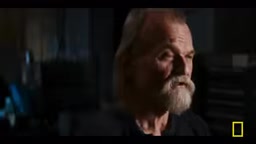
For days on end, they stared at blue screens showing only containers, oil drums, cables, and old anchors. Just as the team was on the verge of despair, colors shifted on the screen — from blue to yellow, orange, and red — faintly outlining what appeared to be a hull. This is where a critical conflict emerged: the world's top sonar expert recommended dropping a camera immediately to confirm the find, which would have saved investors half the survey cost, but Thompson insisted on "completing the entire search grid by the scientific method" and refused the expert's advice.
The team ultimately finished the survey and identified 10 possible sites. With only days left, they lowered the camera — and saw a chain. Team member John Latow sang "Chain of Fools" to himself in wry self-deprecation. They didn't know whether they were fools, or whether they had just found the greatest shipwreck in history.
In the second season in 1987, when they finally got a clear look at the target, a brutal truth emerged: no paddlewheel, wrong dimensions. This wasn't the Central America at all — it was another ship that had sunk around the same time. Two years and millions of dollars gone, failure seemingly inevitable.
SeaMARC (Sea Mapping and Remote Characterization) was a side-scan sonar system developed by the Hawaii Institute of Geophysics at the University of Hawaii. It works by emitting fan-shaped sonar pulses to both sides of the seafloor, using the intensity and timing of return echoes to construct a two-dimensional image of the seafloor's topography. Different materials reflect sound waves differently: hard objects like metal and rock reflect strongly, appearing as bright areas on screen (the color shift from blue to orange and red described in the documentary); soft sediment reflects almost nothing and appears dark. By the 1980s, SeaMARC's mapping resolution could detect seafloor anomalies just a few meters in height — cutting-edge deep-sea technology for its time. However, it could only indicate that something was there, not identify exactly what that something was. This was the technical root of Thompson's disagreement with the sonar expert — the expert wanted to verify immediately based on experience, while Thompson insisted on using a complete dataset to eliminate other possibilities.
A Turn of Fortune: Discovering the "Garden of Gold"
The third year became a last stand. Nine targets remained on the grid, and the team chose the one with the largest, most information-rich sonar image. With storm season closing in and the window of opportunity nearly shut, they lowered the submersible.
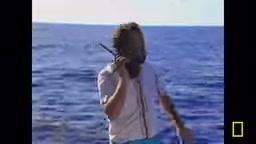
This time, a spoked arc appeared on screen — the starboard paddlewheel, 30 feet in diameter, filling the entire video frame. The decisive piece of evidence came from a ship's bell inscribed "Morgan Iron Works, 1853." Morgan Iron Works was precisely the foundry that had built the heavy machinery for the Central America, and 1853 was the year the ship was launched. Identity confirmed beyond doubt.
But where was the gold? The team repeatedly mistook orange sediment for gold and suffered repeated disappointment. Then, late one night, a staff member reviewing footage spotted rectangular objects and circular shapes that looked like coins in the images. They used the submersible's thrusters to gently blow away the covering layer, and as the silt cleared, everyone saw it with their own eyes — a brilliant, unmistakable yellow.
They called it the "Garden of Gold" — the largest treasure ever discovered in American history. Thompson had realized a dream he had carried since childhood.
The Shadow After the Dream
After the gold was found, investors eagerly anticipated returns of $400 million to $1 billion, and the media rushed to cover the story of the "happy local investors." Yet, as the documentary foreshadows from its opening: "At first it was very exciting, and then it became a tragedy."
Thompson — the genius scientist and inventor hailed as someone who "would never take no for an answer" — was ultimately accused of betraying his investors' trust, becoming a nationally wanted fugitive who allegedly "took the secrets of the Central America gold to his grave." Gold drives people mad, and the man who turned the impossible into reality was ultimately consumed by his own discovery. This is precisely the second act that Cursed Gold: A Shipwreck Scandal sets out to expose.
The legal troubles that followed Tommy Thompson were far more complex than the documentary's ending suggests. After the salvage company Columbus-America Discovery Group brought the gold to the surface, it was immediately drawn into a decade-long ownership lawsuit with insurance companies — the insurers who had covered the cargo at the time argued that their successors held rights to the wreck's contents. In 1996, a federal court ultimately ruled that Thompson's side held claim to the majority of the gold, and proceeds from partial sales were estimated to exceed $50 million. Yet investors never received their proportional distributions; Thompson repeatedly delayed, citing the gold as "still in dispute." When an Ohio court issued a subpoena in 2012, he immediately disappeared — disappearing with a companion and large amounts of cash into a Florida motel, surviving on an anonymous New York Times subscription and takeout food. By the time of his arrest in 2015, he had been a fugitive for more than two years. Some investors believe he suffered from severe paranoid personality disorder; others believe it was deliberate fraud. That question remains unanswered to this day.
Related articles

WorkBuddy Full Tutorial: Build an AI Office Automation Agent from Scratch
A complete WorkBuddy tutorial: installation, three working modes, multimodal picture book video practice, expert team agent building, and workflow configuration for low-cost AI office automation.

WorkBuddy Agent Complete Guide: From Beginner to Automation in 7 Days
Based on Bilibili's 256-episode WorkBuddy masterclass, this systematically breaks down Tencent's AI office workbench core capabilities: Agent principles, Skill encapsulation, cross-platform connectors, scheduled automation, knowledge bases, and zero-code development, with learning path recommendations.

8 AI Accounts, 7 Failed: An Honest Review of Using AI to Get Work Done
Only 1 of 8 AI-run Bilibili accounts succeeded. We break down the real difference between "performing AI" and "using AI to get work done."