The Hidden Word Behind "The Model Can't Do That": Yet

Every "AI can't do X" claim has a hidden word at the end: yet.
This article explores the cognitive bias of treating current AI limitations as permanent. By reviewing the history of "impossible" tasks that were later conquered, it argues that most barriers are engineering constraints, not fundamental limits. The key takeaway: adopt a dynamic mindset, distinguish temporary obstacles from true boundaries, and always append an implicit "yet" to capability assessments.
A Simple Remark That Sparks Deep Reflection
In the AI world, a short tweet recently struck a chord with many: "anything that can happen will happen" — and every claim that "the model can't do X" carries an unspoken word at the end: "yet."
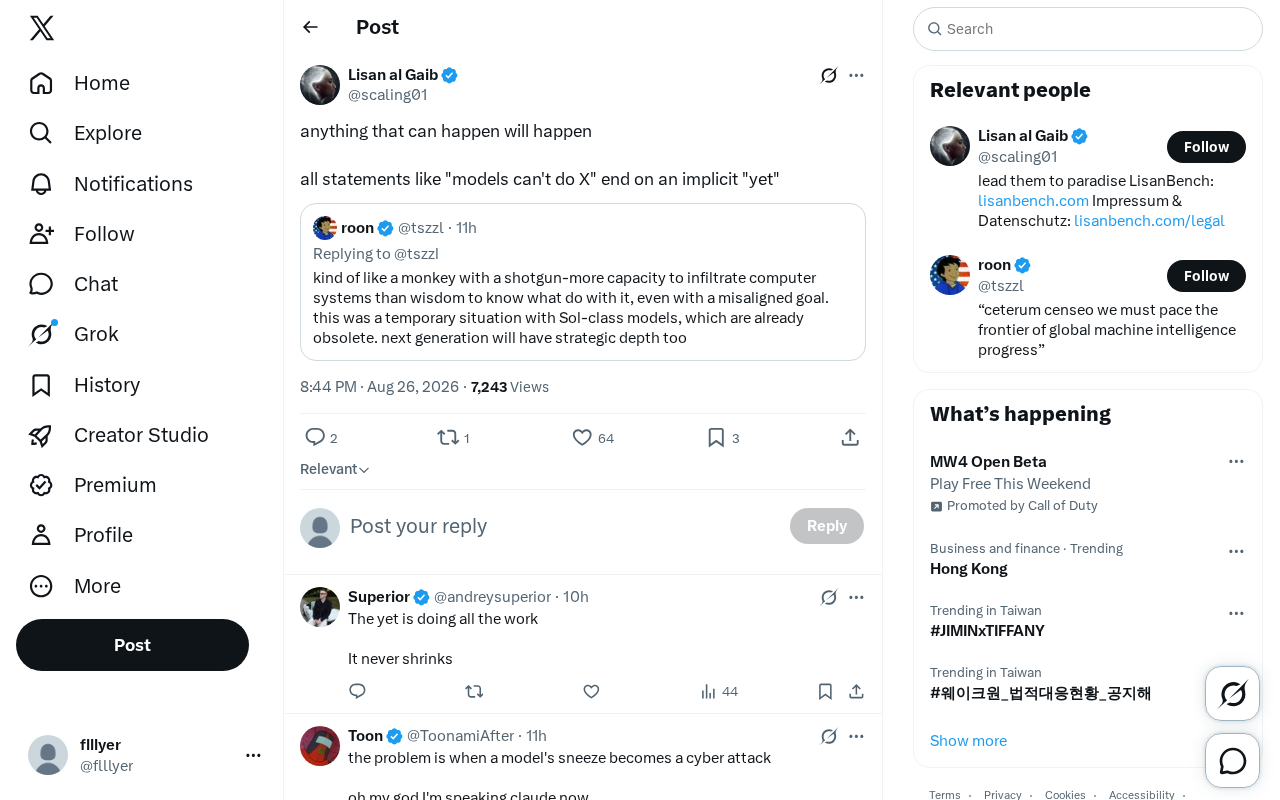
It sounds simple, but it hits precisely on a cognitive bias that plays out again and again in AI capability assessments: we tend to use today's technical boundaries to draw permanent conclusions about a technology that is, by nature, evolving rapidly.
The History of "Can't Do" Keeps Getting Overturned
Looking back at the trajectory of generative AI, nearly every task once declared as something "models will never be able to do" has eventually been conquered.
The "Impossibilities" That Were Shattered
Just a few years ago, the prevailing consensus was that large language models "cannot perform coherent multi-step reasoning." Yet with the emergence of Chain-of-Thought prompting and reasoning models (such as the o1 and o3 series), models now outperform a large number of human experts in math competitions, programming, and logical reasoning.
Similarly, the claim that "models can't generate high-quality images" became history in the face of Midjourney, DALL-E, and Stable Diffusion. The assertion that "models can't generate coherent video" is also being steadily dismantled by models like Sora.
These cases all point to a common pattern: when we say "the model can't do something," we're usually describing limitations of the current architecture, the current data scale, and the current training methods — not some fundamental, permanent ceiling on capability.
The Induction Trap: Why We Consistently Underestimate the Pace of AI Progress
People easily fall into an "induction trap" — because the last several model versions couldn't do something, they infer it's "inherently" impossible. But AI capability improvements are often non-linear, arriving as step-function breakthroughs driven by architectural innovations, scale expansion, and training paradigm shifts. This is precisely the value of the word "yet": it reminds us that our judgments should be provisional and revisable.
Why the "Implicit Yet" Matters So Much for AI Practitioners
For Researchers: Maintain Scientific Humility and Openness
For researchers and engineers, acknowledging "yet" represents a form of scientific humility. When a model fails at a task, the right response isn't to declare "this path is a dead end," but to ask: "What's blocking it? Is it the data, the compute, the architecture, or the way we're framing the problem?"
This shift in perspective is often where breakthroughs begin. Many major advances have come from teams that refused to treat "can't do it right now" as "can never do it."
For Practitioners: Leave Room for Technical Evolution in Product Planning
For product managers and business decision-makers, "yet" means that long-term strategies shouldn't treat current model shortcomings as fixed constraints. Capability gaps that require cumbersome engineering workarounds today may simply vanish in the next generation of models. This demands architectural flexibility and avoiding "permanent" optimizations designed around temporary limitations.
"Yet" Isn't a Silver Bullet: Distinguishing Two Types of AI Limitations
It's worth noting that this idea can also be misused as a shield for blind optimism. The statement "anything that can happen will happen" inherently presupposes that the thing in question "is possible in terms of physics and theory."
Engineering Limitations vs. Fundamental Limitations
The truly valuable discussion lies in distinguishing between two types of limitations:
- Engineering limitations: Problems constrained by current data, compute, or algorithms that will most likely be solved over time. These are the ones that deserve a "yet."
- Fundamental limitations: Problems bounded by computational complexity, information-theoretic limits, or the laws of physics that may never be overcome.
Conflating the two — whether through excessive pessimism or blind optimism — leads to misjudgment. The rational stance is: default to openness, but demand evidence. When someone says "the model can't do X," we should both ask "is that really forever?" and examine "is this a temporary obstacle or a fundamental boundary?"
Conclusion: View AI Capability Evolution Through a Dynamic Lens
The profundity of this tweet lies in how it captures the right mindset for understanding AI development in a single word. Technology is not a static snapshot — it's a continuously evolving process.
When evaluating AI capabilities, perhaps we should all build a habit: every time we're about to say "AI can't do that," silently append the implicit "yet," and then consider — when will that "yet" arrive, and what conditions need to be met to make it happen? This dynamic, thoughtful, yet open way of thinking is the key to staying clear-headed in an era of rapid AI advancement.
Related articles
Configuring OpenTelemetry Logs in Rails: From Integration to Production
Learn how to configure OpenTelemetry logs in Rails, covering OTel SDK setup, trace context injection, structured log export, and performance optimization for seamless log-trace correlation.
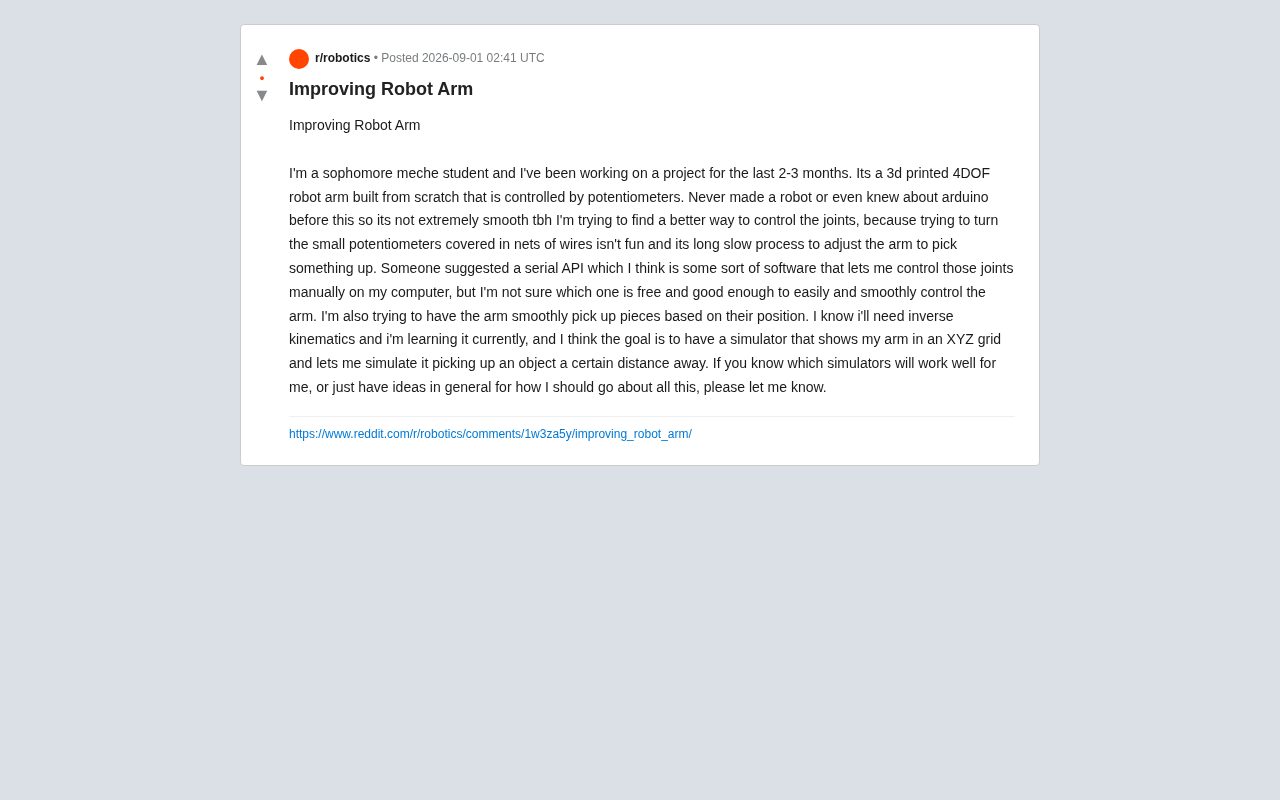
4DOF Robotic Arm DIY Tutorial: A Progressive Guide from Potentiometer Control to Inverse Kinematics
Complete guide to building a 4DOF robotic arm: from potentiometer control to Python serial communication, inverse kinematics, PyBullet simulation, and vision-based grasping for Arduino robotics beginners.
Google Antigravity + Gemini 3.7 Flash: An Efficient Approach to Multi-Agent Collaboration
Explore how Google's Antigravity orchestration platform and Gemini 3.7 Flash model work together to solve complex multi-agent math and engineering problems.