The Limits of AI Research Automation: Agents Aren't Magic Wishing Wells

AI research automation is a smart record-keeping system with humans in the loop — not a magic paper-writing machine.
This article clears up one of the most common misconceptions about AI research automation: a "godlike Agent" that writes your paper overnight simply doesn't exist. The author divides research into two domains — the physical world (data collection, lab work) and the digital world — arguing that only the latter is automatable. The right model is Human-in-the-Loop: AI handles execution and record-keeping on the computer, while the researcher retains judgment, authorship, and accountability. Using a PhD project as an example, the core value of an Agent-ified research workflow is consolidating thousands of scattered files into a single system that is conversational, traceable, reproducible, and exportable — functioning as an intelligent research notebook, not a replacement for the researcher.
AI Research Automation: First, Let Go of the "Wishing Well" Fantasy
Many people imagine AI research automation working like this: you whisper a request to an Agent before bed, and wake up to a finished paper. A Bilibili content creator put it bluntly — that kind of "godlike wishing well" Agent simply doesn't exist. If it could do all that, researchers wouldn't be needed at all.
Treating AI as an all-knowing, all-capable research contractor is the biggest misconception out there right now. What can actually be automated is a clearly bounded portion of the research process — not the entire pipeline. Understanding where that boundary lies matters far more than blindly hyping any particular tool.
Research Has Two Parts: The Physical World and the Digital World
The creator offers a clean distinction: research fundamentally splits into two domains. One happens in the physical world — calling patients for follow-ups, collecting clinical data, running hands-on experiments. That "last mile" from the physical world to the computer — someone still has to walk over with a USB drive — isn't going to be automated anytime soon.

The other domain is everything that happens on a computer. Any operation that can be fully recorded and stored digitally is, in principle, automatable. Put another way: all that work you used to do sitting at your desk, clicking through various software tools — that's exactly the territory AI can take over. This framing is both practical and honest. It neither overstates AI's capabilities nor undersells its value.
The Key Phrase: "Human-in-the-Loop" Automation
It's worth emphasizing that this kind of automation does not mean zero human involvement. The creator specifically notes it's "automation that requires your participation."
Why must humans stay involved? Because the ultimate output of research is publishable results — and someone has to evaluate those results, put their name on them, take responsibility, and give them meaning. These are precisely the things AI cannot replace. Accountability and academic authorship can't be handed off to an Agent. So the right model isn't "AI replaces the researcher" — it's "AI handles execution and record-keeping on the computer; the researcher handles judgment and responsibility."
Human-in-the-Loop (HITL) is a core concept in automation and AI system design. It refers to preserving human intervention and decision-making at critical points in an automated workflow. Unlike fully automated systems, HITL systems don't aim to eliminate humans entirely — they explicitly define which steps the machine handles and which require human review or sign-off. In industry, this model is already widely applied in content moderation, autonomous vehicle testing, and AI-assisted medical diagnosis: machines handle high-frequency repetitive tasks, while humans focus on edge cases and final judgment calls. Bringing this framework into research contexts is especially fitting. AI can rapidly execute standardized tasks like literature retrieval, data cleaning, and code debugging. But decisions like "Is this result trustworthy?" or "Is this conclusion worth publishing?" — those carry academic weight that only a researcher can bear. This isn't just a question of capability limits; it's also a matter of academic ethics. Authorship implies responsibility, and responsibility cannot currently be transferred to a model.
What an Agent-ified PhD Project Actually Looks Like
The creator uses their own doctoral experience to make "AI-automated research" concrete.
Imagine spending three years on a PhD and building a single PhD Project inside a software system. That project might contain dozens of sections — "choosing a research topic" is one section, "running analyses" is another. Each section might involve hundreds of rounds of conversation, and each conversation round might generate several artifacts (output files).
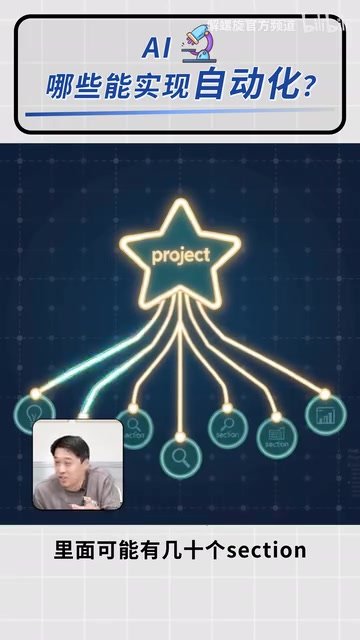
By the time the project wraps up at graduation, the system could hold thousands of accumulated files. Managing that volume under the traditional approach is practically unworkable.
The term artifact — used here to mean a produced output — has become increasingly standardized in AI assistant products in recent years. It refers to a concrete output file generated by a conversation or task execution: a block of code, an analysis report, a chart, or a draft document. Unlike ordinary text replies in a chat thread, artifacts are typically stored as standalone files that can be referenced, revised, or exported in subsequent steps. In research contexts, managing artifacts at the right level of granularity is critical: the script for each statistical analysis, the parameter configuration for each version of a figure, the notes from each round of literature review — all of it gets preserved as searchable artifacts rather than buried in a stream of chat messages. It's precisely this mechanism — "conversations produce artifacts, artifacts are traceable" — that makes a PhD project with thousands of files structurally manageable rather than just numerically overwhelming.
From Chaotic Folders to a Traceable System
What did research look like before? A folder stuffed with files generated by every piece of software imaginable — inconsistent formats, indistinguishable versions, and a provenance that lived entirely in your memory.

In the new Agent-ified paradigm, those thousands of files are unified and interconnected within a single system. This unlocks several genuinely useful capabilities:
- Conversational access: Just ask the system for what you need;
- Traceability: Any conclusion can be traced back to its original source;
- Reproducibility: Any analysis can be re-run on demand;
- Exportability: Whatever a reviewer asks for, you can pull it up and deliver it immediately.
The creator offers a fitting characterization: it's my research notebook. It can even surface the exact question you asked on the very first day you started thinking about your topic — a year ago — along with the answer you got back.
Closing Thoughts: Put AI in the Right Place
The real value of this perspective is the clear, sober line it draws around AI research automation: AI isn't a magic force that conjures papers out of thin air. It's an intelligent record-keeping system that documents, organizes, connects, and makes instantly retrievable everything you do in your digital research environment.
Data collection in the physical world still requires human effort. Academic judgment and responsibility still belong to the researcher. But the tedious, hard-to-track, easily-scattered work that happens on a computer — that's where Agents genuinely shine. Recognize that boundary, and you can deploy AI where it actually counts, instead of standing at a wishing well waiting for miracles that will never come.
Related articles

WorkBuddy Step-by-Step Tutorial: Get an Automated Workflow Running in Half an Hour
A step-by-step breakdown of the WorkBuddy automated workflow: why most people only use it as a chat app, how the 27-anchor course and 12 templates help beginners get up and running in half an hour, plus notes on usage boundaries.

The Truth About Free Claude Code: Three Legitimate Paths and One Scam
Is free Claude Code possible? We break down the real cost of Pro and Max (with exchange rates and taxes), how community free methods work and their privacy trade-offs, plus fake installers and phishing traps—and three legitimate free paths.
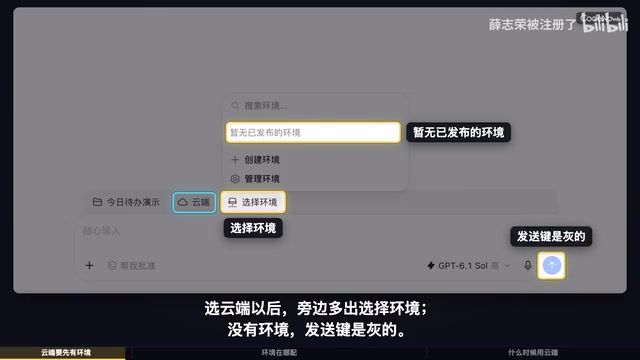
Codex Cloud Mode Explained: Environment Setup and Use Cases
This article explains how Codex cloud mode works, environment setup steps, and use cases, including how to create environments, connect GitHub repositories, set scheduled tasks, and compare cloud vs. local mode.