The Local LLM Community: Recapturing the Golden Era of the Early Internet
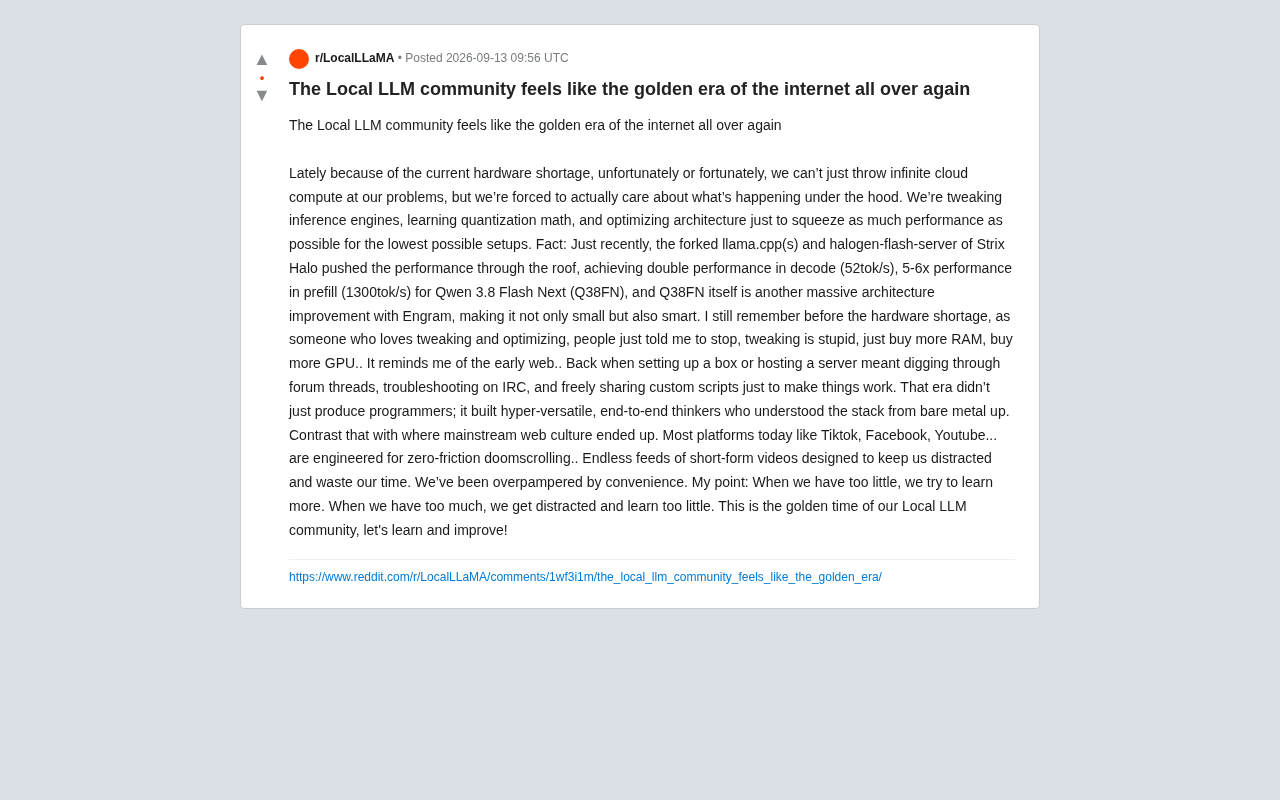
Hardware scarcity is pushing the Local LLM community to go deep on optimization, echoing the early internet's golden creative era.
A resonant Reddit post argues that the current hardware shortage is unexpectedly pushing the local LLM community into deeper technical territory. Unable to rely on cloud compute, developers are studying quantization math, tuning inference engines, and dissecting model architectures — achieving 2× decode and 5–6× prefill performance gains on AMD Strix Halo. The author compares this atmosphere to the early internet, when engineers had to understand everything from bare metal to the application layer. His central insight: when we have too little, we learn more; when we have too much, we grow distracted and regress into consumers. Scarcity, it turns out, is the very soil in which technical communities thrive.
Hardware Scarcity Is Forcing People to Get Good
An interesting phenomenon is spreading through the local LLM community: because of the current hardware shortage, people can no longer throw cloud compute at every problem the way they used to. Instead, they're being forced to actually care about what's happening under the hood.
A Reddit user wrote that this constraint is pushing the entire community back into a "roll up your sleeves" mindset — tuning inference engines, studying the math behind quantization, optimizing model architectures — all to squeeze every last drop of performance out of minimal hardware. This "making do with less" atmosphere is exactly the kind of soil where real technical skills take root.
The author shares an ironic memory: before the hardware shortage, as someone who loved tinkering and optimizing, he was often told to just stop — "Don't bother with all that tuning, just throw more RAM or another GPU at it." Now that compute is no longer cheap and abundant, the value of that tinkering spirit has been rediscovered.
A Performance Breakthrough on Strix Halo
The post includes a concrete technical example that illustrates just how much community-driven optimization can deliver.
Centered on the AMD Strix Halo platform, the community used a forked version of llama.cpp alongside halogen-flash-server to push performance to new heights: on Qwen 3.8 Flash Next (which the author calls Q38FN), decode performance doubled to 52 tok/s, while prefill performance jumped 5–6×, reaching 1300 tok/s.
Even more notably, Q38FN itself represents a major architectural step forward. According to the author, it introduces an Engram mechanism that makes the model not just smaller, but "smarter" — striking exactly the balance that local deployment values most: lightweight and capable.
Behind these numbers are countless hours of people iterating on inference engines, quantization strategies, and architectural details. It demonstrates that with the right software optimization, consumer-grade or edge hardware can deliver genuinely usable — even impressive — performance, without relying on top-of-the-line equipment.
It Feels Just Like the Early Days of the Internet
The author compares today's local LLM community to the "golden era" of the internet — a comparison worth sitting with.
In the early days of the Web, standing up a server and getting a site running meant digging through forum threads, debugging on IRC, and freely sharing homemade scripts just to get things working. That era didn't just produce programmers — it produced highly versatile, end-to-end thinkers who understood the entire stack from bare metal to the application layer.
This ability to understand everything from the ground up is precisely what gets lost when convenience tools do all the heavy lifting. Once everything is abstracted into a one-line API call, most people no longer need — or bother — to understand what's happening under the hood.
The Cost of Convenience: From Creators to Consumers
The author goes on to contrast this with the direction mainstream internet culture has taken.
Platforms like TikTok, Facebook, and YouTube are largely designed as zero-friction, infinite-scroll machines — an endless stream of short videos engineered to keep you distracted and scrolling. We've been spoiled by convenience.
This leads him to a core insight: when we have too little, we work hard to learn more; when we have too much, we get distracted and end up learning far less.
This observation is especially worth heeding in the AI era. The abundance of cloud compute and the ease of closed-source APIs can quietly turn developers into pure consumers. The local LLM community, constrained by hardware, has rekindled that spirit of "I have to understand this before it'll run" — the same curiosity that defined early tech culture.
Scarcity as the Foundation of a Technical Community
Zooming out, this post touches on a broader pattern in how technical communities evolve: constraints are often the catalyst for creativity.
The flourishing open-source toolchain (llama.cpp and its many forks), the democratization of quantization techniques, and the deep platform-specific optimizations around particular hardware all combine to form a collaborative ecosystem reminiscent of the early internet — where people spontaneously share scripts, swap tuning tips, and incrementally push performance higher.
For developers looking to get involved, this may be a signal: rather than waiting for more powerful hardware or cheaper cloud services, use this window of scarcity and excitement to genuinely build a solid foundation in local inference, quantization, and architectural optimization. As the author puts it — this is the golden age of the local LLM community. Let's learn together and grow together.
Related articles
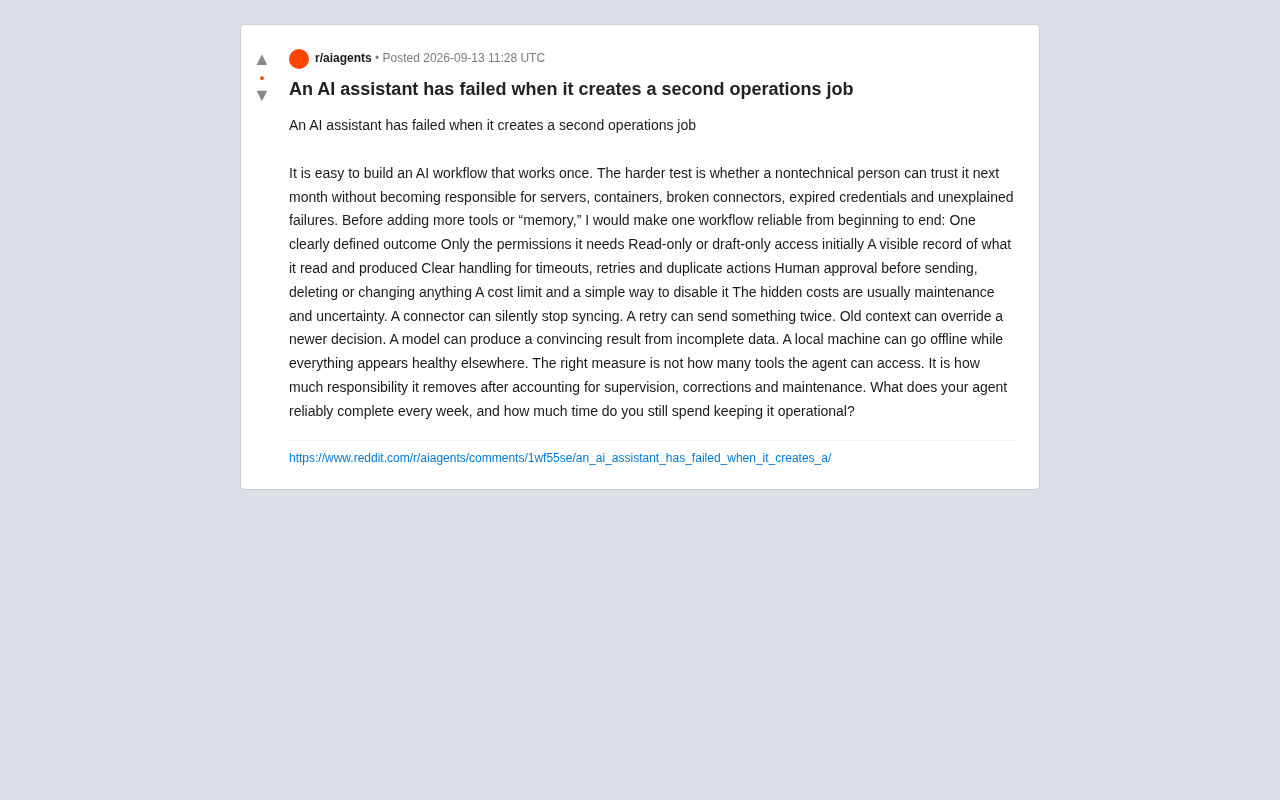
The True Failure of an AI Assistant: When It Creates a Second Operations Job
A Reddit user reframes how to judge AI assistants: they fail when they create a second ops job. Learn how to build end-to-end reliable workflows and measure Agent value by net benefit, not tool count.
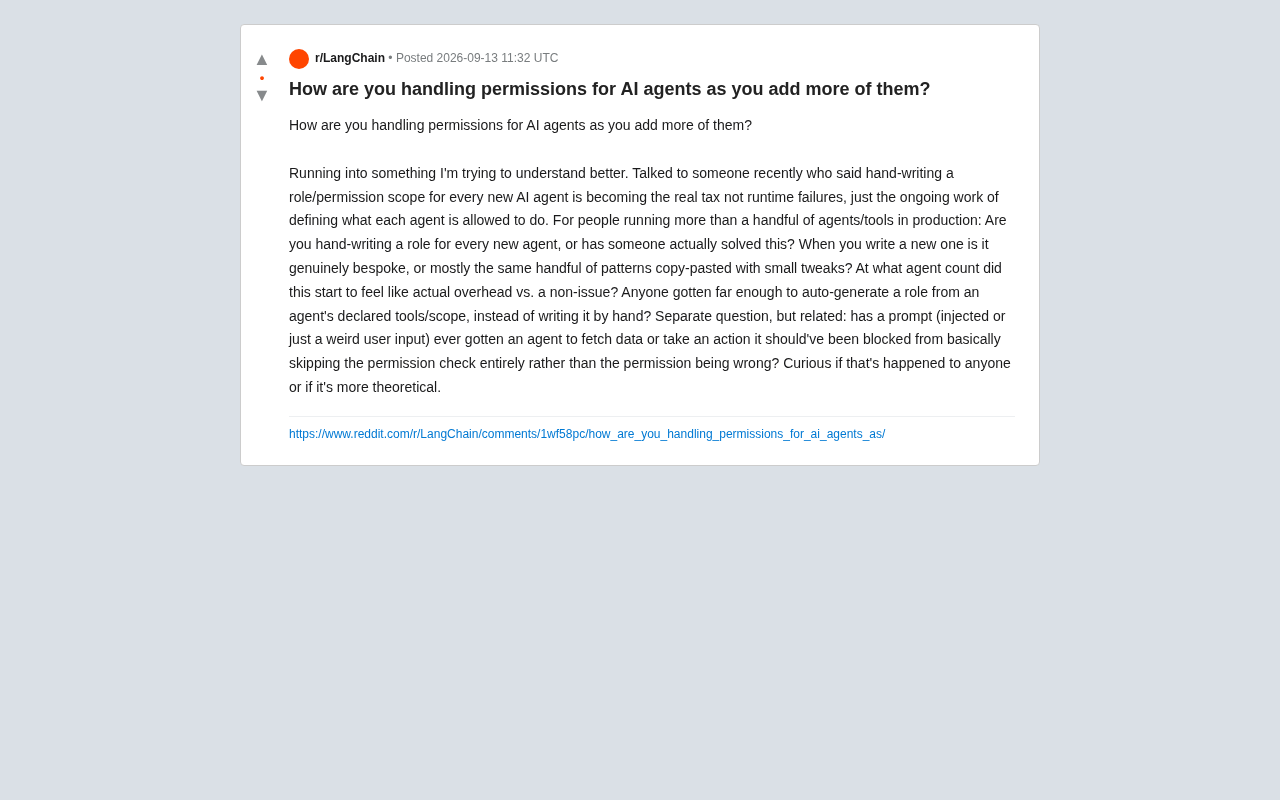
AI Agent Permission Management: Is Writing Roles Manually the New Hidden Tax?
As AI Agent counts grow, manually defining permission roles is becoming a hidden operational burden. This article explores scalability challenges, auto-generated roles, and the security risk of prompt injection bypassing permission checks.
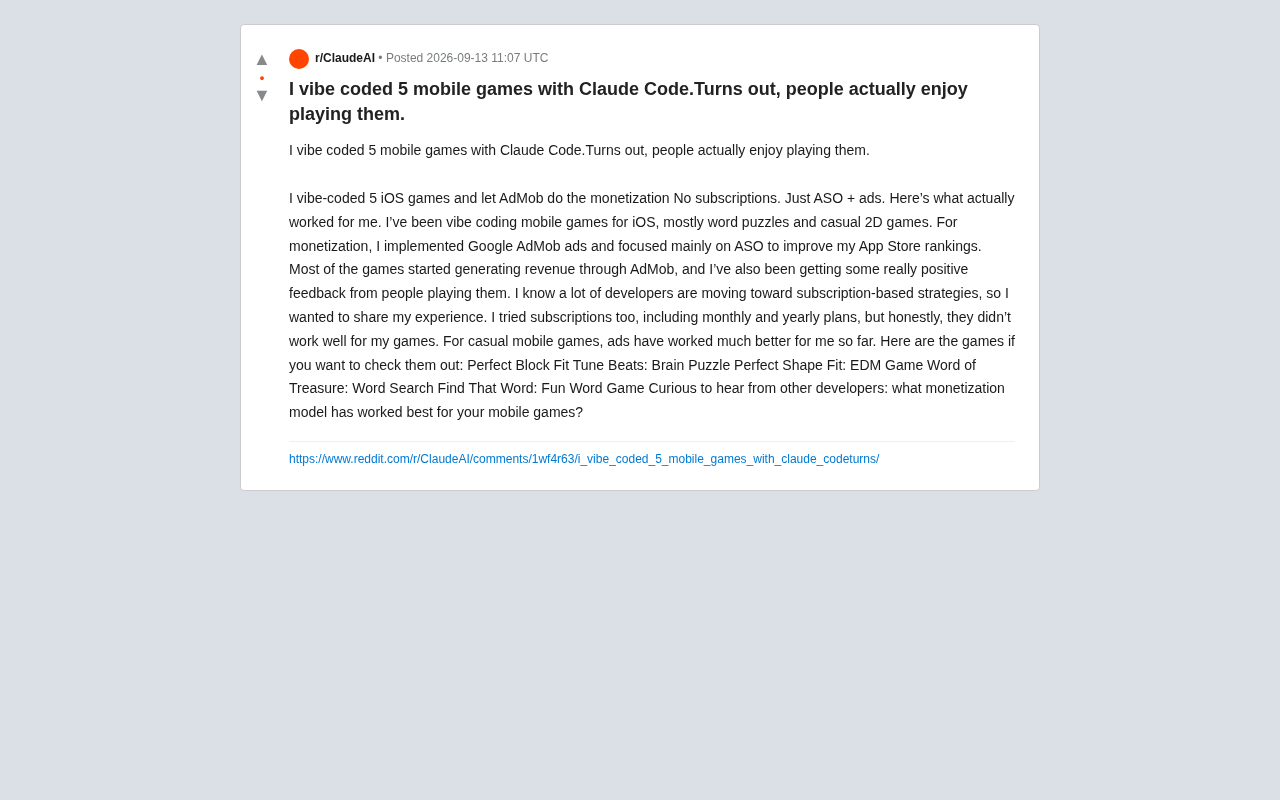
Vibe Coding 5 Mobile Games with Claude Code: Ad Monetization Beats Subscriptions
An indie dev built 5 iOS casual games with Claude Code vibe coding. His verdict: AdMob ads plus ASO optimization outperform subscriptions for casual games.