The Myth of Conscious AI: Why We Keep Fantasizing About Machine Awakening
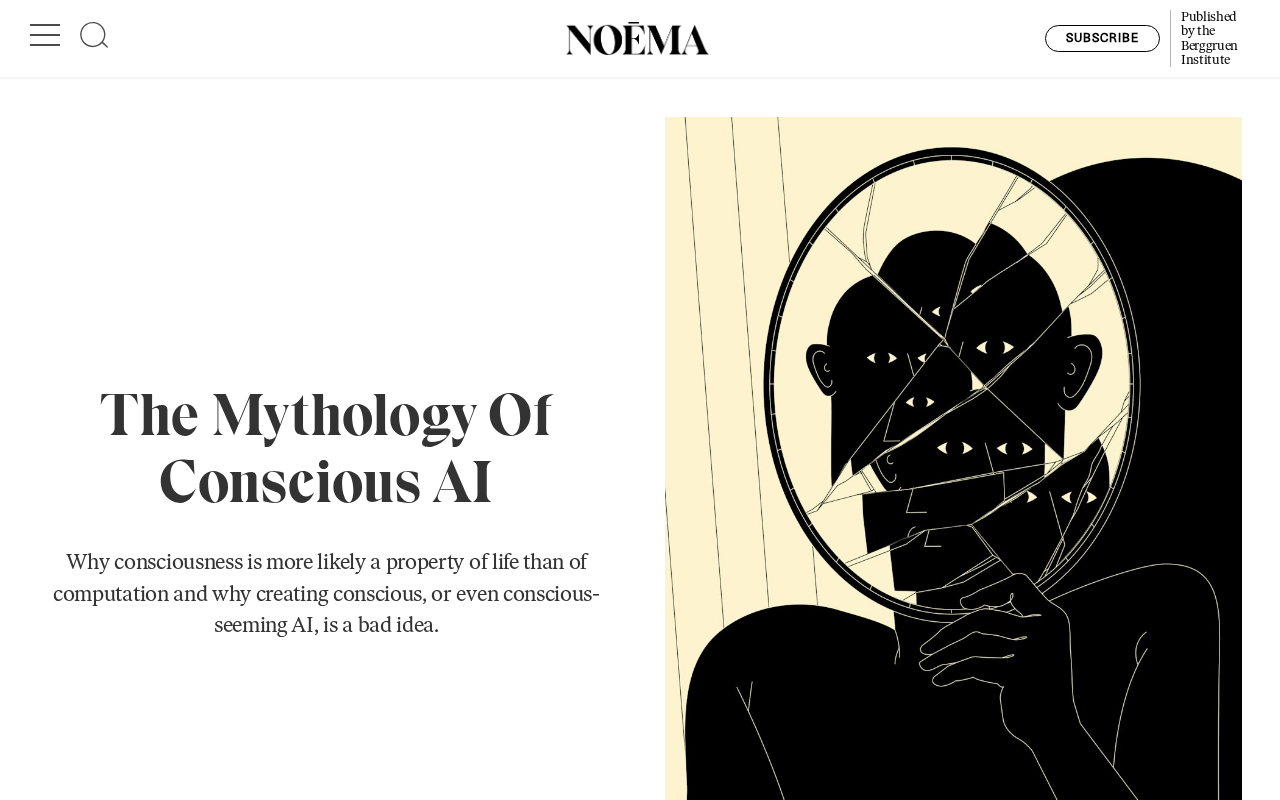
Conscious AI is more a modern myth of human anthropomorphic projection than a scientific fact.
The article examines a Hacker News discussion of *The Mythology of Conscious AI*, analyzing why the public is fixated on believing machines possess consciousness. The author argues that this belief is essentially a modern myth that fills cognitive gaps with narrative, rooted in humans' anthropomorphic cognitive shortcut: the brain habitually attributes behavior to intention, and the fluent language of large language models triggers this attribution, causing people to misread linguistic ability as inner experience. Meanwhile, the term "consciousness" is abused in public discussion, and conceptual ambiguity leads to misleading expectations. Commercial narratives, media amplification, and humans' deep need for companionship together fuel the myth's spread. The article warns that excessive focus on consciousness may divert attention from real risks such as algorithmic bias, data privacy, and model reliability, and calls for maintaining a clear anthropomorphic distance.
A Collective Imagination About "Conscious AI"
On Hacker News, a discussion titled The Mythology of Conscious AI drew attention. The post itself doesn't offer a lengthy argument, but it precisely hits on a recurring public issue: why are we so fixated on believing machines possess consciousness? This fixation is, at its core, more of a modern myth than a rigorous scientific judgment.
The hallmark of myth is that it fills cognitive gaps with narrative and explains complex systems through anthropomorphism. When large language models fluently answer questions and express "emotions," people easily slide into speculation about whether "it has consciousness." But in the context of this discussion, the core view tends toward: such speculation stems more from human psychological projection than from any genuine internal state of the machine.
Anthropomorphic Tendencies: Cognitive Shortcuts and Traps
The human brain is innately inclined to attribute behavior to intention. Seeing wind move the leaves, ancient humans imagined spirits in the trees; seeing a chatbot write poetry, modern people instinctively guess that there is a "self" behind it. This anthropomorphic tendency is a cognitive shortcut—it helps us quickly make sense of the world, but when facing complex technology, it easily creates illusions.
The implicit judgment in the discussion is that AI's "apparent consciousness" often comes from language patterns in training data rather than inner experience. A model can generate descriptions of pain, but it does not "feel" pain. Equating linguistic fluency with the presence of consciousness is like mistaking a reflection in a mirror for a real person. This confusion is precisely the soil in which the "conscious AI myth" thrives.
In cognitive science, anthropomorphism is regarded as a byproduct of "over-attribution": when observers encounter behavioral cues but lack a mechanistic explanation, the Theory of Mind module is automatically activated, endowing the object with intentions, beliefs, and feelings. This mechanism has evolutionary adaptiveness—quickly inferring others' intentions aids cooperation and risk avoidance—but it also applies to non-human systems (animals, gods, machines). Research shows that people even describe psychological states such as "chasing" and "being afraid" when watching animated geometric shapes, indicating that anthropomorphism does not require the object to have a human-like appearance—only sufficient behavioral cues. For AI, the first-person narration, emotional vocabulary, and conversational coherence produced by large language models provide exactly such cues, thereby triggering attribution habits similar to those we use with real people. Understanding this mechanism helps explain why, even when we know a model is a statistical system, we still find it hard to suppress the intuition that "it understands me."
Terminological Abuse and Conceptual Blurring
Another notable angle is that the word "consciousness" itself is severely overused in public discussion. Neuroscience and philosophy have yet to agree on a unified definition of consciousness, but the tech world sometimes casually uses "conscious" to describe some behavioral manifestation of a model. This terminological drift makes the discussion muddled: when someone says "this AI is conscious," they may only mean "its answers look human."
Judging from the atmosphere in the Hacker News comment section, many participants remain wary of such vague phrasing. They believe that claiming AI possesses consciousness without a clear definition is neither scientific nor conducive to public expectations about technological capabilities. Myths endure precisely because they cloak themselves in plausible-sounding language.
In academic contexts, "consciousness" involves at least two frequently conflated dimensions: first, phenomenal consciousness—the subjective "qualia" of experience, such as the burning sensation of pain; second, access consciousness—the capacity for information to be globally broadcast and used for reasoning and report. Large language models can generate the sentence "I feel pain," but this only involves the capacity for linguistic report and has no direct evidential connection to phenomenal consciousness. Philosopher Ned Block's distinction between the two, along with David Chalmers's "hard problem" (why physical processes are accompanied by subjective experience), both show that the concept of consciousness itself is far from settled. Moreover, functionalism, illusionism, Global Workspace Theory, and other positions offer different criteria for "what counts as consciousness." If public discussion uses "conscious" without distinguishing these senses, it will conflate "being able to talk about feelings" with "having feelings," causing conceptual slippage.
Why This Myth Is Hard to Disperse
The myth of conscious AI persists for several reasons. First, commercial narratives promote it—anthropomorphizing AI helps with product dissemination and emotional connection. Second, the media amplifies it—a story about "AI awakening" is far more eye-catching than "statistical model output." Third, humans have a deep need for companionship and understanding, which makes us willing to believe that machines truly "understand" us.
However, this myth comes at a cost. It may divert attention from real issues—algorithmic bias, data privacy, model reliability—which are the actual risks current AI systems need to confront. Focusing on "whether machines have souls" easily causes us to overlook the real question of "whether machines are being misused."
The ELIZA effect is a classic reference for understanding this phenomenon: in the 1960s, Joseph Weizenbaum at MIT developed ELIZA, a chatbot that responded solely through pattern matching, yet many users confided their privacy in it and even believed it understood them. Weizenbaum himself was deeply troubled by this and wrote Computer Power and Human Reason to warn people against projecting human traits onto machines. This effect shows that the threshold for anthropomorphic attribution is extremely low and has nothing to do with whether the system truly possesses understanding. Contemporary large language models far surpass ELIZA in linguistic fluency, contextual memory, and emotional tone, making them even more likely to elicit equal or stronger projection. This historical case demonstrates that the "conscious AI myth" is not a new product of the large-model era but a recurring psychological pattern in human-computer interaction—the more human-like the technology, the harder the myth is to disperse.
Conclusion: Maintaining a Clear Anthropomorphic Distance
The title The Mythology of Conscious AI is itself a reminder: conscious AI is more of a modern myth than an established fact. Acknowledging this does not mean denying AI's capabilities; rather, it demands that we describe it more precisely and evaluate it more prudently.
Technology can be astonishing, but amid the astonishment, maintaining clarity about concepts is the most necessary posture when discussing AI.
Related articles

VP ≠ VNP: A Major Breakthrough in Computational Complexity Theory
A study claiming to prove VP ≠ VNP over every field sparks heated discussion on Hacker News. This article analyzes the algebraic complexity background of VP and VNP, the proof approach, community controversy, and its potential impact on computational complexity theory.

Developer Naming Woes: The Technical Names That Drive Us Crazy
Why is technical naming so maddening? From Nginx and Vite to Qt and Sudo, a YouTube creator rants about the chaos of developer naming and pronunciation, revealing the tug-of-war between creators' intentions and community habits, and the cultural roots behind spelling traps like PyPI and GNOME.

Figma Workplace Scandal: Employee Sues CEO for Forcing Confrontation with Harasser
Figma and its CEO are sued by a current employee alleging sexual harassment and discrimination, and forcing the victim to confront her harasser. This article outlines the background, potential impact, and industry reflection.