The Netflix Microservices Myth: An Architecture Migration Misunderstood by an Entire Industry

Netflix's real reasons for adopting microservices — and why the whole industry copied the wrong lesson.
By reconstructing the true sequence of events around Netflix's 2008 outage, this article exposes a widely misread architectural decision. Netflix's move to the cloud wasn't driven by that outage — it was driven by hitting architectural limits, inability to forecast growth, and reluctance to keep buying hardware. Microservices solved a specific problem: hundreds of engineers blocking each other in a single deployable application. But when the industry followed suit around 2013, it copied the architectural pattern without the organizational scale problem or the supporting toolchain, leaving small teams bearing the full complexity cost of microservices from day one. Segment's retreat to a monolith, Shopify's decision to stay on one, and Prime Video's targeted rebuild all point to the same lesson: architecture choices should start with 'what problem do I have,' not 'what did they do.'
A Three-Day Outage That Reshaped Industry Architecture
The most widely circulated version of why Netflix rebuilt its entire architecture goes something like this: a database disaster in 2008 forced them to go all-in on the cloud and microservices. But if you actually read the blog post Netflix published in December 2010 — Four Reasons We Choose Amazon's Cloud as Our Computing Platform — you'll find the real story diverges significantly from popular memory.
In August 2008, Netflix pushed a firmware update to a disk array and brought down their database for three full days. At the time, Netflix was still a DVD rental company — you'd pick a title on the website, one of 55 distribution centers would mail you the disc, and you'd mail it back when you were done. That was the core business. The outage was the biggest in the company's ten-year history, and the second one that year.
What's interesting is that when the entire DVD operation went dark for three days, one thing kept running — the streaming service called Watch Instantly, which they'd launched the year before as a side project. Most people assume the outage directly triggered the streaming architecture overhaul, but the outage never touched the streaming service. It only took down the DVD business. That detail is precisely where the industry's misreading began.
The Real Cause of the Failure: Two Single Points of Failure Stacked on Top of Each Other
The official explanation over the years has been "database corruption" — technically accurate, but almost entirely uninformative. Netflix's former Chief Product Officer Neil Hunt later gave a more complete account at a conference.
Netflix's entire backend ran on a single Oracle database sitting on a single disk array, with essentially one machine talking to it. Two single points of failure stacked directly on top of each other, with zero redundancy. For a company that had been operating for ten years with a market cap of $1.75 billion at the time, that architecture was borderline reckless.
More critically, Hunt admitted they already knew: "We knew we were approaching the point where we needed redundancy." They just hadn't bought the backup data center yet. So when the firmware update corrupted the database and there was no failover to switch to, the service went down for three days. It's a classic story of a known risk left unaddressed until the bill finally came due.

The Real Reasons Netflix Moved to the Cloud — Nothing Like Popular Memory
Two months after the outage, in October 2008, Hunt gathered about a dozen engineers in a Los Gatos conference room called "The Towering Inferno" — named after a disaster film about a skyscraper fire, with darkly comic timing given they'd just burned down their own systems two months prior.
In that room, they asked a simple question: "What if we just stopped building data centers altogether?" This led to the four reasons listed in that 2010 blog post:
- Since they were rebuilding the architecture anyway, why not "write a check and let someone else do it" instead of building their own data center?
- Let Amazon handle the "undifferentiated heavy lifting" so Netflix engineers could focus on Netflix itself.
- They frankly admitted "we're not very good at predicting subscriber growth or device usage" — their user projections had already been revised three times that year.
- They simply said "we believe cloud computing is the future."
Notice what's missing from that list — the outage isn't mentioned once. The narrative framing the outage as the catalyst for the rebuild comes primarily from a Netflix retrospective published in 2016, by which point everything had already been proven to work. In other words, the real decision logic was: they had hit the ceiling of their existing architecture, couldn't predict their own growth, and didn't want to keep buying hardware for a future they couldn't forecast.
What Microservices Actually Solved: Deployment Conflicts
Moving to the cloud was only half the decision. The other half was what the software would look like in the cloud. Netflix didn't simply lift and shift their old system into AWS — they explicitly refused to, because "moving everything to the cloud as-is means bringing all the problems and limitations of the data center with you."
Over the next roughly seven years, they rebuilt almost everything: the monolith was broken into hundreds of microservices, data was denormalized into NoSQL, and teams stopped coordinating large-scale releases and instead started deploying on their own schedules.
Here's the single most important point in this entire story: what microservices actually solved was deployment conflicts. When hundreds of engineers are all pushing code into a single deployable application, one bug becomes everyone's problem. Your code might be ready, but it can't ship because the entire monolith moves as a single unit. By breaking things into independently deployable services, teams no longer had to wait on each other — and at Netflix's scale, that saved an enormous amount of time.
Hold onto that prerequisite — hundreds of engineers blocking each other — because this architecture is about to leave Netflix and spread across the entire industry, while the problem that created it stays behind.

A monolith, in engineering terms, refers specifically to an application where all business logic, data access layers, and interface layers are packaged into a single deployable unit. Its core constraint is "atomic deployment": any change to any line of code must go live with the entire application, meaning release windows, release approvals, and rollback risk are all shared across every team. Microservices cut that deployable unit along business boundaries, with each service built, deployed, and scaled independently. By the time Netflix was transforming, its engineering headcount was already in the hundreds — a bug from any one team could freeze the release plans of every other team. This also maps neatly to Conway's Law: a system's architecture will ultimately mirror the communication structure of the organization that produces it. Microservices are therefore fundamentally a technical solution to an organizational scale problem, not a pure performance or reliability solution. When a company's engineering team hasn't yet hit that threshold, the network call overhead, distributed transaction complexity, and observability costs that microservices introduce will often far outweigh the deployment conflicts they eliminate.
The Price of Independence: Chaos Monkey and the Christmas Eve Outage
Distributed systems fail in completely different ways than monoliths — they fail continuously, and they fail partially. Part of the system is fine while another part is broken. To deal with this, Netflix built an entire suite of tools and disciplines, the most famous being Chaos Monkey, released in 2011: a tool that deliberately kills production servers during business hours. The logic is simple — if your dependencies are constantly being randomly killed, engineers have no choice but to build services that survive dependency failures. Netflix called this collection of tools the "Simian Army."
On Christmas Eve 2012, someone inside AWS "accidentally" ran a maintenance process against production load balancer data, the data was deleted, and Netflix went down across the Americas. This wasn't Netflix's fault — but they had bet the entire company on someone else's infrastructure. Rather than leaving AWS in response, Netflix doubled down. That incident was actually what pushed them to build cross-region active-active failover.
Adrian Cockcroft, Netflix's cloud architect, kept a slide recording the "typical reaction" to his Netflix talks over the years: 2009 — "You're crazy"; 2010 — "This won't work for Netflix"; 2011 — "Only works for a unicorn like Netflix"; 2012 — "We want to do this but can't"; 2013 — "We're using Netflix's open source code." In four years, the industry went from "this is absurd" to "maybe we should do this too."
The thinking behind Chaos Monkey is part of a broader philosophy called Chaos Engineering — the core idea being: rather than waiting for random failures in production, proactively and deliberately introduce failures in a controlled way to surface system vulnerabilities before they matter. Netflix later systematized this into the "Simian Army": Latency Monkey simulates network latency, Conformity Monkey checks whether services follow best practices, Doctor Monkey monitors instance health, Janitor Monkey cleans up unused resources, and at the top, Chaos Gorilla can simulate an entire AWS availability zone going offline. In 2019, Netflix engineers formally codified these principles into the Principles of Chaos Engineering, and the field has since grown into its own engineering discipline, with dedicated tools like Gremlin and Chaos Mesh emerging in its wake. Worth noting: chaos engineering's underlying assumption is that the system is already complex and distributed enough that you need continuous fault injection to maintain confidence in it — which is itself an ancillary cost of scaling microservices, and an additional burden rather than a necessary investment for small teams.
The Industry's Misreading: Copying the Solution Without Copying the Problem
In early 2016 — seven years after that conference room meeting — Netflix shut down the last of its data centers serving the streaming business. Compared to 2008, streaming memberships had grown eightfold, and viewing volume had grown by three orders of magnitude (roughly 1,000x). That same month, Reed Hastings took the stage at CES, and as he spoke, Netflix went live on the infrastructure they'd spent seven years building — simultaneously, in nearly every country in the world. The bet had paid off completely.
And that's where the problem started. Imagine you're an engineering leader in 2016: Netflix has just completed the most public, most high-profile infrastructure transformation in industry history, with code open-sourced, blog posts published, and engineers presenting the details at countless conferences. At that point, it's very hard to walk into a planning meeting and say "I think we should stay on a monolith." Copying Netflix was the rational move at the time — not stupid, just pressured.
But what got ignored was that core prerequisite: the industry copied the solution (microservices architecture) without having the problem that demanded it (hundreds of engineers blocking each other), and without the entire toolchain Netflix had built to manage the new architecture. So a startup with 30 engineers in 2017 adopted microservices with no context whatsoever. These companies would likely never encounter that problem in their lifetimes (if they even made it that far), yet from day one they were absorbing the full cost of microservices: what used to be a function call was now a network request that could time out or fail; what used to be one stack trace now had to be traced across eight services; local development meant spinning up half a distributed system on a laptop.

From Segment to Shopify: Who Actually Understood Their Own Problem
The costs eventually showed up. In 2018, customer data company Segment published Goodbye Microservices. They had ballooned to over 140 services, one repository per destination, all depending on shared libraries — updating a shared library meant testing and redeploying every service that used it. When engineers were under deadline pressure, they'd only update the one they needed, so version drift accumulated, complexity compounded, and the original benefits began to reverse. In the end, they had three full-time engineers doing almost nothing but keeping the system running. After consolidating, they merged both the mono repo and the monolith.
It's worth clarifying a commonly conflated concept here: a mono repo (single repository) is one repo holding everything; a monolith is one service doing everything. These are two independent decisions, and Segment had split both apart.
The counterexample is Shopify — over a thousand developers maintaining 2.8 million lines of Ruby and more than 500,000 commits in a Rails codebase, arguably the most "qualified" company to adopt microservices, yet they didn't. In a Shopify engineer's own words: "Microservices are touted as a silver bullet for all of a monolith's problems, but the monolith itself isn't the problem — it's just a different way of doing things."
Kelsey Hightower, a prominent figure in the Kubernetes world, was even more direct on the Changelog podcast in 2020: "The monolith is the future, because the problems people are trying to solve with microservices don't map to reality." He also said that when giving talks, he sometimes hopes people feel a tinge of embarrassment about the state of the industry — about all the complexity that's been added for no reason. Coming from a Kubernetes luminary, those words carry real weight.
The Prime Video Incident: History Rhymes Again
In 2023, an Amazon Prime Video engineering team published a post about one of their monitoring services (which monitors streaming video quality). They had built it as a distributed serverless system, and it hit hard scaling limits at around 5% of expected load. So they rebuilt it as a monolith — everything running in a single process — and infrastructure costs dropped by more than 90%, with better scalability to boot.
The post explicitly stated: this was about one specific system with one specific team's specific problem. Prime Video didn't abandon microservices, and they didn't "discover that monoliths are better." But the internet turned it into "Amazon kills microservices" — a perfect mirror image of the exact phenomenon this article is critiquing. The company explained how they solved a specific problem in a specific context, and everyone ignored the "why" and grabbed only the "how."
So don't finish reading this and rush to "reverse-copy Netflix" by collectively retreating to monoliths. The real lesson isn't that microservices are bad and monoliths are good. It's this: every architecture you've ever heard of is a specific solution to someone else's specific problem. The question you should be asking isn't "they did it this way, should I?" — it's "what problem do I actually have, and then what solution fits it?"
Serverless architecture — the approach used in the Prime Video case — deserves its own brief explanation. Serverless doesn't literally mean no servers; it means developers don't manage servers, with the cloud platform dynamically allocating compute resources per function invocation. Representative products include AWS Lambda and Azure Functions. Its advantages are extremely low operational overhead and near-infinite elastic scaling. Its disadvantages include cold-start latency, per-execution time limits, and the fact that state doesn't persist between invocations — a structural liability for audio/video quality inspection workloads that require large amounts of data flowing continuously through a process. Prime Video's monitoring service needed to pass large amounts of state continuously between frames; the stateless model of serverless meant data between invocations had to be routed through external storage, introducing both latency and scaling bottlenecks. Rebuilding it as a single-process monolith let state flow through memory, eliminating that extra hop and improving both cost and performance simultaneously. This perfectly reinforces the article's central argument: serverless, like microservices, is just a tool, and its value depends entirely on whether the problem it addresses actually exists in your system.
Related articles
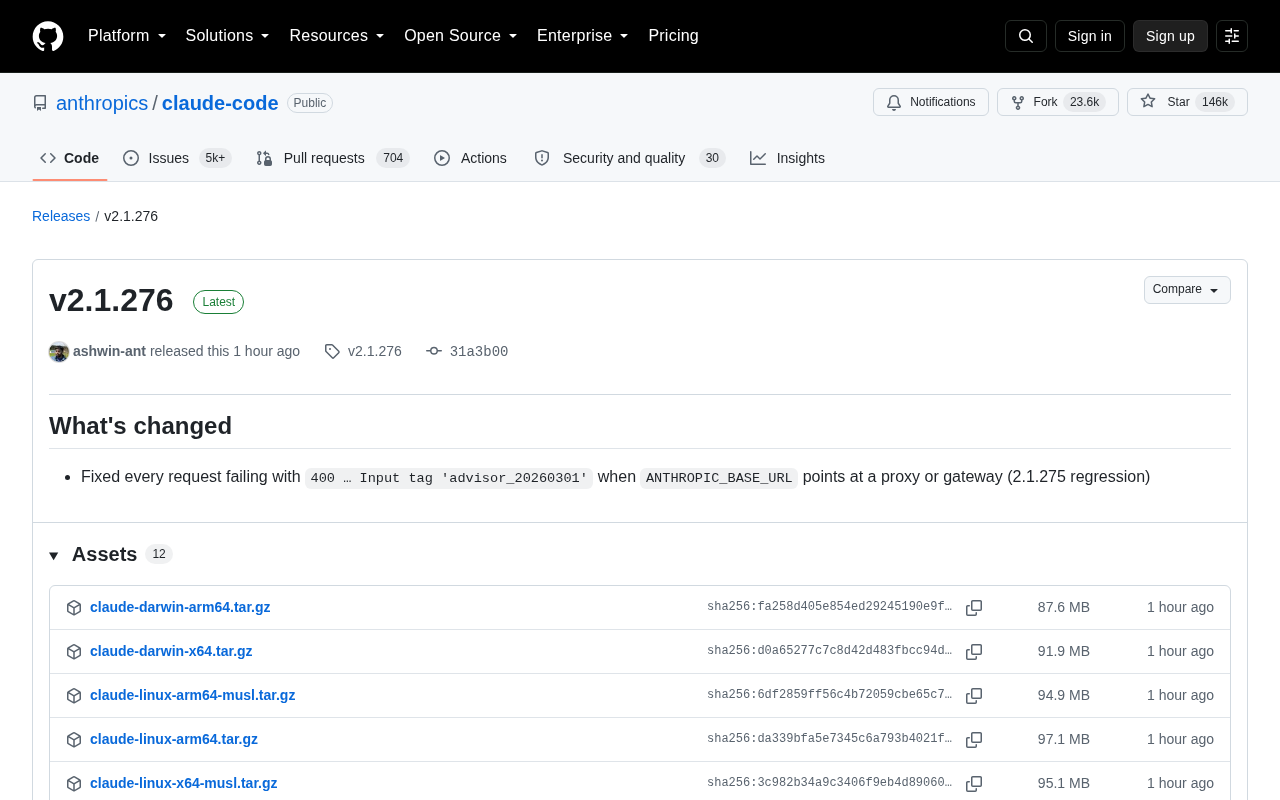
Claude Code v2.1.276 Released: Fixes Proxy/Gateway 400 Error Regression
Claude Code v2.1.276 fixes a critical regression from v2.1.275 where all requests via proxy or gateway failed with a 400 error (Input tag 'advisor_20260301'). Upgrade now.

Andrew Ng on Agentic AI: Cutting Through the Hype to Find Real Value in Agent Development
Andrew Ng's Agentic AI course intro: separating hype from real value, exploring agent workflows in customer service, research, law, and healthcare, and why evals and error analysis define expert-level agent development.

Java 27 Deep Dive: How Default Changes Are Quietly Reshaping Production Environments
Java 27 has just 9 JEPs but changes key defaults: compact object headers on by default, G1 as unconditional default GC, Flight Recorder redaction, and built-in post-quantum TLS 1.3.