The Next Stop for AI in Medicine: From the Generative Hype to Whole-Patient Models

Medical imaging AI has ample evidence but is stuck in deployment; the bottleneck is not technology.
The article distills a Microsoft Research roundtable on AI and medicine. Three researchers agree that generative AI has absorbed most attention, while deep learning in medical imaging has accumulated substantial randomized trial evidence yet remains slow to enter clinical practice, held back by slow acceptance, low profit margins, and silence on the demand side. Horvitz presented agentic diagnostic research on the cover of Science; Topol argued whole-patient models are closer to reality than virtual cells; Amini stressed that virtual experiments cannot replace real ones. The discussion also covered ambient recording tools, patients turning to chatbots, immune aging, and expectations for AI-driven chronicization of cancer.
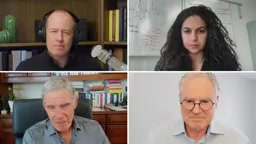
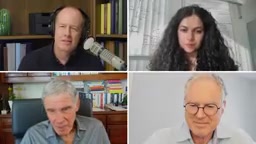
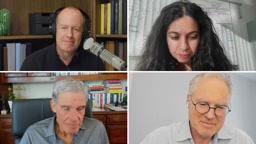
Healthcare finds itself in a curious mismatch: generative AI commands almost all the attention, yet the deep learning that has been genuinely proven effective — and yet slow to reach patients — is in medical imaging. In a roundtable discussion at Microsoft Research, three researchers working at the intersection of AI, biology, and medicine — Microsoft Chief Scientist Eric Horvitz, Scripps Research Executive Vice President Eric Topol, and Microsoft Research Principal Research Manager Ava Amini — reached a rare consensus: technology is not the bottleneck; deployment is.
The Missed Imaging AI Dividend
In the discussion, Eric Topol said plainly that both academia and industry have been "drawn to the shiny thing that is generative AI," overlooking the more mature deep learning results in medical imaging. Retinal scans, chest X-rays, electrocardiograms — AI research on these modalities has accumulated solid clinical evidence. He cited randomized trials of mammography involving more than 100,000 women and 44 randomized trials on colonoscopy, yet the findings have not truly entered patient care workflows.
Topol described this gap between "abundant research and barren clinical practice" as "maddening." He listed several obstacles: the medical field's slow acceptance of change, low profit margins in healthcare systems that discourage investment, and a subtler problem — neither doctors nor patients are actively demanding these advances. "If you're a woman getting a mammogram and you can't get the most advanced AI-assisted reading, you might think, shouldn't that provoke some kind of outcry?"
The mammography and colonoscopy AI evidence mentioned in the article comes from two large-scale randomized controlled trials. On mammography, Sweden's MASAI trial enrolled more than 100,000 women between 2021 and 2022, comparing AI-assisted reading with standard double reading; results showed AI assistance could reduce screening workload by about 44% without lowering cancer detection rates. On colonoscopy, a systematic review published in a Lancet journal in 2023 aggregated 44 randomized trials and found that AI-assisted colonoscopy significantly improves adenoma detection rates. These two types of evidence matter because they represent the highest level of evidence-based medicine — randomized controlled designs — rather than retrospective studies. But even with evidence of this caliber, the lack of reimbursement pathways, regulatory approval, and workflow integration keeps these tools stuck in papers and pilot programs. This is precisely the source of the phrase "abundant research, barren clinical practice" — the sufficiency of evidence does not automatically translate into the inevitability of deployment.
From Diagnostic Accuracy to "Medical Cognition"
Eric Horvitz introduced work he leads at Microsoft, which landed on the cover of Science. The key shift in this research lies in the evaluation method: instead of handing complete cases to AI and tallying diagnostic accuracy, they put AI in the clinician's seat — given only the chief complaint and history, the system decides what questions to ask, what tests to order, and when to make a diagnosis amid uncertainty.
Topol rated the work highly: it is the first demonstration of an agentic system substantially outperforming human doctors in diagnostic accuracy — "nearly double, but at lower cost." He stressed that this contrasts sharply with previous AI applications that inflated coding fees and drove up costs.
Horvitz maintained a researcher's caution, noting that comparisons with human general practitioners "need to be viewed rationally in light of their limitations." But the direction is clear: the value of AI is not in delivering an answer in one shot, but in simulating the entire process of clinical reasoning.
Whole-Patient Models: A Closer Goal Than Virtual Cells
A concept that recurred throughout the discussion was the "whole-patient model" — integrating electronic health records, raw imaging, genomics, proteomics, and other multilayer data to predict disease and its timing at the individual level.
Topol offered a pragmatic judgment on this direction: virtual cells are still far off, but virtual patients may arrive first. Existing models, even when combining only electronic health records with polygenic risk scores, can already provide some information about disease onset timing. The real shortfall is data — "we don't yet have deep longitudinal data at scale."
Amini added another layer of complexity from the biology side: biological systems are inherently multiscale — from molecules to cells, tissues, organ systems, and the whole organism. How to make molecular-level information meaningfully rise to patient-level insight is a machine learning challenge rarely encountered in other fields.
"Virtual cells" are a grand vision in computational biology in recent years: using computable models to fully simulate the internal state of a single cell and its response to external perturbations, thereby performing drug screening and mechanistic inference in silico. The difficulty lies in the nonlinear, multiscale interactions of intracellular molecular networks, as well as the noise and sparsity of single-cell measurement data itself. By contrast, the "whole-patient model" lowers the granularity requirement, seeking only to predict disease occurrence and timing at the patient level — so while the data hierarchy required is broad, the modeling objective is more tractable. Polygenic risk scores are one of the foundational building blocks of this approach: by aggregating the effect sizes of numerous small-effect loci across the genome, they yield an individual's genetic susceptibility score for a given disease; combined with electronic health records, they form a workable but still incomplete prototype of a whole-patient model. The real constraint is not the algorithm, but the cost of collecting longitudinal cohort data and the years of follow-up required.
The Real World Is Always the Bottleneck
When the discussion turned to falling compute costs, Amini proposed the idea of "trading computation for experiments": letting models screen for high-confidence experimental directions and concentrating laboratory resources on the most promising areas, thereby compressing discovery cycles and costs.
But she also offered a sober caveat: "The real world will always be the bottleneck. You cannot fully replace the real world with virtual experiments." The role of virtual experiments is to decide where real experiments should be spent, not to eliminate them.
Horvitz picked up on this judgment and offered a more positive reading: cheaper computation can help determine "where, under given resource constraints, surprising results are most likely to emerge."
Topol brought the conversation back to data: AlphaFold became a landmark breakthrough only because the Protein Data Bank existed. Life sciences and medicine currently lack databases of comparable scale and quality, and that may be the real ceiling.
AI Is Changing Daily Life in the Clinic
At a more clinical level, Topol observed several trends that have already arrived. Ambient recording tools are spreading rapidly through U.S. healthcare systems; automatically generated visit notes are more accurate than the manual notes long in use, and can be linked to ordering tests, scheduling appointments, and prior authorization.
Another phenomenon that surprised him: because doctors' time is so severely compressed, patients are turning to chatbots for information and finding their responses more empathetic than those of humans. "Machines don't understand empathy at all, but they can simulate it." What patients value is round-the-clock availability and unlimited response time.
He hopes these tools will give doctors their time back and create an opportunity to repair the doctor-patient relationship — "I can name my family doctor from age five to ten, but I can't name my last five doctors."
The Immune System and Aging: An Overlooked Dimension
Asked what direction deserves the most attention, Topol pointed to the immune system. He mentioned his team's research on the immunome published in Nature, and a changing understanding: the thymus does not, as previously thought, completely degenerate after age 20; some elderly individuals still have functionally intact thymuses, and this is linked to cancer immunotherapy response and cancer risk. Proteomics, meanwhile, makes it possible to measure the biological age of the immune system.
Horvitz set his sights on the fundamental mechanisms of aging: why do many diseases appear with age, including Parkinson's disease, which in people carrying certain gene mutations does not onset until their sixties or seventies? If we can understand the mechanisms of maintenance and imbalance during aging, we might unlock prevention pathways for multiple diseases at once.
Amini's excitement centers on innovation in measurement technology — new measurement approaches that connect biological modalities in new ways, combined with creative use of existing data, making connections across biological levels computable.
The thymus is the site where T lymphocytes mature. Traditional immunology holds that it begins to turn to fat after puberty and gradually loses function — a view of "irreversible degeneration" that has long dominated clinical understanding. But recent imaging and immunohistochemical studies have found that some elderly individuals retain functional thymic tissue, and thymic output capacity is related to T-cell receptor diversity, which directly determines the body's ability to recognize tumor neoantigens. This explains why thymic function is linked to cancer immunotherapy response and overall cancer risk. Proteomics offers another measurement path: through the concentration profiles of thousands of proteins in plasma, one can construct "biological age" indicators reflecting organ function and immune status, whose deviation from chronological age correlates with the risk of various age-related diseases. Together, these two lines of evidence point to a judgment: immune aging is not a single linear process, but one that is measurable and potentially intervenable.
The Picture Ten Years From Now
Horvitz offered a specific timeline: in ten years, the public will see AI as a driver of medical breakthroughs, including turning several fatal cancers into chronic diseases and making progress in delaying the onset and progression of Alzheimer's disease.
Topol's optimism goes further: he hopes medicine will reach the prevention stage — preventing Alzheimer's, preventing cancers that currently cannot be prevented. "We will eventually have a practice of medicine unrecognizable from today's."
To the question that recurred throughout the discussion — whether biology will ultimately be fully understood and abstracted like an engineering system — the three researchers' answers tended toward no. But Amini's counter-question is more worth remembering: do we really need that degree of precision? For scientists, whether a model can support the next verifiable experiment may matter more than whether it can explain every molecule.
One-line Summary
Medical imaging AI has ample evidence but is stuck in deployment; the bottleneck is not technology.
Paragraph Summary
The article distills a Microsoft Research roundtable on AI and medicine. Three researchers share a consensus: generative AI has absorbed most of the attention, while deep learning in medical imaging has accumulated substantial randomized trial evidence yet remains slow to enter clinical practice, held back by the healthcare system's slow acceptance, low profit margins, and silence on the demand side. Eric Horvitz presented agentic diagnostic research that made the cover of Science, advancing evaluation to simulate the full process of clinical reasoning; Eric Topol argued that whole-patient models are closer to reality than virtual cells, with the shortfall being longitudinal data at scale. Amini stressed that real-world experiments cannot be replaced by virtual ones. The discussion also touched on ambient recording tools, patients turning to chatbots, the immune system and aging mechanisms, and the expectation that AI will turn cancer into a chronic disease within a decade.
Related articles

AI Writes Your Code—Do You Still Need to Learn Git? Five Reasons
AI coding agents handle Git operations automatically—is it still necessary to learn Git? Five reasons: team communication, reviewing agent PRs, monitoring code changes, fallback when AI goes down, and the joy of learning—plus how the focus of learning Git is shifting in the agent era.

Anthropic Reportedly Prices IPO at $83 Per Share, Valuing Company at $1.5 Trillion
Anthropic reportedly prices IPO at $83 per share, above the expected range, with a fully diluted valuation of $1.5 trillion. This article analyzes the signal significance of the pricing and its impact on the AI industry's financing environment.

Open-Source Code Hosting Platform Codeberg Suffers Outage, Sparking Debate in Developer Community
Open-source code hosting platform Codeberg.org suffered an outage, sparking Hacker News debate over nonprofit platform stability and open-source infrastructure dependency risks.