The Only Bilibili Tutorial That Thoroughly Explains Harness Engineering Multi-Agent Collaboration in Practice

An analysis of the Bilibili Harness multi-Agent collaboration tutorial's positioning, principles, component value, and target audience.
The article evaluates a Bilibili tutorial claiming to be the only content on the platform to thoroughly explain Harness Engineering enterprise-grade multi-Agent collaboration. It defines its positioning as enterprise project practice with underlying principles and core components as main threads, notes that the real difficulty lies in collaboration protocols and maintainability rather than single-Agent prompts, highlights how component breakdown builds engineering intuition, and confirms market demand is shifting from usage to principled implementation. It concludes with audience and viewing suggestions, noting the "only one" claim is promotional and should be judged by technical density.
A tutorial on Bilibili has been repeatedly mentioned lately—it claims to be the only content on the platform that thoroughly explains Harness Engineering enterprise-grade multi-Agent collaboration projects, and promises an in-depth analysis of Harness's underlying principles and core components. For developers working on AI Agent engineering implementation, this title is indeed compelling. But before diving in, it's worth clarifying: what this tutorial actually covers, who it's suitable for, and what "enterprise-grade multi-Agent collaboration" really means in terms of engineering challenges in real projects.
The Tutorial's Positioning and Content Scope
Judging from the title, the tutorial positions itself around two terms: "enterprise-grade" and "project practice," rather than general conceptual education. This means its content revolves around a real, runnable collaborative system, with underlying principles and core components as its two main threads. In other words, viewers should expect not introductory content like "what is an Agent," but rather how multiple Agents are orchestrated, how they communicate, how they share context, and how they run stably under an engineering skeleton.
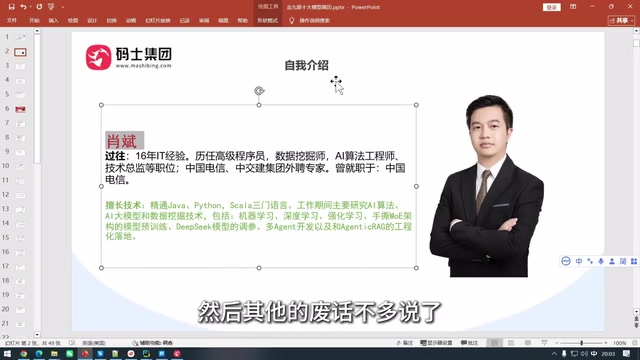
It's worth noting that the original description is mixed with a lot of the instructor's personal background and livestream interaction content—viewers need to filter for the actual technical information density themselves. For engineers with limited time, it's advisable to skip the opening pleasantries and jump straight to the component breakdown and project practice sections.
Harness's Underlying Principles: The Engineering Skeleton of Multi-Agent Collaboration
The difficulty of multi-Agent systems has never been in the prompt of a single Agent, but in the collaboration protocols between them. The core problem that frameworks like Harness aim to solve is abstracting the process of "who calls whom, when, with what context, and how results flow back" into a reusable engineering structure. The value of the tutorial's analysis of underlying principles lies precisely in clarifying this layer of abstraction, helping viewers understand the complete chain from design to implementation of a multi-Agent project.
For enterprise projects, this skeleton also means maintainability: adding a new Agent doesn't require rewriting the entire flow, and replacing the model in a certain step doesn't require changing the collaboration logic. This is exactly the weight behind the word "enterprise-grade."
Before discussing multi-Agent collaboration, it's necessary to first clarify the basic distinction between an Agent and a multi-Agent system. A single Agent typically consists of a model, prompts, a toolset, and simple loop control—it completes tasks independently. A multi-Agent system, on the other hand, organizes multiple such individuals through role division, message passing, and shared state to collaboratively solve complex tasks that a single Agent cannot handle. Common collaboration patterns in the industry include decentralized peer negotiation, centralized orchestrator-worker structures, and pipeline-style sequential relay. Different patterns differ significantly in fault tolerance, observability, and development complexity. The value of frameworks like Harness lies in crystallizing these patterns into configurable engineering structures, rather than having teams design communication protocols from scratch every time.
Core Component Breakdown and Practical Value
The tutorial's breakdown of core components is what distinguishes it from general educational content. A multi-Agent collaborative system typically requires several types of components: task orchestration, context management, tool invocation, and state tracking. The design trade-offs of each component directly affect the system's stability and scalability. Walking through a practical project helps developers build intuition for "how components fit together," which is far more effective than reading documentation alone.

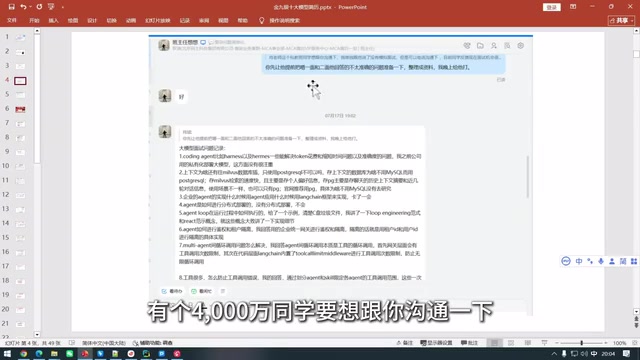
From an employment perspective, this kind of project experience also has practical value in interviews. In the original content, the instructor mentioned that when coaching students for interviews, he found that interviewers are paying increasing attention to engineering details like security isolation and Sandbox—one student was asked by a foreign company what else needed to be prepared beyond Sandbox. This shows that market demands for multi-Agent engineering capabilities are shifting from "knowing how to use" to "understanding principles and being able to implement," and this tutorial's content direction happens to match this need.
Sandbox is an often-underestimated yet crucial infrastructure in Agent engineering. Its essence is to provide a controlled isolated environment for Agents to execute code and invoke tools, restricting their access to the host file system, network, and sensitive resources, thereby keeping the impact within safe boundaries when the model produces errors or malicious behavior. Enterprise projects introducing sandboxes typically also involve supporting mechanisms such as resource quotas, execution timeouts, and audit logs. When interviewers ask about preparations beyond Sandbox, they are often assessing candidates' understanding of defense-in-depth aspects like least privilege, key management, output validation, and fault rollback—capabilities that determine whether a multi-Agent system can run safely in production environments.
Who Should Watch, and How
This tutorial is more suitable for engineers who already have some Agent development foundation and are currently or about to participate in enterprise-grade projects. Complete beginners may find the component breakdown section challenging. Viewing suggestions: first read through to establish an overall framework, then replicate along with the practical project, and finally go back to carefully read the underlying principles section, mapping the engineering skeleton to your own projects.
The tutorial claims to be the only content on Bilibili that thoroughly covers this topic—this claim carries obvious promotional color, and viewers shouldn't judge its uniqueness based on this, but rather evaluate it by the technical density of the content itself. Multi-Agent collaboration is a rapidly evolving field, and any single tutorial can only serve as a starting point—true understanding comes from building one yourself.
One-line Summary
An analysis of the Bilibili Harness multi-Agent collaboration tutorial's positioning, principles, component value, and target audience.
Paragraph Summary
This article evaluates a Bilibili tutorial that claims to be the only content on the platform to thoroughly explain Harness Engineering enterprise-grade multi-Agent collaboration. It first defines its positioning as enterprise-grade project practice, with underlying principles and core components as the main threads, and reminds viewers to filter out redundant information like the instructor's personal background. It then points out that the real difficulty of multi-Agent systems lies in collaboration protocols and maintainability, not single-Agent prompts, and that Harness's value is abstracting invocation relationships, context passing, and result flow into a reusable skeleton. The core component breakdown helps developers build intuition for how components fit together, and interview attention to engineering details like security isolation and Sandbox confirms that market demand is shifting from knowing how to use toward understanding principles and being able to implement. Finally, it offers audience and viewing suggestions, and reminds that the "only one" claim is promotional and should be evaluated by technical density.
Related articles

WorkBuddy In-Depth: The Leap from Conversational AI to Office Automation
What is WorkBuddy? Tencent's AI agent desktop tool understands Chinese commands and directly operates computer files, handling office automation from resume sorting to scheduled reports. This article analyzes its fundamental differences from conversational AI like ChatGPT, its core capabilities, and applicable scenarios.

WorkBuddy for Absolute Beginners: From Web Chat to AI Agent Productivity in Practice
Still using web-based AI chat and feeling more exhausted? This article breaks down the essential difference between chat and AI Agents, and explains how WorkBuddy, as a ready-to-use desktop tool, helps beginners turn AI from an advisor into an executor for real productivity gains.

DeepSeek Harness Penetration Mode: A Practical Guide to Automated Vulnerability Discovery with AI Agents
A breakdown of DeepSeek Harness penetration mode based on a Bilibili tutorial: Agent tool selection, desktop installation, mounting penetration mode, and automated vulnerability discovery on a teaching range, plus safety boundary constraints and FAQs for newcomers.