The Other Side of the Fable Programming Myth: A Developer's Sober Reflection and Rational Assessment

A developer's honest reflection on why Fable's coding hype didn't match his real-world experience.
When AI coding assistant Fable sparked widespread excitement in developer communities, one Reddit user candidly admitted he couldn't replicate the magic others described. This article examines his experience, exploring survivorship bias, cognitive dissonance, and hidden prompt engineering skill gaps — offering four practical recommendations for evaluating AI coding tools more rationally.
When Hype Meets Cold Water
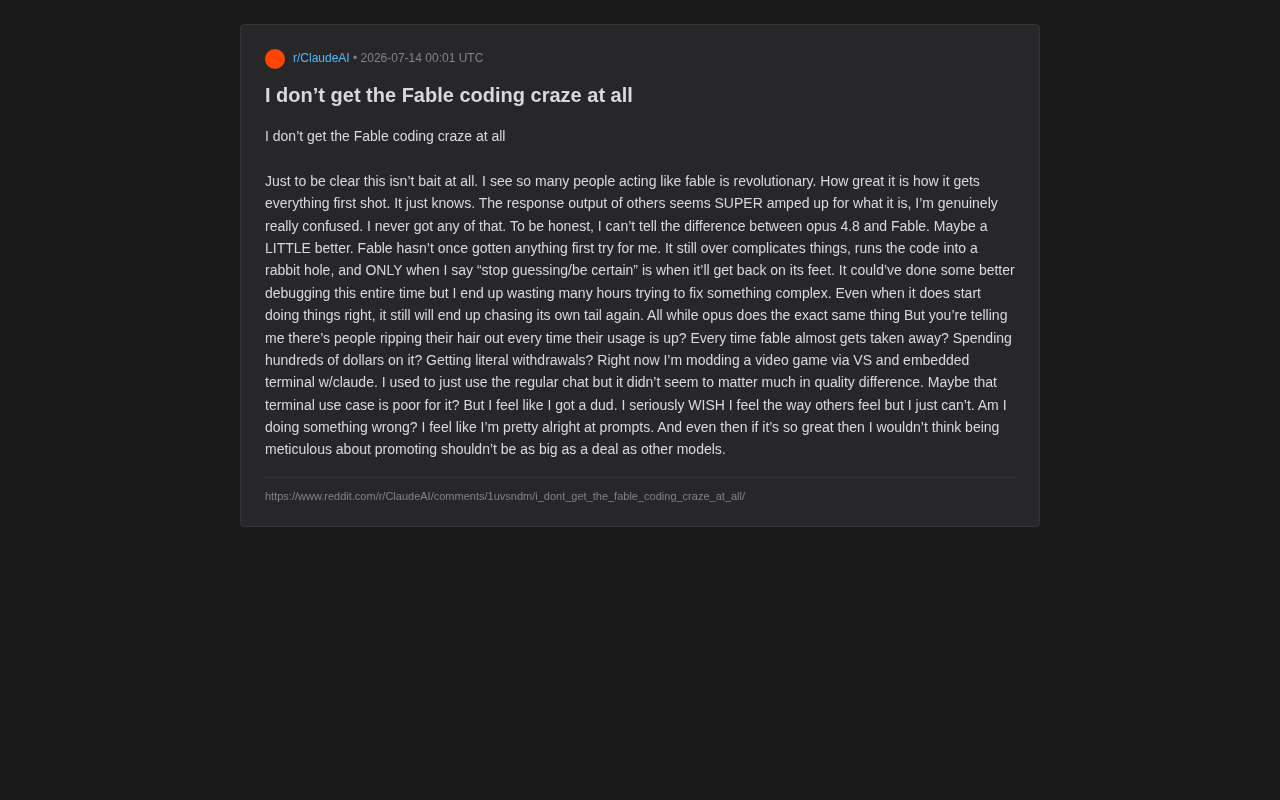
Recently, the AI coding assistant Fable has sparked a frenzy in developer communities. Social media is flooded with praise: "one-shot success," "it just gets it," "a revolutionary experience." Some users report anxiety when their usage limits run out, others spend hundreds of dollars a month on it, and some describe withdrawal symptoms when they can't access it.
Yet not everyone has been swept up in this wave. A Reddit developer posted a calm, candid piece of skepticism that quickly sparked widespread discussion. He put it plainly: "I just don't get the Fable coding hype." This wasn't trolling — it was a genuine expression of confusion. When the entire community is celebrating, why can't he feel the magic?
This question deserves serious attention, because it touches on a core contradiction that's pervasive in AI tool evaluation yet rarely discussed openly: the enormous gap between collective enthusiasm and individual real-world experience.
Background: The Technical Nature of AI Coding Assistants AI coding assistants are developer tools built on large language models (LLMs). They assist developers through natural language understanding and code generation. Leading products such as GitHub Copilot, Cursor, and Claude Code are all based on the Transformer architecture, obtaining deep understanding of programming language syntax, design patterns, and algorithmic logic through pre-training on massive codebases and documentation. Core capabilities include code completion, error diagnosis, natural language to code conversion, and multi-file context understanding. However, different products vary significantly in context window size, tool use capabilities, and system prompt design — all of which directly impact the actual user experience.
"I Can't Tell the Difference Between Fable and Opus"
This developer's core point is straightforward: in his actual usage, Fable hasn't demonstrated the legendary magical abilities everyone talks about.
"Honestly, I can barely tell the difference between Opus 4.8 and Fable — maybe it's slightly better. Fable has never gotten anything done for me in one shot."
Model Positioning: Where Does the Difference Between Opus and Fable Come From? The Opus 4.8 and Fable mentioned in the article are different versions or variants of Anthropic's Claude model family. Anthropic uses a tiered product strategy: Haiku is lightweight and fast, Sonnet balances performance and cost, and Opus is the flagship high-capability model. Fable can be understood as a version specifically optimized for coding scenarios — typically achieved through instruction fine-tuning or reinforcement learning from human feedback (RLHF), aimed at improving reasoning chain completeness and instruction-following precision on code tasks. However, domain-specific optimization doesn't guarantee universal improvement across all task types, and in certain areas (such as game mod development or terminal debugging workflows), it may actually underperform compared to the general base model.
His described problems are quite specific: Fable tends to overcomplicate simple problems, leads code into dead ends, and only gets back on track when he explicitly instructs it to "stop guessing / give me a definitive answer." Even more frustrating is that even when the model starts working correctly, it still "chases its own tail" — falling into a loop of repeated modifications with no meaningful progress.
This real-world experience stands in sharp contrast to the community's "one-shot" reputation. He admits he wasted substantial time fixing complex issues that should have been debugged correctly much earlier — precisely the kind of scenarios that a so-called "top AI coding model" should excel at.
The Differences in Use Cases Cannot Be Ignored
Notably, his specific workflow involves video game mod development using Claude via VS Code's embedded terminal. He raises a thought-provoking question:
"Maybe the terminal use case just isn't a good fit for it? I used to use the chat interface directly, but it didn't seem to make much of a difference in quality either."
Technical Detail: The Fundamental Differences Between IDE Integration and Context Management The three usage approaches mentioned — VS Code embedded terminal, IDE plugin, and pure chat interface — differ fundamentally at a technical level. IDE plugins (such as Cursor or Continue.dev) can directly read currently open files, project structure, Git history, and error logs, automatically injecting this information into the model's context. Pure chat interfaces or terminal integration, on the other hand, rely on users manually pasting code snippets, meaning context is often incomplete. The quality of the context window directly determines the quality of the model's output — which is why the same model can perform vastly differently across different integration environments. Furthermore, LSP (Language Server Protocol) integration can provide the model with real-time type information and semantic analysis — capabilities that are entirely absent in terminal scenarios.
This detail points to a critical variable in AI coding tool evaluation: different integration methods and usage scenarios can lead to dramatically different experiences. Command-line/terminal integration, IDE plugins, and pure chat interfaces all differ significantly in context management, tool-calling capabilities, and interaction feedback. The same model running in different containers can perform worlds apart.
Was It My Mistake, or Is the Hype Overblown?
The most compelling part of this post is the author's self-examination. Rather than simply blaming the tool, he repeatedly questions whether he did something wrong:
"Am I doing something wrong? I think my prompt writing is reasonably good. And stepping back — if it really is that powerful, then carefully crafting prompts shouldn't matter as much as it does with other models."
This logic is quite sharp, exposing an internal contradiction: if an AI coding tool truly "gets everything" and can "nail it in one shot," users shouldn't need to carefully polish their prompts. If refined prompt engineering remains a prerequisite for good results, then claims of a "revolutionary breakthrough" deserve a question mark.
He also expresses genuine regret — "I sincerely wish I could feel what everyone else is feeling, but I just can't." This isn't sour grapes. It's the loneliness and confusion of a serious user facing collective mania.
Three Psychological Mechanisms Behind the Hype
From this case, we can draw several deeper observations about AI tool hype cycles.
Survivorship Bias and Screenshot Culture
What gets amplified on social media is always the success stories. When someone gets a stunning result, they excitedly share screenshots. When someone experiences the frustration of a model "chasing its own tail," they quietly close the window and don't post about it. This survivorship bias creates a collective illusion: it seems as though everyone is having magical experiences.
Conceptual Background: The Cognitive Science Roots of Survivorship Bias Survivorship bias (Survivorship Bias) was first systematically articulated by statistician Abraham Wald during World War II when analyzing aircraft bullet hole patterns, and has since been widely applied in cognitive science. In the context of AI tool evaluation, this bias is further amplified by social media algorithms: recommendation systems tend to surface content with high engagement and strong emotional valence, and a screenshot of "AI completing a complex feature in one shot" is naturally more shareable than "AI had me going in circles for two hours." Developer communities on Reddit, Twitter/X, and YouTube have developed a special demo culture — carefully selected demonstration scenarios and optimal results are presented as everyday experiences, creating a systemic gap with the actual experiences of ordinary users.
Cognitive Dissonance and Investment Self-Reinforcement
After users have invested hundreds of dollars and significant time, cognitive dissonance sets in — admitting the tool is "actually mediocre" means admitting the investment wasn't worth it. So people tend to reinforce the belief that "it's great." The so-called "withdrawal symptoms" and usage anxiety are, to some extent, outward expressions of this psychological investment.
Theoretical Extension: Festinger's Cognitive Dissonance Theory in Consumer Behavior Cognitive dissonance was proposed by psychologist Leon Festinger in 1957, referring to the psychological discomfort experienced when an individual simultaneously holds contradictory cognitions, and the mechanism by which beliefs are actively adjusted to eliminate that discomfort. This mechanism is particularly pronounced in AI tool consumption: once users pay hundreds of dollars per month for a tool, admitting it performs ordinarily triggers intense cognitive dissonance — because it implies they made an irrational purchasing decision. To maintain a consistent self-image, users unconsciously amplify positive experiences, downplay negative ones, and may even attribute the tool's limitations to their own misuse. This psychological mechanism creates a systemic positive bias in user reviews of expensive tools, making it a difficult-to-eliminate source of noise in AI tool reputation analysis.
The Hidden Skill Threshold of Prompt Engineering
The effectiveness of AI coding is highly dependent on task decomposition, context provision, and iteration strategy. The differences in users' "prompt crafting skills" may be far greater than they realize. The "one-shot successes" some users report often involve long-accumulated tacit knowledge — a skill threshold that rarely gets acknowledged when people share their success stories.
Deep Dive: Skill Levels and Tacit Knowledge in Prompt Engineering Prompt engineering as an emerging field has gradually developed a more systematic methodology, encompassing techniques such as chain-of-thought prompting, few-shot prompting, role prompting, and constraint injection. However, these techniques spread very unevenly across developer communities. Research suggests that the output quality gap between top-tier prompt users and average users working with the same model can be several times over. More importantly, high-level users have typically internalized these techniques as intuitive habits, and when sharing success stories, they generally don't explicitly explain which prompt strategies they applied — creating a false impression that "the model is magical and anyone can use it," while actually concealing a significant skill threshold.
Four Recommendations for Rational Use of AI Coding Tools
This skeptical post offers practical insights for all AI tool users:
First, trust your own real experience over community noise. If a heavily hyped tool performs mediocrely in your actual workflow, it isn't necessarily your fault — it may be a mismatch between your use case and the tool, or simply overhyped marketing.
Second, pay close attention to scenario fit. As the author suspected regarding the terminal scenario, the same model can perform very differently across different integration methods. Before drawing conclusions, it's worth trying multiple access approaches: from pure chat interfaces to deep IDE integration, each method corresponds to fundamentally different levels of context quality and tool-calling capability.
Third, be wary of how group emotion can hijack your judgment. When a tool generates "withdrawal-level" fervor, that's precisely the moment when staying clear-headed matters most. AI tool evaluation should be based on reproducible, real-world results — not collective emotion.
Fourth, AI coding still requires deep human involvement. No matter how advanced the model, actively correcting errors, understanding code logic, and maintaining overall direction remain indispensable. True efficiency isn't about handing everything to the model — it's about knowing how to collaborate with it at a high level.
Closing: Demystifying Technology Is a Form of Clarity
This developer's confusion is, at its core, an act of demystification — stripping away the mythology around a technology. In an era where AI tools evolve rapidly and marketing buzzwords multiply endlessly, maintaining the honest humility of "I just don't feel it — is something wrong?" is actually a rare form of rationality.
The value of technology must ultimately be proven in real production environments, not in the applause of social media. Every voice willing to say "the emperor might not be wearing any clothes" helps the entire developer community build a healthier, more pragmatic culture of AI tool evaluation.
Key Takeaways
Related articles
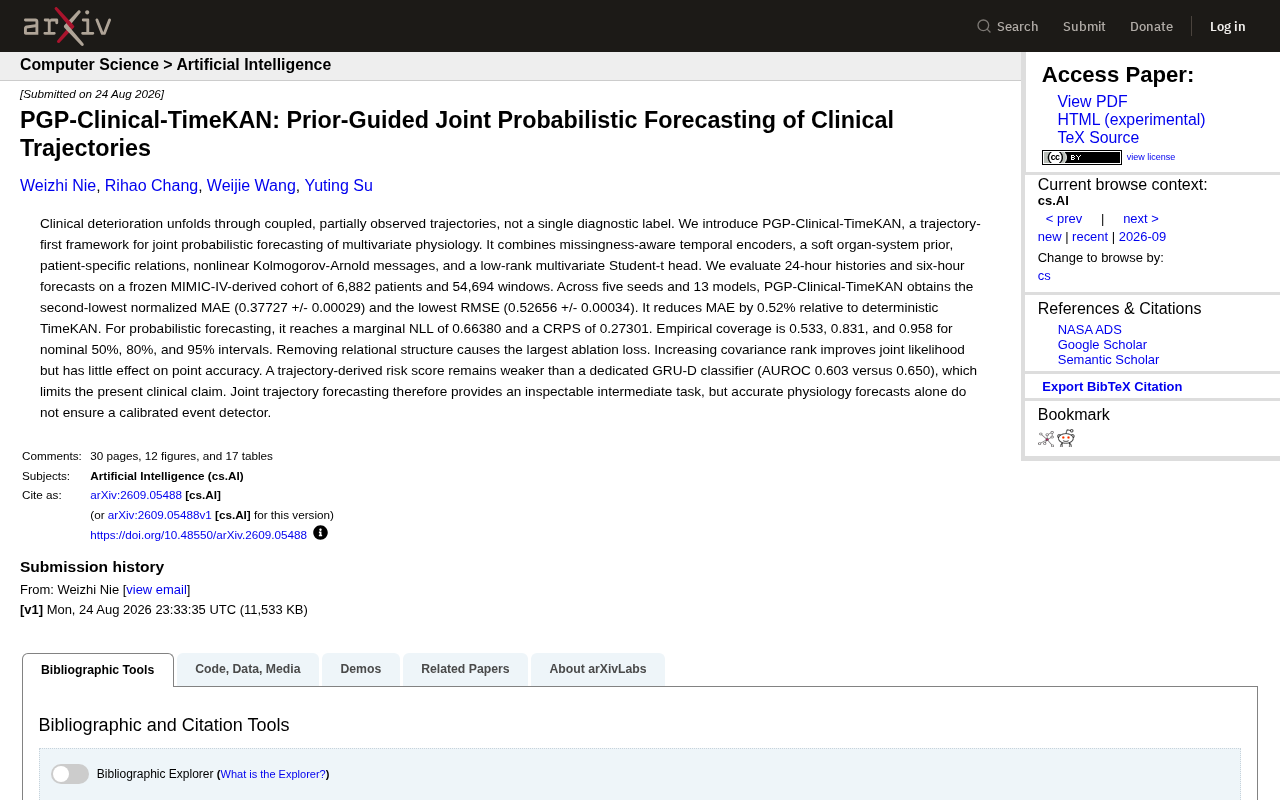
PGP-Clinical-TimeKAN: A Detailed Guide to the Multivariate Physiological Indicator Joint Prediction Framework
An in-depth analysis of the PGP-Clinical-TimeKAN framework for joint probabilistic prediction of multivariate physiological indicators, covering trajectory-first paradigm, KAN message passing, MIMIC-IV validation, and ablation studies.
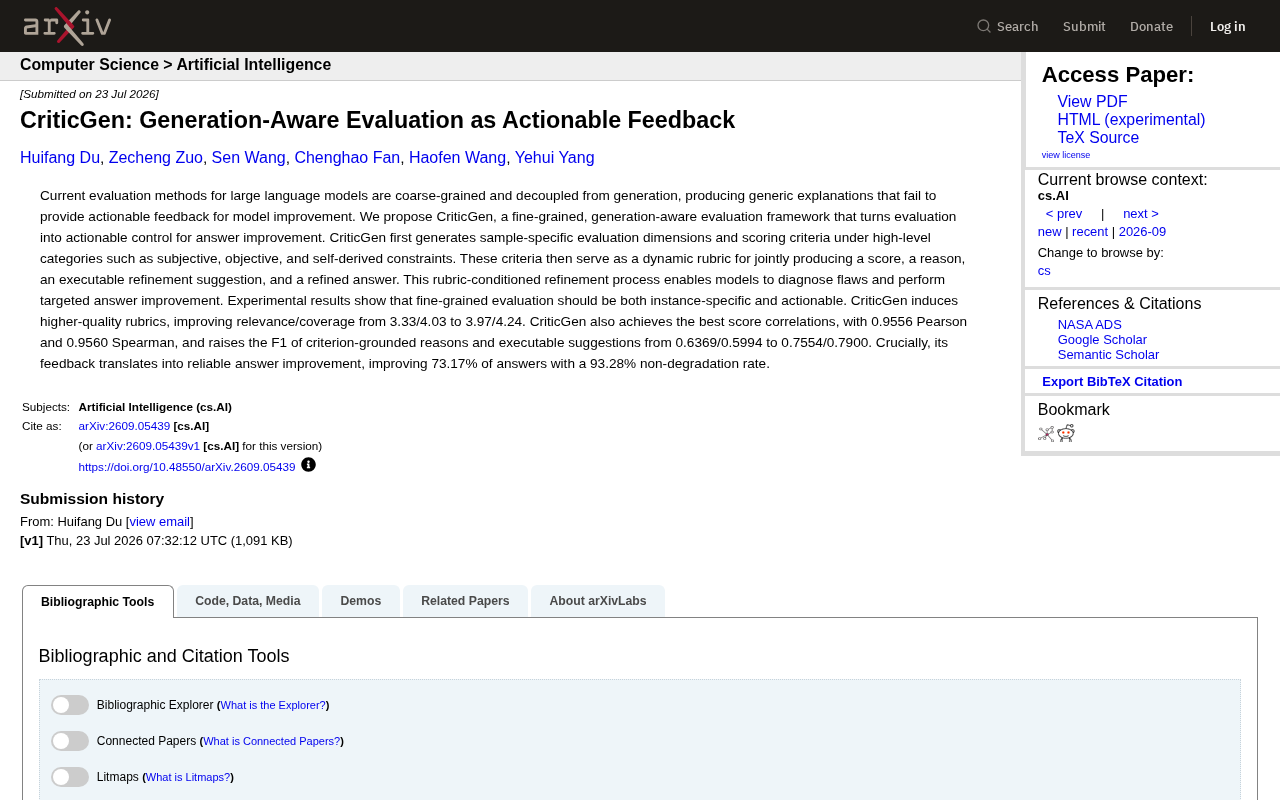
CriticGen: A New Framework That Transforms AI Evaluation into Actionable Improvement Feedback
CriticGen proposes a generation-aware evaluation framework that transforms AI assessment from passive scoring to an active optimization loop, achieving 73.17% answer improvement and 93.28% non-degradation rate.
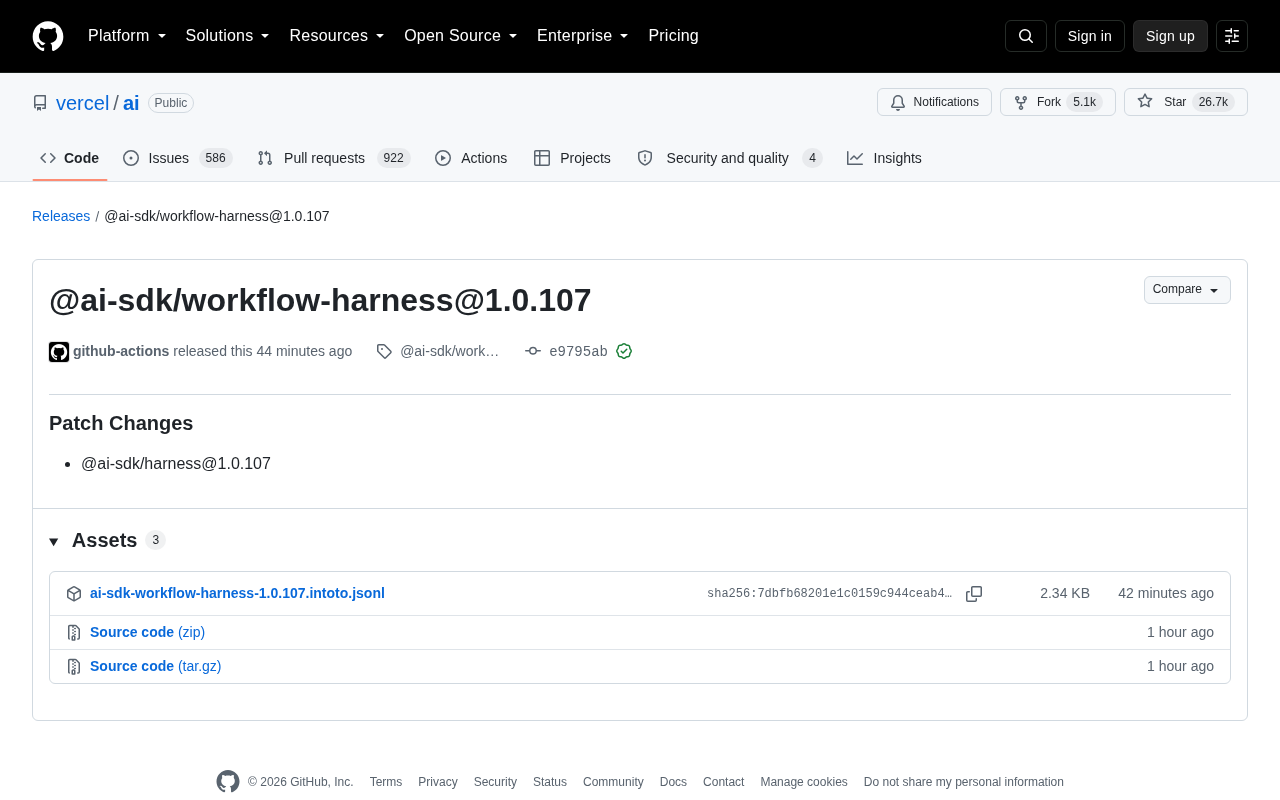
Vercel AI SDK workflow-harness Update Analysis
Deep analysis of Vercel AI SDK workflow-harness 1.0.107 update: architecture design, engineering practices, and developer value for building reliable AI apps.