The Real Risks of Third-Party ChatGPT Top-Up Services: Don't Let a Bargain Cost You Your Account

Third-party ChatGPT top-ups look cheap but carry real account ban and fraud risks — here's why.
Third-party ChatGPT top-up services exploit Apple's IAP system to undercut official pricing, but they expose users to account bans via chargebacks, credential theft, and unpredictable service outages. This article breaks down how these gray-market operations work, compares the real risks across three subscription methods, and outlines the safest paths to a legitimate ChatGPT subscription.
Those "Done in 2 Minutes" ChatGPT Top-Up Tutorials — What Are They Actually Saying?
Recently, a wave of tutorials claiming to help you "set up ChatGPT Plus/Pro in 2 minutes" has flooded certain video platforms. These videos typically market themselves with promises like "activate your membership with Alipay," "cheaper than the official price," and "fully automated delivery with after-sales support" — attracting many users eager to access GPT's advanced models.
But what's actually going on behind these third-party top-up services? What risks are lurking beneath the surface? And what's the genuinely safe way to subscribe? This article doesn't recommend any third-party top-up platform — it simply helps you understand how this business works and where the traps are.
How Third-Party Top-Up Services Actually Work
Based on how these tutorials describe the process, the typical flow for so-called "self-service top-up on a third-party website" goes like this: you purchase a "card key" on a third-party site, use it to obtain a "top-up code," paste the code into the payment page and submit, and within about 10 seconds a "top-up successful" message appears — refresh the ChatGPT website and your account shows as Plus.
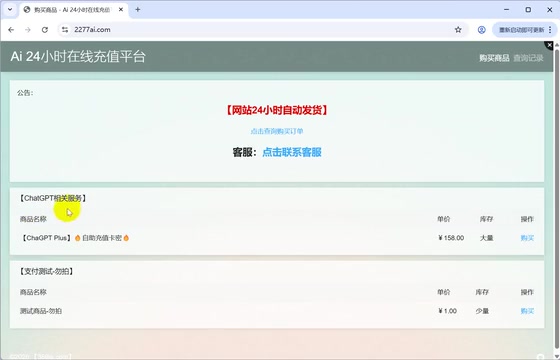
The core of this process exploits Apple's iOS In-App Purchase (IAP) mechanism for "fully automated top-ups." The tutorials even state outright that their "core relies on using iOS for fully automated charging."
Apple's IAP system is a closed-loop payment ecosystem built by Apple. Developers integrate via Apple's StoreKit framework, all transactions are processed through the App Store, and Apple takes a 15–30% cut. Originally designed to provide users with a safe and convenient in-app purchase experience, the system's design characteristics have been exploited by gray-market operators: as long as you have a valid Apple ID and a corresponding regional payment method (gift card or linked credit card), you can complete a subscription. There are certain gaps in Apple's enforcement around regional attribution and account ownership. Top-up platforms typically bulk-purchase foreign Apple gift cards or use shared Apple IDs to complete IAP charges, then resell access at prices below the official rate. Because the entire process bypasses OpenAI's own payment system, OpenAI has limited ability to trace or flag such subscriptions — but the moment Apple issues a refund or flags an account anomaly, the subscription is immediately revoked.
In plain terms: these services pay your subscription fee using bulk foreign Apple IDs, gift cards, or certain payment loopholes, and pocket the difference.
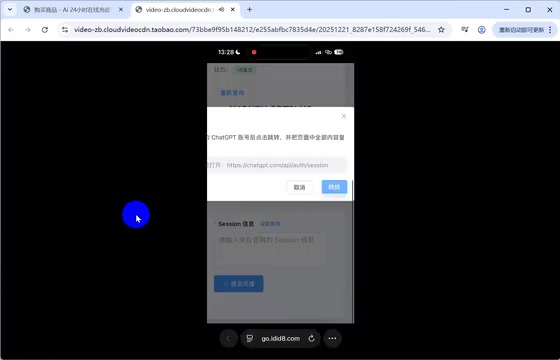
The so-called "¥158 for Plus" may seem cheaper than the official $20/month (roughly ¥140+), but it comes with substantial uncertainty — you have no idea what payment channel is being used, and no way to confirm the subscription will remain valid.
A Side-by-Side Comparison of Three Top-Up Methods
OpenAI currently offers multiple subscription tiers for individual users: ChatGPT Plus at $20/month, offering priority access to GPT-4o, higher message rate limits, and select advanced features; and ChatGPT Pro, launched in late 2024 at $200/month, targeting heavy professional users with unlimited access to advanced models and o1 pro mode. In RMB terms, the Plus monthly fee is approximately ¥145–150 (subject to exchange rate fluctuations) — meaning the advertised "¥158" top-up price is not nearly as much of a bargain as claimed, and once you factor in account risk and service interruption probability, the real value is far below a direct subscription.
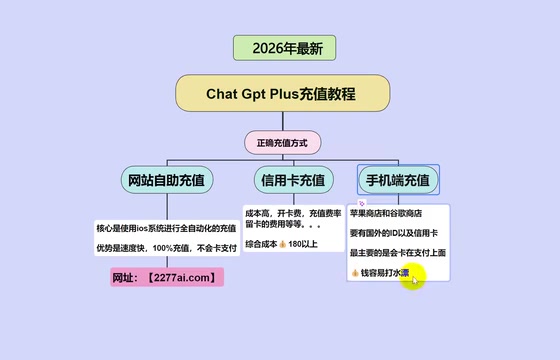
The tutorials describe three common top-up methods. Breaking down the true costs and risks of each helps you make a more informed decision.
Direct Credit Card Subscription
This is the method closest to the official path. You link a credit card that supports foreign currency payments and subscribe directly on the OpenAI website. OpenAI subscriptions are managed via account.openai.com and support major international cards like Visa and Mastercard, as well as PayPal in some regions — but currently do not support bank cards issued in mainland China. This method is the most legitimate, with the highest level of account security. The only barrier is having a Visa or Mastercard capable of international payments and a network environment that can access OpenAI services.
Subscribing via App Store / Google Play
This means activating a membership through in-app purchases on Apple's App Store or Google Play. Tutorials note that this method has a "high cost," involving card issuance fees, top-up fees, and card maintenance, with all-in costs often exceeding ¥180. It also requires a foreign Apple ID or Google account paired with a credit card or gift card. More critically, "payment can easily get stuck," creating a real risk of losing your money with nothing to show for it.
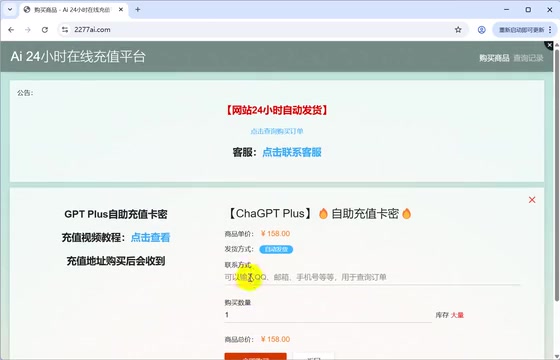
Third-Party Top-Up Services
This is the method these tutorials primarily promote, advertised as discounted, auto-delivered, and backed by after-sales support. But the operation depends on bulk accounts and unverifiable payment methods — the risks are far more complex than they appear on the surface.
The Real Risks Behind Third-Party Top-Ups
Despite repeated assurances of "100% successful top-up," "after-sales included," and "no risk of bans," third-party top-up services carry several unavoidable problems.
Risk of account suspension. Like most international SaaS providers, OpenAI has built a multi-layered fraud detection system on top of payment processors like Stripe. Risk controls cover factors including the geographic consistency of IP addresses, the match between the card issuer's country and account registration details, the frequency of subscriptions from a single payment instrument, and unusual account behavior patterns. Activating a membership through someone else's payment or a bulk proxy payment can trigger these systems once flagged as a fraudulent transaction.
Even more critical is the chargeback mechanism: when the cardholder whose card was used by the top-up platform disputes the transaction with their bank, OpenAI receives a reversal notification from its payment processor and revokes the corresponding account's membership — even if the end user had no idea the dispute was filed. "After-sales support" typically only means they'll re-issue the top-up; it offers no real protection for your account, and you have zero control over whether your membership continues to exist.
Risk of account and payment credential exposure. Some top-up services require you to hand over your account credentials so they can "operate on your behalf" — meaning you're giving control of your account to a stranger, creating the risk of theft or unauthorized use.
Service can vanish at any time. Gray-market channels are always at risk of having their payment pipelines shut down or the platform disappearing overnight. The "membership" you paid for today could quietly disappear next month when the subscription source goes dead.
Almost no recourse if things go wrong. Since the transaction occurs outside any regulatory framework, users have virtually no effective way to resolve disputes.
Safer Ways to Subscribe to ChatGPT
For users who genuinely need access, the following paths are worth prioritizing:
- Always try the official subscription channel first. Using a foreign credit card in your own name to subscribe directly on the OpenAI website is currently the only method that guarantees long-term account stability.
- Use the official API on a pay-as-you-go basis. For users who can't easily make international payments, OpenAI's official API with usage-based billing is a compliant alternative worth considering. API usage is metered in tokens (a token can be roughly understood as a word fragment; GPT-4o processes Chinese at approximately 1.5–2 tokens per character). Users can pre-load a balance on the official platform and pay only for what they consume — no monthly commitment, and no reliance on any third-party intermediary.
- Consider domestic compliant alternatives. Several Chinese large language model products now offer capabilities comparable to GPT within a compliant regulatory framework, including Baidu ERNIE, Alibaba Tongyi, iFLYTEK Spark, Moonshot AI Kimi, and Zhipu ChatGLM. These products support local payment methods like Alipay and WeChat Pay, are subject to domestic regulatory oversight, and offer some assurance of compliant data handling. For everyday tasks like office work and writing assistance, they already meet most needs.
- Stay alert to suspiciously low prices. Any channel offering prices obviously below the official rate while emphasizing "automatic delivery" and "Alipay direct payment" deserves extra scrutiny — the savings on the difference could easily come at the cost of your account and financial security.
Closing Thoughts
The gray-market ecosystem that has formed around ChatGPT subscriptions fundamentally exploits the reality that many mainland Chinese users face inconvenient payment options and information asymmetry. These "done in 2 minutes" tutorials may appear to solve a real pain point, but they quietly transfer the risk onto ordinary users.
The value of a technical tool lies in serving your work and learning reliably over the long term — not in creating hidden hazards for the sake of short-term convenience. Choosing official channels takes more effort, but it's the most basic way to protect your account and your data. When faced with the endless parade of top-up ads, staying rational and holding the line is the real prerequisite for making good use of AI tools.
Related articles

PGP-Clinical-TimeKAN: A Detailed Guide to the Multivariate Physiological Indicator Joint Prediction Framework
An in-depth analysis of the PGP-Clinical-TimeKAN framework for joint probabilistic prediction of multivariate physiological indicators, covering trajectory-first paradigm, KAN message passing, MIMIC-IV validation, and ablation studies.
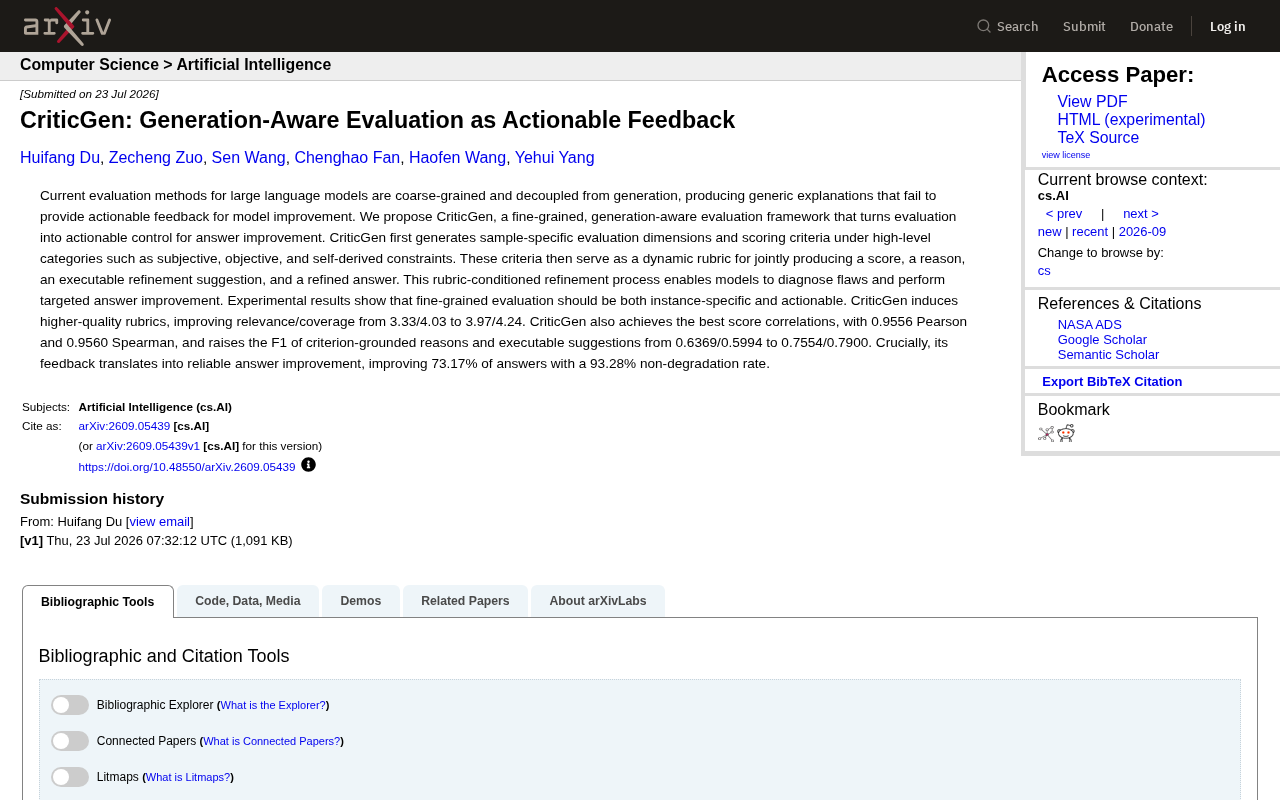
CriticGen: A New Framework That Transforms AI Evaluation into Actionable Improvement Feedback
CriticGen proposes a generation-aware evaluation framework that transforms AI assessment from passive scoring to an active optimization loop, achieving 73.17% answer improvement and 93.28% non-degradation rate.
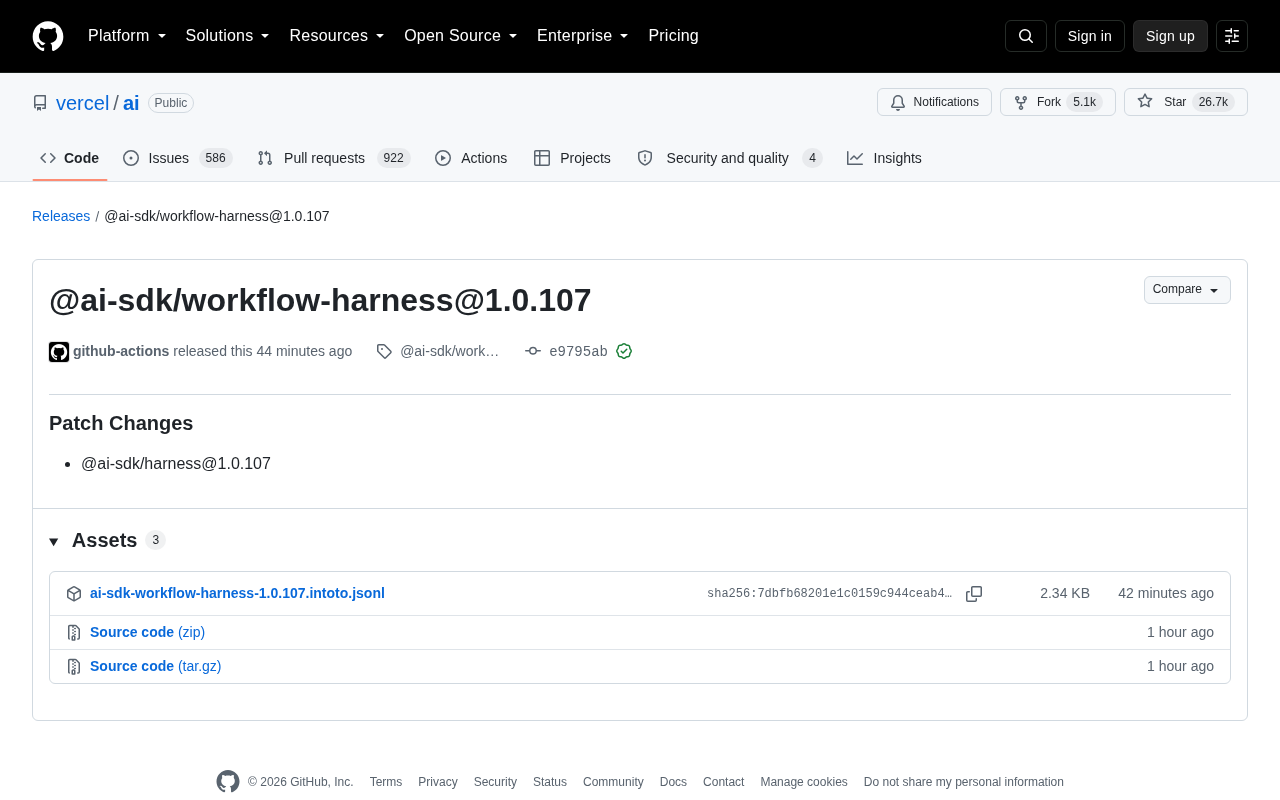
Vercel AI SDK workflow-harness Update Analysis
Deep analysis of Vercel AI SDK workflow-harness 1.0.107 update: architecture design, engineering practices, and developer value for building reliable AI apps.