The Rise of AI Coding Agents: Who Takes Responsibility for the Code?

AI coding tools have evolved into autonomous agents, but there is still no consensus on who bears responsibility for the code.
The article traces the shift of AI coding tools from auto-completion to intelligent agents capable of exploring projects, resolving dependencies, making batch edits, running tests, and self-repairing. Yet greater capability doesn't mean greater reliability—AI-generated code may hide security flaws and logic errors, still requiring human review and decisions. This raises the core question: when an agent autonomously modifies files and commits changes, who is responsible—the developer, the tool provider, or the model? The article argues developers remain ultimately accountable, with their role shifting from writing code to reviewing it, making decisions, and taking responsibility.
AI coding tools are evolving from simple code completion into intelligent agents capable of autonomously executing development tasks. With a single instruction, an agent can explore an entire project, understand file relationships, formulate a plan, modify multiple files, and even run tests and fix errors. Tools like CloudCode, Cursor, and GitHub Copilot have moved beyond auto-completion to become AI agents that can actually carry out development tasks. But behind this lies a critical question: when AI writes code, who bears the responsibility?

From Assistant to Agent: The Qualitative Shift in AI Coding Tools
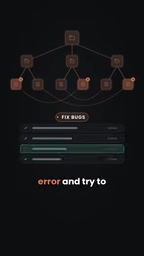
In the past, AI coding assistants simply suggested the next line while you typed. Today, they are starting to work like genuine development partners. When you give an instruction, the AI agent proactively explores your project structure, reads relevant files, works out the dependencies between modules, and then formulates a modification plan. Next, it changes multiple files at once and runs tests to verify its own changes. If tests fail, it can read the error messages and attempt to fix them on its own. This capability turns AI from "helping you write a single line of code" into "completing development tasks for you."
What Is an "AI Agent"
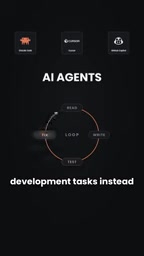
In the AI context, an agent refers to a large-model system that can autonomously plan around a goal, invoke tools, and iterate on execution—rather than merely responding passively to single-step prompts. A typical agent loop includes: observing the environment (reading files, running commands), reasoning (analyzing dependencies and causes of errors), acting (modifying files, running tests), and then continuing to adjust based on the results. Compared with auto-completion, the key difference of an agent is that it chains multi-step decisions into a closed loop, advancing tasks without step-by-step human direction.
Applied to programming, this capability forms a "coding agent": it is granted read-write access to the codebase and terminal capabilities, and can search files, formulate modification plans, make batch changes, and verify them. The agent modes of CloudCode, Cursor, and GitHub Copilot all fall into this category. And precisely because it can act autonomously, the scope of permissions, rollback capability, and review checkpoints become engineering concerns that must be designed for.
Capability and Risk Coexist: Is AI-Generated Code Reliable?
AI can write code and run tests, but that doesn't mean everything it produces is secure and production-ready. The original article explicitly points out that AI-generated code may hide security vulnerabilities or logic flaws, and human developers are ultimately still needed to understand the code, review changes, and make key decisions. AI may be taking over the coding process, but responsibility for the final product becomes blurred.
Why "Passing Tests" Doesn't Equal "Production-Ready"
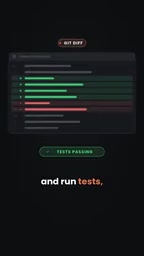
Passing tests only shows that the code behaves as expected within the scope covered by existing test cases; it does not prove it is safe or correct. Common blind spots include: inadequate test coverage, where AI-generated implementations may bypass edge cases; dependencies or configurations being quietly changed, introducing supply chain risks; non-functional requirements such as error handling, concurrency, and permission checks that are hard for unit tests to capture; and AI potentially modifying tests rather than fixing logic just to make tests go green.
Therefore, before AI-generated code enters production, it typically still requires static analysis, security scanning, dependency auditing, and human code review. This explains the original article's judgment: agents can accelerate coding and verification, but the determination of "production-readiness" must still be made by human developers who understand the business and the risks.
Who Takes Responsibility: Who Is Accountable for AI's Code?
When an AI agent autonomously modifies multiple files and commits changes, who bears responsibility if something goes wrong? Is it the developer who wrote the initial instruction, the company providing the AI tool, or the AI model itself? The original article raises this sharp question: AI may be taking over the coding process, but who is taking responsibility? For the final product, are you willing to entrust your entire codebase to an AI agent?
There is no simple answer to this question. From a practical standpoint, the developer is still ultimately responsible—after all, you accepted the AI's changes and merged the code. But should tool providers bear partial responsibility for AI's mistakes? Currently there is no industry consensus.
Open Source Licenses and Compliance Issues of AI-Generated Code
Beyond accountability after errors occur, the responsibility issue also involves the compliance of code provenance. AI models have encountered vast amounts of open source code during training, and their outputs may closely resemble existing code, thereby implicating license obligations (such as attribution and open source copyleft) or even copyright disputes. Most tool providers currently transfer the rights and responsibilities of output code to users in their terms of service, and require users to ensure compliance themselves.
This means that teams adopting AI-generated code often need additional license scanning and provenance review processes. The unclear boundary of responsibility is not just a question of "who takes the blame," but also concerns the allocation of legal and compliance risks—one of the reasons the industry has struggled to form unified consensus.
A New Balance in Human-AI Collaboration
The capabilities of AI coding agents are genuinely exciting, but they are currently better suited as a "super assistant" rather than a "replacement." Developers need to maintain their ability to understand and review code, and must not relax control over security and production-readiness just because AI can run tests. In the era of AI agents, the human role shifts from "writing code" to "reviewing code, making decisions, and taking responsibility." Only by clearly defining the boundaries of responsibility can AI coding tools truly unleash productivity.
For teams, establishing review processes for AI-generated code and clarifying accountability is more important than merely pursuing AI coding speed. After all, code can be generated automatically, but responsibility cannot be transferred automatically.
One-line Summary
AI coding tools have evolved into autonomous agents, but there is still no consensus on who bears responsibility for the code.
Paragraph Summary
The article traces the qualitative shift of AI coding tools from auto-completion to intelligent agents: a single instruction can explore project structure, clarify dependencies, make batch file modifications, run tests, and self-repair. But increased capability does not equal increased reliability—AI-generated code may hide security vulnerabilities and logic flaws, and still requires human understanding, review, and decision-making. This leads to the core question: when an agent autonomously modifies multiple files and commits changes, should responsibility fall on the developer, the tool provider, or the model? The article argues that developers remain ultimately responsible, with their role shifting from writing code to reviewing code, making decisions, and taking responsibility. Teams should establish review processes and clarify responsibility boundaries so that AI can unleash productivity as a super assistant rather than a replacement.
Related articles

Building an AI Agent with Claude Code from Scratch: From Workspace to Cloud Autonomy
No coding required: build an AI Agent in four steps with the Claude Code desktop app—from workspace setup and Agent Designer to Skills, Memory, and cloud autonomy.

No Python Required: How Cursor AI Coding Is Reshaping Automated Testing and Test Development
Test engineers can do automated testing without learning Python? This article examines how Cursor and other AI coding tools empower functional testing, automation scripts, test platform development, and performance tuning, compares the cost and access restrictions of mainstream domestic and foreign tools, and offers capability transformation advice for testers.

Nearly 5,000 Affected! AI Coding Plugin Found with Backdoor, Officials Urgently Remove It
Claude Code's VS Code extension version 2.1.313 was maliciously tampered with, implanting a backdoor for remote login and persistent control, potentially affecting up to 5,000 users. Officials have removed the malicious version; this article details the attack method and cleanup steps.