The Technical Reality of Sports Betting Prediction Models: How Developers Should Rationally Evaluate Collaboration Opportunities

A technical deep-dive into sports betting prediction models and what developers should know before signing on.
A Reddit job post recruiting developers for an MLB betting prediction model serves as the jumping-off point for this analysis of sports betting systems. The article covers the math behind the vig, market efficiency research, why MLB is popular for quantitative modeling, and the practical risks — including unclear IP, vague compensation, and overfitting — that developers must carefully evaluate before committing to such projects.
A Reddit Job Post That Got People Thinking
A job post on Reddit recently sparked considerable discussion among data science professionals. The poster claimed to have a "data-driven prediction model" framework built around MLB (Major League Baseball), asserting that it possessed a genuine "edge," and was publicly recruiting developers or data scientists with predictive modeling experience to bring it to life.
This kind of request is hardly unusual in the data science community, but it reflects a topic worth exploring in depth: Are sports betting prediction models actually viable? To what extent can technology beat the market? This article breaks down the real picture of such projects from a technical standpoint, helping interested developers make informed decisions.
What the Post Is Really Asking For
Looking at the original post, the author is notably careful in their phrasing:
- Claims the "framework, logic, and core variables" are already mapped out — only the technical implementation is missing;
- Emphasizes this is not a "casual project" and expects applicants to take it seriously;
- Declines to share details publicly for confidentiality reasons, directing interested parties to DM;
- Asks applicants to provide proof of past work, such as GitHub links, model output screenshots, or historical performance records.
Notably, the poster explicitly states the text was "written with AI to ensure clarity" — a small but telling sign of how rapidly generative AI is being adopted in everyday communication.
The Technical Reality Behind Prediction Models
Where Does the "Edge" Come From?
The core challenge in sports betting prediction isn't predicting game outcomes per se — it's beating the odds set by the sportsbooks. Modern sportsbooks are backed by professional quant teams and sophisticated pricing models. Their odds already embed the sportsbook's take, known as the vig, which typically runs around 4% to 5%.
To understand the math behind the vig: at standard American odds of -110, a bettor must wager $110 to win $100. This implies a break-even win rate of approximately 52.38%, not the theoretical 50%. In other words, a bettor needs to sustain a long-term win rate above 52.38% just to break even — and in a near-efficient market, that threshold is extremely difficult to clear consistently. If a market carries a 5% vig, a random guesser can expect to lose roughly 5% annually — comparable to holding a high-fee mutual fund. But if a bettor can establish even a 1–2% stable edge, the long-term returns can be substantial. That's precisely why top sports hedge funds and professional betting syndicates invest heavily in quantitative models: they're chasing those small but persistent statistical advantages measured in basis points.
This means a prediction model must not only outperform random guessing, but do so by enough to cover the vig and still return a profit — a statistically very high bar.
Academic research on betting market efficiency spans decades. The Efficient Market Hypothesis (EMH), first proposed by Eugene Fama in 1970 to describe how prices in financial markets fully reflect all available information, has a parallel framework in betting markets. If a market is weak-form efficient, historical odds data can't help predict the future. If it's semi-strong-form efficient, all publicly available information — player injuries, historical records, weather — is already priced in. Multiple empirical studies, including research by Vaughan Williams and Paton published in 1997, suggest that mainstream sports betting markets are close to semi-strong-form efficient in most cases, and that professional bookmakers' odds are often better probability estimators than statistical models. This is why academia broadly holds that the scope for sustained, consistent profit is extremely limited.
Why MLB Is a Popular Choice
The poster's choice of MLB is no accident. Baseball has several characteristics that make it a popular target for quantitative modeling:
- Data richness: MLB has extremely detailed historical data. The Statcast system records a massive range of metrics including pitch velocity, launch angle, and spin rate;
- Large sample size: A regular season runs 162 games, far more than the NFL's 17, making statistical patterns easier to surface;
- Relatively independent at-bats: Each pitcher-batter matchup can be treated as a relatively independent event, making it amenable to probabilistic modeling.
Statcast is MLB's ballpark tracking system, fully deployed in 2015, comprising radar and optical cameras that capture over 100,000 data points per second — covering dozens of detailed metrics including Exit Velocity, Launch Angle, Barrel Rate, and Spin Rate. This system forms the technical foundation for Sabermetrics, a tradition of baseball statistical analysis that traces back to Bill James's work in the 1970s and became widely known through Michael Lewis's book Moneyball (2003). Today, Statcast data is freely available to the public through platforms like Baseball Savant. While this dramatically lowers the barrier to modeling, it also means every competitor is working from the same raw dataset. That's the other side of the coin: market participants have already thoroughly mined this data, and whether any "underexplored analytical framework" genuinely exists is a question worth scrutinizing.
Rational Advice for Prospective Applicants
Be Wary of the "Concept Holder" Collaboration Model
The typical structure of these job posts is: one party holds the "core concept" but refuses to disclose details, while the other provides all the technical labor. For developers, this carries clear potential risks:
- Unclear IP ownership: Without an explicit contract, who owns the model code you build?
- Vague compensation terms: The post mentions no salary or equity arrangement — "opportunity" is a promise that can't be quantified;
- The concept may lack substance: The so-called "already planned framework" might be nothing more than unverified intuition with no quantifiable statistical basis.
How to Assess the Real Value of a Betting Prediction Model
If you're genuinely considering getting involved in such a project, the professional approach is to insist on the following:
- Demand backtesting data: Any strategy claiming an "edge" should be demonstrable via out-of-sample backtesting on historical data, with a performance curve shown net of vig;
- Focus on Sharpe ratio and maximum drawdown: Win rate alone is meaningless — you need to evaluate risk-adjusted returns;
- Clarify the collaboration terms: Before investing any substantial work, sign a written agreement covering compensation, IP ownership, and confidentiality obligations;
- Insist on out-of-sample validation: Be highly alert to overfitting — a model that looks perfect on historical data often fails completely in live betting.
Overfitting is the most common and most fatal trap in predictive modeling, and it's especially pronounced in betting models. When a model over-learns noise and coincidental patterns in the training data rather than true underlying signals, overfitting occurs. In finance and betting, there's an even more dangerous variant: Data Snooping Bias, where a researcher repeatedly tests different parameter combinations on the same dataset until they inevitably "find" a strategy that looks great — but the outperformance is purely statistical coincidence. Proper validation requires strictly splitting data into training, validation, and out-of-sample test sets, with out-of-sample testing conducted only after the model is finalized, with no going back to make adjustments. For betting models, true out-of-sample validation means Walk-Forward Testing with real money in a live market. No matter how impressive a historical backtest looks, it cannot serve as the final proof of a model's validity.
What This Job Post Reveals About Project Collaboration in the AI Era
AI Has Lowered the Bar for Expression — Not for Expertise
The poster's use of AI to polish their writing shows that generative AI has already seeped into everyday communication for ordinary people. Anyone can now use AI to produce a job post that reads as structured and professional. But this brings a concerning side effect: the professionalism of the writing and the actual professionalism of the project can diverge dramatically.
For technical professionals, evaluating a project opportunity should not be swayed by polished language. The focus should be on verifiable hard evidence — data, code, backtesting results, and clearly defined business terms.
Beyond Technology, Judgment Matters More
The technical difficulty of building a prediction model may be far lower than the business and legal judgment required to assess whether the project is "worth doing" in the first place. This Reddit post is a reminder that in an era where AI tools continue to lower the bar for expression, independent critical thinking is precisely the core capability that is hardest to replace in a data scientist.
Conclusion
Sports betting prediction models occupy a space that is technically fascinating but brutally unforgiving in practice. They sit at the intersection of statistics, machine learning, and financial game theory — yet those who achieve genuine, sustained profitability are exceptionally rare. When faced with a "I have the concept, you build it" style collaboration offer, developers should stay clear-headed: demand evidence before agreeing to collaborate; define the terms before writing a single line of code. Technology can bring many ideas to life, but it cannot conjure an "edge" that doesn't exist in the market.
Key Takeaways
Related articles

Alibaba Launches Happy Shrimp: AI-Powered One-Click Complete Song Generation
Alibaba launches Happy Shrimp, an AI music generation tool that creates complete songs with lyrics, melody, arrangement, and vocals from natural language descriptions. In-depth analysis of its core features, differentiation from competitors like Suno, and industry impact.
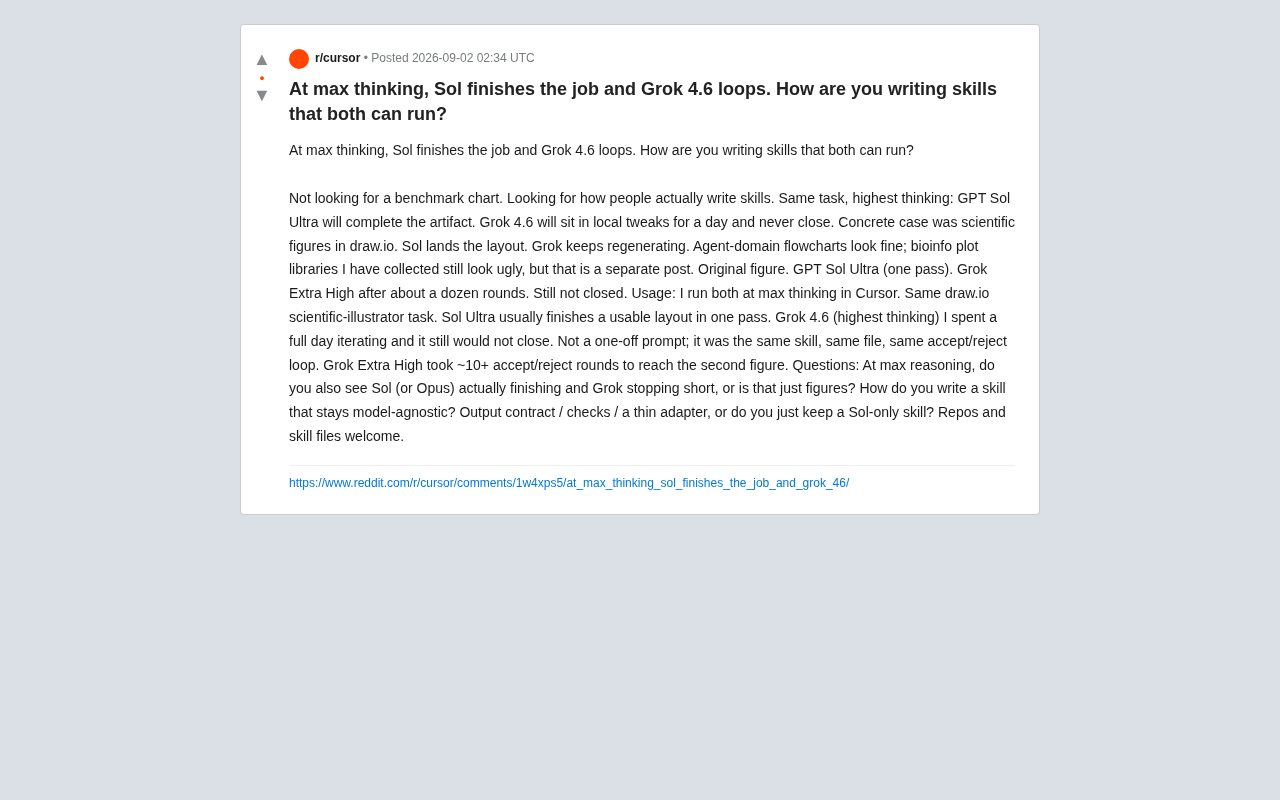
GPT Sol Ultra vs Grok 4.6: Real-World Task Completion Benchmark in Reasoning Mode
Developer benchmark reveals GPT Sol Ultra completes draw.io scientific diagrams in one iteration while Grok 4.6 fails to converge despite maximum reasoning mode, exposing that reasoning depth ≠ task delivery capability.
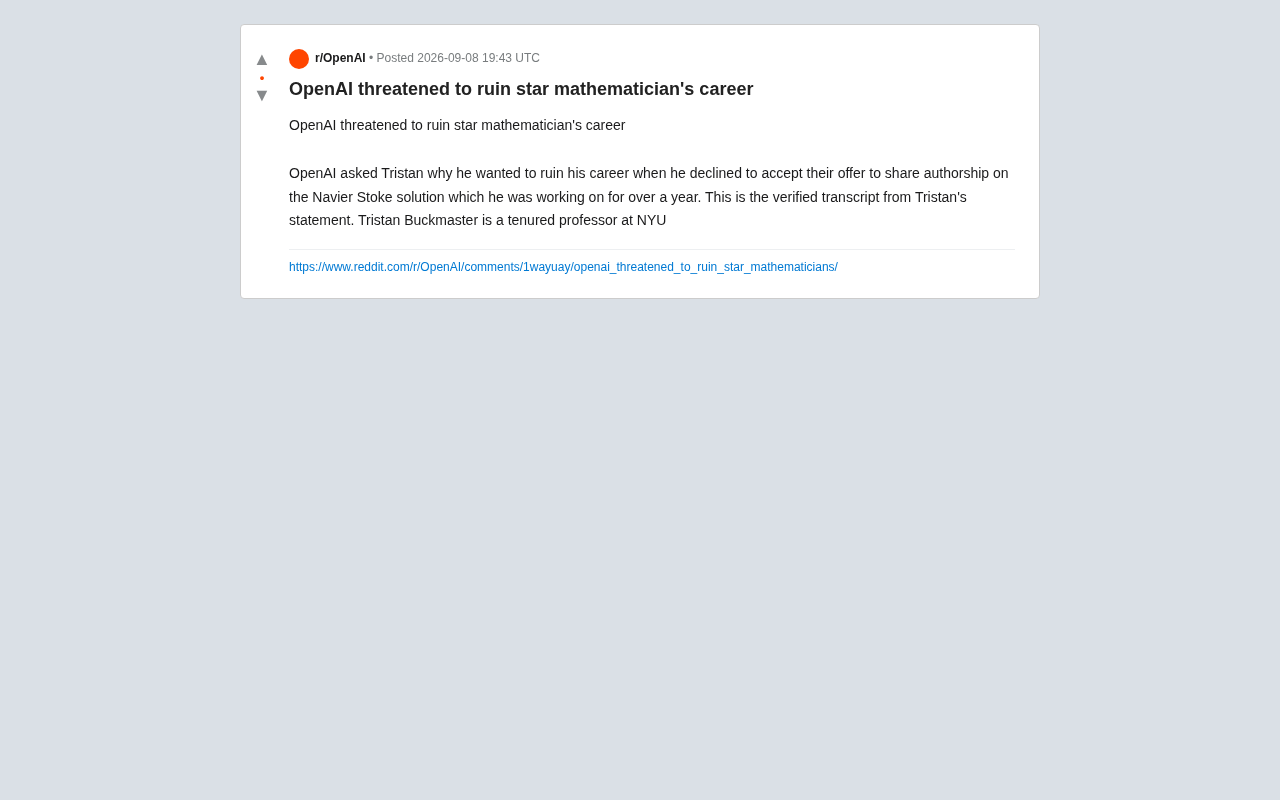
OpenAI Authorship Dispute: The Battle Over Academic Boundaries in the AI Era
OpenAI disputes authorship with mathematician Tristan Buckmaster over Navier-Stokes research, raising ethical questions about AI involvement in science.