TheoremSmith: Mass-Producing Hard Proof Problems to Train LLMs
TheoremSmith attempts to break the data bottleneck in LLM math reasoning training by automatically mass-producing hard proof problems.
TheoremSmith is a project on Hacker News Show HN that advocates letting systems automatically mass-produce hard mathematical proof problems to train large language models' reasoning and proof capabilities. The article notes that proof problems are scarce due to the lack of unique answers, complex evaluation, and high manual authoring costs, while the success of synthetic data in code and instruction-following domains supports this approach. A difficulty-controllable problem pool can support curriculum learning and provide raw material for automated solving, verification, and reinforcement learning; mass-generated hard problems can also supplement evaluation benchmarks. However, the core challenge lies in ensuring the correctness and meaningfulness of problem statements, and the project's community discussion is limited, with actual performance still to be verified.
From "Solving Problems" to "Creating Problems": A New Approach to Training LLM Proof Capabilities
In the Show HN section of Hacker News, a project called TheoremSmith proposes an interesting direction: rather than waiting for human mathematicians to write problems, let the system automatically mass-produce hard proof problems to train large language models' reasoning and proof capabilities. The post received 7 points—not much discussion—but it touches on a core bottleneck in current LLM mathematical reasoning training: high-quality, high-difficulty proof problems are too scarce.
Why Proof Problems Are a Scarce Resource
Mathematical reasoning has long been an important yardstick for measuring LLM capabilities, but most public datasets focus on computational problems or multiple-choice questions with definite answers. Proof problems are different: they have no unique answer, require multi-step logical deduction, and have more complex evaluation criteria. Writing a rigorous proof problem by hand is costly, and for models to genuinely improve their proof abilities, they need large quantities of diverse problems with a reasonable difficulty distribution. TheoremSmith attempts to fill this gap through automated production—an approach that follows in the footsteps of the success of "synthetic data" in the code and instruction-following domains.
Synthetic Data refers to training data automatically generated by programs or models rather than collected from the real world. In the code domain, systems like GitHub Copilot heavily use code snippets generated by models themselves for fine-tuning; in the instruction-following domain, Self-Instruct uses strong models to generate instruction-response pairs, which has been shown to be comparable to human-annotated data. The advantages of synthetic data are scale, low cost, and controllable distribution, but the risk is that the generator's own biases get amplified. TheoremSmith transplants this paradigm to mathematical proof problems, essentially "manufacturing" training corpora through automation, and its success depends on whether the generated content can pass rigorous correctness checks.
What TheoremSmith Aims to Solve
Mass Production and Difficulty Control
From the project title, TheoremSmith's keywords are "Mass-Producing" and "Hard Proof Problems." This means it's not just randomly generating some mathematical statements, but aims to systematically produce difficult proof problems suitable for training. For the training pipeline, a difficulty-controllable problem pool means curriculum-style training data can be constructed: gradually transitioning from easier lemma combinations to hard problems requiring creative insight, helping models build more robust reasoning chains.
Curriculum Learning originates from the 2009 work by Bengio et al. The core idea is to let models learn easy samples first and then gradually transition to hard samples, leading to more stable convergence. In LLM reasoning training, this means a difficulty spectrum of problems that can be continuously adjusted. TheoremSmith's emphasis on "controllable difficulty" is precisely to support this training strategy: if the generator can only produce problems of fixed difficulty, the model will either waste compute on problems that are too easy or fail to get effective gradients on problems that are too hard. Difficulty can be quantified along dimensions such as the number of proof steps, the number of required lemmas, and the cross-domain degree of concept combinations, but automatically labeling difficulty remains an open problem.
The Closed Loop from Problems to Training Signals
Problems alone are not enough—training needs usable signals. A reasonable automated problem-generation system usually also needs accompanying verification or filtering mechanisms; otherwise, the generated content may contain incorrect statements or meaningless problems. TheoremSmith's value lies in scaling up the "problem creation" step, providing raw material for subsequent automated solving, verification, and reinforcement learning—echoing the recent direction of training reasoning models with verifiable rewards.
Verifiable Reward is a key concept in recent reasoning model training, with representative work including OpenAI's o1 series and DeepSeekAd-R1. The core idea is: for tasks with objective judgment criteria such as math and code, use automated checkers (e.g., answer matching, unit tests, formal proof checkers) to provide 0/1 or continuous rewards, then optimize the model with reinforcement learning (e.g., PPO, GRPO). This approach bypasses expensive and unstable reward models, but the premise is the existence of reliable verifiers. For proof problems, verifiers can be formal proof assistants like Lean or Coq, or another stronger LLM acting as a judge—the former is rigorous but limited in coverage, the latter is flexible but may misjudge. For TheoremSmith's generated problems to truly enter the training loop, they must interface with one of these verification mechanisms.
Potential Impact on the LLM Training Ecosystem
Alleviating the Data Bottleneck
High-quality public mathematical corpora grow slowly, while model scale and training demands continue to rise, making synthetic data an important supplement. If automatically generated proof problems can guarantee a certain level of rigor, they can significantly expand training sets and cover domain combinations that human problem writers rarely touch.
Dual Use for Evaluation and Training
Mass-generated hard problems can also supplement evaluation benchmarks. Existing benchmarks are easily "seen" by models, whereas newly generated problems are more unfamiliar in distribution and can more truly reflect models' generalized reasoning abilities. Of course, this requires the generation mechanism itself to be sufficiently diverse to avoid forming new patterned biases.
Data Contamination refers to evaluation set problems having appeared in training corpora, causing models to "memorize answers" rather than genuinely reason. There is empirical evidence in mathematics: some problems in benchmarks like GSM8K and MATH have been found in Common Crawl, and models' high scores on them may be overestimated. Mitigation measures include dynamically updating benchmarks, using private held-out sets, and generating new problems on demand as TheoremSmith does. But generative evaluation has its own pitfalls: if the generator shares the same source as the training data, new problems may just be reskins that cannot truly test generalization ability; moreover, if the correctness of generated problems is not reviewed, the evaluation conclusions themselves are unreliable.
Issues That Require a Sober View
The difficulty of automated problem generation lies not in "generation" but in "ensuring correctness and meaningfulness." If the statements of proof problems contain hidden errors, training signals will be contaminated; if difficulty is merely stacked through surface complexity, it may also produce large numbers of repetitive or trivial variants. In addition, the post currently has only 7 points and no comments, so community validation and actual performance data are still very limited. Whether TheoremSmith can strike a balance between scale and rigor requires more public experimental results to answer.
For researchers and engineers focused on LLM reasoning training, such "problem-creation tools" are worth following—they represent an approach to engineering data production itself.
One-line Summary
TheoremSmith attempts to break the data bottleneck in LLM mathematical reasoning training by automatically mass-producing hard proof problems.
Paragraph Summary
TheoremSmith is a project on Hacker News Show HN that advocates letting systems automatically mass-produce hard mathematical proof problems to train large language models' reasoning and proof capabilities. The article notes that proof problems are a scarce resource due to the lack of unique answers, complex evaluation, and high manual authoring costs, and that the success of synthetic data in code and instruction-following domains provides a basis for this approach. A difficulty-controllable problem pool can support curriculum learning and provide raw material for automated solving, verification, and reinforcement learning; mass-generated hard problems can also supplement evaluation benchmarks. However, the core challenge lies in ensuring the correctness and meaningfulness of problem statements rather than mere generation, and the project's community discussion is limited, with actual performance still to be verified.
Related articles

AI Teams Up with Mathematicians to Attack the Riemann Hypothesis: 17 Million Lines of Code Tear Open a 167-Year Gap
In November 2026, Anthropic mathematicians and Claude claimed to have discovered a proof of the Riemann Hypothesis, publishing 17 million lines of Lean formalized code that passed machine verification. This article analyzes the event's impact on mathematics and cryptography, and the deeper questions raised by the separation of discovery and understanding.
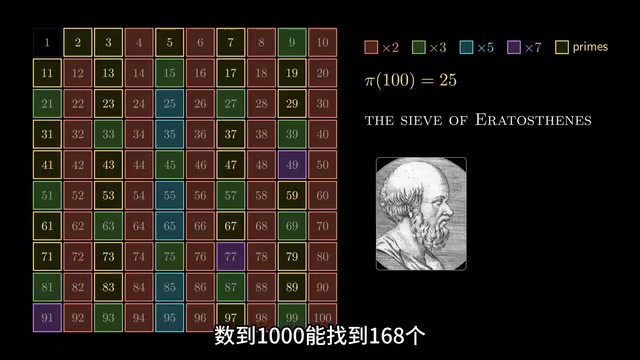
AI Claims Formal Proof of the Riemann Hypothesis — But Machine Verification Isn't a Mathematical Proof
In Nov 2026, Anthropic's Levent Alpöğe released a Riemann Hypothesis proof of 175,000 code files that passed machine formal verification. But machine verification isn't a mathematical proof: the kernel can't confirm the proposition is the Riemann Hypothesis humans understand, and there's no human-readable paper. This article breaks down how ζ function zeros determine prime-count deviation, and the core of the controversy.

Anthropic Raises Over $80 Billion in IPO, DeepSeek Secures $100 Billion in Funding: AI Weekly Roundup
This week in AI: Anthropic's Nasdaq IPO raises $93.5B in the largest ever, DeepSeek closes ~100B yuan round, AI claims formal Riemann proof, MiniMax breaks crypto candidates in seconds.