Theos RFM Review: How 3D Digital Twins Are Reshaping Facility Management
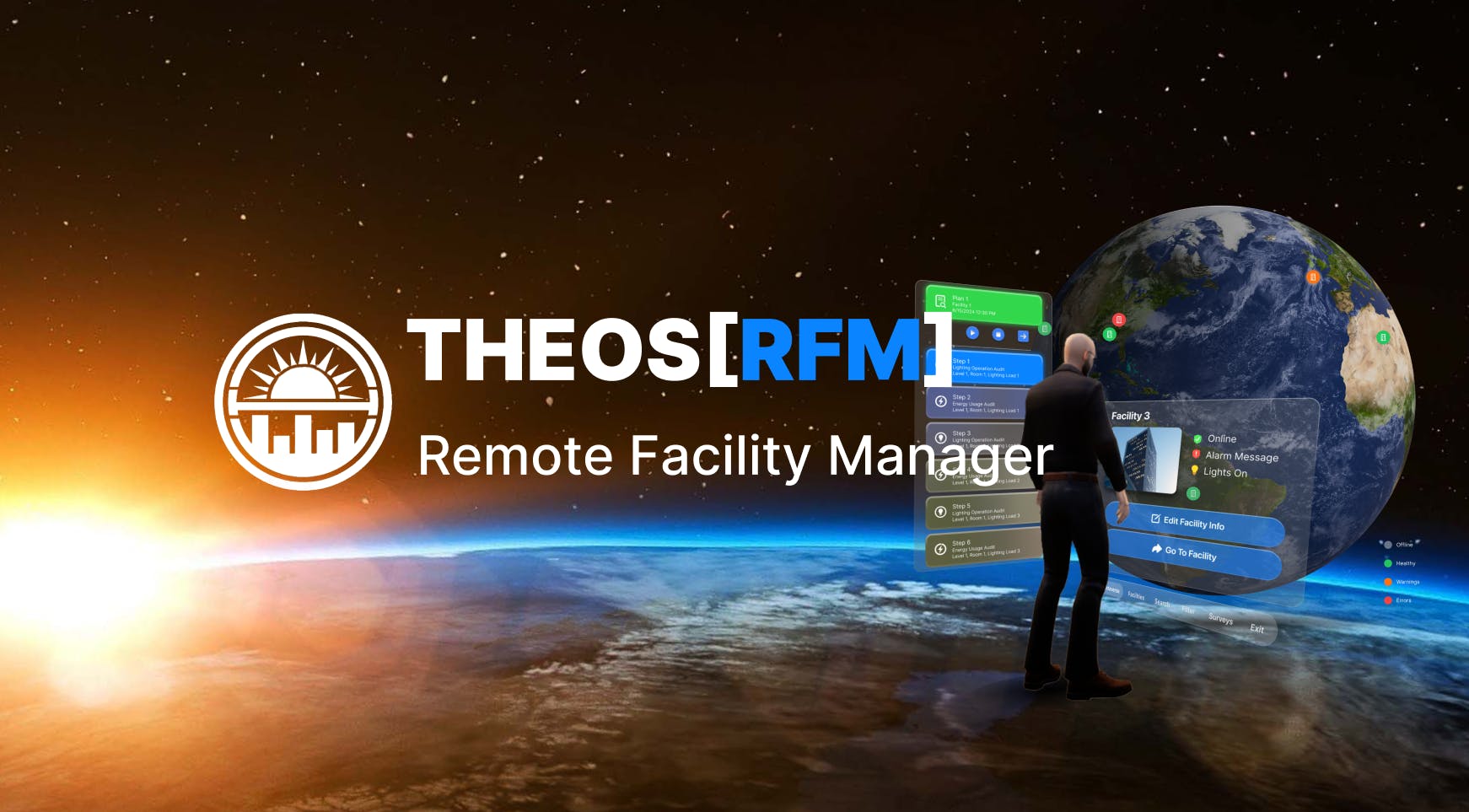
Theos RFM brings 3D digital twins and real-time IoT integration to facility management collaboration.
Theos RFM is an emerging facility management platform that combines 3D digital twins with real-time IoT data to address longstanding industry pain points like information silos and communication delays. By creating immersive spatial interfaces for property owners, facility managers, and frontline workers, it aims to transform how buildings are managed—though challenges remain around modeling costs, system integration, and market adoption.
When Facility Management Meets Real-Time 3D
Facility Management has long been a corner overlooked by technological innovation. Property owners, facility managers, and frontline workers often rely on 2D blueprints, Excel spreadsheets, and fragmented work order systems to manage complex building assets. Information silos, communication delays, and troubleshooting difficulties are endemic pain points in this industry. According to data from the International Facility Management Association (IFMA) and various market research firms, the global facility management market has exceeded trillion-dollar scale, yet the industry's overall digital penetration remains relatively low. Many small and medium-sized properties still depend on paper work orders, phone dispatching, and spreadsheets for daily operations. Even enterprises that have adopted Computerized Maintenance Management Systems (CMMS) or Integrated Workplace Management Systems (IWMS) often find their software consists of 2D interfaces and modular designs that lack spatial visualization capabilities.
Recently launched on Product Hunt, Theos[RFM] aims to change this landscape. The product's tagline hits the mark—"Manage your facilities in the real world, in real time, in 3D." It has currently garnered 62 votes on the platform, ranking 20th, and is categorized under IoT, SaaS, and Tech.
From its positioning, Theos[RFM] is not just another traditional work order software, but rather seeks to provide an entirely new operational paradigm for facility management through immersive, collaborative 3D experiences.
3D Digital Twins: More Than Just Visualization
From Blueprints to Three-Dimensional Space
The core selling point of Theos[RFM] lies in the combination of "3D + real-time + real world." This actually points to the Digital Twin concept that has emerged in recent years in industrial and real estate sectors—creating a virtual three-dimensional model that synchronizes in real-time with physical facilities.
The digital twin concept can be traced back to NASA's mirror simulation practices for spacecraft during the Apollo program, but it wasn't until the mid-2010s—with declining IoT sensor costs, improved cloud computing power, and mature 3D rendering technology—that this concept began entering industrial and commercial real estate at scale. Gartner listed digital twins among its top strategic technology trends for several consecutive years. The core logic is: assets in the physical world continuously generate data through sensors, which is fed in real-time into virtual models, making the models "living mirrors" of physical assets, thereby supporting predictive maintenance, scenario simulation, and remote decision-making. In the facility management context, digital twins not only present the geometric form of buildings but can also overlay dynamic layers such as temperature, energy consumption, and foot traffic, transforming static spaces into perceptible, interactive information carriers.
For property owners and facility managers, this means they can intuitively see the entire building's spatial layout, equipment locations, and operational status within a unified 3D interface. Compared to flipping through floor plans and mentally reconstructing spatial relationships, 3D presentation significantly reduces cognitive load and enables remote collaboration.
Real-Time Data Synchronization Is the Key Differentiator
The product's emphasis on "real time" deserves attention. Static 3D models are merely visualization tools, while real-time synchronization means the model is connected to data streams from sensors, IoT devices, or work order systems. When an air conditioner fails or a zone experiences abnormal temperature, managers can immediately locate the problem in the 3D view.
This also explains why the product is categorized under IoT—its value lies not just in rendering, but in bridging the data channel between physical devices and digital interfaces. To achieve this, the product must deeply integrate with Building Management Systems (BMS). BMS is an automation platform used in commercial buildings to centrally monitor and control subsystems such as HVAC, lighting, power, elevators, and fire safety, with major vendors including Siemens, Honeywell, Johnson Controls, and Schneider Electric. BMS typically uses industrial communication protocols like BACnet or Modbus, and in recent years has gradually supported internet protocols such as MQTT and RESTful APIs to integrate with broader IoT ecosystems. However, the BMS market has long suffered from "protocol fragmentation" and "vendor lock-in" issues, with data interoperability difficulties between different brands and generations of systems. This means any facility management platform claiming "real-time data synchronization" must face the integration challenge of how to accommodate heterogeneous BMS and IoT devices—often the most complex aspect of technical implementation.
Multi-Role Collaborative Management Portal
Theos[RFM] positions itself as a "portal" serving three clearly defined role types: property owners, facility managers, and their subordinate workers.
This multi-role collaboration design reflects the real complexity of facility management scenarios:
- Property owners care about overall asset condition and operating costs
- Facility managers need to dispatch resources and assign maintenance tasks
- Frontline workers must execute specific repair operations on-site
A unified 3D collaboration platform can theoretically allow all three parties to communicate within the same "spatial context"—managers can mark maintenance points in the model, workers receive precise spatial guidance on-site, and owners can oversee global operational data.
For organizations with multiple properties and numerous distributed equipment, this improvement in collaboration efficiency has tangible commercial value. Leading facility management software such as Archibus, Planon, and IBM Tririga have also introduced 3D and digital twin features in recent years, but mostly target large enterprise customers with high product complexity and long deployment cycles. The small and medium property market still has a significant product gap, which is a potential entry window for emerging products like Theos[RFM].
Opportunities and Challenges to Be Validated
Despite its attractive concept, Theos[RFM], as an early-stage product, still has several key questions that need validation in practice.
First is the cost of 3D modeling. Building accurate three-dimensional models for existing buildings often requires laser scanning, BIM data import, or manual modeling—the cost and barrier of this step may become an obstacle for small and medium-sized property adoption. Building Information Modeling (BIM) is the current foundation infrastructure standard for digital transformation in the construction industry. It contains not only 3D geometric information but also rich semantic data such as material properties, structural relationships, and equipment parameters, with IFC (Industry Foundation Classes) as the industry-standard data exchange format maintained by buildingSMART International. However, in reality, many existing buildings—especially older properties—do not have ready-made BIM models. Supplementing digital models for these buildings typically requires using 3D laser scanning (LiDAR) to generate point cloud data, then converting it through manual or semi-automated processes into structured models, with modeling costs ranging from thousands to hundreds of thousands of dollars per building, depending on area and complexity. Notably, consumer-grade devices like Apple's iPad Pro now include built-in LiDAR sensors, and the rise of AI 3D reconstruction technologies based on NeRF (Neural Radiance Fields) is gradually lowering this barrier, providing more economical modeling paths for small and medium properties.
Second is the breadth of data integration. The value of "real-time" depends on how many devices and systems can be connected. If seamless integration with mainstream Building Management Systems (BMS) and IoT platforms cannot be achieved, real-time capability will be greatly diminished. As mentioned earlier, protocol fragmentation and vendor lock-in issues in the BMS market are long-standing problems. Whether Theos[RFM] can provide out-of-the-box connectors or open APIs to cover mainstream device manufacturers will directly determine the credibility of its "real-time" promise.
Third is market education. The traditional facility management industry has varying levels of digital adoption, and getting practitioners accustomed to 2D work orders to accept immersive 3D operations requires time and patience. Currently, the product has 0 comments on Product Hunt, lacking real feedback from frontline users. However, Product Hunt, as a launch platform for tech products, has limited reference value for vertical B2B products—B2B tools naturally have weaker propagation momentum on the platform compared to consumer-facing products. The real validation scenario for Theos[RFM] is more likely to occur through industry exhibitions, customer POCs (proof of concept), and accumulation of benchmark cases. While zero comments indicates a lack of public user endorsement, it may also reflect that the product has just entered the public market and has not yet completed the transition from technical validation to user operations.
The Next Station for Facility Management
Theos[RFM] represents a direction worth watching: integrating digital twins, IoT, and collaboration software to inject a new paradigm into traditional and inefficient facility management. Its vision—"revolutionize the way people manage facilities"—while ambitious, indeed addresses the industry's core pain points.
For properties and facility management organizations seeking digital transformation, such real-time management tools centered on 3D space may preview the industry's future form. Of course, from concept to scaled implementation, Theos[RFM] still has a long way to go, and its data integration capabilities, modeling costs, and actual user experience will be key determinants of success or failure. As LiDAR hardware becomes ubiquitous, AI modeling technology advances, and IoT standards gradually unify, the technical conditions for the facility management industry to embrace 3D real-time management are rapidly maturing—the question is no longer "whether it will happen," but "who can be the first to make it both usable and affordable."
Related articles
Mini GPT Visualizer with 11,000 Parameters: Train and Understand LLM Fundamentals Right in Your Browser
A mini GPT visualizer with just 11,000 parameters lets you train a language model in your browser and watch the entire process — understand embeddings, attention, and more in 10 minutes.

What Projects Should You Build After One Month of Learning to Code? Recommended Projects for Beginners Ready to Level Up
Not sure what to build after one month of learning to code? This guide offers project recommendations for beginners ready to level up through project-based learning.
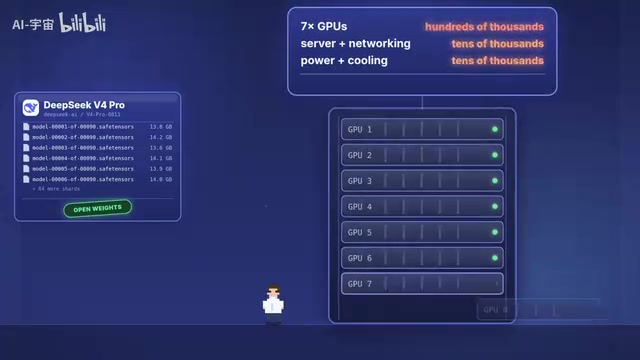
DeepSeek V4 Pro In-Depth Analysis: How Open-Source Weights Are Disrupting the Closed-Source LLM Landscape
DeepSeek V4 Pro releases with MIT license, achieving capability leap through specialized expert training, knowledge distillation, and multi-token prediction with 78% speed boost. Analysis of post-training techniques and open-source impact on closed models.