Third Mind Notes: A Note-Taking App Built for AI Prompt Management
Third Mind Notes: A Note-Taking App Bu…
Third Mind Notes is an AI-native note-taking app built for prompt engineering and LLM knowledge management.
Third Mind Notes is a new indie-developed app positioning itself as a fusion of Apple Notes, Cursor, and Obsidian — designed specifically for managing AI prompts and building LLM knowledge bases. Currently in TestFlight beta, it treats prompts as first-class knowledge assets and embeds AI deeply into the note-taking workflow, addressing a growing need in the age of LLMs.
A Note-Taking Tool for the AI Era
The note-taking app market is already fiercely competitive, with Apple Notes, Notion, and Obsidian each holding their ground. Yet as large language models (LLMs) become deeply embedded in everyday workflows, a new demand is emerging: a note-taking tool designed specifically for prompt engineering and knowledge base construction.
What is prompt engineering? The rise of LLMs like GPT-4 and Claude has given birth to prompt engineering as an emerging skill set. It refers to the practice of carefully crafting input text to guide AI models toward higher-quality, more predictable outputs. A well-crafted prompt may go through dozens of iterative refinements, covering dimensions such as role definition, task description, output format constraints, and few-shot examples. As the frequency of human–AI interaction explodes among both enterprises and individual users, prompts have become a valuable knowledge asset in urgent need of systematic management.
Recently, an indie developer announced a new project on Twitter — Third Mind Notes — positioning it as a fusion of "Apple Notes + Cursor + Obsidian." The app is now open for testing on TestFlight, Apple's official iOS/macOS beta distribution platform, which allows developers to invite up to 10,000 external testers before an official App Store launch. It's a key channel for indie developers to build early communities.
The analogy itself is revealing: it aims for Apple Notes' simplicity, Cursor's AI-native interaction, and Obsidian's bidirectional linking and knowledge graph. Together, these point toward a clear goal — a knowledge management system built for AI collaboration.
A Design Philosophy Centered on Prompting
The developer explicitly states that Third Mind Notes is "built for prompting and building LLM wikis." The key distinction from traditional note-taking apps: it's not just a container for storing information — it's a workspace for ongoing AI dialogue and iterative refinement.
Prompts Need Systematic Management
Anyone who regularly works with LLMs will recognize a common pain point: carefully crafted prompts end up scattered everywhere — buried in chat histories, tucked into memos, saved haphazardly across documents. When you need to reuse or refine them, retrieval becomes a chore.
Third Mind Notes aims to solve this by treating prompts as "first-class citizens." Users can organize, link, and reuse their prompt assets systematically, much like curating a knowledge base. In an era of increasingly frequent AI use, this is a genuine and underestimated need.
The Metaphor of "Third Mind"
The name "Third Mind" is also worth unpacking. It suggests a new paradigm for human–AI collaboration: your own thinking is the first mind, AI is the second, and the knowledge network that emerges from their interaction becomes the "third mind."
This idea builds on the "Building a Second Brain" methodology popularized by knowledge management expert Tiago Forte, whose core CODE framework (Capture, Organize, Distill, Express) has had a profound influence on knowledge workers — it addresses the relationship between people and information. "Third Mind" goes a step further by bringing AI into the thinking loop, elevating it from a tool to a genuine cognitive partner and exploring the three-way dynamic between humans, AI, and knowledge.
The Imagination Behind Three Classic Products
Breaking Third Mind Notes down into its three reference points helps clarify the product's ambitions.
Apple Notes represents ultimate ease of use and seamless cross-device syncing. As a TestFlight app clearly targeting the Apple ecosystem, it prioritizes a low barrier to entry and an out-of-the-box experience.
Cursor is today's most representative AI-native code editor. Built by the Anysphere team on top of VS Code, Cursor's core innovation lies in elevating AI from a "plugin feature" to the "primary interaction layer" of the editor — users can describe intent in natural language, reference codebase context, and let AI understand and modify code across files. This "AI-first" design philosophy stands in fundamental contrast to the traditional approach of "add AI as a feature." Third Mind Notes drawing on this thinking means AI isn't an add-on — it's deeply woven into the core editing experience.
Obsidian contributes the concept of bidirectional linking and knowledge graph thinking. Bidirectional linking traces back to Ted Nelson's hypertext concept from the 1960s — unlike traditional one-way hyperlinks, it allows every note node to be aware of "who links to me," automatically building a knowledge graph that mirrors the associative way human neurons work. For constructing an "LLM wiki," this structured linking capability is especially powerful: related prompts, use cases, model characteristics, and other nodes can be organically connected into a reusable AI knowledge system.
Indie Developers and the New Opportunity in AI Tooling
Third Mind Notes comes from an indie developer — a fact that reflects a clear trend in today's AI tool ecosystem. As companies like OpenAI and Anthropic have opened up their APIs, the proliferation of LLM APIs has dramatically lowered the technical barrier to building intelligent applications. The cost of a single GPT-4 API call has dropped to negligible levels, enabling small teams and solo developers to rapidly build competitive AI products without relying on large-scale infrastructure.
That said, there remains a significant gap between concept and mature product. The real challenges for tools like this lie in: striking the right balance between feature richness and simplicity; ensuring that prompt management actually boosts efficiency rather than adding cognitive overhead; and carving out a differentiated position against strong competitors like Notion AI and the Obsidian plugin ecosystem.
Conclusion
Third Mind Notes is a microcosm of the broader wave of AI-native productivity tools. It accurately identifies an emerging need — in an era where AI is deeply involved in our workflows, knowledge management tools themselves need to be redesigned.
The vision of unifying Apple Notes' simplicity, Cursor's AI interaction, and Obsidian's knowledge network is genuinely compelling. The app is still in TestFlight testing, and its real-world experience and product maturity have yet to be proven. But for users who collaborate frequently with LLMs and need to systematically manage prompts and knowledge bases, Third Mind Notes is undoubtedly a new option worth watching.
Key Takeaways
Related articles
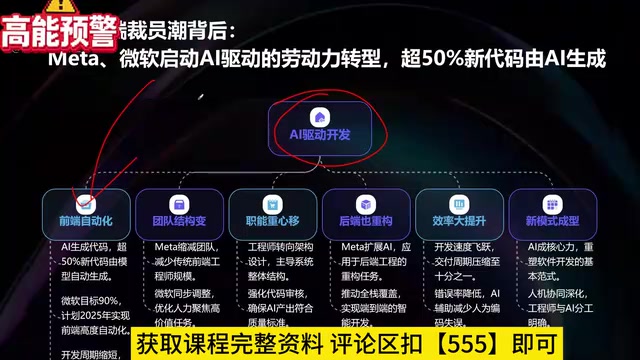
What Is Vibe Coding? The AI Programming Skill Every Developer Needs
What is Vibe Coding? Learn how AI programming is reshaping dev teams, why traditional programmers face displacement, and why Cursor & Claude Code matter.
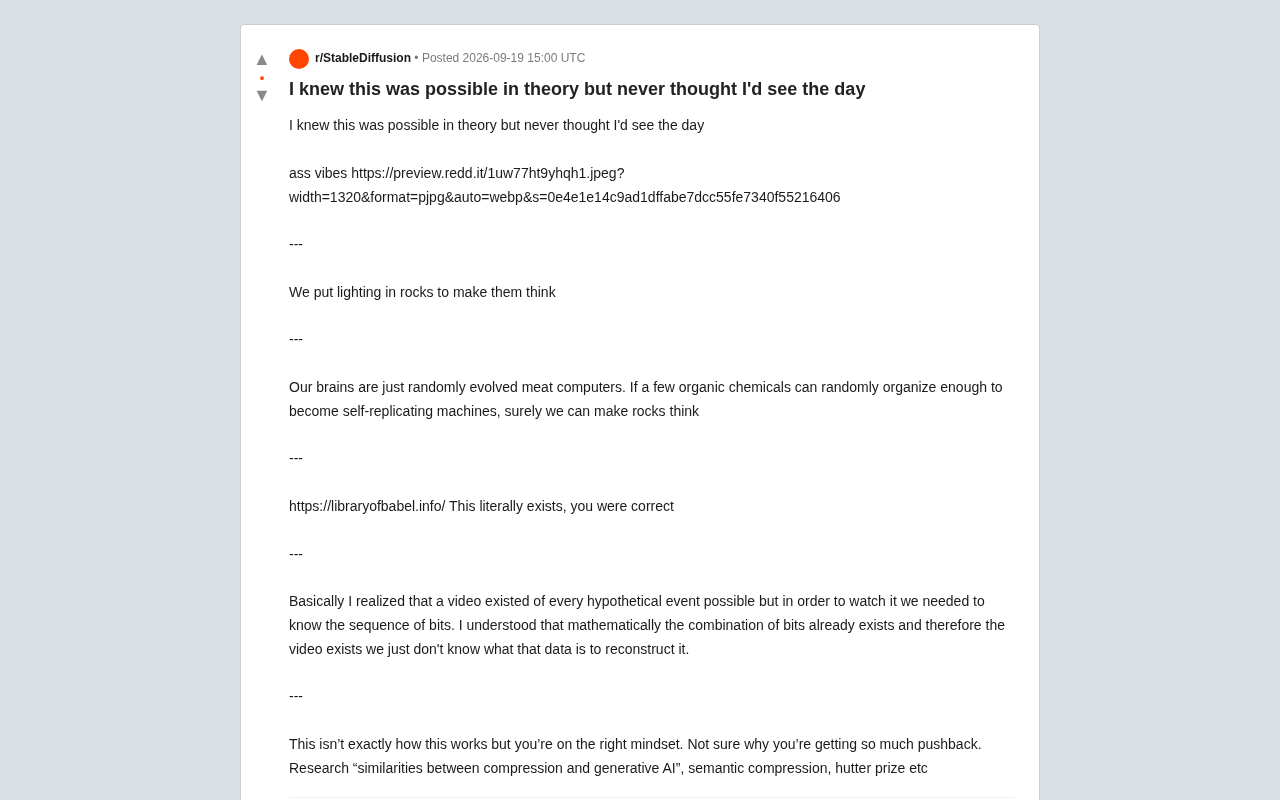
Making Rocks Think: A Philosophical Exploration of Generative AI and Information Compression
From a viral Reddit post to deep AI theory: why compression equals understanding, the Library of Babel thought experiment, semantic compression, and the Hutter Prize.

Irregular Warns: Four AI Lab Security Breaches Traced to the Same Root Cause
Irregular reveals four AI lab security breaches share a single root cause, exposing systemic risks from technology stack homogeneity across the AI industry.