Thread: An AI-Powered 'Second Brain' Journal That Connects Your Scattered Thoughts
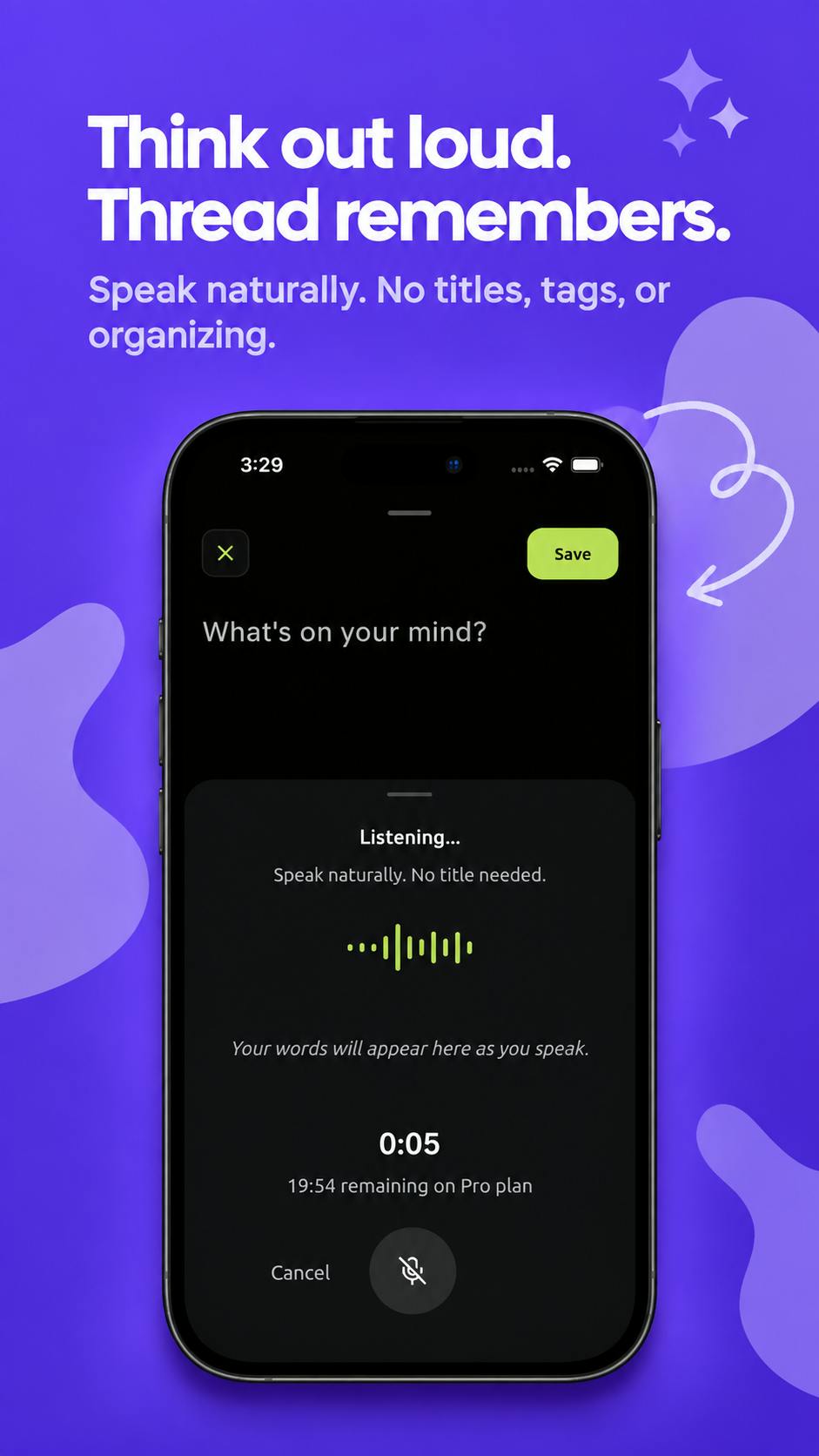
Thread is an AI journal that automatically links your scattered notes into a private, actionable second brain.
Thread is an AI-powered journal app for Android that tackles the age-old problem of fragmented, unorganized thoughts. Unlike Notion or Obsidian — which require manual upkeep — Thread hands the job of "connecting" ideas to AI. It supports text, notes, and voice input, automatically linking related memories, surfacing thinking patterns, and turning scattered ideas into actionable steps. Built around privacy, it enters the growing personal knowledge management + AI market. With 87 upvotes and an 8th-place ranking on Product Hunt, the concept is promising — but with only 3 reviews, its AI quality and long-term retention remain to be proven.
When Journaling Meets AI: What Problem Is Thread Solving?
We've all been there — a spark of inspiration strikes during your commute, you jot down a few fragmented notes in a meeting, and another idea surfaces late at night. But these scattered fragments end up dispersed across different note-taking apps, sticky notes, or just floating in your head, never coalescing into a coherent whole. Thread, a new product on Product Hunt, is taking direct aim at this pain point.
It positions itself as an "AI journal" and "second brain," with a core promise: capture ideas in any form, then let AI automatically connect those scattered memories into meaningful "threads." The product has earned 87 upvotes on Product Hunt, ranking 8th for the day, under the categories of Android, Productivity, Notes, and Artificial Intelligence.
Core Features: Not Just Recording — It's About "Connecting"
The biggest difference between Thread and traditional note-taking tools comes down to that word: "connection." Ordinary note apps store your thoughts; Thread emphasizes actively finding relationships between what you record.
According to the product description, it offers several key capabilities:
- Multi-format capture: Supports text, ideas, notes, and voice recordings — users can log anything in seconds, lowering the friction of capturing thoughts.
- Automatic memory linking: AI automatically connects related memories without requiring users to manually add tags or build bidirectional links.
- Pattern discovery: The system attempts to identify recurring themes and thinking patterns across your long-term records.
- From fragments to action: Organizes scattered ideas into actionable steps, turning "wrote it down" into "getting it done."
Underpinning this approach is the "personal knowledge management + AI" trend that has gained momentum over the past two years. Compared to tools like Notion and Obsidian — which require users to actively build their own knowledge networks — Thread's differentiator is handing the "connecting" work off to AI.
The AI Evolution of the "Second Brain" Concept
"Second Brain" isn't a new idea — Tiago Forte's PARA methodology made it widely known. But past implementations relied heavily on manual organization: you had to categorize, archive, and build links yourself. For most users, that's a high bar to clear, and it's exactly why so many people abandon these systems — too much upkeep, too little follow-through.
Thread aims to use AI to lower that barrier entirely. Its private AI-powered memory system means that connecting and analyzing your thoughts happens in a relatively closed, personal environment. For users who entrust private journals and fleeting inspirations to an app, "privacy" is indeed a critical consideration.
In terms of positioning, Thread feels like a blend of the intimacy of journaling, the structure of note-taking, and the associative power of AI — aiming to become a long-term thinking companion for the individual.
Tiago Forte's PARA methodology organizes all information into four buckets: Projects, Areas, Resources, and Archives. This system has a large following across tools like Notion and Obsidian, but at its core it remains manually classification-driven — users must actively decide where information belongs at the time of entry, making maintenance quite costly. Meanwhile, the "backlinks" popularized by tools like Obsidian can build knowledge networks, but still require users to create links manually or rely on plugins. What Thread represents is offloading all of these manual decisions to a language model: AI reads through historical entries in the background, automatically identifying connections through semantic similarity and topic clustering, while users simply keep inputting — no structure to maintain. This "zero-friction archiving" philosophy has also appeared in products like Rewind and Mem.ai in recent years, though each takes a different approach to balancing privacy and connection quality.
Worth Watching, But Worth Waiting On
As a product freshly launched on Product Hunt, Thread's concept is well-timed and on-trend — but it also faces the common challenges of this competitive space.
The quality of AI-generated connections is the make-or-break factor for products like this. When the links are precise, they help users rediscover forgotten ideas; when they're superficial or frequently off-base, they become noise rather than signal. Currently, the product has only 3 reviews, which means there's far too little real-world feedback to validate the actual quality of its AI capabilities.
Beyond that, the moat for "second brain" products typically builds over time — the more you use it, the more valuable it becomes. But this also means earning user trust around data privacy and reducing migration costs takes time. For Android users today, Thread offers a low-stakes opportunity to try something new. Whether it can take root as a daily habit depends entirely on the real-world experience that follows.
"AI auto-linking" typically relies on a combination of a vector database and an embedding model under the hood: each note is converted into a high-dimensional vector, and the system calculates cosine similarity between vectors to surface semantically related content, then uses a language model to generate readable connection summaries. The quality of this pipeline depends heavily on how well the embedding model understands a user's personal way of expressing ideas, as well as the sophistication of the retrieval strategy. For short fragments — say, a three-to-five-word spark of inspiration — the vector carries limited information, and false-positive recall rates climb significantly. And when the total volume of entries is still low, the connection network is too sparse to demonstrate the "smarter over time" flywheel effect. This is precisely why the cold-start phase is the hardest hurdle for products in this category.
Takeaway
Thread represents a clear direction for the evolution of personal knowledge tools: from passive storage to active connection, from manual organization to AI-assisted curation. It integrates capture, linking, pattern discovery, and action conversion into a single private system — attempting to turn "scattered thoughts" into "something bigger." The direction is sound, but the product's maturity and AI connection quality still need more real users to put it to the test.
Related articles
Why Do All AI-Generated Projects Look the Same? The Aesthetic Homogenization Problem in Vibe Coding
Why do vibe coding projects all use purple gradients and dark glassmorphism? We break down the technical roots of AI aesthetic homogenization and how to escape it.
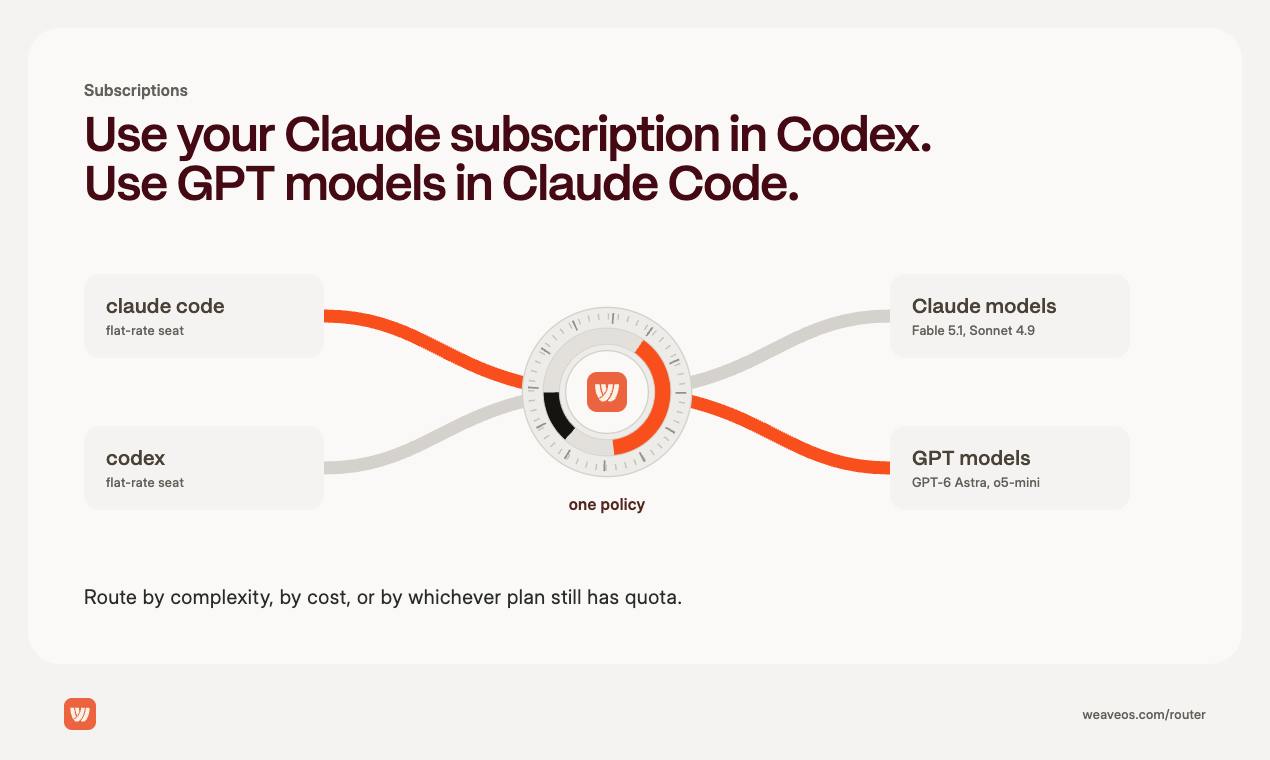
Weave Router 2.0: A Subscription-Aware AI Coding Agent Router with Cross-Service Intelligent Dispatch
Weave Router 2.0 is a subscription-aware AI coding agent router that auto-dispatches requests across Claude, Codex, and GPT subscriptions — claiming half the cost and double the speed of GPT-6 Astra.
LARA: A Lightweight Adaptation Framework for Injecting Composable Behaviors into Frozen LLMs
LARA (Lightweight Additive Residual Adaptation) is an open-source framework that injects pluggable, composable behaviors into frozen LLMs via low-rank residual adapters with soft routing and Mixture of Behaviors support.