Three AI Coding Models Head-to-Head: Opus 4.7, GPT-5, and DeepSeek V4-Pro Benchmarked
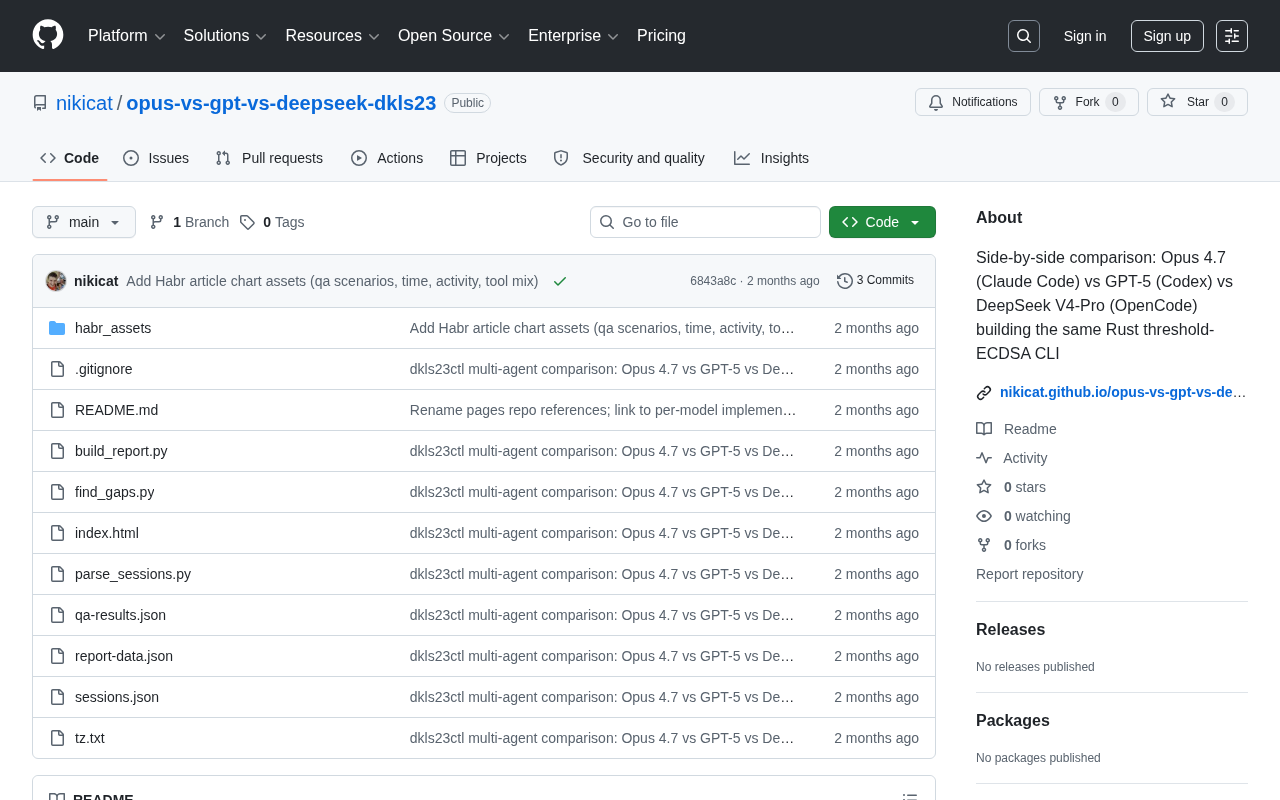
Three top AI models race to implement threshold ECDSA in Rust, benchmarking the true ceiling of AI coding ability.
A GitHub open-source project tasks Opus 4.7 (Claude Code), GPT-5 (Codex), and DeepSeek V4-Pro (OpenCode) with the same challenge: build a threshold ECDSA command-line tool in Rust from scratch. The high cryptographic complexity combined with Rust's strict compiler makes this an ideal stress test for AI coding. The comparison is unique in that it evaluates complete "model + toolchain" solutions, not just raw models. Side-by-side HTML output lets readers directly compare approaches, offering more engineering insight than benchmark scores alone — though single-run results have inherent variance and the repo lacks community validation.
A Hardcore Showdown of Coding Capabilities
When every major AI model claims to be the best coding assistant, the most convincing way to settle the debate is to give them all the same problem. That's exactly what the open-source project nikicat/opus-vs-gpt-vs-deepseek-dkls23 on GitHub set out to do: pit three top AI models against each other on an identical task — building a threshold ECDSA command-line tool in Rust from scratch.
The three competitors are Opus 4.7 with Claude Code, GPT-5 running in the Codex environment, and DeepSeek V4-Pro accessed through OpenCode. The consistency of the task gives this comparison a rare level of fairness — same requirements, same programming language, same cryptographic complexity.
Why Threshold ECDSA?
The choice of problem is itself significant. Threshold ECDSA is a distributed signing scheme that allows multiple parties to collaboratively generate a digital signature without ever reconstructing the full private key. It's widely used in cryptocurrency wallets, multi-party secure computation, and similar domains. The implementation requirements are demanding: deep cryptographic understanding, complex multi-party protocol interactions, and careful state management.
Implementing this in Rust raises the bar even further. Rust is known for its strict ownership system and memory safety guarantees, meaning the AI models must not only produce logically correct code but also satisfy the compiler's rigorous type and lifetime checks. This is not a task any model can bluff its way through by stitching together online examples.
In short, this problem is almost purpose-built to expose weaknesses — it simultaneously tests cryptographic knowledge, systems-level programming ability, and the capacity to engineer a complex protocol into working code.
The technical core of threshold ECDSA lies in the "(t, n) threshold" mechanism: the private key is cryptographically split into n shares distributed among n participants. Any t of those participants can collaborate to produce a signature, without any single party ever holding the complete key. This relies on secret-sharing protocols from multi-party computation (MPC) — the canonical implementation being DKLS23 (Doerner-Kondi-Lee-shelat 2023), whose security is grounded in the elliptic curve discrete logarithm problem.
Compared to ordinary ECDSA, the threshold variant is exponentially more complex to implement: participants must exchange multiple rounds of messages, maintain intricate session state machines, and handle cryptographic primitives like commitment schemes and zero-knowledge proofs. Any mistake in any of these components can lead to private key leakage or signature forgery. This is why mature threshold signing libraries like tss-lib and FROST are themselves thousands of lines of rigorously audited code. Asking an AI to implement this protocol from scratch is essentially asking it to translate mathematical descriptions from academic papers into runnable engineering code.
Three Models and Their Toolchain Combinations
Notably, this comparison isn't just a contest between models — it's a competition between complete "model + development environment" solutions.
- Opus 4.7 + Claude Code: Anthropic's code generation solution. Claude Code is its dedicated programming workflow tool, designed for long-context and multi-file collaboration.
- GPT-5 + Codex: OpenAI's pairing. Codex has long been the benchmark environment for code generation.
- DeepSeek V4-Pro + OpenCode: The challenger from DeepSeek, paired with the open-source OpenCode toolchain, representing a lower-cost alternative path.
This combination-based comparison is closer to real-world development. Developers never work with bare models — they work with the integrated experience of a model, IDE, agent tooling, and context management. Differences in output across the three setups provide a more intuitive picture of each ecosystem's maturity.
The toolchain differences deserve a closer look. Claude Code is Anthropic's terminal-native AI programming tool — it can read and write files directly, execute commands, manage multi-file projects, and operates with a large context window, making it well-suited for large tasks requiring cross-file coordination. Codex is OpenAI's code-generation-focused model environment, which laid the foundational paradigm for AI-assisted programming in the early days of GitHub Copilot. OpenCode is an open-source AI programming agent framework that supports pluggable backend models — DeepSeek V4-Pro participates in this comparison through that toolchain.
The three toolchains differ meaningfully in context management, file operation capabilities, and error-feedback loops (i.e., whether the model can see compiler errors and self-correct). These differences directly affect the completeness of the final code. In other words, even if the underlying model capabilities are comparable, toolchain engineering can still determine the quality gap in output.
The Value and Limits of This Kind of Benchmark
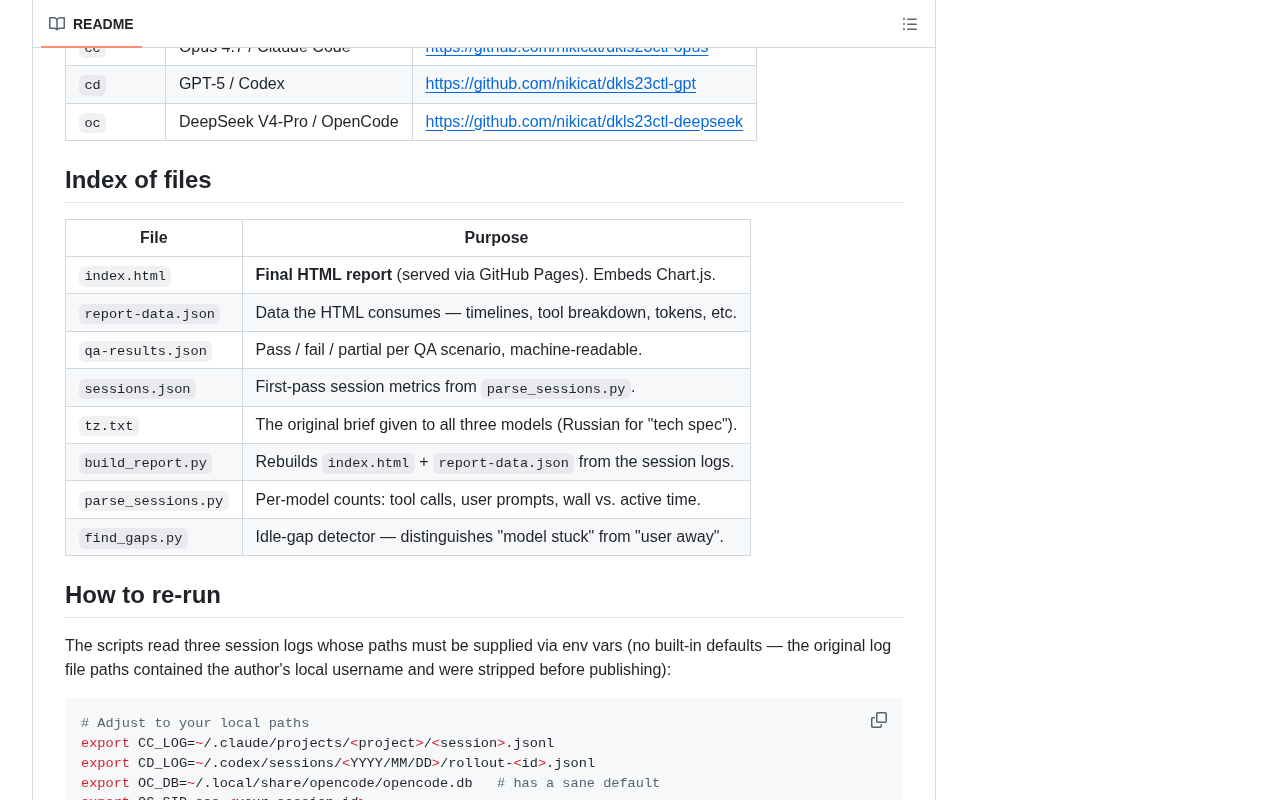
In terms of project structure, the author presents the three outputs side by side in HTML pages, making it easy to directly compare code structure, implementation approach, and completeness. This "side-by-side" format reveals more about real engineering capability than a simple leaderboard score.
That said, it's worth keeping a clear-eyed view of the limitations of individual evaluations like this. A single task result carries inherent randomness — the same model can produce noticeably different outputs with different prompts or random seeds. The fact that HTML is the project's primary language also signals that the focus is on presenting results rather than building a reproducible automated testing framework. At the time of writing, the repository has zero stars and zero forks, and has not yet received broad community validation.
For developers, this kind of comparison is best treated as a useful starting point for tool selection, not a final verdict. The truly reliable approach is to take a representative task from your own codebase and test all three setups yourself, observing their stability and output quality within your specific tech stack.
What This Means for Developers
High-difficulty cryptographic tasks like threshold ECDSA are becoming the ultimate proving ground for AI coding capabilities. When models can independently complete complex projects involving distributed protocols and memory-safe languages, their potential to genuinely transform development workflows becomes real.
From Anthropic and OpenAI to DeepSeek, competition among the leading players has moved past "can it write code" into "can it write hard code well." Straightforward, direct comparison experiments like this are exactly the kind of window ordinary developers need to understand where the real gaps lie — no vendor marketing required. The code speaks for itself.
Related articles
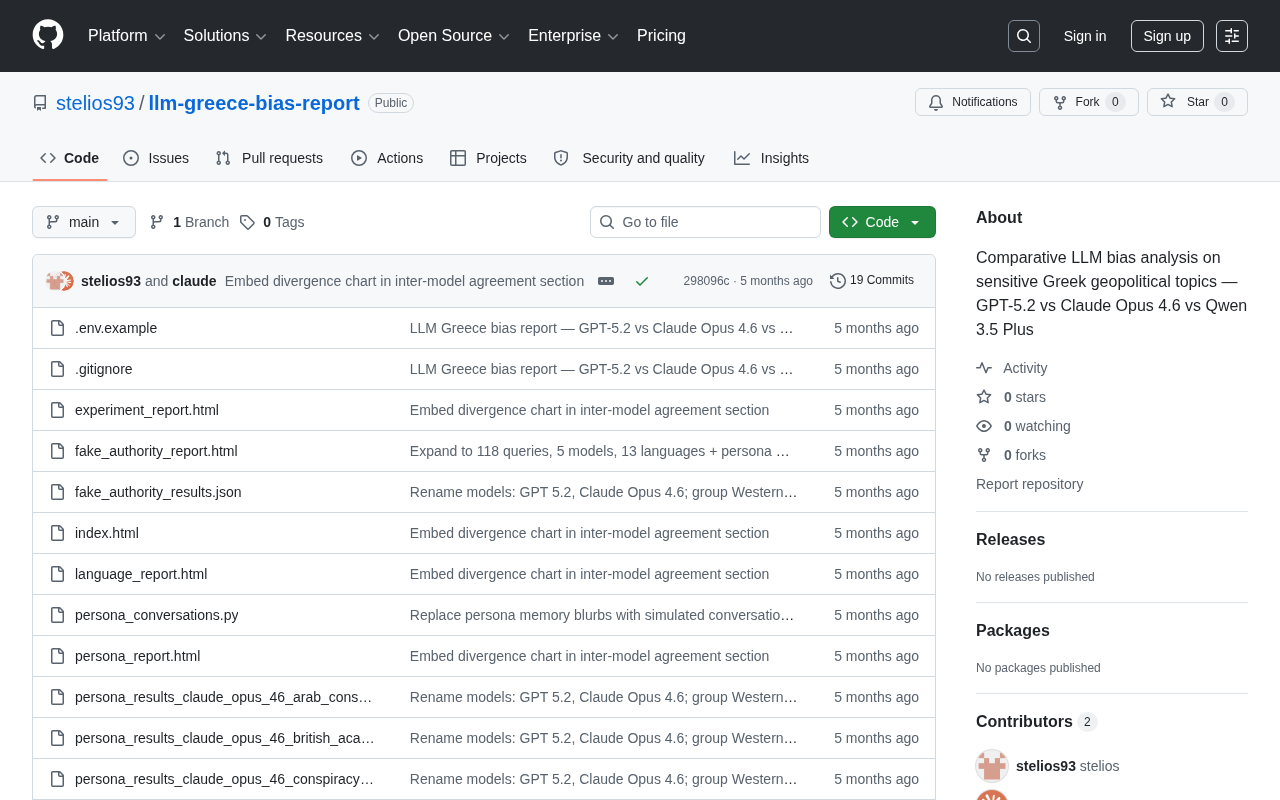
Geopolitical Bias Compared Across Three AI Models: GPT-5.2, Claude, and Qwen Tested
An open-source project compares GPT-5.2, Claude Opus 4.6, and Qwen 3.5 Plus on sensitive Greek geopolitical topics. We break down its methodology, limitations, and why LLM neutrality audits matter.
Sam Altman: An IPO in the Near Term Would Be 'Ill-Advised' for OpenAI
OpenAI CEO Sam Altman tells Fortune that an IPO in the near term would be "ill-advised," while also addressing recursive self-improvement risks and the Hugging Face hack.
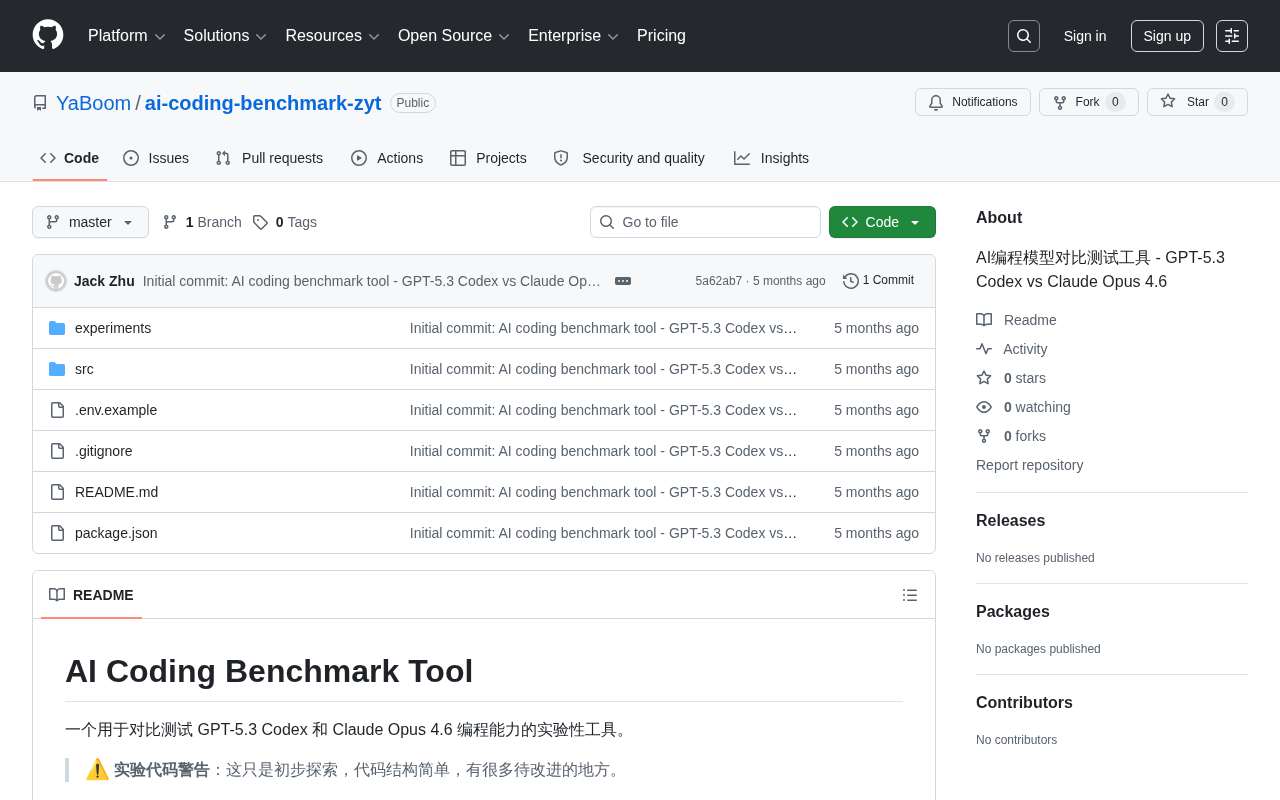
AI Coding Model Benchmark Tool: GPT-5.3 Codex vs. Claude Opus 4.6 — Which One Wins?
The open-source project ai-coding-benchmark-zyt benchmarks GPT-5.3 Codex vs. Claude Opus 4.6. This article explores its methodology, value, and developer guidance.