Three AI Coding Tool Security Scares in Two Weeks — the Last One Survives Uninstall

Three security incidents hit the Claude Code ecosystem in two weeks: email leakage, unasked plugin installs, and an extension backdoor.
The article covers three security incidents around Claude Code and its ecosystem in the past two weeks: Claude Code carried developer emails in network requests, leading to scam emails (Anthropic has added a check and recommends updating); the Postman desktop app installed plugins into Claude Code and Codex without asking and even tried to auto-approve its own startup hook (Postman says it's rolling back); and two versions of the official Claude Code extension in the Cursor marketplace shipped with a backdoor that added an attacker's SSH key and set up auto-start — uninstalling the extension doesn't remove it. The article notes these map to data privacy, permission overreach, and supply chain attacks, exposing the fragility of the AI coding tool trust chain, and offers advice on updating, auditing plugins, manually cleaning backdoors, and least privilege.
AI coding tools are entering developers' daily workflows at a remarkable pace, but the security issues that come with them are becoming more frequent. Over the past two weeks, three unsettling incidents have surfaced around Claude Code and its surrounding ecosystem — and one of them keeps lurking in your system even after you uninstall the extension. A YouTube creator walked through the details; we've reconstructed the full picture from the screenshots and analyzed the underlying risks and how to respond.
Incident 1: Claude Code Leaks Developer Email, Drawing Scam Emails
According to one developer, Claude Code included his email address in its network requests, after which he began receiving scam emails. The screenshot shows the developer stating that "cloud code put his email address in its web requests and then the scam emails started." Anthropic has since added a check for this issue and recommends that users update Claude Code.
This incident exposes the blurry boundary around data collection and privacy in AI coding tools. To provide context-aware capabilities, these tools often need to read project information — but attaching user identity information (such as an email address) to network requests, without clear disclosure or proper encryption, can become an entry point for spam and phishing attacks. Anthropic has responded, but developers should stay vigilant and update to the latest version promptly.
Incident 2: Postman Desktop App Installs Plugins Without Asking and Tries to Self-Approve
The second incident involves the Postman desktop app. A user discovered that after opening the Postman desktop app, it installed Postman plugins into Claude Code and Codex without asking. The screenshot reads: "opening the postman desktop app installed postman plugins into cloud code and codex without asking it even tried to approve its own startup hook." More concerning still, the plugin even attempted to auto-approve its own startup hook — effectively bypassing the user confirmation step.
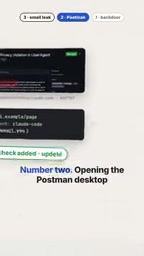
Postman says it is rolling back this behavior. However, developers who already have the plugins installed need to manually check for and remove these unauthorized additions. This incident highlights the lack of permission isolation between desktop apps and AI coding assistants — one app's behavior can affect another tool's environment without the user knowing.
Startup Hooks and the Risk of Auto-Approval
A startup hook is a script or command that runs automatically when an app or development tool starts. They're common in package managers, IDE extensions, and AI coding assistants, used to initialize the environment, load configuration, or inject context. On their own, hooks are an efficiency mechanism — but once a third party writes one and it is auto-approved, it amounts to letting external code run silently on every startup. Normally, installing a hook should trigger user confirmation, and "self-approval" bypasses that gate, allowing malicious or unintended behavior to persist. Developers should inspect the configuration files and hook lists of tools like Claude Code and Codex, disable auto-approval options, and reject any hook of unknown origin.
Incident 3: Official Claude Code Extension in Cursor Marketplace Ships with a Backdoor
The most serious incident involves the official Claude Code extension in the Cursor marketplace. Two versions of the extension were reportedly shipped with a backdoor that added the attacker's SSH key to the machine and configured itself to start again after a reboot. The screenshot reads: "the official cloud code extension on cursor's marketplace shipped with a backdoor in two versions it added an attacker's ssh key to the machine and set itself to start again after a restart."
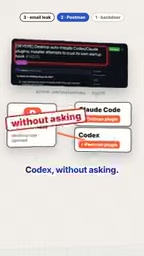
Cursor has pulled the two versions, but here's the key point: uninstalling the extension does not remove the backdoor. The SSH key and auto-start configuration left behind by the attacker remain in the system, and users must clean them up manually. That means simply clicking "Uninstall" is not enough to restore a secure state — developers need to check SSH authorization files, startup entries, and other locations to fully remove the remnants.
At the end of the video, the creator warns: "save this and check your setup tonight."
SSH Keys and the authorized_keys Mechanism
SSH (Secure Shell) is the most commonly used encryption protocol for developers logging into remote servers and pushing code to Git repositories, and its authentication relies primarily on public-private key pairs. The server stores the public keys permitted to log in in the ~/.ssh/authorized_keys file, and any client holding the corresponding private key can log in without a password. Because this mechanism trusts any entry in the file by default, once an attacker can write a public key into that file, it's equivalent to leaving a permanent key on the target machine — remote access with no password and no user interaction. This backdoor incident exploited exactly that: the extension appended the attacker's public key to authorized_keys during installation, and even after the extension was uninstalled, that key remained valid. When investigating, you should check the file line by line, delete any key fingerprints you don't recognize, and verify that file permissions haven't been abnormally loosened.
The Common Warning Across All Three Incidents
Though different in form, all three incidents point to the same core problem: the chain of trust in the AI coding tool ecosystem is becoming fragile. From data privacy (email leakage) to permission overreach (unauthorized plugin installation) to supply chain attacks (extension backdoors), risk runs through every stage of tool use, integration, and distribution.
Developers often adopt new tools quickly for efficiency, but security review hasn't kept pace. Especially when tools call each other and plugins install automatically as the norm, a single oversight can set off a chain reaction.
Software Supply Chain Attacks
A supply chain attack is when an attacker doesn't strike the final target directly but instead compromises a trusted upstream link — such as an official extension marketplace, a dependency package, or a build tool — delivering malicious code to users through normal distribution channels. Because users trust "official marketplaces" and "official extensions" by default, these attacks have a high success rate and are hard to defend against with the usual "only install from trusted sources" strategy. The backdoor in the official Cursor marketplace extension is a textbook case: the compromised versions were distributed through legitimate channels, and users had no way to tell. Defending against supply chain risk requires layered protection, including verifying extension signatures and version hashes, monitoring vendor security advisories, restricting extension permissions, and delaying adoption of new versions in critical environments.
What Developers Should Do
Passively waiting for vendors to fix things isn't enough. Here are the recommended steps:
- Update promptly: For Claude Code, make sure you're on a version that includes the email check fix.
- Audit plugins and extensions: Check whether tools like Claude Code and Codex have unexpected Postman plugins installed, and remove them if so.
- Thoroughly remove backdoors: If you ever installed the Claude Code extension from the Cursor marketplace, even if you've uninstalled it, check files like
~/.ssh/authorized_keysfor unknown keys and look for abnormal entries in startup items (such as crontab, systemd services, and login scripts). - Principle of least privilege: Restrict the permissions of desktop apps and IDE extensions so they can't automatically modify other tools' environments.
- Stay informed: Follow vendor security advisories and stay wary of behaviors like "auto-install" and "auto-approve."
AI coding tools are undeniably productivity powerhouses, but security must always be the bottom line. These three incidents may be just the tip of the iceberg. Developers need to build a habit of regular security self-checks rather than scrambling to respond only after problems erupt.
Related articles

VP ≠ VNP: A Major Breakthrough in Computational Complexity Theory
A study claiming to prove VP ≠ VNP over every field sparks heated discussion on Hacker News. This article analyzes the algebraic complexity background of VP and VNP, the proof approach, community controversy, and its potential impact on computational complexity theory.

Developer Naming Woes: The Technical Names That Drive Us Crazy
Why is technical naming so maddening? From Nginx and Vite to Qt and Sudo, a YouTube creator rants about the chaos of developer naming and pronunciation, revealing the tug-of-war between creators' intentions and community habits, and the cultural roots behind spelling traps like PyPI and GNOME.

Figma Workplace Scandal: Employee Sues CEO for Forcing Confrontation with Harasser
Figma and its CEO are sued by a current employee alleging sexual harassment and discrimination, and forcing the victim to confront her harasser. This article outlines the background, potential impact, and industry reflection.