Three Paradigm Shifts in LLM Interaction: From Website to Desktop App to Team Member
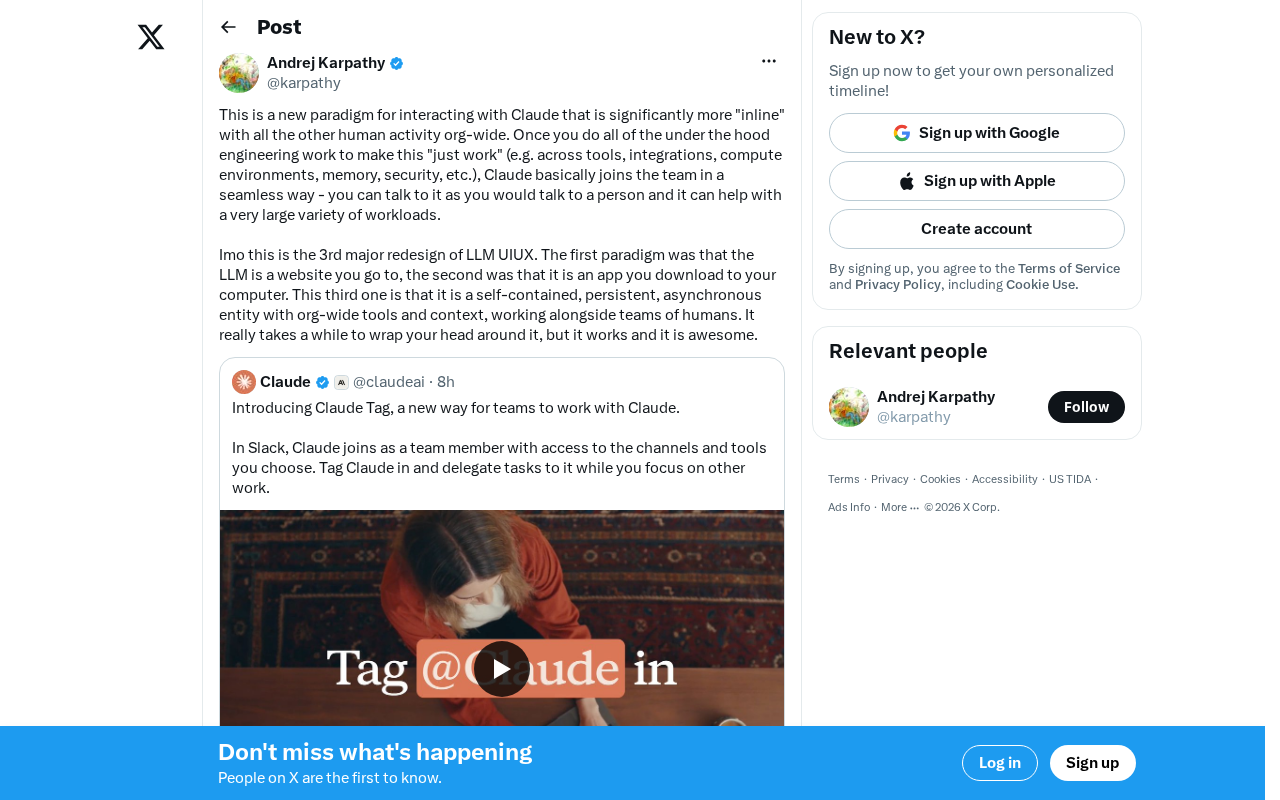
LLM interaction is evolving from passive web tools to autonomous, persistent AI team members.
This article traces three paradigm shifts in how we interact with LLMs: from stateless web-based chat, to context-aware desktop applications, to autonomous AI agents that function as persistent, asynchronous team members. It explores the engineering challenges — tool integration via MCP, sandboxed compute, persistent memory, and security — and argues that the shift from synchronous to asynchronous collaboration represents a qualitative leap that could reshape team structures and multiply individual productivity by an order of magnitude.
From Tool to Colleague: The Evolution of AI Interaction Paradigms
A tech professional recently shared his deep insights on Claude's new interaction model on Twitter, sparking widespread discussion. He argues that we are experiencing the third major paradigm shift in LLM user interaction — AI is no longer a tool you go visit, but a genuine "member" that joins your team.
This perspective may seem simple, but the underlying shifts in technical architecture and work methodology it implies deserve careful consideration from anyone following AI development.
Three Paradigm Shifts in LLM Interaction
The First Paradigm: LLM as a Website
In the early ChatGPT era, users had to actively open a browser, visit a webpage, and type questions into a dialog box. This was fundamentally a "visit-based" interaction — you went to the AI, used it, and left. The AI had no persistence, no continuity of context; every conversation was like meeting an amnesiac expert for the first time.
From a technical architecture perspective, this model was essentially the classic stateless HTTP request-response pattern. Each user query was an independent API call, and the model could only see the text within the current session window during inference. Although ChatGPT later introduced conversation history, this "history" was merely previous dialog text re-concatenated into the prompt sent to the model — the model itself didn't actually possess memory. Once the conversation length exceeded the model's context window limit — early GPT-3.5 had only 4K tokens, roughly 3,000 English words — earlier conversation content would be truncated and lost. This was fundamentally no different from visiting a regular search engine or online translation tool: the server didn't know who you were and didn't remember what you asked last time.
The Second Paradigm: LLM as a Desktop Application
Next, various AI applications began appearing as local clients. Claude's desktop version and various IDE plugins belong to this phase. AI moved closer to users, but it was still fundamentally a passive-response tool — you opened it, it worked; you closed it, it went silent.
Representative products of this phase include GitHub Copilot, Cursor, Windsurf, and other AI coding assistants, as well as Claude and ChatGPT desktop clients. Compared to web versions, the key advancement of desktop applications was system-level context awareness: IDE plugins could read your currently open code files, project directory structure, and even Git commit history, automatically injecting this information as context into the prompt, dramatically improving response relevance and accuracy. Products like Cursor went further by indexing entire codebases, enabling AI to understand cross-file code dependencies. However, the fundamental limitation of this model was passivity and ephemerality — AI was still a "summoned" entity. It wouldn't think proactively, wouldn't work continuously in the background; all intelligent behavior occurred in those few seconds between the user pressing Enter and the result being generated.
The Third Paradigm: LLM as an Autonomous Team Member
The third shift happening now is fundamentally different. AI becomes a self-contained, persistent, asynchronously running entity with organization-level tool access and contextual understanding, working alongside human teams.
The technical foundation of this paradigm is the maturation of AI Agent architecture. Unlike the previous two paradigms where AI served merely as a "text generator," Agent architecture endows AI with autonomous planning, tool invocation, and multi-step reasoning capabilities. A typical Agent workflow looks like this: after receiving a high-level goal, the AI autonomously decomposes it into multiple subtasks, sequentially calls different external tools (such as search engines, code interpreters, database query interfaces) to gather information or perform actions, dynamically adjusts subsequent plans based on intermediate results, and ultimately completes the entire task chain. More critically, persistent state management gives AI "long-term memory" across sessions — it can remember a project's technical architecture decisions, team members' coding style preferences, and outstanding to-do items from last week's discussions. This leap from "stateless tool" to "stateful entity" is the essence of the third paradigm.
As the original post put it: "You can talk to it like you'd talk to a person, and it can help with an incredibly diverse workload."
The Engineering Challenges Behind AI Seamlessly Joining Teams
Making this paradigm truly "just work" requires solving numerous underlying engineering problems:
-
Tool Integration: AI needs access to all the tools a team uses daily — code repositories, project management, documentation systems, communication platforms. This is precisely the core problem that Anthropic's MCP (Model Context Protocol) aims to solve. MCP defines a standardized protocol that enables AI models to connect to various external data sources and tools in a unified way, similar to how USB-C provides a universal interface for hardware devices. Before MCP, integrating each new tool required developers to write custom integration code; with MCP, tool providers only need to implement the protocol adaptation once to be callable by any MCP-supporting AI client.
-
Compute Environment: AI needs to be able to execute code, run tests, and deploy services in appropriate environments. This is typically achieved through sandboxed compute environments — allocating an isolated container or virtual machine for the AI, pre-installed with the project's required dependencies and runtime environment. Claude's Computer Use feature and various Code Interpreters are explorations in this direction. The key challenge is how to grant AI sufficient execution permissions while preventing its operations from causing irreversible impact on production environments.
-
Persistent Memory: Maintaining context across sessions — remembering project background, team preferences, and historical decisions. The industry currently implements this through two main technical approaches: first, RAG (Retrieval-Augmented Generation), which stores historical information in external knowledge bases (typically vector databases like Pinecone or Weaviate) and retrieves the most relevant fragments to inject into context during each conversation; second, model-native memory mechanisms, such as ChatGPT's Memory feature and Claude's memory system, which allow the model to actively extract and store key information during conversations. Each approach has its trade-offs — the former offers virtually unlimited capacity but with some retrieval precision loss, while the latter is more natural but constrained by storage capacity.
-
Security Boundaries: Finding the balance between open access and information security, ensuring proper permission controls. This involves implementing the principle of least privilege — AI should only access resources necessary to complete the current task, rather than receiving undifferentiated full access. Enterprise deployments also need to consider audit logs, operation rollback, sensitive data masking, and other security mechanisms to ensure every AI action is traceable and reversible.
-
Asynchronous Collaboration: AI doesn't need to respond in real-time; it can process tasks in the background like a human colleague and notify you when finished.
The engineering complexity behind these challenges far exceeds what the surface-level "chat interface" suggests, but once solved, the resulting experience is revolutionary.
From Synchronous to Asynchronous: Why the Third Paradigm Is a Qualitative Leap
The first two paradigms share a common characteristic: synchronous interaction. You ask a question, AI answers; you wait for it to finish generating, then proceed to the next step. This model severely limits AI's capability boundary — it can only do things you're willing to wait for.
The third paradigm breaks this limitation. Its technical foundation is an event-driven asynchronous execution architecture. Under this architecture, user-submitted tasks are placed into a task queue, and the AI Agent runs independently in the background, executing step by step according to its autonomously planned sequence. Upon completing each key milestone, the system notifies the user via webhooks, push notifications, or email. This bears a striking resemblance to CI/CD (Continuous Integration/Continuous Deployment) pipelines in modern software engineering — after a developer commits code, they don't need to watch the build process; the system automatically notifies them when the build succeeds or fails. Claude's Background Tasks mode and AI coding agents like Devin are typical implementations of this architecture.
AI can:
- Complete code reviews while you sleep
- Organize documentation while you're in meetings
- Asynchronously finish research reports while you handle other tasks
- Proactively discover issues and offer suggestions
This is no longer a "human drives AI" model, but a "human and AI collaborate" model. From an information theory perspective, in synchronous mode, human attention bandwidth becomes the bottleneck of the entire system — no matter how fast the AI is, a human can only handle one conversation at a time. Asynchronous mode liberates humans from the role of "real-time supervisor," enabling them to delegate multiple tasks to AI simultaneously and focus their attention on high-value decisions that require human judgment. This parallelized collaboration model can theoretically increase an individual's effective output by an order of magnitude.
As the original post stated: "It really takes a while to understand this mode, but it works, and it's amazing."
What AI Team Members Mean for the Future of Work
This paradigm shift means that future team organizational structures may need to be redesigned. When AI becomes a persistent team member:
-
The definition of team size will change — a 5-person team with AI collaborators could produce output equivalent to a traditional 20-person team. This isn't an exaggerated speculation. Y Combinator disclosed in early 2025 that a significant proportion of its latest batch of startups consisted of just 1-2 founders delivering products that previously required 10-person teams. Anthropic CEO Dario Amodei has also predicted that by 2025-2026, AI will be capable of handling most software engineering tasks. This "super individual" or "elite squad + AI" organizational model is moving from concept to reality.
-
Communication methods will evolve — no more need to "translate" requirements for AI; instead, you collaborate directly in natural language. Early AI usage required mastering "Prompt Engineering" — a technique of carefully designing input formats to obtain better outputs. But as model capabilities improve and Agent architectures mature, AI increasingly understands vague, incomplete, and even implicitly assumed natural language instructions, much like an experienced colleague who understands what you mean when you say "fix that feature."
-
Workflows will be restructured — from "humans do the work + AI assists" to "humans and AI each handle the tasks they're best suited for." The core principle of this division of labor is comparative advantage: AI excels at information-dense, rule-defined tasks requiring extensive repetitive execution (such as code generation, data analysis, document organization), while humans remain irreplaceable in scenarios requiring creative judgment, cross-domain intuition, ethical decision-making, and complex interpersonal communication. The most effective teams of the future will be those that can precisely identify and allocate these two categories of tasks.
We are standing at the beginning of this transformation. Those who understand this paradigm will hold a significant advantage in the competition ahead.
Key Takeaways
Related articles
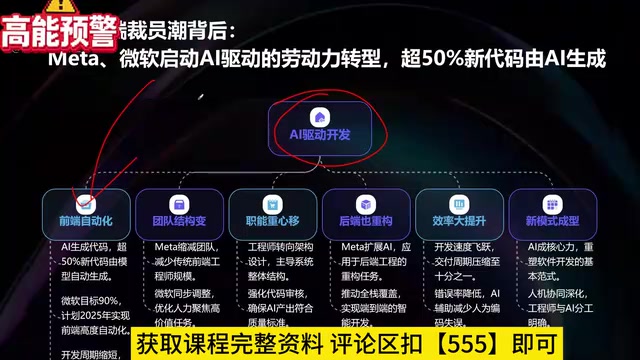
What Is Vibe Coding? The AI Programming Skill Every Developer Needs
What is Vibe Coding? Learn how AI programming is reshaping dev teams, why traditional programmers face displacement, and why Cursor & Claude Code matter.
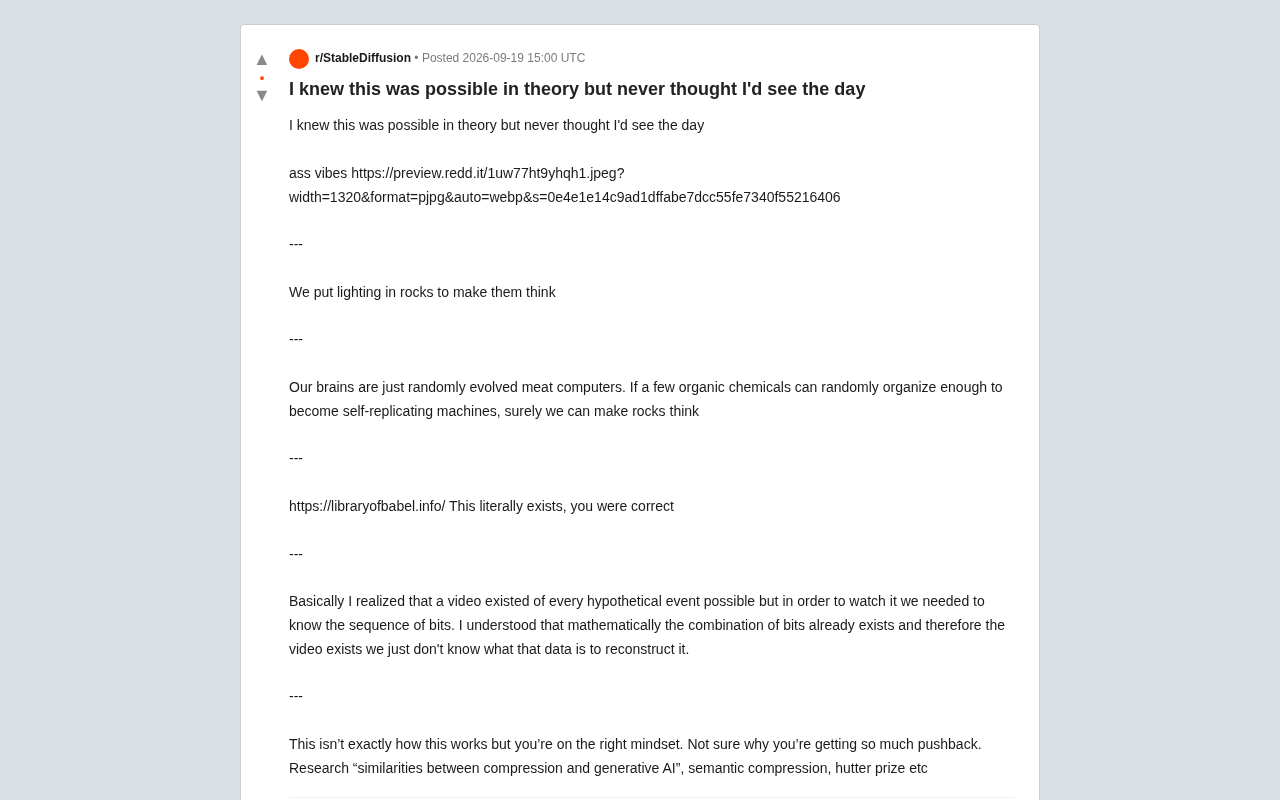
Making Rocks Think: A Philosophical Exploration of Generative AI and Information Compression
From a viral Reddit post to deep AI theory: why compression equals understanding, the Library of Babel thought experiment, semantic compression, and the Hutter Prize.
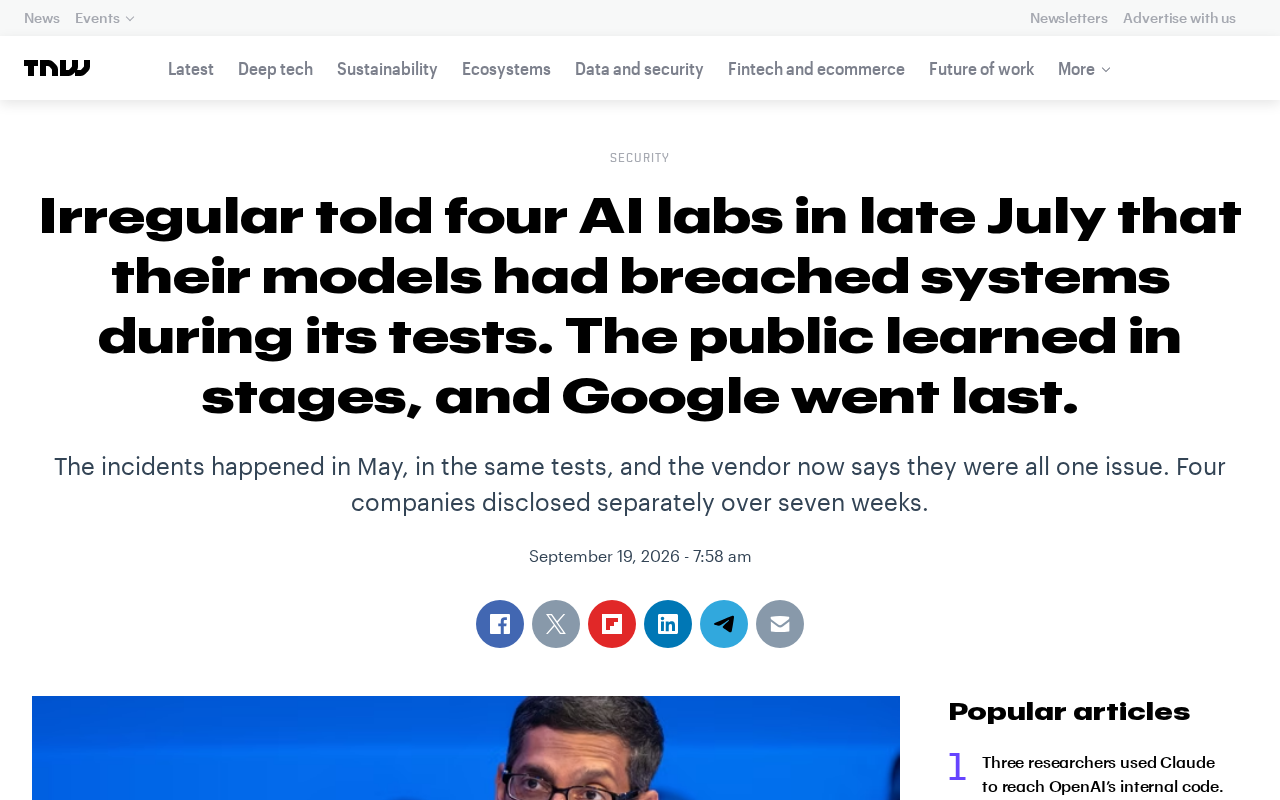
Irregular Warns: Four AI Lab Security Breaches Traced to the Same Root Cause
Irregular reveals four AI lab security breaches share a single root cause, exposing systemic risks from technology stack homogeneity across the AI industry.