Tidal to Fully Ban AI Music Next Month: Rejecting 85,000 Tracks Daily, Deleting 29 Million Songs
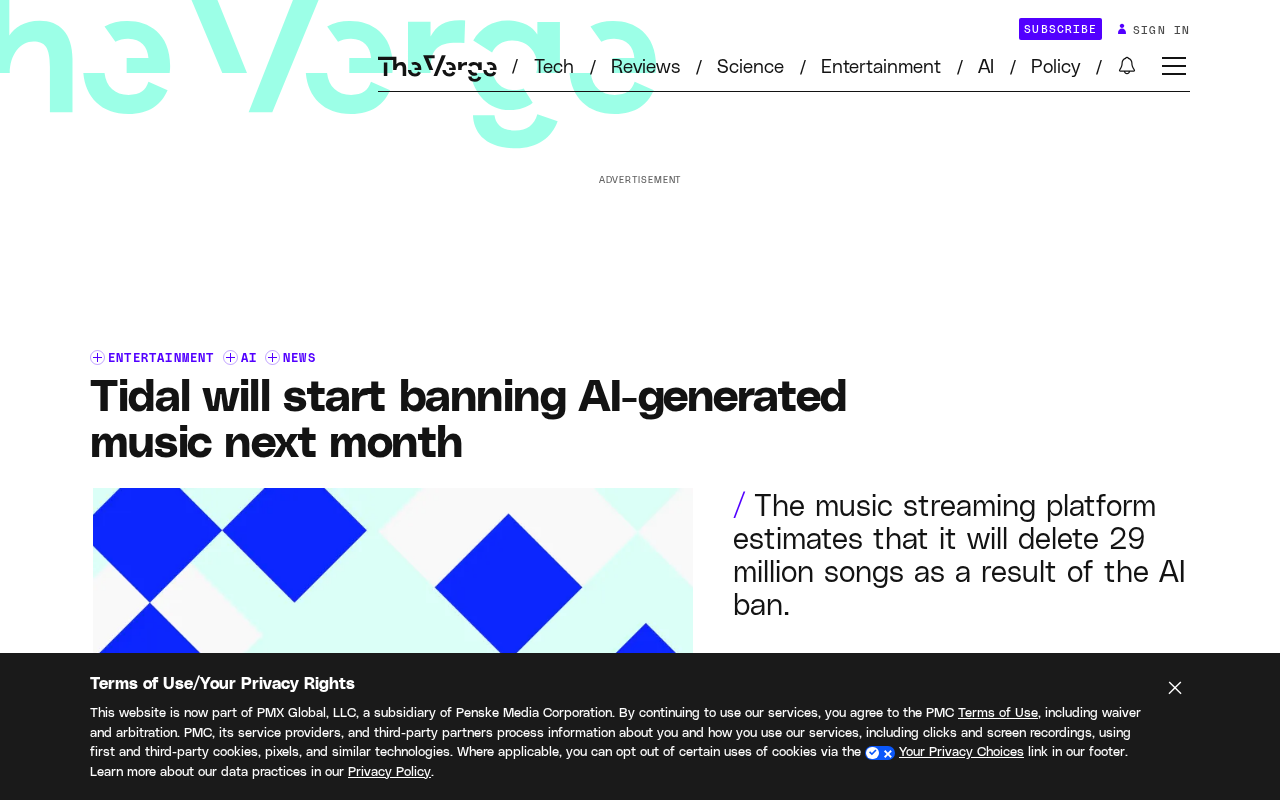
Tidal will ban AI-generated music on December 9, deleting about 29 million tracks and rejecting 80,000 uploads daily.
Tidal announced it will officially ban AI-generated music on December 9, deleting approximately 29 million existing AI songs and expecting to reject 80,000 to 85,000 uploaded tracks daily. Coming just months after the platform began labeling AI tracks and stripping revenue sharing, the move marks a shift from moderate labeling to active purging. The article analyzes what the 29 million deletion scale reveals about AI content volume, notes that detection accuracy, copyright determination, and appeal mechanisms are core challenges, compares industry divergences between banning and coexistence, and discusses potential impacts on uploaders relying on AI tools and human-assisted creators, viewing Tidal's policy as an industry test case.
Streaming platform Tidal is taking the toughest stance yet on AI-generated music. According to Tidal's head of music Robert Andersen, the platform will officially ban AI-generated music on December 9, at which point it will delete approximately 29 million AI-generated songs and expects to reject 80,000 to 85,000 uploaded tracks per day.
This decision comes just months after Tidal began labeling tracks identified as AI-generated and stripping them of revenue sharing, marking an escalation from "label and observe" to "actively purge."
From Labeling to Banning: Tidal's Regulatory Escalation
Tidal did not adopt a ban strategy from the start. The platform had previously introduced an AI music detection mechanism that labeled tracks deemed AI-generated and removed their commercial revenue. This approach represented a relatively moderate transitional solution in the industry—disclosing content attributes to users while keeping the works accessible on the platform.
The new policy on December 9 means this transitional period is over. The platform will directly delete existing AI-generated songs and set up interception thresholds for new uploads. According to figures provided by Andersen, an estimated 80,000 to 85,000 tracks will be rejected daily—a volume that indicates the scale of AI-generated music uploads has become substantial.
The technical foundation of AI-generated music is generative audio models, which are typically based on diffusion models or autoregressive Transformer architectures. After training on massive audio datasets, these models can synthesize complete songs from text prompts or melodic fragments. Early AI music remained largely experimental, but with the proliferation of tools like Suno and Udio, generation quality has approached release-ready levels and upload barriers have dropped dramatically. This is precisely the root of the governance pressure facing streaming platforms: traditional copyright identification systems (such as audio fingerprinting) are designed to detect copies of existing recordings, but AI-generated music consists of entirely new audio that fingerprint matching cannot catch. Platforms must rely on acoustic feature analysis, metadata anomaly detection, or upload behavior pattern recognition to determine whether content is AI-generated—methods whose accuracy remains unstable and which represent the biggest technical variable in implementing Tidal's policy.
What the 29 Million Deletion Scale Means
Approximately 29 million AI-generated songs will be removed—a number that is itself a noteworthy industry signal. It shows that AI-generated content has accumulated considerable volume in Tidal's catalog, rather than being isolated cases.
From a platform operations perspective, large-scale cleanup involves a series of complex issues including detection accuracy, copyright attribution, and user appeals. Whether the detection system can accurately distinguish AI-generated from human-created content directly determines the risk of false positives. Tidal's choice to publicly disclose specific timing and estimated figures is, to some extent, expectation management for potential disputes.
Industry Divergence: Ban or Coexist
Tidal's hardline approach contrasts with some platforms. On the AI music issue, the streaming industry has yet to form a unified standard: some platforms prefer to constrain through labeling and revenue rules, while others are exploring licensing models that coexist with AI music. Tidal's direct ban puts the fundamental question—"whether to allow AI music into the catalog"—on the table.
Supporters argue that a flood of AI-generated music without sufficient authorization would dilute catalog quality and harm human creators' revenue, making a ban a necessary bottom-line defense. Opponents worry that one-size-fits-all detection and deletion could harm human musicians who use AI tools as aids, and that technical errors at the enforcement level are difficult to fully avoid.
The industry's divergence on AI music essentially stems from differences in copyright licensing chains. Platforms like Spotify favor a middle path of "labeling + revenue rules," requiring uploaders to disclose AI usage and excluding AI tracks from recommendation algorithms and editorial playlists, but not directly deleting them. Deezer goes further, launching dedicated detection tools to identify AI tracks and label the results. In contrast, some platforms are exploring "licensing for coexistence" models with record labels, whereby AI music can enter the catalog provided it obtains copyright holder permission and pays royalties. Tidal's choice of a direct ban effectively abandons room for licensing negotiations, pushing governance costs onto the detection stage rather than the licensing stage. This divergence also reflects different platform positioning: platforms that sell themselves on high fidelity and a human creator community have more incentive to maintain a "purely human-created" brand label.
Practical Impact on Creators and Uploaders
For creators who rely on AI tools to generate music and upload to Tidal, December 9 is a clear dividing line: existing works face deletion and new uploads will be rejected. For works where AI is used as an auxiliary tool but core creation is still done by humans, the platform's detection standards will be key—detailed determination rules and appeal mechanisms have not yet been disclosed in public information.
This policy also provides an observational sample for other streaming platforms. If Tidal's ban performs smoothly in terms of detection accuracy and creator feedback, it could prompt more platforms to follow suit; if controversies are significant, the industry may return to the middle path of labeling and revenue constraints.
Related articles

Zero-Code Replication of a $10,000 3D Website with Claude Code: A Six-Tool Breakdown
Bilibili creator Yomi used Claude Code plus five free tools to build a 3D product landing page quoted at $10,000 overseas—zero code. Breakdown of the six-tool division of labor, image-to-3D workflow, and the core collaboration method: "give AI a reference, not 'make it look better.'"
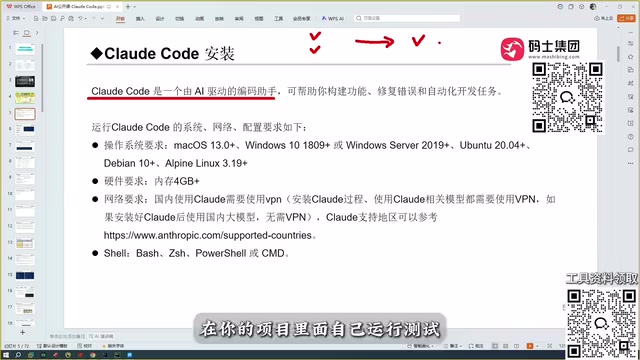
Claude Code in Practice: Install, Connect Models, Calculate Tokens, and Ship a Full-Stack Project with a Single Document
Based on a Bilibili public course demo, this covers Claude Code installation, model connection, token cost calculation, and the practical path of shipping a full-stack project with a single document, plus comparisons with Copilot, Cursor, Trae, and other coding assistants.
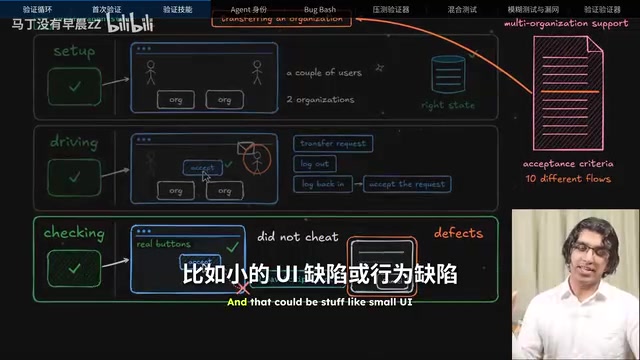
Who Accepts AI-Written Code? A 25-Minute Deep Dive into Verification Loops and the New Code Review Paradigm
After AI writes lots of code, how should Code Review verify it? This article breaks down the Claude Code team's verification loop framework: surface-level end-to-end verification, setup/drive/check three-stage skills, hybrid end-to-end testing and reliability checklists, and how to tighten the loop when issues slip through.