TinyKPI: Bringing Your Business Dashboard Into the MacBook Notch

TinyKPI embeds live KPIs into the MacBook notch for zero-switching, fully local metric monitoring.
TinyKPI is a macOS app by indie developer Rida Ennasry that ranked #9 on Product Hunt. It embeds key business metrics from Stripe, PostHog, and Google Analytics directly into the MacBook notch, keeping data in ambient view and eliminating the need to switch between dashboards. Acting purely as an aggregation display layer, it supports custom database connections for flexible use cases. Its standout feature is a 100% local architecture — all data fetching, aggregation, and rendering happens on-device with no third-party cloud involvement, making it well-suited for privacy-conscious founders, PMs, and growth teams on newer MacBook hardware.
For founders and product managers who need to keep a constant eye on key metrics, repeatedly switching between Stripe, Google Analytics, PostHog, and other dashboards is both inefficient and distracting. TinyKPI takes a radically different approach: embedding your most important business metrics directly into the MacBook's notch area, keeping your data permanently within view.
This macOS app — built by developer Rida Ennasry and ranked #9 on Product Hunt's daily chart with 81 upvotes — addresses a genuine pain point: how to maximize metric visibility while minimizing interface footprint.
Turning the Notch Into a Live Data Dashboard
TinyKPI's core concept is the repurposing of the MacBook notch. What was once a hardware-imposed "dead zone" on the screen is transformed into a customizable mini dashboard. You choose the KPIs that matter most, arrange them to your preference, and let them stay persistent and update in real time.
The real value here is zero switching cost. Instead of opening a browser, logging into a backend, and navigating to a reports page, TinyKPI makes your metrics part of the operating environment itself — always visible at a glance, requiring zero interaction. For anyone who monitors revenue, active users, conversion rates, and similar numbers on a daily basis, this "ambient awareness" approach to information display can meaningfully reduce the cognitive overhead of context switching.
The MacBook notch was introduced with the 14-inch and 16-inch MacBook Pro models in 2021, serving as a cutout for the camera module. macOS natively extends the menu bar into the space on either side of the notch, but the notch itself has no built-in system UI purpose. TinyKPI exploits this "negative space" by overlaying custom content in the notch area, transforming it visually from an obstruction into a display surface. Similar ideas have appeared in tools like TopNotch and NotchNook, but TinyKPI's vertical focus on KPI monitoring is its differentiating choice. The implementation relies on macOS window layering — floating the metrics above all other windows — so data remains visible regardless of which app is in use.
Connecting the Tools You Already Use
TinyKPI doesn't ask you to change your existing data stack. Instead, it reaches out to connect with the tools you're already using. The officially listed integrations include the payment platform Stripe, product analytics tool PostHog, website analytics via Google Analytics, and your own databases.
This positions TinyKPI as an aggregation and display layer, not a data store or analytics engine. Developers and operators can consolidate key metrics scattered across different platforms into a single view. The support for custom databases is particularly noteworthy — it extends TinyKPI's applicability beyond standard SaaS metrics to any queryable business data, significantly broadening its flexibility.
A Privacy Promise: 100% Local
In an era of growing data privacy awareness, TinyKPI makes an explicit commitment: your data never leaves your Mac.
This is a meaningful selling point. Business metrics often include sensitive information like revenue figures and user counts, and many teams are uncomfortable pushing that data to third-party cloud services. TinyKPI's local-processing architecture means that metric fetching, aggregation, and rendering all happen on the user's device, fundamentally eliminating the risk of data leakage. For teams that prioritize compliance and information security, this design lowers the barrier to adoption.
In practical terms, "local" means API keys, database credentials, and fetched business data are stored and processed only on the user's machine — the app runs no intermediary server to proxy requests or cache data. This contrasts with SaaS dashboard tools like Databox or Klipfolio, which require data to be ingested into their cloud before aggregation can happen. The tradeoff of a local architecture is the inability to sync across devices or share a dashboard with teammates on other machines. But for solo founders or single-device use cases, this is a perfectly reasonable tradeoff. Compliance frameworks like GDPR and SOC 2 also define "data processors" in ways that make local-only processing naturally exempt from many data-sharing agreement obligations.
Positioning and Takeaways
TinyKPI is a quintessential "small but beautiful" productivity tool. It doesn't try to reinvent data analytics — it focuses on a specific interaction scenario: keeping the numbers that matter most constantly present. This restrained product philosophy is exactly what makes many indie developer apps resonate with users.
That said, as an app built around a specific piece of MacBook hardware, its target audience is naturally limited to users of newer MacBook models. Its value also depends heavily on the breadth of its integration ecosystem — the more data sources it supports, the wider the range of use cases it can cover. The current lineup of Stripe, PostHog, and Google Analytics already addresses many common needs, but its long-term trajectory will depend on whether the third-party integrations continue to expand.
For founders, growth teams, and product managers who live and breathe data every day, TinyKPI offers a lightweight, privacy-respecting alternative worth trying.
Related articles
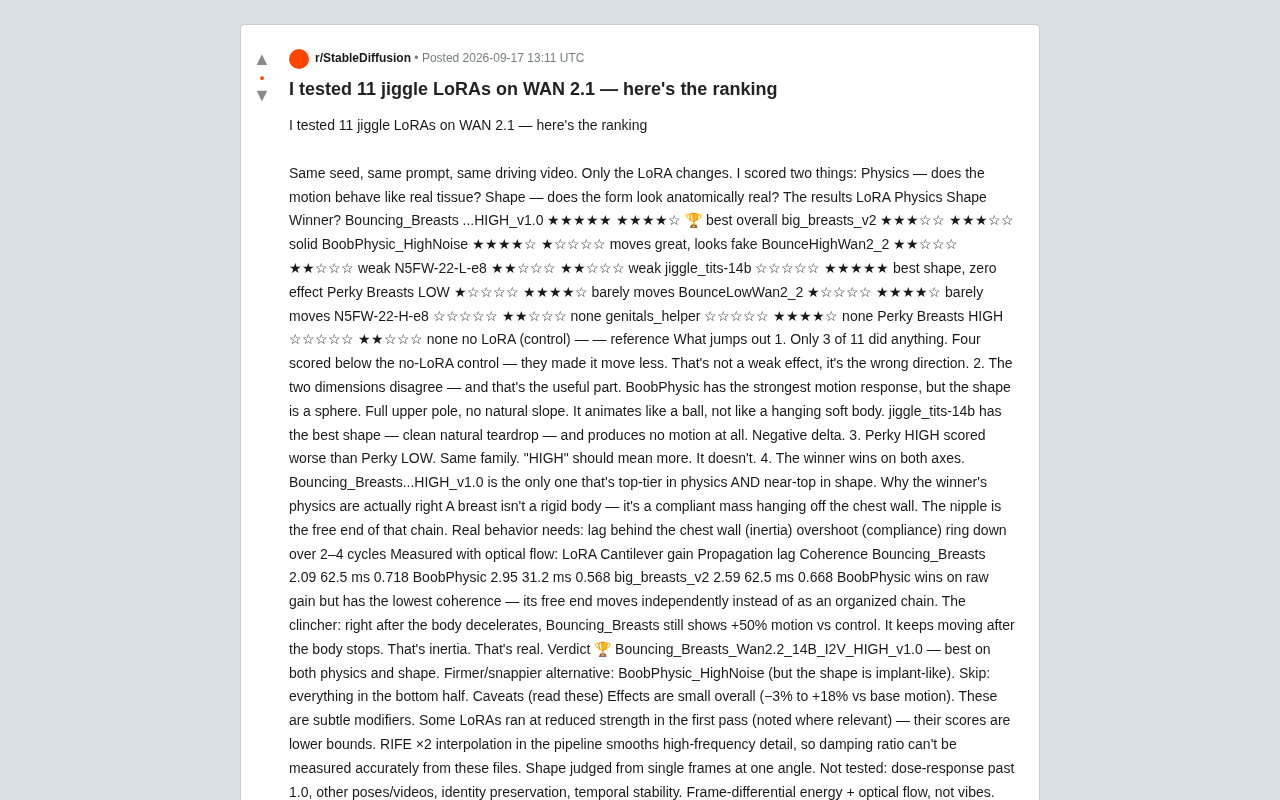
WAN 2.1 Physics Motion LoRA Benchmark: Rankings and Methodology for 11 Models Tested
A Reddit user benchmarked 11 physics-motion LoRAs on WAN 2.1 using optical flow analysis. Only 3 worked meaningfully; 4 scored below the no-LoRA baseline. Full rankings and methodology inside.

Lucid Partners with Bolt to Target European Robotaxi Market
Lucid Motors has signed a letter of intent with European mobility platform Bolt to explore Robotaxi services in Europe, though no vehicle orders have been placed yet.

AI Assistants Enter the "Phone Call" Era: Instinct and Meta Muse Add Voice Task Execution
AI assistants Instinct and Meta Muse now make phone calls on your behalf — booking restaurants, canceling subscriptions — marking a leap from chat tools to real-world agents.