tiun.: An All-in-One Auth and Payments System Built for AI Developers
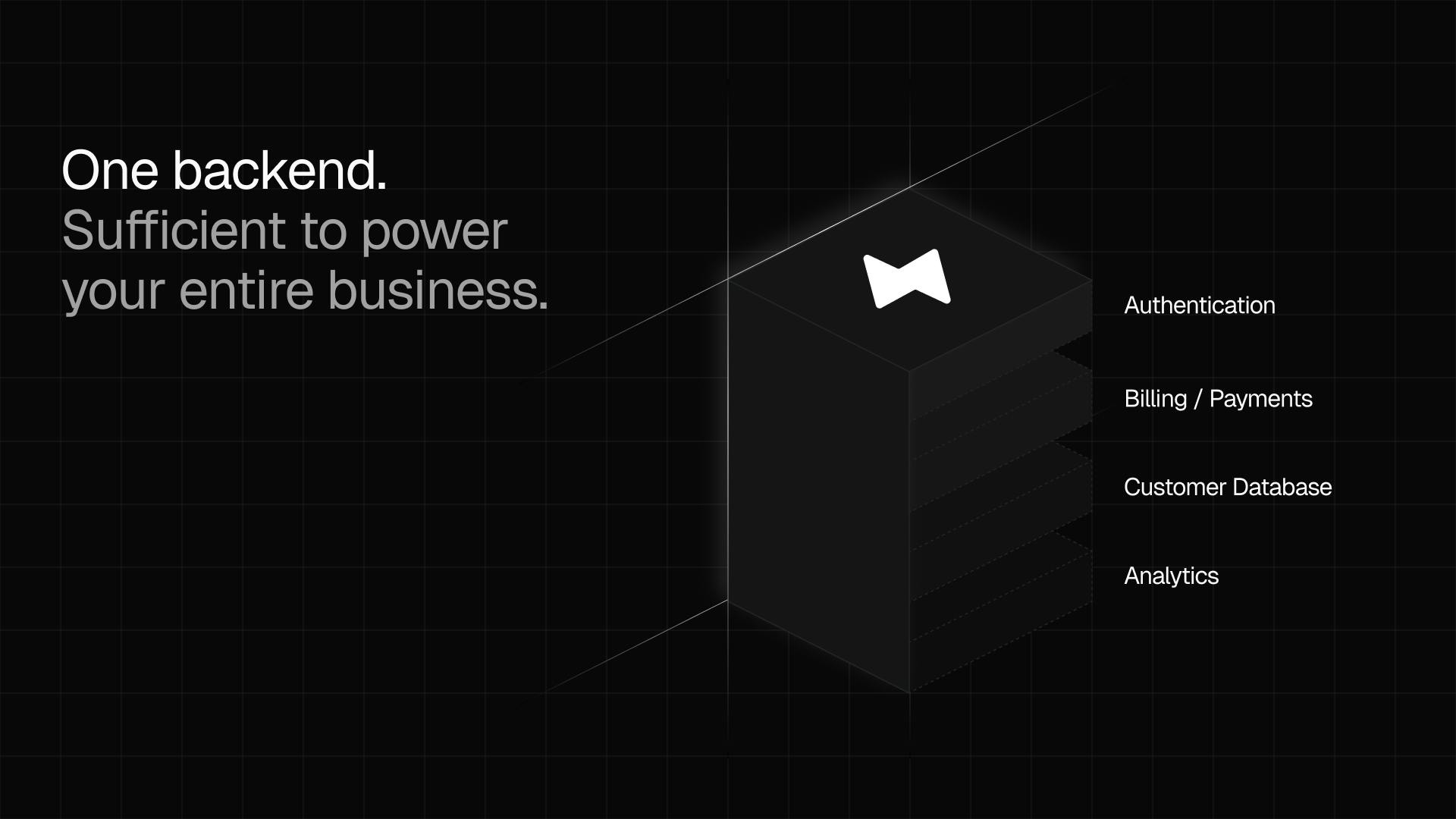
tiun. bundles auth, payments, and usage billing into a one-command install built for AI developers' productization needs.
tiun. is an all-in-one infrastructure tool for AI developers, consolidating identity auth, payments, usage-based billing, customer data management, and analytics into a single system with a "one command to install" experience. Its entry point is precise: AI products typically rely on token- or call-based usage billing, which is the most integration-intensive part of the traditional SaaS toolchain. By making these capabilities work out of the box, tiun. lets developers accept payments on launch day instead of spending weeks wiring together Auth0, Stripe, databases, and analytics tools. The product topped Product Hunt with 228 upvotes across Payments, Developer Tools, and AI categories — but platform lock-in risks and long-term maintainability still warrant evaluation.
In today's AI application boom, indie developers and small teams rarely lack ideas — what they lack is the infrastructure to turn those ideas into revenue-generating products quickly. Authentication, payments, billing, user data, analytics — these modules are unrelated to core functionality yet absolutely essential, and they routinely consume weeks or even months of developer time. tiun., which topped Product Hunt's daily rankings, is built precisely to solve this pain point.
What Problem Does tiun. Solve?
tiun.'s tagline is straightforward: "Auth, billing, and payments for AI builders." It consolidates identity authentication, payment collection, customer data management, and usage analytics into a single system, with a flagship "one command to install" onboarding experience.
For many developers building AI products, the real challenge isn't calling a model — it's the "last mile" of productization. How do users log in? How do subscriptions get charged? How is usage metered and billed? Traditionally, answering these questions required stitching together Auth0, Stripe, a database, and analytics tools, with non-trivial integration costs. tiun. aims to cover all of these with a single system, letting developers "ship a paid product the same day they start."
Why Targeting "AI Builders" Is a Smart Entry Point
tiun.'s explicit focus on AI developers isn't just marketing language. The billing logic for AI products differs meaningfully from traditional SaaS — they typically rely on usage-based billing (by tokens, API calls, or generations) rather than flat monthly subscriptions.
This "usage-based billing" (UBB) is precisely where integration complexity peaks: it requires precisely recording each user's consumption, real-time reconciliation, and handling overage and quota controls. By making this capability work out of the box, tiun. saves AI developers from the enormous engineering effort of building their own metering systems. The fact that it's listed under Payments, Developer Tools, and Artificial Intelligence simultaneously on Product Hunt reflects this cross-cutting positioning.
The engineering reality of Usage-Based Billing (UBB) is far more complex than it appears. Traditional SaaS only needs to trigger a payment at subscription start and renewal, while UBB requires building a complete metering pipeline: capturing consumption data on every API call, writing to a high-throughput event stream, aggregating by billing period, reconciling with the billing system, and handling quota warnings, overage cutoffs, and refund calculations. Stripe itself provides Meter and Usage Records APIs, but wiring these together with user identity, access control, and frontend displays still requires substantial glue code. The emergence of UBB-focused startups like Metronome and Orb is itself evidence that this integration layer is painful enough to support standalone products — tiun.'s choice to make it a core differentiator for AI developers is a well-reasoned entry point.
Minimal Setup Is the Core Selling Point
"One command to install" is the core experience tiun. emphasizes repeatedly. For indie developers, a tool's value isn't just in its breadth of features — it's whether it can be quickly embedded into an existing workflow.
Consolidating auth, payments, data, and analytics into one system means developers don't need to sync data or manage state across multiple third-party services — user identity, subscription status, and consumption records are natively connected. This "integrated" design reduces cognitive overhead and eliminates the boundary bugs that come with stitching multiple systems together. Of course, the flip side of tight integration is potential vendor lock-in, and the cost of replacing or migrating later is worth evaluating upfront.
Market Reception and Competitive Landscape
tiun. took the top spot on Product Hunt with 228 upvotes and 38 comments, signaling that this direction resonates with real developer needs. The product was built by a team of Nikolaos Christoforakos, Sandro Zweig, Christian Heiduschke, and Srdjan Pajic.
From a competitive standpoint, tiun. is up against a mature ecosystem: Stripe for payments, Clerk/Auth0 for authentication, and various analytics tools. Its differentiation lies not in out-competing these incumbents on any single feature, but in the dimensions of "integration" and "AI-native design." Whether it can sustain that experience advantage and deliver on its out-of-the-box promise will determine how far it can go.
Clerk and Auth0 represent two classic authentication product philosophies: Auth0 is full-featured and built for enterprise compliance scenarios, with a steep learning curve; Clerk prioritizes developer experience with ready-made React components and has seen wide adoption among indie developers in recent years. Both solve only the "identity authentication" piece — connecting them to payments and usage systems still requires significant developer effort. On the payments side, Stripe is the de facto standard, but its API documentation is vast and Webhook handling is tedious, making it unfriendly for small teams that need to ship fast. tiun.'s competitive logic isn't to surpass any of these specialized tools on their home turf — it's to trade "good enough" for "less hassle." That tradeoff holds real value for developers in early product validation stages, but as products scale, the tension between customization needs and an integrated solution will inevitably grow.
Final Thoughts
tiun. represents a clear trend in the developer tools space: as the number of AI products multiplies, infrastructure is evolving toward "less configuration, faster launch." For teams that want to focus their attention on core AI capabilities rather than reinventing the wheel, this kind of all-in-one solution offers genuine appeal.
One important caveat: a Product Hunt #1 ranking reflects topic momentum and early enthusiasm more than anything else. The product's stability, pricing reasonableness, and long-term maintainability still need to be validated through real-world use. Interested developers would do well to start with a small-scale project and assess whether it truly delivers on its promise of shipping a paid product on day one.
Related articles

DeepSeek Speaks Japanese: Observations on Natural Multilingual Interaction
A Bilibili demo shows DeepSeek conversing naturally in Japanese — with proper honorifics, emotional roleplay, and Chinese–Japanese switching. Here's what it means.

From Solo to Team Player: The Journey of an AI/LLM Self-Learner
A CSE student with LLM, RAG, AI Agent, MCP, and LangChain skills seeks mentorship and team experience. Exploring how AI self-learners can transition from solo to collaborative engineering.
Jev: A New Frontier Model Claiming 40–400x Lower Cost and 20–200x Faster Inference
New frontier model Jev claims 40–400x lower cost and 20–200x faster inference. We break down the efficiency claims, likely technical approaches, and how to evaluate them.