TopAgent: An AI Agent SMS Marketing Tool to Boost B2B Event Attendance

TopAgent uses AI agents to automate B2B event SMS invitations and follow-ups in a human-in-the-loop workflow.
TopAgent is an AI agent tool on Product Hunt focused on boosting B2B conference, summit, and workshop attendance. Marketers submit opted-in audience lists, event details, registration links, and deadlines; the agent generates SMS invitation campaigns, monitors delivery, clicks, and replies, and drafts follow-up messages for approval rather than auto-sending. SMS offers immediacy and high read rates for time-sensitive scenarios, but compliance and list quality are prerequisites, and actual conversion results remain to be validated.
TopAgent: An AI Agent SMS Marketing Tool to Boost B2B Event Attendance
Inviting and following up on B2B events has always been a time-consuming, labor-intensive grind. Sending texts, chasing replies, tracking clicks, and then adjusting messaging based on feedback—marketing teams often have to juggle multiple tools back and forth. TopAgent, newly launched on Product Hunt, aims to automate this entire workflow with an AI agent: you simply provide an opted-in audience, event details, registration link, and deadline, and it generates SMS invitation campaigns, monitors delivery and engagement data, and hands you drafts for approval when follow-ups are needed.
From Invitation to Follow-Up: How TopAgent Works
TopAgent's positioning is crystal clear—driving attendance for B2B conferences, summits, or workshops. According to its product page, the workflow isn't complicated: marketers hand TopAgent an opted-in audience list, event details, registration link, and deadline, and the agent gets to work preparing the campaign.
Once launched, TopAgent continuously monitors SMS delivery, link clicks, and reply content. When certain contacts need a second touchpoint, it generates corresponding follow-up messages—but these aren't sent automatically; they're returned to the user for approval. This "human-in-the-loop" design preserves the efficiency of automation while avoiding the awkwardness of AI sending inappropriate content to customers without oversight.
In terms of product categorization, TopAgent is listed under Messaging, Marketing, and Artificial Intelligence simultaneously, indicating it's not a simple mass-messaging tool but rather embeds AI decision-making capability into the execution chain of SMS marketing.
Why SMS Is Regaining Attention in B2B Scenarios
It's no secret that email open rates keep declining, while SMS reach on mobile remains impressive. For B2B event marketing, SMS advantages lie in immediacy and high read rates, making it particularly suitable for time-sensitive scenarios like pre-event reminders, registration nudges, and on-site guidance.
But SMS marketing has equally prominent challenges: content must be concise, timing must be precise, and follow-up cadence that's poorly calibrated easily irritates recipients. TopAgent makes "monitoring replies and preparing follow-ups" a core capability, hitting this pain point squarely—it doesn't just send and forget, but determines next actions based on actual engagement.
It's worth noting that the product emphasizes the audience is opted-in, which is crucial in increasingly strict SMS marketing compliance. Mass-texting without explicit consent not only yields low conversion rates but may also cross regulatory red lines.
The compliance foundation of SMS marketing is typically built on an "opt-in" mechanism. In the US, marketing texts must comply with TCPA (Telephone Consumer Protection Act) and carrier registration requirements for A2P (Application-to-Person) messaging; businesses must complete brand and campaign registration through methods like 10DLC. In Europe, GDPR and the ePrivacy Directive apply, generally requiring prior consent and opt-out mechanisms for marketing texts. An opted-in audience means users have actively checked a box agreeing to receive such information, and businesses must be able to prove the source and timing of consent. This is why the article repeatedly emphasizes that lists must be opted-in—it's not just a conversion rate issue but directly determines whether an SMS campaign is legally sendable.
Where Agent Products Fit in Marketing Tools
TopAgent isn't the first product to bring AI agents into marketing workflows, but it represents a trend worth watching: marketing tools are evolving from "assisting content generation" to "end-to-end task execution." In the past, AI mostly helped you write a text message; now TopAgent attempts to take over the complete loop from campaign preparation and send monitoring to follow-up drafting.
The value of this model lies in reducing manual switching costs. Marketers don't need to jump between SMS platforms, analytics tools, and CRMs repeatedly—the agent aggregates information and directly provides actionable next steps. However, the existence of the approval step also indicates that vendors remain cautious about fully automated sending at this stage; human judgment remains an indispensable part of the process.
On Product Hunt, TopAgent received 133 upvotes and 15 comments, ranking 7th for the day. This result shows the product concept has attracted some attention, but as an early-stage product, its actual effectiveness—such as the degree of conversion rate improvement from follow-up messages and its ability to differentiate prospects with varying intent—still needs more user cases to verify.
"Human-in-the-loop" is a common design paradigm in AI agent products: the agent perceives the environment and generates candidate actions, but hands critical actions to humans for confirmation or correction before execution. It sits between fully manual and fully automated, with the advantage of delegating repetitive judgment and drafting work to the model while retaining final responsibility with the operator. For customer-facing marketing outreach, this design also reduces the risk of misinformation from model hallucinations or prompt injection, and preserves audit and accountability mechanisms for enterprises. As agent capabilities improve, the industry typically opens permissions gradually along a gradient of "suggestion—approval—exception approval—autonomous execution"; TopAgent is clearly at the approval stage currently.
Use Cases and Potential Limitations
Inferring from the product description, TopAgent is best suited for B2B marketing teams with clear event schedules and compliant audience lists. Conference organizers, SaaS company event marketing departments, and training institutions that frequently hold offline workshops could all be potential target users.
Limitations are equally apparent. First, the product is entirely built around SMS and registration links; support for multi-channel coordination (such as combining email and LinkedIn outreach) remains unclear. Second, the quality of agent-generated follow-up messages depends on its semantic understanding of reply content, and actual performance in this area isn't detailed in public information.
Additionally, SMS marketing effectiveness is highly dependent on list quality. If the opted-in audience doesn't closely match the event theme, even the smartest follow-ups can't rescue conversion rates. Tools can optimize execution efficiency but can't replace precise judgment about target audiences.
Summary
TopAgent applies AI agents to a specific and practical scenario: SMS invitations and follow-ups for B2B events. It doesn't try to be a universal marketing platform but focuses on one thing—"boosting attendance rates"—by monitoring engagement and generating follow-up drafts to reduce manual burden. For marketing teams tormented by event invitations, this is undoubtedly a direction worth watching. Before trying it out, however, it's advisable to first assess your audience list's compliance and match quality—no tool, however good, can save a terrible list.
One-line Summary
TopAgent uses AI agents to automate B2B event SMS invitations and follow-ups, forming a human-in-the-loop execution loop.
Paragraph Summary
TopAgent is an AI agent tool launched on Product Hunt, focused on boosting attendance for B2B conferences, summits, and workshops. After marketers submit opted-in audience lists, event details, registration links, and deadlines, the agent generates SMS invitation campaigns and continuously monitors delivery, link clicks, and replies; when second touchpoints are needed, it generates follow-up messages for user approval rather than sending automatically, forming a human-in-the-loop automated workflow. The article notes that SMS offers immediacy and high read rates in time-sensitive scenarios like pre-event reminders and registration nudges, but compliance and list quality are prerequisites for effectiveness. The product also represents the trend of marketing tools evolving from content generation to end-to-end task execution, with its actual conversion effectiveness still awaiting verification through more user cases.
Related articles

Mistral Large 4 Open-Sources a Trillion Parameters, Microsoft Offers Voluntary Severance to 60,000 Employees
Mistral Large 4 open-sources a trillion-parameter multimodal model with a coding agent score of 48; SanDisk earnings show AI inference reshaping NAND demand; Google Gemini adds in-app file editing, OpenAI raises Codex quotas, and Microsoft offers voluntary severance to 60,000 employees.
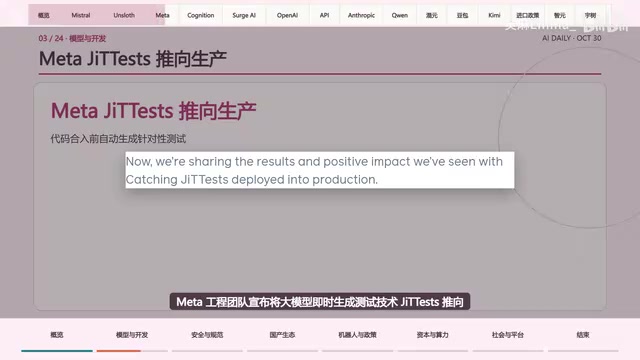
Mistral Large 4 Opens Its Weights: AI Morning Brief Roundup of Models and Ecosystem Trends
Mistral Large 4 opens its weights, a 1-trillion-parameter MoE architecture that can run locally on MacStudio; Meta's test-generation technology enters production; top tax benchmark pass rate only 10.8%; Canadian government takes a stake in Cohere; Doubao Work opens third-party model calls. This AI Morning Brief rounds up model, ecosystem, capital, and policy developments.
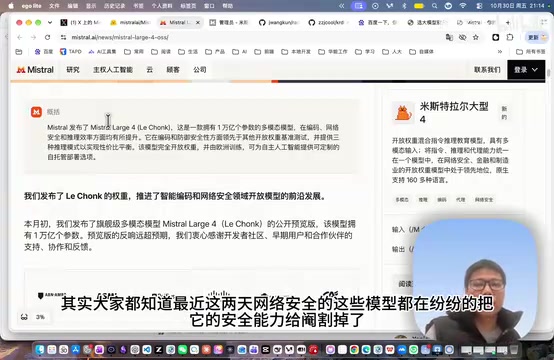
Mistral Large 4 Goes Open Source: A 1T-Parameter European Qwen Challenging DeepSeek
Mistral Large 4 is now open source: 1T total parameters, 52B activated, focused on coding and cybersecurity, with ~610G NVFP4 weights. We analyze its comparison with DeepSeek V4 Flash, API pricing, demo realism, and local deployment value.