Tovel AI Deep Dive: The AI Action Assistant That Goes from Meeting Recordings to Automatic Execution

Tovel AI transforms meeting conversations into automated business actions like CRM updates and follow-ups.
Tovel AI differentiates itself from traditional meeting recording tools by moving beyond transcription to automated execution. Through deep native integrations, it converts conversations into CRM entries, follow-up emails, and task scheduling—all with human-in-the-loop review. With a potential wearable hardware component, Tovel aims to build a complete pipeline from conversation capture to business action, signaling a shift from information tools to action tools.
When AI Recording Tools Go Beyond Just Taking Notes
The AI meeting assistant space has long been crowded with recording, transcription, and summarization tools. From Otter.ai to Fireflies.ai, and later entrants like Grain and Avoma, these tools share a core value proposition: "helping you remember what was said in a meeting." Most of these products are built on ASR (Automatic Speech Recognition) engines—such as OpenAI's Whisper, Google's Speech-to-Text, or proprietary models—converting audio to text before using large language models for summary extraction. Otter.ai alone had accumulated over 24 million users by 2023, a testament to the enormous demand for such tools.
However, there's an awkward reality: no matter how thorough the notes, the follow-up actions still require manual execution—entering data into a CRM, organizing to-dos, drafting follow-up emails. This "last mile" efficiency gap is precisely the most time-consuming link in the entire value chain.
Tovel AI aims to break this pattern. Its slogan is straightforward: "From conversation to action, in three steps." After launching on Product Hunt, the product garnered 78 upvotes, ranking 20th, and was categorized under Productivity, Wearables, and Artificial Intelligence.
Tovel AI's Core Differentiator: From the Information Layer to the Execution Layer
Tovel's most fundamental differentiator, in the company's own words: "Tovel doesn't just tell you what happened—it helps complete what happens next."
This statement precisely identifies the ceiling of traditional AI recording tools. Most tools remain at the "information layer," declaring mission accomplished once they output a polished summary. Tovel targets the "execution layer"—it can transform conversation content into real, actionable business operations.
What Can Tovel AI Automatically Do?
According to official documentation, Tovel can automatically perform a range of operations through deep native integrations:
- Create CRM contacts, leads, and opportunities
- Schedule appointments, tasks, and reminders
- Draft follow-up emails
Crucially, these actions are not executed in a fully automated black box—they require user review and approval. This design adopts a classic paradigm in AI system design: Human-in-the-loop. Originating from active learning in machine learning, the core idea is to preserve human review and intervention capabilities at critical decision points in AI automation workflows. In enterprise applications, fully autonomous AI operations often face a trust crisis: a single incorrect CRM entry could lead a sales team to make business decisions based on faulty information. Therefore, Tovel employs a three-stage "suggest-review-execute" process—AI extracts structured information from conversations and generates action recommendations, while final execution authority rests with the user. This design preserves AI's efficiency while giving users control, avoiding the risks of unsanctioned AI actions. For scenarios like sales and customer success, where accuracy requirements are extremely high, this model is particularly important.
No More Complex Automation Setup: The Advantage of Native Integrations
Another noteworthy selling point of Tovel is its lowering of the automation barrier. The company specifically emphasizes: "No custom Zaps. No complicated low-code or no-code workflows."
This statement directly addresses a pain point in today's automation tools. Zapier, founded in 2011, currently connects over 6,000 apps and is the benchmark product in low-code automation. Similar tools include Make (formerly Integromat), n8n, Power Automate, and others. These tools use a "Trigger-Action" pattern that allows users to achieve cross-application data flow without writing code. However, several significant pain points emerge in practice:
- Configuration complexity scales exponentially with business logic—a seemingly simple "sync meeting notes to CRM" may involve field mapping, conditional logic, error handling, and multiple other steps;
- Middleware itself becomes an additional point of failure—API changes, expired authentication, and rate limits can cause automation workflows to fail silently, with users unaware that data wasn't synced successfully;
- Cost concerns—Zapier charges per task execution, and costs can become substantial in high-frequency use cases.
Tovel addresses this through deep native integrations—directly connecting with CRM and other business systems, eliminating the configuration overhead of middleware. Native integrations bypass the middle layer and complete data interactions with target systems directly within the product. In theory, this offers higher stability and lower latency, but the tradeoff is that development and maintenance burdens fall on the product team. For sales professionals or small business owners without technical backgrounds, this means an out-of-the-box automation experience.
Wearable AI Devices: Tovel's Hardware Play
An easily overlooked detail is that Tovel is simultaneously categorized under "Wearables" on Product Hunt. This suggests Tovel is likely more than just a software application—it may be a complete solution that includes some form of wearable recording hardware.
This aligns with a recent wave of AI hardware innovation. Between 2023 and 2024, AI wearable recording devices entered an intense period of innovation: Limitless (formerly Rewind AI) launched its $99 Pendant, a necklace-style recording device that captures the wearer's conversations around the clock and organizes and retrieves them via AI; Plaud.ai's NotePin uses a brooch-style design targeting on-the-go meeting recording scenarios; the earlier Humane AI Pin, despite its poor commercial performance, pioneered the concept of AI wearable devices. The common technical foundations of these devices include: Bluetooth Low Energy (BLE) connectivity, edge-based Voice Activity Detection (VAD), cloud-based ASR processing, and increasingly powerful on-device AI inference capabilities.
The core value of wearable devices lies in transforming AI's input from "deliberately starting a recording" to "always-on passive capture," thereby covering scenarios like informal meetings and face-to-face conversations that traditional software tools struggle to reach. If Tovel is indeed pursuing a hardware + software approach, its complete value chain would be: hardware captures conversations → AI understands content → automatically converts into business actions. This is a remarkably complete closed loop and one of the few product visions in the current AI hardware space that truly connects the entire pipeline from capture to execution.
Challenges and Outlook for Tovel AI
From a product logic standpoint, Tovel has identified a real market gap: the value of AI recording tools shouldn't stop at "recording" but should extend to "execution." This direction is fundamentally sound.
However, several questions warrant further validation:
First, the breadth and depth of integrations. While native integrations offer a better experience, they also mean a limited number of supported CRM systems. If coverage is restricted to a few mainstream platforms like Salesforce, the appeal to teams using niche tools will be diminished.
Second, the accuracy of AI-extracted actions. Converting unstructured conversations into structured CRM fields falls under the domain of Information Extraction in NLP, specifically involving subtasks like Named Entity Recognition (NER), relation extraction, and event extraction. For example, accurately identifying a client's company name, contact role, budget range, and decision timeline from a sales conversation requires the model to understand contextual nuance, disambiguate entities with identical names, and handle colloquial expressions and implicit information. The emergence of large language models has significantly improved capabilities for these tasks, but the hallucination problem persists—models may "fill in" information not explicitly mentioned in the conversation, resulting in CRM data that appears reasonable but is actually inaccurate. Moreover, field definitions vary enormously across different industries and CRM systems, requiring models to be fine-tuned or optimized through prompt engineering for specific business scenarios. Recognition errors can contaminate CRM data, actually increasing cleanup costs—which is precisely why the "review and approve" step is so critical.
Third, privacy and compliance. As a recording product—especially one involving customer conversations—how it handles recording consent, data storage, and compliance will directly impact its acceptance in the enterprise market. Recording products face a complex global legal compliance landscape: in the United States, state requirements for recording consent are divided into "one-party consent" (approximately 38 states) and "all-party consent" (such as California, Illinois, etc.) models; the EU's GDPR treats recording as personal data processing, requiring explicit legal basis and data minimization principles; the EU AI Act, effective in 2024, further imposes transparency requirements on AI systems. In enterprise procurement scenarios, SOC 2 compliance certification, data residency options, end-to-end encryption, and data retention policies have become key evaluation criteria. For a product like Tovel that involves both audio recording and business data write-back, compliance requirements are especially stringent—it not only processes audio data but also writes extracted information into core business systems like CRMs, meaning every link in the data chain must meet compliance standards.
Overall, Tovel represents a clear signal that AI meeting assistants are evolving from "information tools" to "action tools." At a time when the AI Agent concept is booming, this "from conversation to action" approach may well be the prototype for the next generation of productivity tools. When AI no longer just helps you remember what happened but can actually push things forward, our definition of "productivity tools" may need to be rewritten.
Related articles
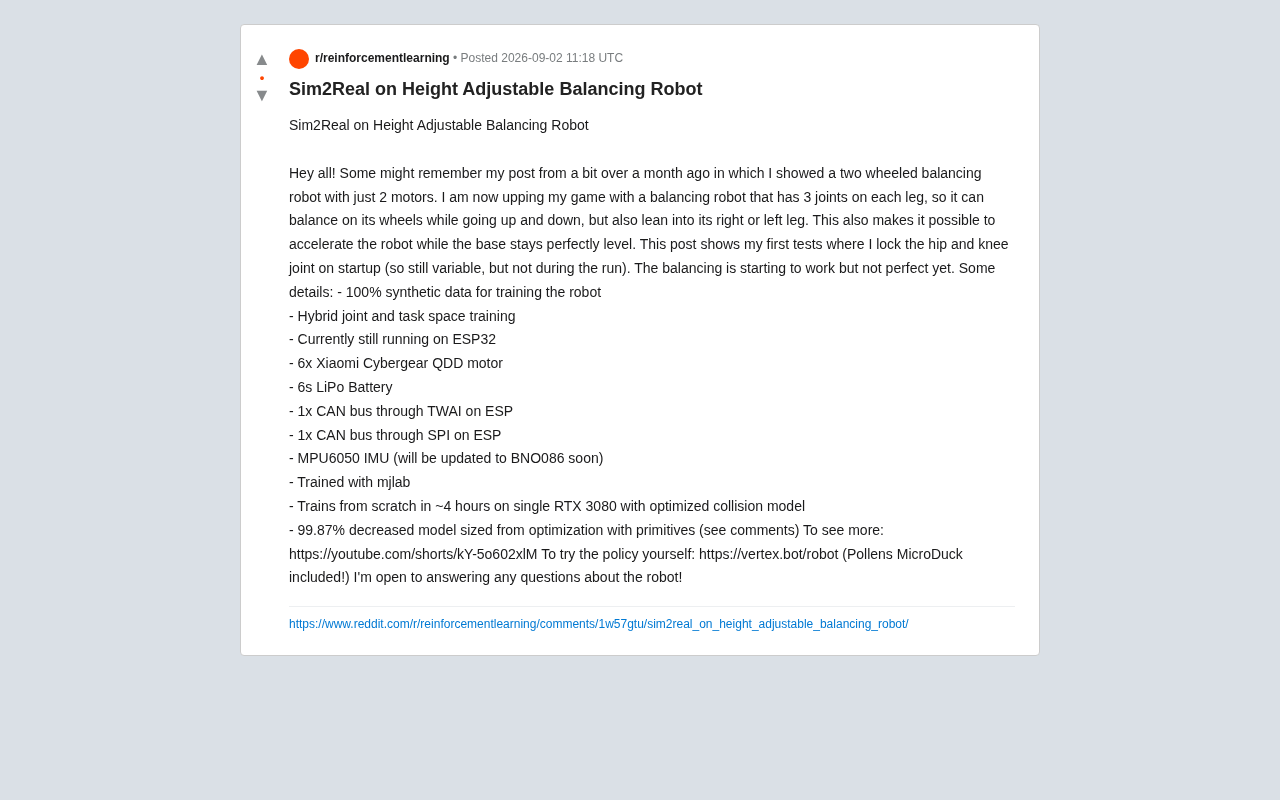
Sim2Real in Practice: A Complete Guide to Reinforcement Learning Training and Deployment for a Two-Wheeled Balancing Robot
Deep dive into a variable-height two-wheeled balancing robot's full Sim2Real pipeline: 100% synthetic data training, hybrid joint/task space policy, 99.87% model compression, from MuJoCo to ESP32.
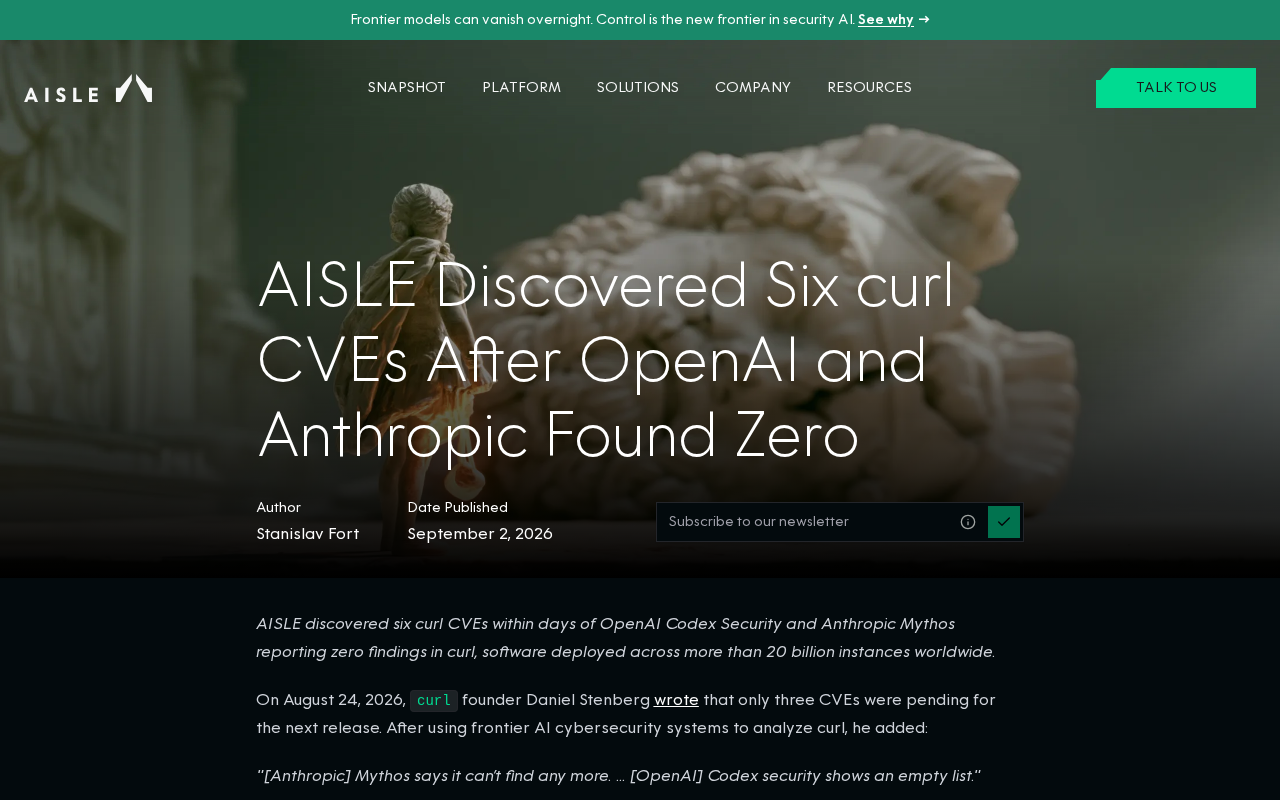
curl Project Exposes AI Code Auditing Shortcomings: 6 CVEs Found by Humans After AI Detected Zero
After OpenAI and Anthropic AI audits found zero issues in curl, human reviewers uncovered 6 CVEs. Explore AI code auditing limitations and human-AI collaboration best practices.
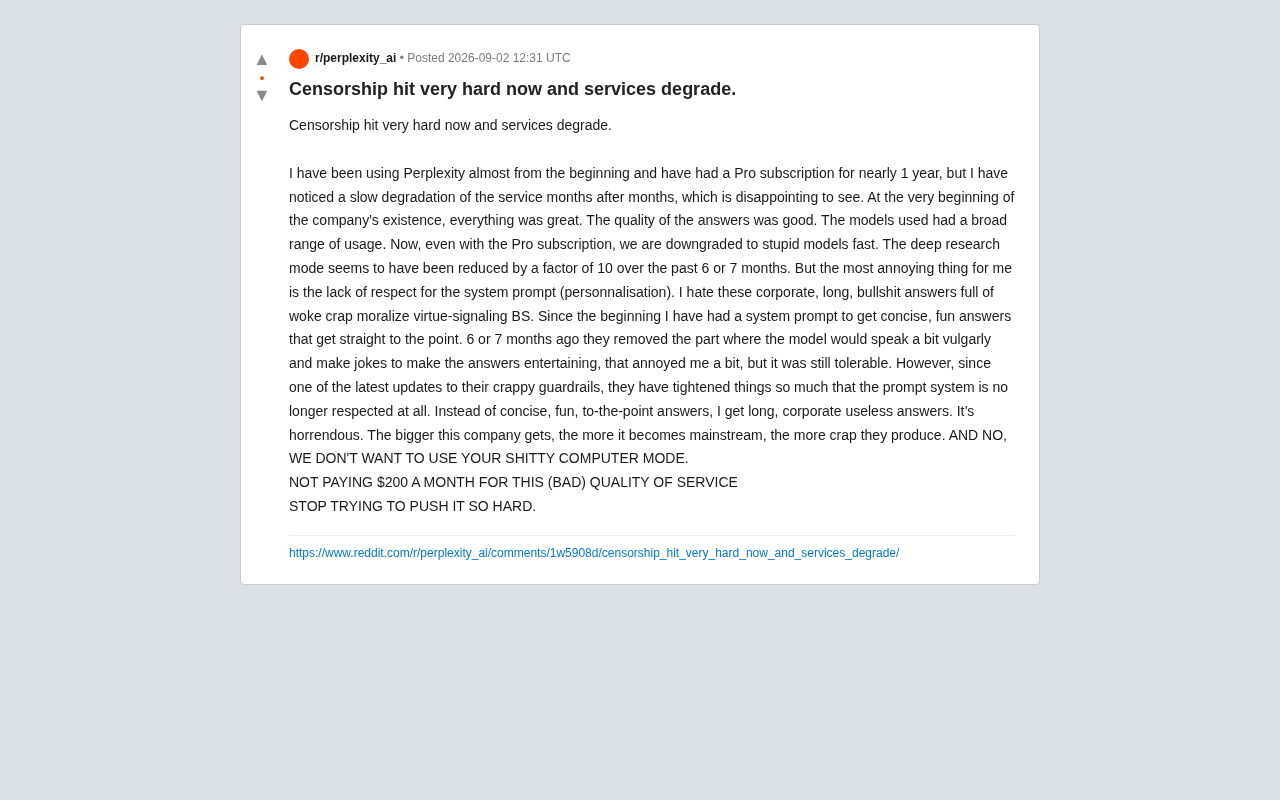
Perplexity Pro Service Downgrade? Long-Time Users Complain About Model Downgrades and Tighter Censorship
A Perplexity Pro long-time user complains on Reddit about weakened Deep Research, ignored system prompts, and silent model downgrades. We analyze the structural causes behind declining user experience.