Trump-Backed Crypto Token WLFI Plummets Over 90%: The Bursting of the Political Concept Coin Bubble
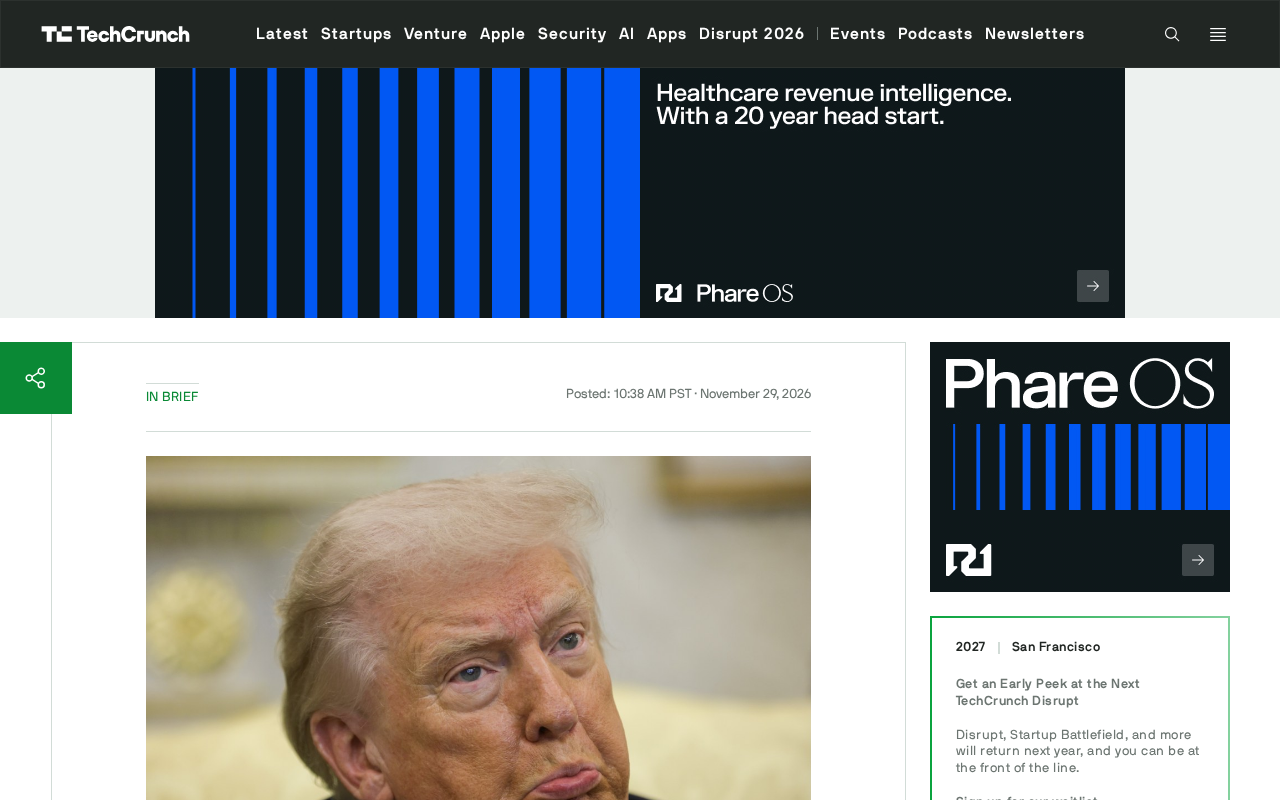
Trump-related crypto token WLFI has fallen over 90% from its all-time high, revealing the narrative dependence and structural risks of political concept coins.
The article focuses on the event that the Trump-branded crypto token WLFI has fallen more than 90% from its all-time high, treating it as a typical sample of the special asset class of "political concept coins." The author points out that such tokens rely on celebrity effect and the supporter base of political figures to quickly drive up prices in the early issuance period, but lack sustainable fundamental support, and once narrative热度 fades they undergo sharp corrections. A decline of more than 90% reflects a drop in the market's recognition of long-term value, the exit of speculative capital, and the lack of effective support at low levels. The article further summarizes three structural risks of political concept coins: excessive dependence on narrative, controversies over governance and transparency, and regulatory uncertainty. It also reminds investors that celebrity endorsement does not equal value protection, and that they should pay more attention to the token's actual use case, economic model, team transparency, and quality of community governance, viewing such assets as high-risk speculative targets rather than long-term allocation assets.
According to RSS sources, the Trump-related crypto token WLFI has fallen more than 90% from its all-time high. This drop has drawn widespread attention in the crypto market and once again pushed the special asset class of "political concept coins" into the spotlight.
What Is WLFI: A Token Under a Political Halo
WLFI is a crypto token associated with the Trump brand. In the crypto market, tokens endorsed by celebrities or political figures tend to come with built-in traffic, making it easy to attract a large amount of attention and capital inflow in the early stages of issuance. WLFI's positioning is precisely to leverage Trump's political influence and supporter base to build a token ecosystem with community consensus.
The typical characteristics of such tokens are: in the early issuance period, they rely on narrative and celebrity effect to quickly drive up the price, but lack sustainable fundamental support. When market sentiment fades or narrative热度 declines, the price often undergoes a sharp correction.
How the All-Time High and Drawdown Are Calculated
In the context of crypto assets, "down 90% from its all-time high" means the decline of the current price relative to the highest trading price (ATH, All-Time High) reached since the token was listed. If a token's all-time high is $1, after a 90% drop the price would be $0.1; to return to the original level from there, it would need to rise 900%—this is precisely the mathematical reason why "breaking even is extremely difficult" after a deep drawdown. It should be noted that different data platforms may use different statistical standards for all-time highs—some use the highest spot price on a particular exchange, while others use an aggregated weighted price. Early liquidity for newly listed tokens is thin, and prices can easily be pushed up by a small amount of capital, so the all-time high itself may contain a significant liquidity premium. This also means that for tokens like WLFI, which have not been listed long and have limited trading depth, the 90% drop both reflects a genuine retreat in demand and may be amplified by distorted early prices.
What a 90% Drop Means
Falling more than 90% from an all-time high means that if an investor bought at the high and held until now, they would face the loss of the vast majority of their principal. This decline has already exceeded the scope of ordinary market fluctuations and constitutes a typical deep drawdown.
For crypto assets, a decline of more than 90% usually reflects problems at several levels: the market's recognition of the token's long-term value has dropped sharply; early profit-taking positions and speculative capital have already exited on a large scale; and the token's narrative appeal is insufficient to support the price in forming effective support at low levels.
Common Risks of Political Concept Coins
WLFI's trajectory is not an isolated case. Crypto projects endorsed by political figures generally face the following structural risks:
Excessive dependence on narrative. The token's value is largely tied to the political figure's personal influence and supporter sentiment, rather than actual product usage or network effects. Once political热度 changes, the token price lacks a buffer.
Controversies over governance and transparency. Such projects are often questioned by the community over issues such as token distribution, governance structure, and use of funds, and their foundation of trust is relatively fragile.
Regulatory uncertainty. Crypto assets associated with political figures are more likely to become a focus of regulatory attention, and policy risks may hit market confidence at any time.
Why Token Distribution and Unlock Mechanisms Affect Price
The "token distribution" issue that such projects are often criticized for technically corresponds to unlock/vesting arrangements. Most projects allocate a portion of tokens to teams, advisors, early investors, and ecosystem funds, with lock-up periods and linear release schedules. When a large number of tokens are unlocked at a certain point and flow into the secondary market, if new buying demand is insufficient during the same period, sustained selling pressure will form and suppress price rebounds. In addition, "governance structure" usually refers to whether token holders can vote on protocol parameters and the use of funds, and whether voting power is concentrated in the hands of a small number of addresses; if most tokens are held by the project team or its affiliates, community governance can easily become a formality. Insufficient transparency combined with unlock selling pressure is an important mechanistic reason why political concept coins accelerate their decline after the narrative fades.
Implications for Investors
The WLFI case once again reminds market participants: celebrity endorsement does not equal value protection. When evaluating crypto assets, the token's actual use case, economic model, team transparency, and quality of community governance deserve more attention than narrative packaging.
The high volatility of political concept coins means they are more suitable to be viewed as high-risk speculative targets rather than long-term allocation assets. The 90% drop is an intuitive footnote—when the narrative dividend is exhausted, the process of price reversion is often more violent than imagined.
For investors paying attention to such assets, understanding the drivers behind token prices is more important than chasing hot spots themselves.
What "High-Risk Speculative Target" and Position Management Mean
Defining a certain type of asset as a "high-risk speculative target" corresponds in practice to position sizing and expectation management: the prices of such assets are driven by sentiment and narrative, and short-term volatility is far higher than that of mainstream assets. They are suitable for participation with a small proportion of capital that one can afford to lose entirely, rather than as core holdings for long-term allocation. A related concept is "liquidity risk"—when market sentiment weakens, tokens with insufficient trading depth may see a sharp widening of bid-ask spreads and large sell orders smashing through multiple price levels, causing the quoted price to diverge severely from the actual executable price. Therefore, when evaluating such assets, in addition to market cap and narrative热度, one should also pay attention to indicators such as average daily trading volume, concentration of holding addresses, and market-making depth. These data reflect the real difficulty of exiting better than celebrity endorsements.
Related articles

AI Ate Math: Why Are Mathematicians Panicking?
Rivka Galchen reveals on a podcast how AI is disrupting mathematics: from solving Erdős problems to collective anxiety, what does this crisis foreshadow for education and creativity?
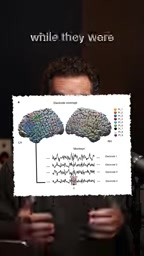
Does AI Think Like the Human Brain? Inside Claude's Internal Mechanisms
New research shows AI models resemble the human brain in word prediction and meaning construction, but Anthropic's observations of Claude reveal AI self-explanations may be completely divorced from its actual computations.

Family-Shared 2FA Codes: A New Balance Between Security and Convenience
Tech blogger Terence Eden proposes family-shared 2FA codes, sparking Hacker News debate. This article analyzes the convenience and security risks of shared two-factor authentication, explores the product design gap in family account management, and offers practical scenario-based advice.