Turbo Pascal Is Smaller Than These: A Nostalgic Look at Code Size and Efficiency

Turbo Pascal's tiny size becomes a cultural benchmark for reflecting on modern software bloat, sparking HN discussion.
"Things That Turbo Pascal Is Smaller Than" evokes reflection on software bloat by comparing Turbo Pascal's compiler size of tens of KB with modern software installation packages of hundreds of MB. The discussion on Hacker News presents two perspectives: nostalgia and rational defense of modern software complexity. The article points out that Turbo Pascal's small size benefited from a single platform and resource constraints, so direct comparison isn't entirely fair, but size growth is not just about storage—it's also about cognitive load and maintenance costs. The core insight is: actively setting constraints (such as bundle size budgets) can help modern developers regain design tension, and efficiency remains a core value of the developer community.
Introduction: A Collective Memory of Code Size
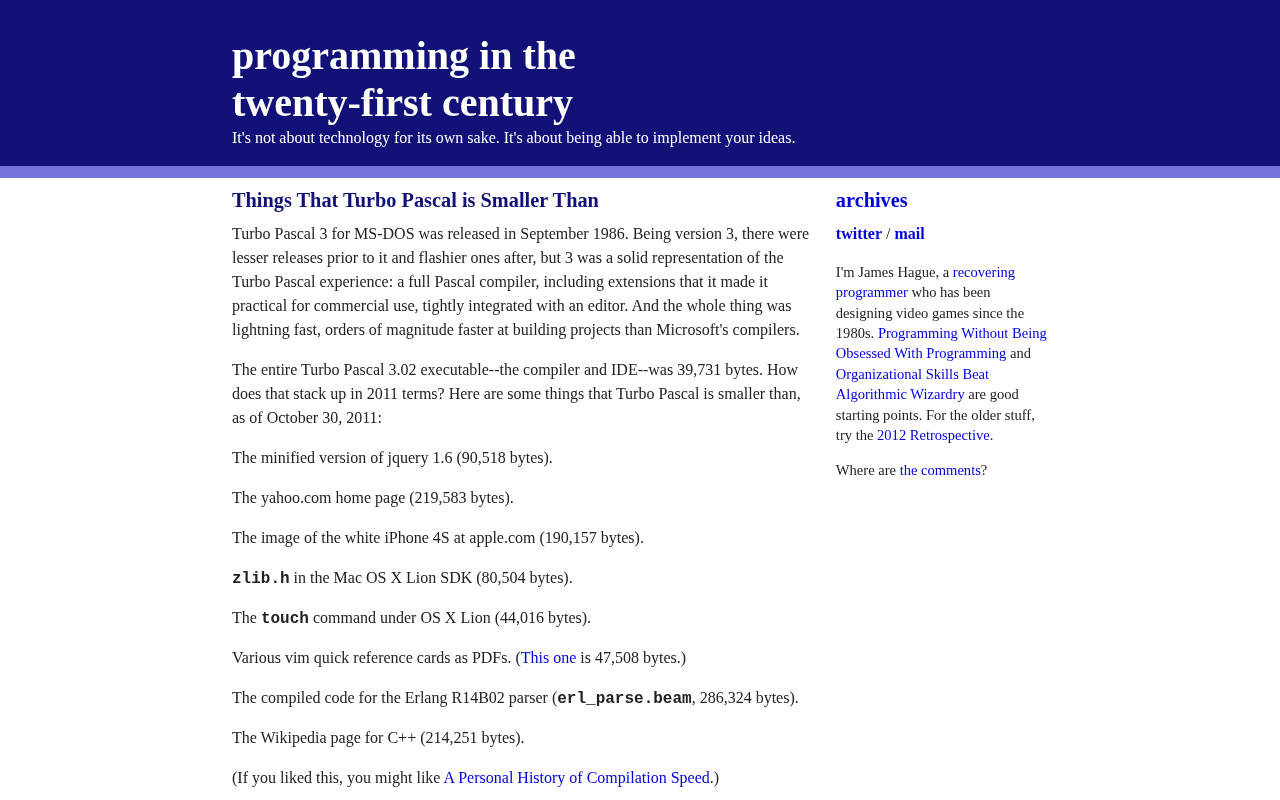
On Hacker News, an old article from 2011 titled "Things That Turbo Pascal Is Smaller Than" has resurfaced, sparking a discussion with 205 points and 108 comments. The core of this article isn't technical archaeology, but rather an extreme size comparison that evokes reflection on software bloat among developers.
Turbo Pascal was an integrated development environment released by Borland in the 1980s. It's frequently mentioned because its compiler was surprisingly small in size, yet complete enough to support an era of programming education and commercial development.
The Size Legend of Turbo Pascal
An Efficiency Benchmark of an Era
The compiler size of Turbo Pascal is often used by developers as a unit of measurement for "small." In the floppy disk era, it nearly filled a 360KB disk, but in return you got a complete editor, compiler, debugger, and runtime library. Today, this ratio of integration to size is hard to replicate.
The original article didn't provide specific numerical comparisons, but a recurring theme in the discussion is: modern software installation packages are often hundreds of MB, contrasting sharply with the tens of KB compilers of yesteryear. This contrast isn't meant to deny the complexity of modern software, but to remind us that size growth isn't always proportional to functional improvement.
Turbo Pascal was a Pascal compiler and integrated development environment (IDE) released by Borland in 1983. Its initial version (1.0) had a compiler core of only about 20KB, and the entire IDE could fit on a single 360KB floppy disk. The key to its compactness was its use of a one-pass compiler that directly generated machine code, and all tools (editor, compiler, debugger) were integrated into a single executable with no external dependencies. This design was extremely rare on microcomputers in the 1980s because it simultaneously provided compilation speed and functional completeness, making it one of the most popular programming environments on personal computers at the time.
Why It's Used as a Benchmark
Turbo Pascal's smallness was a product of engineering constraints. Memory was measured in KB, disks in floppy disks, and developers had no room to waste space. These constraints forced out refined coding styles and highly optimized compiler designs.
When people say "this is smaller than Turbo Pascal," they're actually expressing nostalgia for efficiency—in today's world of abundant resources, have we lost our sensitivity to size?
In the era of floppy disks and early hard drives, storage capacity was measured in KB and MB, and memory was typically only 640KB (the conventional memory limit of DOS). Developers had to write programs under strict memory and disk constraints, and compilers themselves had to use resources efficiently. Turbo Pascal demonstrated engineering optimization under extreme constraints by compressing the compiler, editor, and runtime library into tens of KB. This practice of "small is beautiful" later became a cultural reference for measuring software efficiency, and whenever modern software bloats, developers cite Turbo Pascal as a benchmark for comparison.
Perspectives from Hacker News Discussions
Technical Reflection Beyond Nostalgia
The Hacker News comment section (108 comments) presented two voices. Some were immersed in nostalgia, sharing their experiences of writing programs with Turbo Pascal; others pointed out that the bloat of modern software has its rationality—dependency management, cross-platform support, and security updates all require space.
According to views in the HN discussion, Turbo Pascal's small size partly benefited from being targeted at a single platform (DOS) and not needing to handle the network, graphics, and security complexities that modern software faces. Therefore, direct comparison isn't entirely fair.
Hacker News is a tech news and discussion community founded by Paul Graham in 2007, known for high-quality technical commentary and startup topics. Its user base consists mostly of engineers, entrepreneurs, and tech enthusiasts, and discussions often delve into technical details and are reflective. This article was originally published in 2011 and sparked heated discussion after being re-shared on Hacker News, reflecting the community's ongoing interest in software engineering history and efficiency issues. Comments include both nostalgia for early programming environments and rational analysis of modern software complexity—a diversity of perspectives that is typical of Hacker News discussions.
Sustained Interest in Small Size
Despite different comparison conditions, discussants still have enthusiasm for small-sized software. Comments mentioned some modern small tools and language implementations that continue the spirit of Turbo Pascal—providing complete functionality within a limited size. This interest shows that efficiency remains one of the core values of the developer community.
Implications for Modern Development
Size and Cognitive Load
Software size isn't just about storage and downloads; it's also about cognitive load. A large project often means more dependencies, longer build times, and higher maintenance costs. The example of Turbo Pascal reminds us that a streamlined architecture can lead to lower cognitive load.
Of course, this doesn't mean going back to the KB era. Modern software needs to handle far more complex problem domains. But what we can learn is: before adding a dependency, ask "is this really necessary?"
Constraints Breed Design
Turbo Pascal's success was partly due to constraints. Today, by actively setting constraints for ourselves (such as performance budgets, package size limits), we can regain that sense of design tension. Some front-end frameworks have begun introducing bundle size monitoring, which is a renewed recognition of the value of "small."
Performance budgets and bundle size limits are common constraint mechanisms in modern front-end engineering. For example, developers can set a JavaScript bundle to not exceed 200KB after gzip compression, or first-screen load time to not exceed 1 second. Tools like Webpack's size-plugin, Bundlesize, and Lighthouse can be used to monitor these metrics. This practice of actively setting constraints is similar in spirit to the forced optimization due to resource scarcity in the Turbo Pascal era—both use resource limitations to inspire more efficient design decisions.
Conclusion
The reason "Things That Turbo Pascal Is Smaller Than" still resonates years later is that it touches on an eternal topic: efficiency. Turbo Pascal's size is a symbol pointing to how engineers made elegant trade-offs under resource-limited conditions. For today's developers, this spirit of trade-offs is more worth inheriting than specific numbers.
One-line Summary
Turbo Pascal's tiny size has become a cultural benchmark for reflecting on modern software bloat, sparking heated discussion on HN.
Paragraph Summary
"Things That Turbo Pascal Is Smaller Than" evokes reflection on software bloat by comparing Turbo Pascal's compiler size of tens of KB with modern software installation packages of hundreds of MB. The discussion on Hacker News presents two perspectives: nostalgia and rational defense of modern software complexity. The article points out that Turbo Pascal's small size benefited from a single platform and resource constraints, so direct comparison isn't entirely fair, but size growth is not just about storage—it's also about cognitive load and maintenance costs. The core insight is: actively setting constraints (such as bundle size budgets) can help modern developers regain design tension, and efficiency remains a core value of the developer community.
Related articles
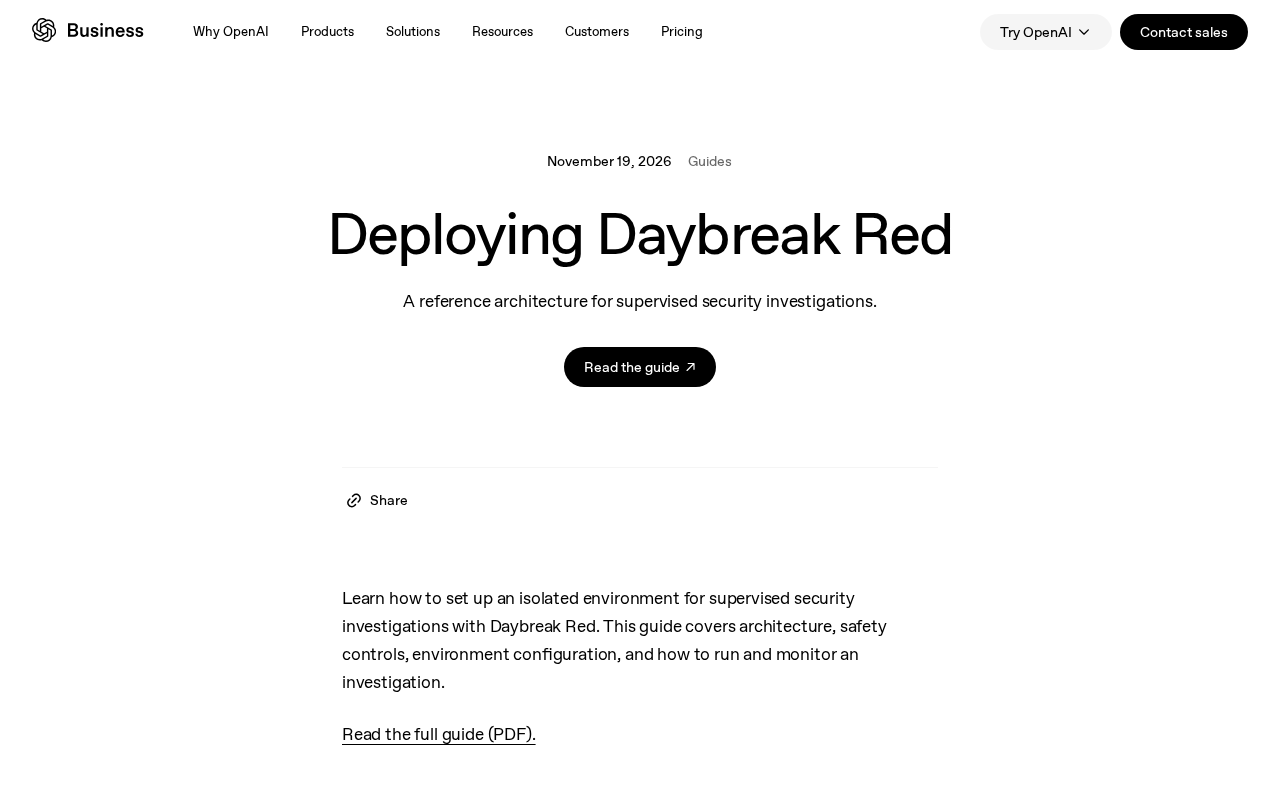
Daybreak Red Deployment Guide: A Reference Architecture for Supervised Security Investigation
A breakdown of the Daybreak Red reference architecture: security control design, deployment configuration process, and runtime monitoring for supervised security investigation.
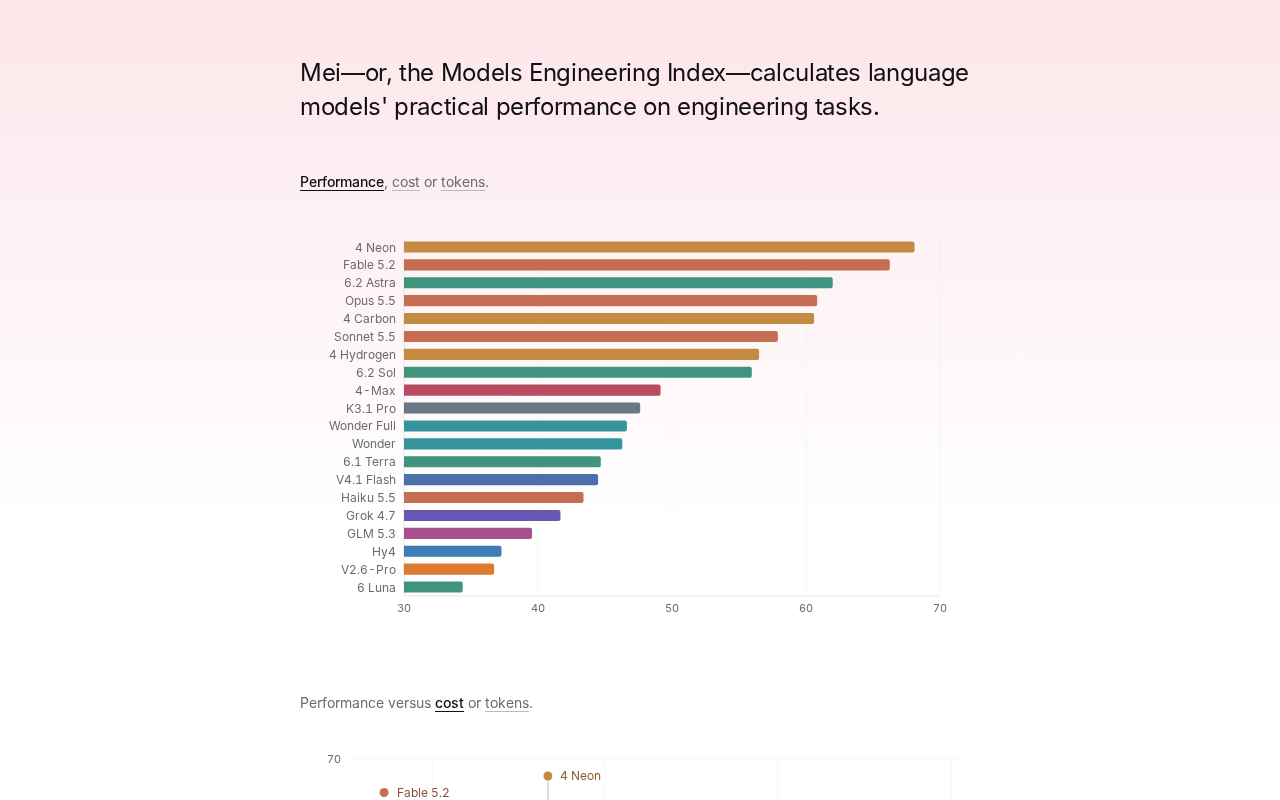
Gemini 4 Neon Tops the Models Engineering Index
Gemini 4 Neon tops the Models Engineering Index, sparking Hacker News debate over ranking credibility and evaluation methods. Here's what it means for developers.

Apple's Self-Developed AI Agent: An Agent That Can Operate Your Mac Is Coming
Apple is reportedly developing an AI agent that can operate a Mac, targeting Meta Muse, Claude, OpenAI Dots, and others. This article analyzes Apple's system-level advantages, the competitive landscape, and likely rollout paths in the agent race.