Turning a Sperm Video into a Game with Muse? An AI Generation Experiment

A developer used Muse AI to turn a sperm video into an interactive game, showcasing new possibilities for video-to-game generation.
A developer used an AI tool called Muse to turn a sperm video into an interactive video game, sparking widespread attention. The experiment's core is using AI to understand object motion and scene structure in video and automatically generate game characters, levels, and interaction rules rather than writing code from scratch. This shows AIGC extending from static images and short videos to interactive experiences, potentially lowering the game development barrier and enabling non-professional developers to quickly realize ideas, while also posing new challenges to traditional workflows and designer roles. Community reactions combine surprise and curiosity; although details are unverified, it offers new ideas for AI in gaming.
A developer shared his latest experiment on Twitter: using an AI tool called "Muse" to turn a sperm video into an interactive video game. The tweet quickly drew attention—not only because of the quirky subject matter, but also because it showcased a new possibility for combining AI video generation with game development.
Experiment Background: Crossing from Video to Game
According to the tweet, the creator did not write game code from scratch, but instead used an AI tool called "Muse." The tweet specifically mentioned "muse wonder full," hinting that the tool demonstrated surprisingly impressive capabilities during the generation process.
Traditional game development requires collaboration across art, programming, design, and other disciplines. The core idea behind this experiment is: use AI to understand existing video content and automatically generate an interactive game scene. This offers a new approach for independent creators—without needing a large team, they can quickly bring ideas to life.
Video-to-Game Generation is an emerging direction in the AIGC field, whose core lies in enabling AI models to understand the spatiotemporal dynamic information in videos and map it to interactive game elements. Unlike traditional "text-to-game" or "image-to-game" approaches, video input provides richer motion trajectories, scene changes, and causal cues. Typical technical paths include: first using video understanding models (such as Transformer-based video encoders) to extract objects, actions, and scene graphs, then building game state machines, collision detection, and interaction logic through rule engines or generative models. This direction is still in an early exploratory stage, facing challenges such as video ambiguity, physical plausibility, and automatic derivation of interaction rules.
The Muse Tool: The "Magic" of AI Video Generation
Although the tweet did not reveal Muse's specific technical details, the description "turned the sperm video into a video game" suggests that Muse has the ability to convert video into game logic. It may analyze object motion and scene structure in the video to automatically generate game characters, levels, and interaction rules.
The emergence of such tools means that AI-generated content (AIGC) is extending from static images and short videos to interactive experiences. For the gaming industry, this may be a signal: future game prototyping may no longer rely on manual coding, but instead iterate quickly through AI.
AIGC (AI Generated Content) refers to the use of artificial intelligence technology to automatically generate text, images, audio, video, and even interactive content. Its technical foundations typically involve Generative Adversarial Networks (GANs), Diffusion Models, and large-scale pre-trained Transformers. In recent years, AIGC has moved from single-modal generation toward multimodal fusion, such as text-to-video and image-to-3D scenes. The article's mention of "extending from static images and short videos to interactive experiences" is precisely a frontier trend in AIGC: generating not only the content itself, but also the interaction rules between content. This requires models to possess certain world knowledge and causal reasoning abilities, rather than merely pattern replication.
Technical Significance and Industry Impact
The value of this experiment lies not only in its entertainment factor. It demonstrates AI's progress in understanding dynamic visual content, as well as the potential to transform unstructured data (video) into structured interaction (games).
From an industry perspective, tools like Muse may lower the barrier to game development, allowing more non-professional developers to participate in creation. At the same time, this also poses a challenge to traditional game development workflows—when AI can automatically generate playable content, the role of game designers may need to be redefined.
Unstructured Data and Structured Interaction: Video is typical unstructured data, composed of continuous pixel frames and lacking explicit object labels and logical relationships; games, by contrast, are highly structured interactive systems containing entities, states, rules, and events. Converting video into a game is essentially completing a "unstructured → structured" semantic parsing and reconstruction. This process typically requires technologies such as scene graph generation, action recognition, and physical attribute inference to abstract the visual information in video into parameters that a game engine can understand. If this capability matures, it will greatly expand the application boundaries of AI in fields such as simulation, education and training, and interactive entertainment.
Community Response and Future Outlook
After the tweet was posted, many netizens expressed surprise and curiosity about the idea of "turning a sperm video into a game." Some joked that it was "the strangest game material," while others seriously discussed the feasibility of AI-generated games.
Although it is currently only a personal experiment, it offers new ideas for AI's application in gaming. As tool capabilities improve, we may see more games generated directly from videos, and even new content categories may emerge.
(Note: This article is based on the tweet content and does not independently verify the experimental details.)
Game Prototyping is an early stage in the game development process for validating core gameplay, interaction feel, and visual style. Traditionally, it relies on quickly writing code by hand or using visual scripting tools (such as Unity Bolt or Unreal Blueprint) to build a playable demo. AI-assisted prototyping attempts to directly generate a runnable prototype from natural language, sketches, or video, thereby shortening iteration cycles from days to hours. However, AI-generated prototypes still lag behind human design in gameplay depth, balance, and scalability, and are more likely to serve as an auxiliary tool for creative exploration rather than a complete replacement for professional development.
One-line Summary
A developer used Muse AI to turn a sperm video into an interactive game, showcasing new possibilities for video-to-game generation.
Paragraph Summary
A developer used an AI tool called Muse to turn a sperm video into an interactive video game, and the tweet attracted widespread attention. The core of the experiment lies in using AI to understand object motion and scene structure in the video and automatically generate game characters, levels, and interaction rules, rather than writing code from scratch. This demonstrates the trend of AIGC extending from static images and short videos to interactive experiences, potentially lowering the barrier to game development and allowing non-professional developers to quickly bring ideas to life, while also posing new challenges to traditional game development workflows and the role of designers. Community reactions combined surprise and curiosity; although the experimental details have not been verified, it offers new ideas for AI's application in gaming.
Related articles
Ollama Local Deployment Guide: Run Open-Source LLMs with Zero Experience
Ollama local deployment tutorial: what Ollama is, why choose it, how to download, install, and run open-source LLMs, and use its API for custom development. Beginner-friendly.

n8n: The 187K-Star Open-Source Automation Powerhouse That Turns Repetitive Work into Workflows
n8n is a 187K-star open-source visual workflow automation engine with 400+ nodes, Webhook/schedule/polling triggers, self-hosting for data security, and AI Agent support. Here's a guide to its core concepts, use cases, and pitfalls.
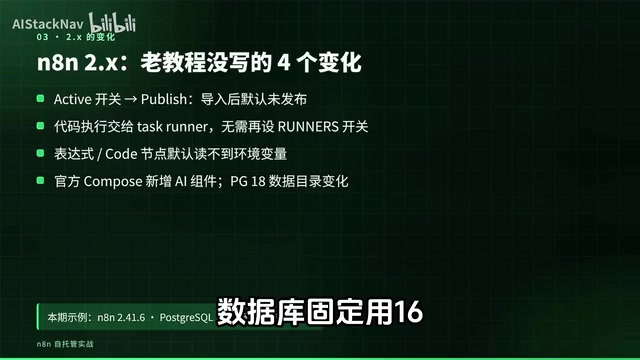
Self-Hosting n8n in Practice: Docker + PostgreSQL + Caddy Deployment Guide
A step-by-step guide to deploying a self-hosted n8n instance with Docker Compose, PostgreSQL, and Caddy automatic HTTPS, including env var pitfalls, Feishu alerting, and backup/upgrade/rollback tips.