TypeTale (字字动画): A Free, Open-Source AIGC Video Generation Tool
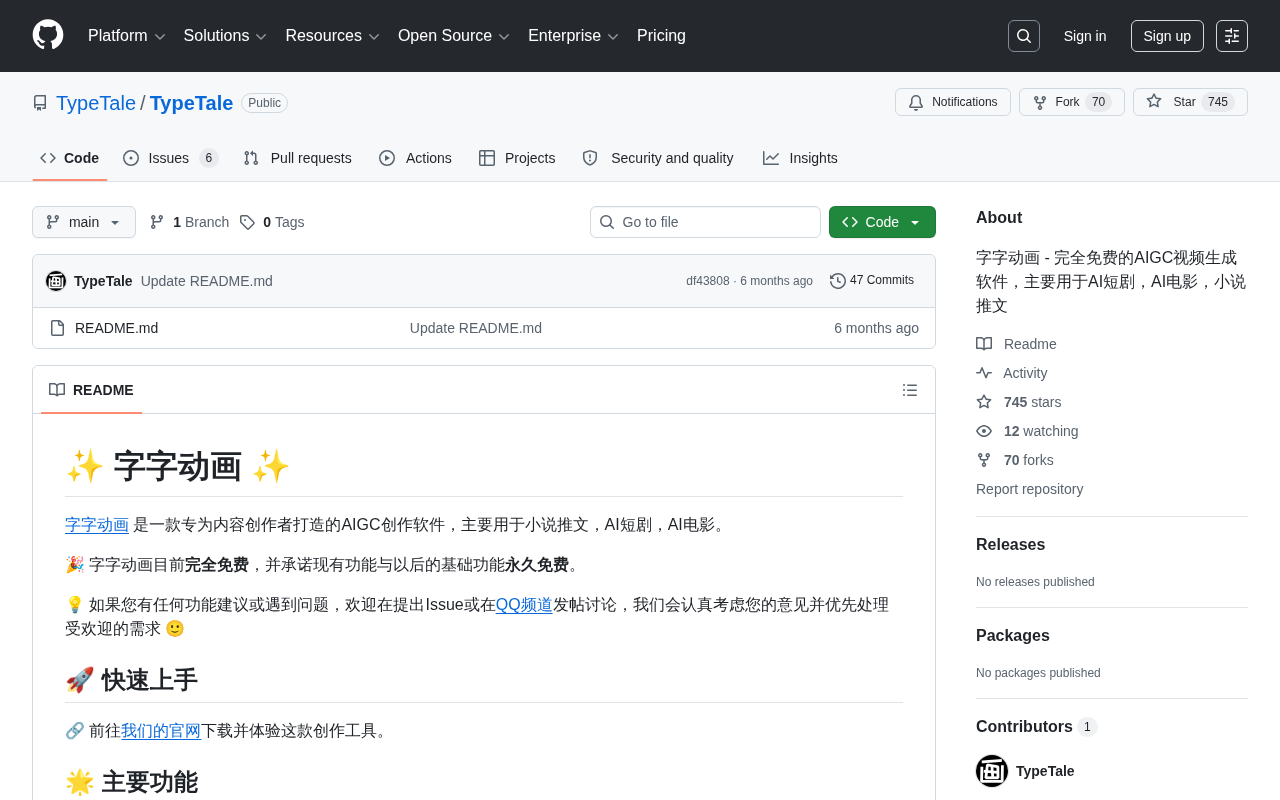
TypeTale is a free, open-source AIGC video tool built specifically for AI short dramas and novel promotional content.
TypeTale (字字动画) is a recently launched open-source AIGC video generation tool on GitHub, with 686 Stars and 67 Forks. Unlike general-purpose commercial platforms like Runway and Pika, it focuses on three vertical content formats — AI short dramas, AI films, and novel promotional videos — using a text-driven workflow to turn written storylines into animated video. Its completely free, locally deployable model is its core differentiator, making it especially appealing to budget-conscious indie creators. The project is still in early stages, and feature completeness, output quality, and long-term maintenance remain to be verified.
A Free Tool Targeting the AI Short Drama Market
A recently launched open-source project on GitHub called "TypeTale" (字字动画) has been drawing attention from AIGC content creators. This is a clearly positioned, free AIGC video generation tool focused on three specific content formats: AI short dramas, AI films, and novel promotional videos (a format known as "小说推文"). As of now, the project has earned 686 Stars and 67 Forks — early metrics that suggest it's addressing a real need for a subset of creators.
Rather than building a broad, all-purpose video generation platform, TypeTale deliberately targets the short drama and novel promotional content ecosystem — two categories that have seen explosive growth over the past two years. Both demand high-volume, low-cost video output, yet traditional editing workflows and the subscription costs of commercial software put many independent and small-scale creators off. "Completely free" is the core differentiator TypeTale is betting on against the crowded field of paid AIGC tools.
Built for Short Dramas and Novel Promotional Content
AI short dramas and novel promotional videos are two of the hottest tracks in today's content industry. Short dramas gain rapid traction on short-video platforms thanks to their fast pacing and high emotional intensity, while novel promotional videos convert written story content into visual clips to drive reader acquisition. Both formats share a common pain point: the need to quickly and repeatedly turn text-based storylines into watchable video scenes.
The name "TypeTale" (字字动画 — literally "character-by-character animation") hints at its underlying approach: text as the primary driver, progressively transforming written narratives into animated video. This text-to-video workflow is a natural fit for novel content creators who have abundant written material but lack video production skills.
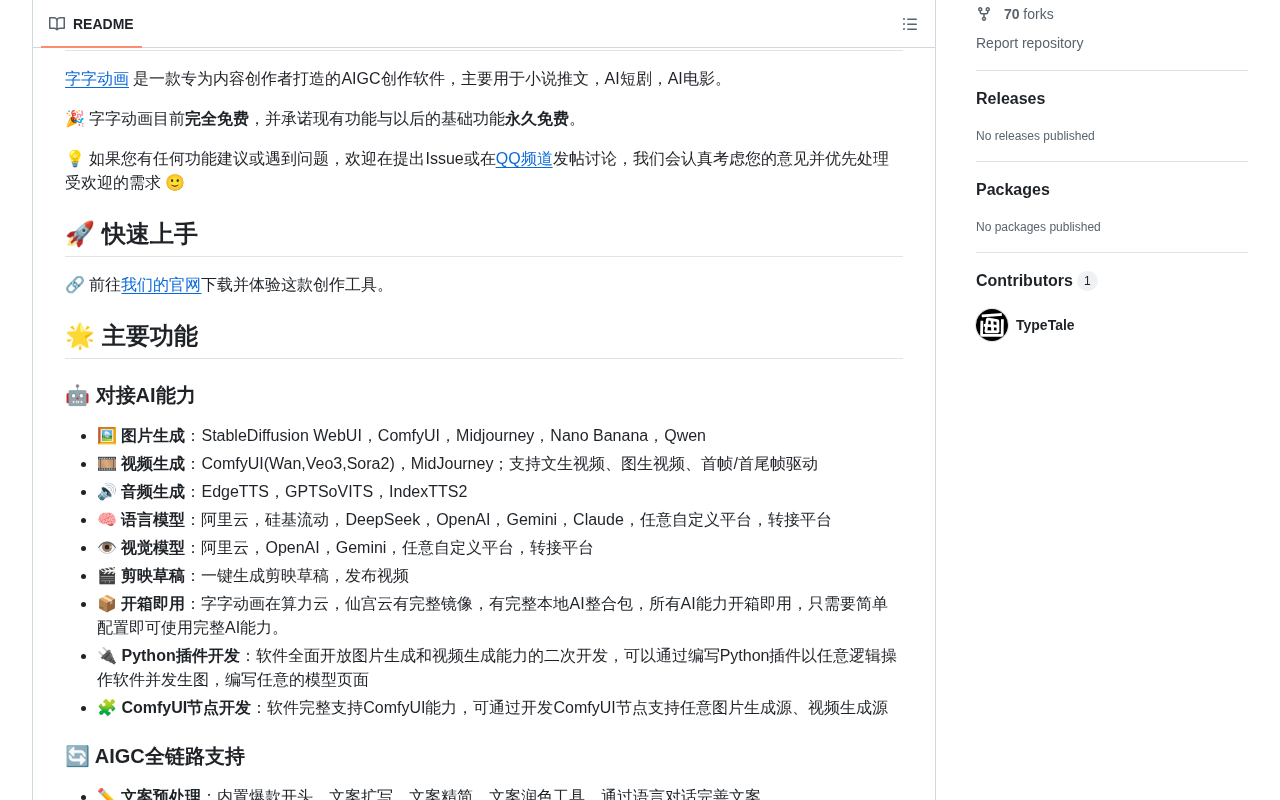
For AI films — a more ambitious use case — whether the tool can sustain long-form narrative coherence and visual quality remains to be seen through actual use. That said, the product's ambition to cover the full spectrum from short dramas to feature-length films signals that the developers have high expectations for where AIGC video can go.
Context: Novel promotional videos (小说推文) originated in the WeChat public account ecosystem before expanding to platforms like Douyin and Kuaishou. Creators typically clip high-tension scenes from web novels and pair them with narration, background music, and simple visuals or video, using a "hook" structure to drive readers toward paid chapters or novel platforms. This format commercialized rapidly between 2022 and 2024, generating strong demand for bulk "text → video" conversion tools. AI short dramas push visual requirements even further, requiring consistent character appearances across frames, smooth scene transitions, and coherent plot visuals — making cross-frame character consistency one of the hardest technical challenges for tools like TypeTale to solve.
The Value of Open Source and Free Access
As an open-source project, TypeTale's value goes beyond free usage — it means the developer community can contribute improvements and build on top of it. The 67 Forks indicate that developers have already started forking the codebase for their own extensions and localized customizations.
For creators, the free and open-source nature significantly lowers the barrier to experimenting with AIGC video production. At a time when commercial AIGC tools typically charge per generation or by usage time, a locally deployable solution with no marginal cost is a compelling proposition for budget-conscious solo creators and small teams. Of course, open-source tools typically come with trade-offs: they often require some technical proficiency to set up and run, and may have incomplete documentation or unverified stability.
How to Think About Vertical AIGC Tools
The AIGC video generation space currently features two broad approaches: commercial products like Runway and Pika that prioritize general-purpose generation capabilities, and vertical tools like TypeTale that focus on specific content niches. The advantage of vertical tools is that their workflows are tailored to concrete use cases — packaging complex general-purpose AI capabilities into streamlined, almost plug-and-play pipelines designed for short dramas or novel promotional content.
That said, 686 Stars still puts TypeTale firmly in early-stage territory on GitHub. Feature completeness, output quality, and long-term maintenance are all open questions. The project page is relatively sparse, and the listed programming language field is empty — raising some questions about architectural transparency. Interested creators are advised to test it on a small-scale project first, assess whether the actual output meets their needs, and only then consider integrating it into a regular production workflow.
For those following AIGC content creation, TypeTale represents a trend worth watching: AI video generation is moving from general capability toward scenario-specific deployment, with an increasing number of tools tailored to particular content formats emerging. Whether TypeTale can carve out a lasting position in the competitive AIGC tool market will ultimately depend on its pace of iteration and the vitality of its community.
Context: Runway (Gen-2, Gen-3) and Pika are leading commercial AIGC video generation products. Runway is known for strong video quality and integration with professional post-production workflows, charging via subscription or generation credits starting at around $15/month; Pika is recognized for ease of use and rapid iteration, targeting a broader creative audience. In the Chinese market, platforms like Kling (可灵) and Jimeng (即梦) offer comparable services. What these commercial tools share is zero local setup required — ready to use immediately — but ongoing costs are high, and their terms often impose restrictions on content ownership and data privacy. TypeTale's locally deployed, open-source approach creates differentiation through data ownership and zero marginal cost, though it does place certain demands on users' hardware (particularly GPU VRAM).
Related articles
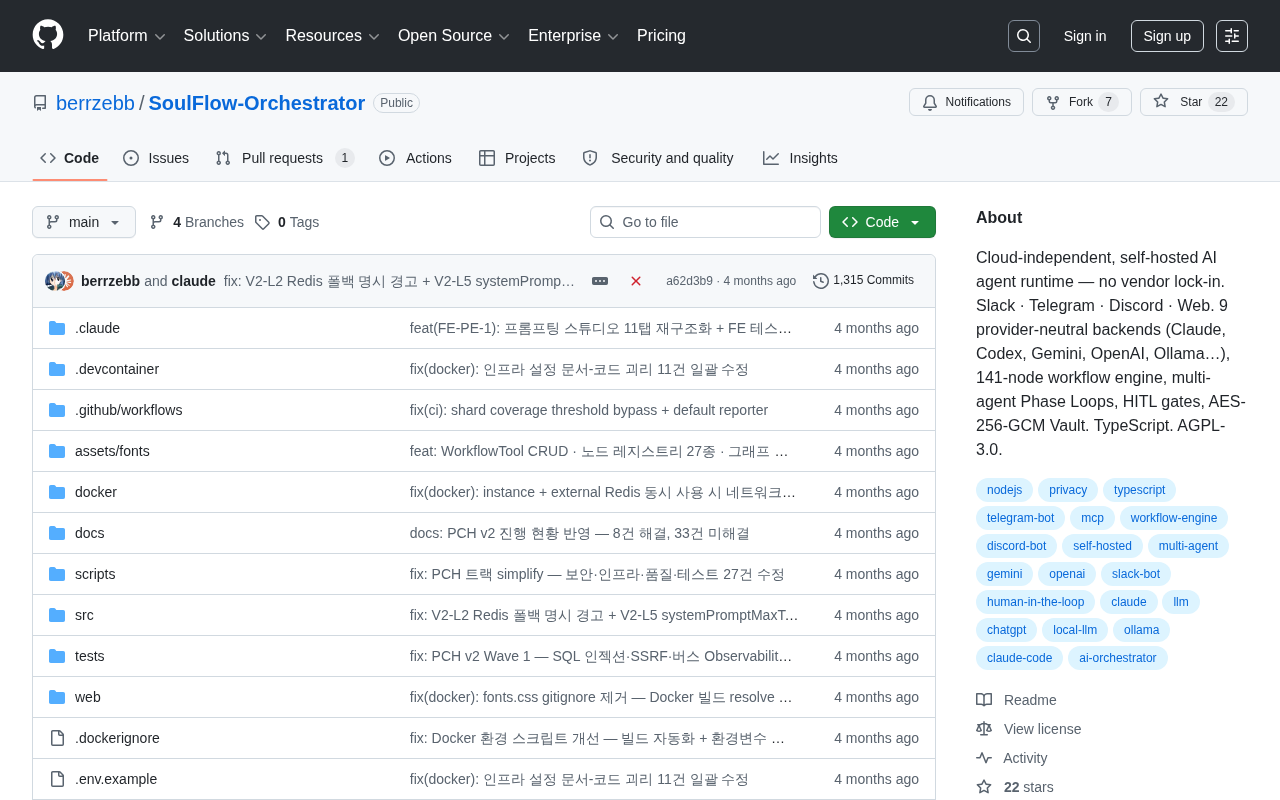
SoulFlow-Orchestrator: A Self-Hosted, Vendor-Lock-In-Free AI Agent Runtime
SoulFlow-Orchestrator is an open-source, self-hosted AI agent runtime with no vendor lock-in. Supports 9 neutral backends (Claude, OpenAI, Ollama), 141-node workflow engine, multi-agent loops, and HITL gates.
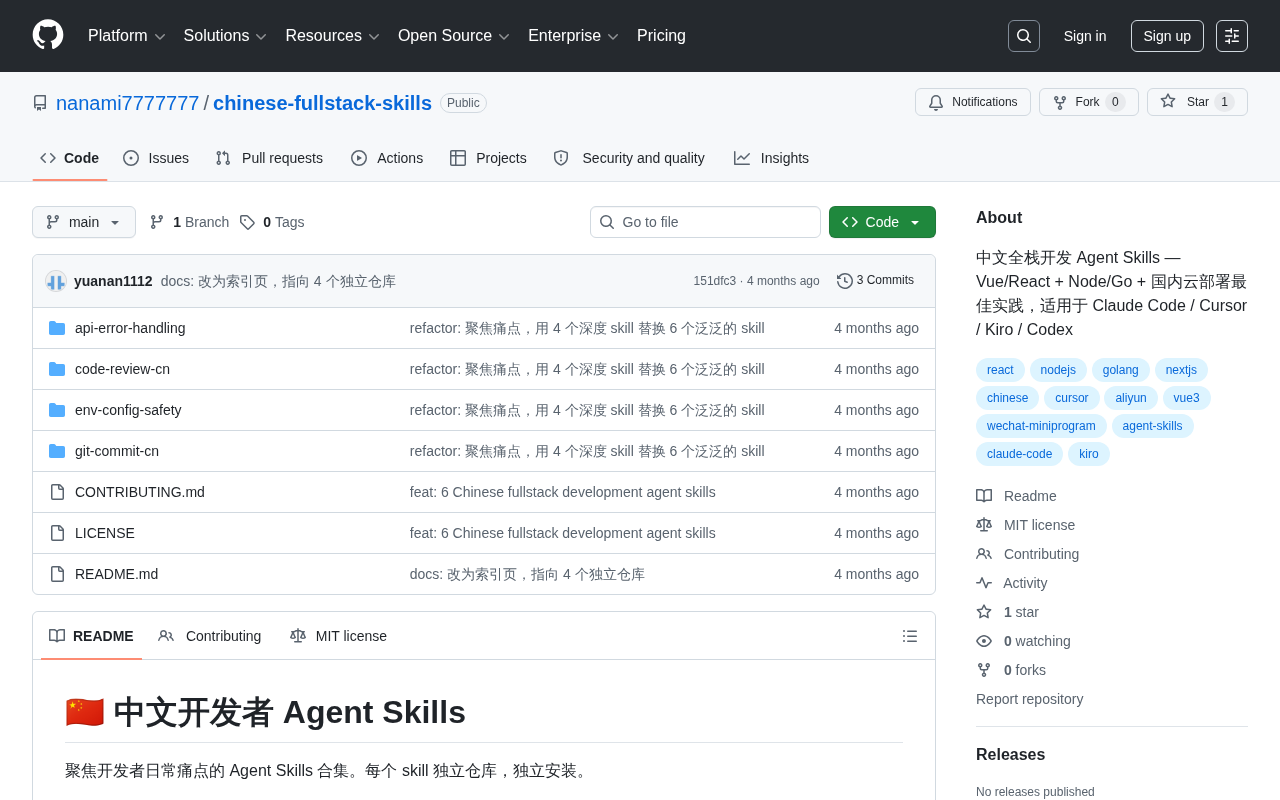
Chinese Full-Stack Agent Skills: A Skill Library Tailored for Domestic AI-Assisted Development
chinese-fullstack-skills is an Agent Skills library for Chinese full-stack development, covering Vue/React, Node/Go, and domestic cloud deployment best practices. Compatible with Claude Code, Cursor, Kiro, and Codex.
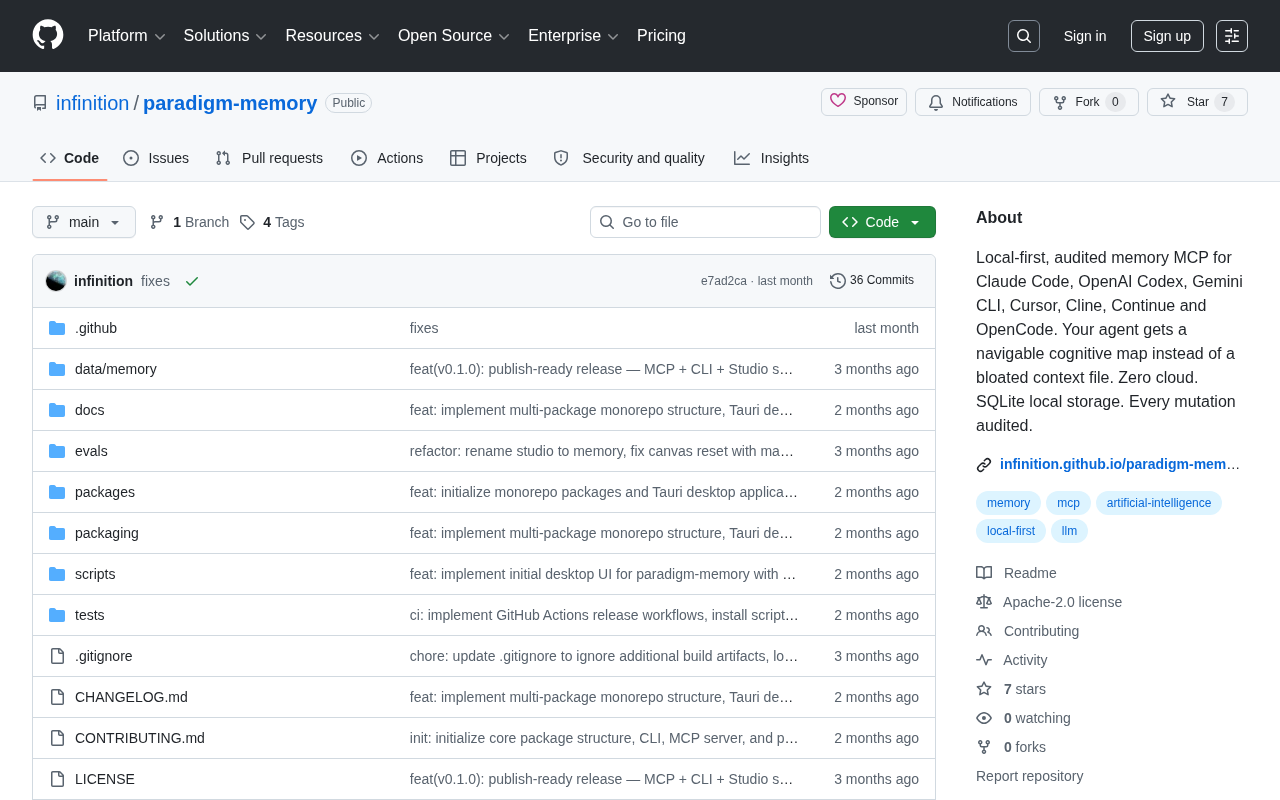
Paradigm Memory: A Local-First Memory System for AI Coding Assistants
paradigm-memory is a local MCP memory tool for Claude Code, Cursor, and Cline. It uses SQLite local storage, zero cloud, full audit trails, and a navigable cognitive map instead of bloated context files.