U.S. Investigated Chinese Spy Plot Targeting Nvidia CEO

U.S. investigated a Chinese spy plot targeting Nvidia's CEO; a Singapore AI cloud executive is accused of illegal chip sales to China and espionage.
According to The New York Times, citing anonymous sources, the U.S. investigated an alleged Chinese spy plot aimed at Nvidia's CEO. Meanwhile, an executive at a Singapore-based AI cloud company was accused of illegally selling Nvidia chips to China and possibly being a Chinese spy. The case links commercial chip export controls with national security intelligence, showing U.S. anxiety over AI compute supply chain security has moved from trade to intelligence. Details remain unconfirmed.
Event Overview
According to a report by The New York Times citing sources, U.S. authorities investigated a case involving an alleged Chinese spy plot targeting the Nvidia CEO. At the same time, an executive at a Singapore-based AI cloud company was accused of illegally selling Nvidia chips to China, and this executive may also have been a Chinese spy. The news intertwines commercial chip export controls with national security intelligence activities, raising concerns about the security of the AI compute supply chain.
The Intersection of Chip Export Controls and Espionage Allegations
Nvidia's AI chips are core components of global compute infrastructure, and the U.S. imposes strict controls on their export. The allegation that an executive at a Singapore-based AI cloud company illegally sold chips to China shows that enforcement of these controls faces challenges. The accusation of being a "possible Chinese spy" escalates the case from a commercial violation to a national security threat. Together, these elements reflect that U.S. anxiety over the outflow of AI technology has extended from the trade level to the intelligence level.
Nvidia's AI chips (such as H100 and A100) have been placed on the export control list by the U.S. Department of Commerce's Bureau of Industry and Security (BIS) since 2022, under the Export Administration Regulations (EAR). The regulations restrict the flow of high-end chips to China through dual criteria based on "performance thresholds" and "end use/end user." In 2023, controls were further tightened to include some "downgraded" chips (such as H800 and A800). Violating the EAR can lead to criminal prosecution, substantial fines, and Entity List sanctions. So-called "illegal sales" usually refer to transferring controlled chips to China without a BIS license, through third-country transshipment or false end-user declarations—practices referred to in enforcement as "diversion."
In U.S. legal context, "espionage" allegations typically involve the Economic Espionage Act, which prohibits stealing trade secrets or sensitive technology for the benefit of a foreign government. If a case involves both export violations and espionage activities, it may be jointly investigated by the Department of Justice's National Security Division and the Commerce Department's BIS, escalating its nature from an administrative violation to a federal criminal offense. However, the evidentiary threshold for such allegations is high, requiring proof of intent to benefit a foreign government.
Impact on Nvidia and the AI Industry
Nvidia's CEO being the target of an investigated plot—this detail remains unclear as to what specific actions it points to. What is certain is that the geopolitical contest over AI chips is intensifying. For global AI companies relying on Nvidia GPUs, supply chain compliance risks are rising; for cloud service providers, especially those located in transshipment hubs such as Singapore, stricter scrutiny may be on the horizon. The industry needs to find a balance between obtaining compute and legal compliance.
Singapore plays the role of a "transshipment hub" in the global AI chip supply chain. Due to geographic and trade convenience, Singapore has long been an important node for re-export trade in electronics, and some controlled chips may flow through Singapore to other regions. In recent years, the U.S. has strengthened export reviews for Southeast Asian countries such as Singapore and Malaysia, requiring local companies to provide stricter end-user certifications. For cloud service providers, being found to have participated in improper diversion could result in placement on the BIS Entity List, thereby cutting off their access to U.S. technology and chips.
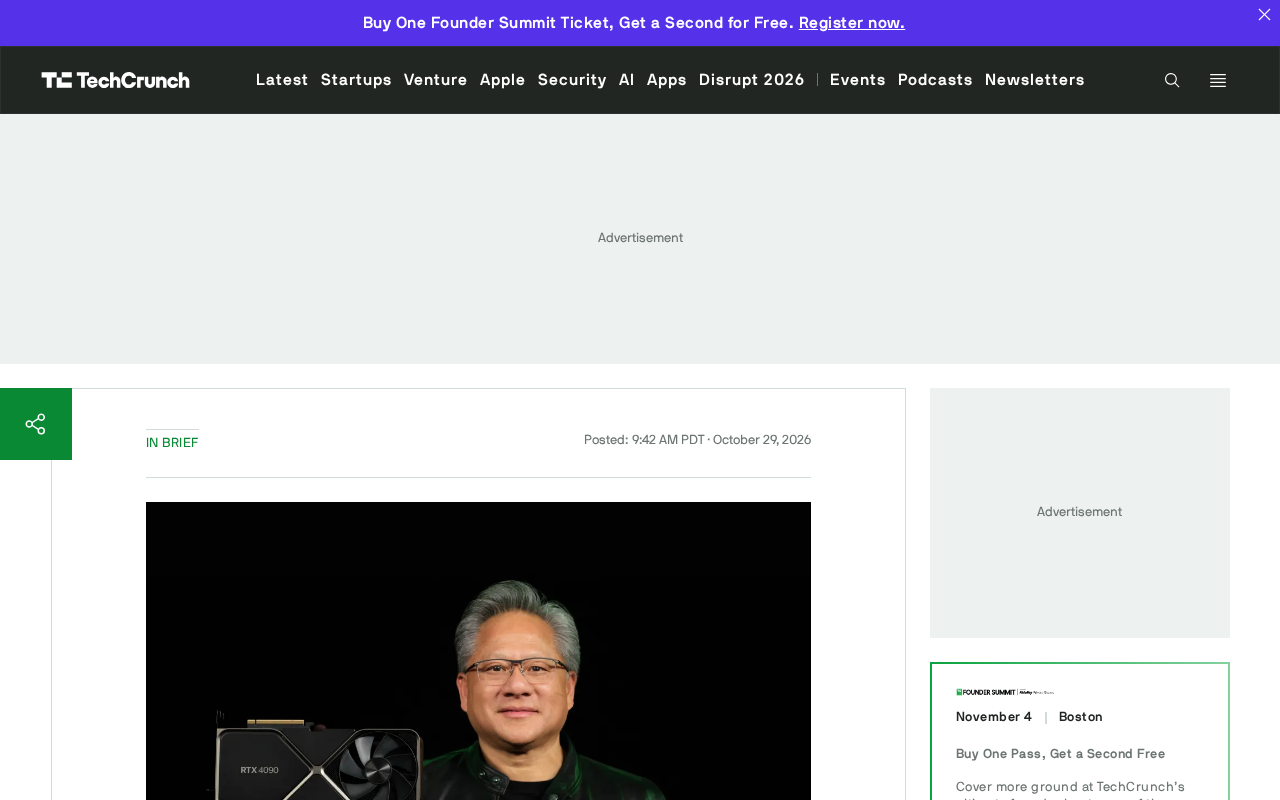
In addition, if Nvidia CEO Jensen Huang, as the company's central figure, became the target of foreign intelligence activities, it could trigger security reviews for corporate executives and upgrades to internal compliance. The Committee on Foreign Investment in the United States (CFIUS) and the Federal Bureau of Investigation (FBI) typically maintain close attention to security threats involving executives of companies with critical technologies. For global AI companies relying on Nvidia GPUs, supply chain compliance risks involve not only export controls but also counterintelligence reviews, data security, and "long-arm jurisdiction" risks in cross-border operations.
Information Limitations and What to Watch
Currently, the report is based on anonymous sources and lacks official confirmation. Specific details—such as the nature of the plot, the progress of the investigation, and the identity of the executive involved—have not been made public. Readers should remain cautious and watch for subsequent official disclosures or judicial proceedings. This incident also serves as a reminder that AI chips have become sensitive assets in great-power competition, and relevant companies' cross-border operations need to pay greater attention to compliance reviews.
One-line Summary
The U.S. investigated a Chinese spy plot targeting Nvidia's CEO, while a Singapore AI cloud company executive was accused of illegally selling chips to China and of being a spy.
Paragraph Summary
According to The New York Times, citing anonymous sources, the U.S. investigated a case involving an alleged Chinese spy plot targeting Nvidia's CEO. Meanwhile, an executive at a Singapore-based AI cloud company was accused of illegally selling Nvidia chips to China and may have been a Chinese spy. The case intertwines commercial chip export controls with national security intelligence activities, reflecting that U.S. anxiety over AI compute supply chain security has extended from trade to intelligence. The report says investigation details have not been made public and lack official confirmation. For global AI companies relying on Nvidia GPUs and cloud service providers in transshipment hubs such as Singapore, supply chain compliance risks are rising, and the industry needs to balance compute access with legal compliance.
Related articles

T3 Code: The Open-Source AI Coding Assistant's Comeback Story
T3 Code is an open-source AI coding assistant that unifies subscriptions like Codex and Claude, with powerful remote control and parallel task management.

Never Elected, Yet Ruled New York for 30 Years: The Ultimate Case Study in the Mechanics of Power
Robert Caro's biographies reveal how unelected Robert Moses ruled New York for 30 years through legal drafting and public authorities, and how Lyndon Johnson built leverage as a "powerless" Senate Majority Leader. Unpacking the underlying logic of accumulating and sustaining power.

The CPython 3.10 Recursion Trap and Synthetic Recovery in TokenGuard, an LLM Circuit Breaker
TokenGuard's author recounts a recursion crash caused by OrderedDict.pop in CPython 3.10 and introduces v0.3.0's Loop Nudge synthetic recovery, inline DLP scanning, and other new LLM agent circuit-breaker capabilities.