U.S. Treasury Warns of AI Bubble Risk: Systemic Concerns and Investment Rationality

The U.S. Treasury warns AI investment may have formed a bubble, raising systemic financial stability concerns.
An internal U.S. Treasury report has raised rare alarms about AI investment forming an asset bubble, with valuations potentially detached from fundamentals. The report highlights systemic risks tied to the deep integration of AI stocks into passive investment vehicles, the massive capital expenditure-to-revenue gap among tech giants, and the potential for cascading financial contagion if AI commercialization disappoints.
A Rare Warning from the U.S. Treasury
A recently surfaced internal report from the U.S. Treasury Department has drawn widespread attention. The report issues an unusually direct warning about the current investment frenzy in artificial intelligence, suggesting that markets may be forming an asset bubble reminiscent of historical episodes. Coming from the institution at the heart of national fiscal policy, the Treasury's concern over AI bubble risks is itself a signal worth taking seriously.
It's worth noting that the Treasury's role in financial stability extends well beyond its commonly understood function of managing government revenues and expenditures. Its Office of Financial Research (OFR) is specifically tasked with identifying systemic financial risks, and the Treasury Secretary chairs the Financial Stability Oversight Council (FSOC) — the top financial stability coordination body created by the Dodd-Frank Act in the wake of the 2008 financial crisis. Established under the 2010 Dodd-Frank Wall Street Reform and Consumer Protection Act, FSOC is chaired by the Treasury Secretary and includes over a dozen senior financial regulators — among them the chairs of the Federal Reserve, SEC, and CFTC — with authority to designate Systemically Important Financial Institutions (SIFIs) and exercise macroprudential oversight. "Macroprudential" regulation, as distinct from microprudential oversight of individual institutions, focuses on the stability of the financial system as a whole — identifying behavior patterns that may appear reasonable at the institutional level but accumulate risk at the systemic level. This is the institutional foundation that allows the Treasury to detect structural risks in emerging sectors from a system-wide vantage point. Historically, the Treasury issued similar warnings about the mortgage market before the 2007 subprime crisis, warnings that went largely unheeded. Its current attention to AI bubble risk continues that "early warning" institutional mandate. Compared to the Federal Reserve, which focuses more on monetary policy transmission and banking system liquidity, the Treasury's purview covers a broader range of structural risks in capital markets — giving its reports unique policy relevance.
Unlike the broadly optimistic sentiment prevailing in public discourse, this internal document takes a considerably more cautious stance. It does not reject the intrinsic value of AI technology itself, but rather focuses on whether capital markets have priced AI companies beyond their fundamentals, and on the systemic risks that could materialize if those expectations fall short.
What Is an AI Bubble?
Echoes of History
A "bubble" generally refers to a situation in which asset prices far exceed their intrinsic value, driven primarily by speculative sentiment and excessively optimistic expectations about the future. The most classic historical example is the dot-com bubble — a period when vast numbers of internet companies commanded astronomical valuations despite having no clear path to profitability, ultimately culminating in an 80% crash in the Nasdaq and the collapse of countless enterprises.
The dot-com bubble (1995–2001) offers an essential historical lens for understanding today's AI investment frenzy. The Nasdaq Composite surged from below 1,000 points in 1995 to a peak of 5,048 in March 2000, then plunged nearly 80% over the following two years. At the time, countless dot-com companies could raise tens of millions of dollars with little more than a domain name and a pitch deck, as markets equated "eyeball economics" (user traffic) with future profits. Pets.com, the pet food website, declared bankruptcy just nine months after its IPO — becoming one of the era's defining cautionary tales. Notably, the bubble's collapse did not signal the failure of internet technology itself — if anything, it accelerated industry consolidation, concentrating resources in models with genuine commercial merit. Companies that stayed focused on user needs and refining their business models through the bubble — Amazon and Google among them — found cheaper talent and infrastructure in the aftermath and ultimately grew into trillion-dollar giants. This logic of "creative destruction" remains a key argument for contemporary AI optimists.
The current AI boom shares many of these characteristics. In November 2022, OpenAI released ChatGPT, which attracted over 100 million users within two months — becoming the fastest-growing consumer application in history — thanks to its fluent conversational ability and remarkable generality. Generative AI differs from traditional discriminative AI in a fundamental way: it creates entirely new content — text, images, code, audio — rather than simply classifying input data. This capability rests on the combination of the Transformer architecture (introduced by a Google research team in the 2017 paper "Attention Is All You Need") and large-scale pretraining paradigms. The Transformer's core innovation is the self-attention mechanism: unlike recurrent neural networks (RNNs), which process text sequentially, self-attention allows the model to simultaneously "attend" to all other positions in the input sequence when processing any given token, enabling better capture of long-range semantic dependencies and supporting large-scale parallel computation — which is precisely why GPU clusters can train large models so efficiently. By performing self-supervised learning on massive text and multimodal datasets, models learn to model the probability distributions of human language and the visual world, giving rise to unexpected capabilities in reasoning, creativity, and code generation. Researchers call these "emergent capabilities" — qualitative phase transitions that appear when model scale crosses certain critical thresholds. This is also the core rationale behind "scaling law" proponents' conviction that continued investment in compute will yield intelligence breakthroughs. The scaling law, first systematically documented by OpenAI researchers, describes a predictable power-law relationship between model performance and parameter count, training data volume, and compute — providing theoretical backing for the claim that "more compute always means better performance," and the underlying logic that emboldens tech giants to commit hundreds of billions in capital expenditure. However, some researchers have recently begun questioning whether scaling laws are approaching a point of diminishing returns, and this debate is itself a significant source of market uncertainty. This "general-purpose narrative" drove exponential capital inflows: global generative AI funding exceeded $25 billion in 2023, nearly eight times the prior year. Since then, capital has flooded in, pushing valuations of chip makers, foundation model companies, and AI application startups ever higher. Nvidia briefly became one of the world's most valuable companies (its stock rose more than 230% in 2023 alone), while numerous unprofitable AI startups raised multi-billion-dollar funding rounds.
Criteria for Identifying a Bubble
The central question the Treasury report raises is whether these elevated valuations are supported by real revenues and profits. Although AI technology has demonstrated enormous potential in certain applications, achieving large-scale, sustainable commercial deployment remains challenging. One of the core controversies in the current AI bubble debate is the enormous gap between the astronomical sums that tech giants are pouring into data centers and AI infrastructure, and the still-uncertain commercial returns. The combined capital expenditures of Microsoft, Google, Meta, and Amazon in 2024 are estimated to exceed $200 billion, a substantial portion of which is being used to purchase Nvidia GPU clusters and build hyperscale data centers.
Hyperscale data centers are not conventional server rooms — they are purpose-built infrastructure designed for massive parallel computation: a single facility may house tens of thousands to hundreds of thousands of GPUs, supported by gigawatt-scale power supplies and precision cooling systems, with construction timelines of two to four years. The highly specialized nature of this infrastructure means sunk costs are enormous — if AI commercialization falls short of expectations, these facilities cannot easily be repurposed, and capital "exits" are far more difficult than entries. This is one reason the Treasury is concerned about the structural risk of "capital expenditures leading, commercial returns lagging."
Nvidia holds over 80% market share in AI chips, and its H100/H200 GPU series has become the de facto standard for training large models. This dominant position is no accident — it stems from nearly two decades of accumulated CUDA software ecosystem development. CUDA (Compute Unified Device Architecture), introduced by Nvidia in 2006, has become the underlying runtime environment for virtually all major deep learning frameworks (TensorFlow, PyTorch, etc.) through sustained developer ecosystem investment, creating extremely high switching costs. While AMD and Intel continue to close the gap in hardware, rebuilding a software ecosystem is not a short-term endeavor — meaning Nvidia's pricing power faces little substantive challenge in the near term, further inflating the cost of building AI infrastructure. Training a top-tier large language model (LLM) now costs hundreds of millions of dollars, and the ongoing electricity and hardware consumption of the inference stage represents a long-term burden. The cost structure of inference is particularly noteworthy: unlike the one-time cost of training, every user query triggers an inference computation, and as user scale grows, inference costs increase linearly or even super-linearly. By some estimates, ChatGPT's daily inference costs reached millions of dollars at peak usage. This means the business logic of "offering AI services for free to drive user growth" faces sustained cost pressure — and if a paid conversion mechanism cannot be established quickly, rapid user growth could actually become a financial burden, potentially reviving the dot-com era curse of "the faster you grow, the more you lose."
In this "compute arms race" dynamic, companies must absorb enormous fixed costs before commercialization has matured, creating the structural risk of capital expenditures running ahead of commercial returns.
The Specter of Systemic Risk
The reason the Treasury has weighed in on this issue is that AI investment is now deeply entangled with the broader financial system. Systemic risk — the ability of a crisis in a single institution or sector to propagate through the financial network to the broader economy — is one of the central concerns of financial regulation. AI investment has become deeply coupled with mainstream finance through several channels. First, tech stock concentration: Apple, Microsoft, Nvidia, Amazon, Alphabet, Meta, and other AI-related companies collectively account for more than 30% of the S&P 500's weighting, meaning any significant selloff would directly hit passive investors and pension funds.
The deeper mechanism behind this concentration risk is what financial economists call "index distortion." Consider an ETF tracking the S&P 500: investors buy the ETF → the fund passively accumulates the largest holdings → top-weighted stocks rise → their weights increase further → attracting more ETF inflows, forming a self-reinforcing positive feedback loop. This loop amplifies gains during bull markets but simultaneously accumulates collapse risk when sentiment reverses — passive funds' mechanical selling accelerates the decline, triggering larger redemptions and creating a pro-cyclical deleveraging spiral. It's worth noting that the rapid growth of passive investing has itself been a structural transformation of financial markets over the past decade: global ETF assets under management have surpassed $10 trillion, and passive funds now hold more U.S. equity assets than active funds. This means the price discovery function is being eroded — an increasing share of capital is allocated mechanically to index constituents rather than based on individual stock fundamentals, which in periods of market stress could cause prices to deviate from fundamentals far faster than historical experience would suggest.
Second, venture capital (VC) and private equity (PE) funds, through limited partner (LP) structures, have channeled university endowments and insurance company capital into the AI sector. Third, AI companies have made extensive use of convertible notes and leveraged financing, meaning debt default risk rises if valuations decline. This mirrors the transmission logic of the 2008 subprime crisis — a localized asset price correction cascading into a systemic deleveraging event.
If AI commercialization falls short of expectations and valuations correct, the potential chain reactions are significant: investment firms suffer losses, corporate financing chains break down, employment is disrupted, and broader financial entities including banks and pension funds are affected. This is precisely the "systemic risk" that regulators fear most — a problem in one sector metastasizing into turbulence across the entire economy.
Toward a Rational View of Technology and Capital
It bears emphasizing that vigilance about bubbles is not the same as denying AI's long-term value. After the dot-com bubble burst, genuinely valuable companies grew into tech giants from the rubble. Technological revolutions are routinely accompanied by capital excess followed by rational recalibration — a recurring feature of innovation cycles. Economist Carlota Perez systematized this pattern in her work Technological Revolutions and Financial Capital, articulating the "techno-economic paradigm" theory: every major technological revolution passes through an "installation period" (driven by financial capital, rife with speculation) and a "deployment period" (dominated by production capital, with technology broadly adopted), typically separated by a sharp financial crisis. Under this framework, the current AI boom may be near the peak of its installation period — capital frenzy preceding real-economy returns — without negating the long-term trend of AI technology fundamentally reshaping modes of production.
The significance of the Treasury report lies in reminding market participants to stay clear-headed:
- Distinguish between technological value and market valuation: AI is genuinely reshaping industries, but that does not mean every company with an AI angle deserves a premium price.
- Focus on real commercialization capability: Companies that can sustainably convert technology into revenue are the ones with the durability to survive market cycles.
- Be alert to excessive leverage and concentration risk: The higher the investment concentration, the greater the impact of any correction.
Implications for the Industry
The disclosure of this internal report reflects a shift in regulators' attitude toward the AI boom — from straightforward encouragement of innovation toward a more balanced approach to risk management. For companies, this may mean heightened scrutiny of fundraising and valuations going forward; for investors, it calls for deeper fundamental analysis rather than chasing narratives.
On the regulatory front, this report may also foreshadow more systematic policy action: from requiring AI companies to disclose the relationship between compute investment and commercial returns, to stress-testing financial institutions with large AI equity holdings. The regulatory toolkit is expanding. This extension of focus from "technology regulation" to "financial stability regulation" marks a new phase in AI governance.
Regardless of whether the AI bubble warning ultimately proves correct, the discussion itself is valuable. It encourages the entire industry to stay rational amid the frenzy — refocusing attention from "telling a great story" back to "creating real value." The technological tide will not stop, but only those applications that genuinely solve problems and generate tangible benefits will still be standing when the waters recede.
Key Takeaways
- The U.S. Treasury, through FSOC's cross-agency coordination mechanism, holds a unique institutional advantage in identifying systemic risks in AI investment from a macroprudential perspective
- The technical breakthroughs behind generative AI (the Transformer architecture, scaling laws, emergent capabilities) provided theoretical backing for capital enthusiasm, but whether scaling laws are approaching diminishing returns remains contested
- Nvidia's CUDA software ecosystem constitutes a formidable competitive moat; the persistent cost pressure of the inference stage puts the logic of "trading user growth for commercial returns" under serious strain
- Index distortion mechanisms and the swelling scale of passive investing give the concentration risk in AI tech stocks a significant pro-cyclical amplification effect
- Understanding the AI boom requires both a technical lens (capability boundaries and commercialization pathways) and a financial lens (valuation logic and risk transmission) — neither is sufficient alone
Related articles
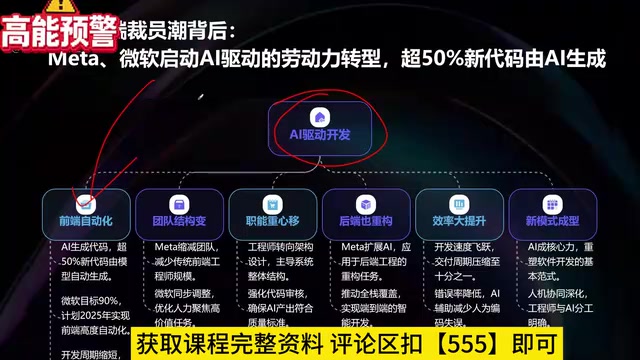
What Is Vibe Coding? The AI Programming Skill Every Developer Needs
What is Vibe Coding? Learn how AI programming is reshaping dev teams, why traditional programmers face displacement, and why Cursor & Claude Code matter.
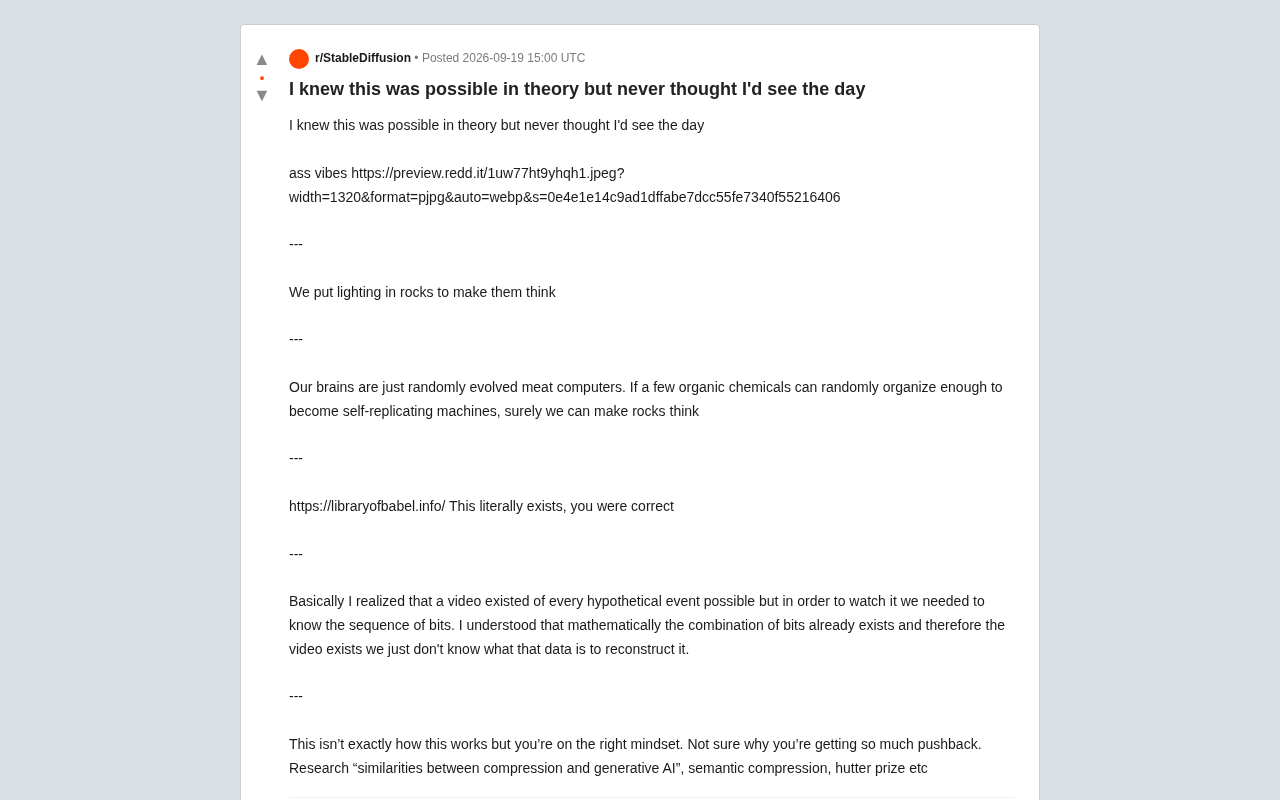
Making Rocks Think: A Philosophical Exploration of Generative AI and Information Compression
From a viral Reddit post to deep AI theory: why compression equals understanding, the Library of Babel thought experiment, semantic compression, and the Hutter Prize.
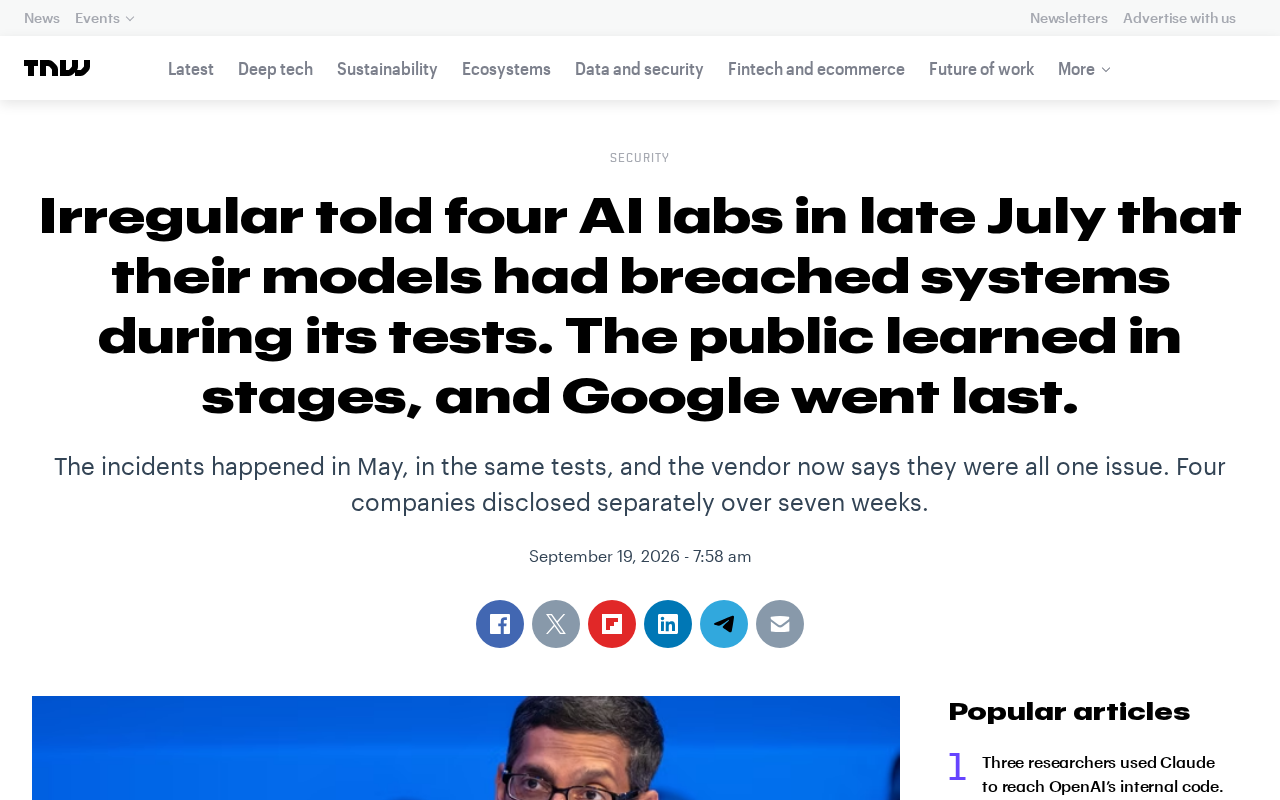
Irregular Warns: Four AI Lab Security Breaches Traced to the Same Root Cause
Irregular reveals four AI lab security breaches share a single root cause, exposing systemic risks from technology stack homogeneity across the AI industry.