UN Court Rules Myanmar Committed Genocide, Facebook Posts Cited as Key Evidence

The ICJ cited Facebook military posts as evidence in its Myanmar genocide ruling, directly linking platform content governance failures to the legal determination of atrocity crimes.
The UN International Court of Justice found that the Myanmar military committed state-sponsored genocide against the Rohingya and used hate speech posts published by the military on Facebook as part of the evidence establishing intent and acts. For the first time in the highest-level international judicial proceedings, the ruling directly linked social media content governance failures to the legal determination of atrocity crimes, challenging the narrative of platforms positioning themselves as neutral conduits and invoking liability exemptions to avoid responsibility. The article notes that the Myanmar case exposed blind spots in AI moderation systems in low-resource language markets, and that platforms have an obligation to allocate moderation capacity according to market risk levels. However, the ruling did not list Facebook as a defendant nor set specific accountability standards; enforcement mechanisms remain vague, and its subsequent impact depends on how domestic litigation and regulation cite this factual determination.
A ruling by the United Nations International Court of Justice (ICJ) has pushed the role of social media platforms in atrocities to the forefront of legal scrutiny. The court found that the Myanmar military committed state-sponsored genocide against the Rohingya, and military posts on Facebook were formally cited as key evidence of the spread of hate speech.
The Core of the Ruling: Facebook Posts as Conviction Evidence
The ICJ explicitly stated in its ruling that Facebook played a role in the spread of hate speech by the Myanmar military against the Muslim minority. The court examined posts published by the Myanmar military on Facebook and used them as part of the evidence establishing genocidal intent and acts. The significance of this ruling goes beyond the individual case—for the first time in the highest-level international judicial proceedings, it directly linked social media platforms' content governance failures to the legal determination of atrocity crimes.
According to the original report, the court's ruling focused on systematic atrocities against the Rohingya between 2016 and 2017. The military posts on Facebook were not incidental but were incorporated into the court's evidentiary chain for characterizing "state-sponsored genocide." This means that content on platforms is no longer merely expressive speech but, in certain contexts, becomes a tool for state machinery to carry out persecution.
The International Court of Justice (ICJ) is the principal judicial organ of the United Nations, located in The Hague, Netherlands. It adjudicates disputes between states under the Statute of the International Court of Justice and provides advisory opinions at the request of UN organs. It differs from the International Criminal Court (ICC): the ICJ deals with state responsibility, not individual criminal liability. In this case, The Gambia, on behalf of member states of the Organisation of Islamic Cooperation, filed suit against Myanmar under the Convention on the Prevention and Punishment of the Crime of Genocide. ICJ rulings are legally binding on states, but the court itself has no enforcement means; enforcement depends on the Security Council or the political will of relevant states. Understanding this mechanism helps clarify why, despite finding genocide, the ruling leaves considerable ambiguity regarding platform accountability.
The Legal Boundaries of Platform Responsibility Are Redrawn
For a long time, tech platforms have tended to position themselves as neutral information conduits and invoked liability exemptions to avoid content responsibility. This ICJ ruling breaks that narrative inertia. When platform content is used to incite racial hatred and ultimately linked to genocidal acts, the platform's claim to neutrality becomes legally untenable.
Facebook's case in Myanmar is not isolated. Multiple investigations have previously pointed out that the platform's content moderation resources in Myanmar were severely inadequate, and its moderation capacity for local languages and contexts was weak, allowing hate speech to spread on a large scale. The ICJ ruling provides judicial endorsement for these criticisms—platform inaction, under certain conditions, can be regarded as a contributing factor to atrocities.
It is worth noting that the court did not list Facebook itself as a defendant but used the military's posts as evidence. Yet this is enough to trigger a chain reaction: human rights organizations and legal scholars have begun to discuss whether platforms should bear responsibility for complicity or condonation in similar situations. The ruling's description of Facebook's role provides a citable precedent for future litigation and regulation.
The liability exemption framework that tech platforms have long invoked is most typically Section 230 of the U.S. Communications Decency Act, which stipulates that platforms are not liable as publishers for content posted by users; the EU's Digital Services Act, by contrast, requires large platforms to conduct systemic risk assessments and fulfill due diligence obligations. At the level of international law, the Convention on the Prevention and Punishment of the Crime of Genocide primarily binds states and does not directly prescribe corporate obligations. The UN Guiding Principles on Business and Human Rights set out an independent corporate responsibility to respect human rights but lack direct judicial enforcement. Therefore, while this ruling does not directly set platform liability standards, it connects platform content with atrocity intent at the factual determination level, providing a factual basis for subsequent accountability under domestic law or regional human rights mechanisms.
A Warning for the AI Content Moderation Industry
From a technical governance perspective, this ruling sounds an alarm for platforms that rely on AI for content moderation. The core problem exposed by the Myanmar case is that when platforms lack sufficient language model training data and local moderation manpower in a specific market, the blind spots of AI moderation systems can become breeding grounds for hate speech. The reason military posts could spread widely is partly that automated moderation systems had limited ability to recognize Burmese-language content.
This has practical significance for tech companies currently investing heavily in AI content moderation. The ICJ ruling implies a judgment: platforms have an obligation to build moderation capacity commensurate with risk levels in every market they operate in, rather than shirking responsibility on grounds of technological limitations. For AI moderation systems, model coverage for low-resource languages, semantic understanding of local contexts, and identification of politically sensitive content all need to be upgraded from "best effort" to "legal compliance" requirements.
Low-resource languages refer to languages with scarce available resources in digital corpora, annotated data, and model training, and Burmese is one such language. Mainstream content moderation models are mostly trained on high-resource language data such as English; when transferred to low-resource languages, insufficient word embedding coverage, difficulties in word segmentation and morphological analysis, and the challenge of recognizing slang and implicit hate expressions lead to declines in both recall and precision. Platforms typically remedy this by adding local human moderators and language experts, but the Myanmar case shows a severe mismatch between staffing and market risk levels. This leads to the idea of "risk-tiered moderation": dynamically allocating moderation resources based on the intensity of market conflict, user scale, and language complexity. The implicit requirement of the ICJ ruling is precisely to elevate this tiering from an operational best practice to a duty of care subject to legal scrutiny.
The Ruling's Aftermath and Unresolved Questions
Although the ICJ ruling found the Myanmar military guilty of genocide, enforcement mechanisms remain vague. The court did not directly order Facebook to take specific measures, nor did it set specific standards for platform liability. This ambiguity is both a limitation of the ruling and leaves room for future legal development.
A key question is: how will the statement in the ruling that "Facebook played a role" be cited in subsequent cases? If a platform, knowing its content is being used to incite atrocities, still fails to take effective action, where is the legal fault threshold? These questions have no clear answers in the ruling, but the ruling itself has already advanced the discussion from the moral level to the legal level.
For the tech industry, the lesson of the Myanmar case is clear: content moderation is not merely a product feature; in extreme situations, it determines whether a platform becomes complicit in atrocities. The ICJ's inclusion of Facebook posts in a genocide ruling marks a new era of accountability for platform governance.
Factual findings in ICJ rulings are often cited as persuasive references in subsequent litigation but do not constitute binding precedent, because the ICJ is not bound by strict stare decisis. The real chain reaction is more likely to occur in domestic courts and regional human rights bodies: plaintiffs can cite the ICJ's factual findings to argue that platforms "knew" content was being used to incite atrocities. The legal fault threshold typically revolves around "knew or should have known," i.e., whether the platform failed to take reasonable measures after receiving sufficient warning. In the Myanmar case, UN fact-finding missions and media investigations had long publicly warned about Facebook's role, making the "lack of knowledge" defense difficult to sustain and providing a factual anchor for setting future standards of care.
One-line Summary
The ICJ cited Facebook military posts as evidence in its Myanmar genocide ruling, directly linking platform content governance failures to the legal determination of atrocity crimes.
Paragraph Summary
The UN International Court of Justice found that the Myanmar military committed state-sponsored genocide against the Rohingya and used hate speech posts published by the military on Facebook as part of the evidence establishing intent and acts. For the first time in the highest-level international judicial proceedings, the ruling directly linked social media content governance failures to the legal determination of atrocity crimes, challenging the narrative of platforms positioning themselves as neutral conduits and invoking liability exemptions to avoid responsibility. The article notes that the Myanmar case exposed blind spots in AI moderation systems in low-resource language markets, and that platforms have an obligation to allocate moderation capacity according to market risk levels. However, the ruling did not list Facebook as a defendant nor set specific accountability standards; enforcement mechanisms remain vague, and its subsequent impact depends on how domestic litigation and regulation cite this factual determination.
Related articles

AI Teams Up with Mathematicians to Attack the Riemann Hypothesis: 17 Million Lines of Code Tear Open a 167-Year Gap
In November 2026, Anthropic mathematicians and Claude claimed to have discovered a proof of the Riemann Hypothesis, publishing 17 million lines of Lean formalized code that passed machine verification. This article analyzes the event's impact on mathematics and cryptography, and the deeper questions raised by the separation of discovery and understanding.
AI Claims Formal Proof of the Riemann Hypothesis — But Machine Verification Isn't a Mathematical Proof
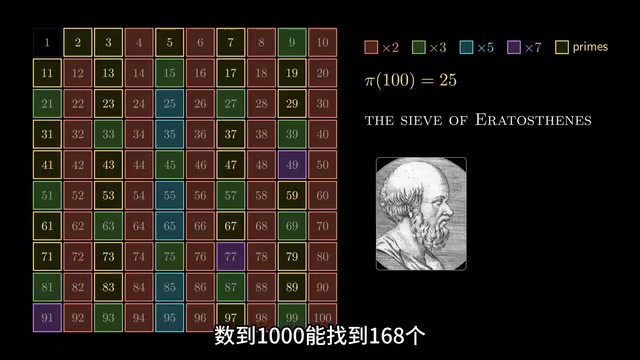
In Nov 2026, Anthropic's Levent Alpöğe released a Riemann Hypothesis proof of 175,000 code files that passed machine formal verification. But machine verification isn't a mathematical proof: the kernel can't confirm the proposition is the Riemann Hypothesis humans understand, and there's no human-readable paper. This article breaks down how ζ function zeros determine prime-count deviation, and the core of the controversy.

Anthropic Raises Over $80 Billion in IPO, DeepSeek Secures $100 Billion in Funding: AI Weekly Roundup
This week in AI: Anthropic's Nasdaq IPO raises $93.5B in the largest ever, DeepSeek closes ~100B yuan round, AI claims formal Riemann proof, MiniMax breaks crypto candidates in seconds.