Unified MCP Endpoint: Building Agent Architecture with Progressive Disclosure
Unified MCP Endpoint: Building Agent A…
Unify AI agent capabilities under one MCP endpoint with progressive disclosure, one API key, and one credit balance.
This article proposes a reference architecture that converges four core AI agent capabilities — Skills, Files, Memory, and Generation — into a single MCP endpoint with tiered progressive disclosure. A unified API key scopes all permissions, and a single credit balance meters all resource consumption, enabling consistent behavior across MCP clients, in-product chat, and CLI entry points for scalable agent fleet governance.
From Four Integrations to One Endpoint
When building high-performance AI agent systems, capability fragmentation is one of the most common pitfalls. Skills, Files, Memory, and Generation — these four core capabilities are often split into four separate integration solutions, each with its own access method, authentication logic, and billing system. The result is exponentially growing system complexity, persistently high maintenance costs, and agents that struggle to exhibit coherent, coordinated behavior.
The reference architecture proposed in this article offers a fundamentally different answer: these four capabilities don't require four integrations — just one MCP endpoint. This endpoint features Tiered Disclosure, paired with a single unified API key that scopes permissions, and a single unified Credit Balance. The same set of tools can simultaneously serve MCP clients, in-product chat interfaces, and CLI tools.
This "convergence" design isn't simply an engineering preference — it's the foundational pattern that keeps an agent fleet coherent.
What Is Progressive Disclosure
Layered Capability Exposure
Progressive Disclosure is the core philosophy of this architecture: rather than exposing all capabilities to callers at once, tools are revealed in layers, on demand, based on context and permissions.
This concept has deep roots in UX design, grounded in the Cognitive Load Theory proposed by John Sweller in 1988. That theory established that human working memory has limited capacity, and presenting too much information at once leads to cognitive overload and degraded decision quality. In agent architectures, this problem is further amplified: when an agent faces hundreds or thousands of available tools, an excessively long tool list not only consumes precious context window tokens, but also causes higher hallucination rates and mis-invocation probabilities during tool selection — a phenomenon known in academic circles as the "Tool Selection Dilemma." The design philosophy of hiding advanced features to reduce cognitive burden for beginners takes on new engineering significance in agent architecture.
Through tiered disclosure, the MCP endpoint initially exposes only the most core and frequently used capability set. As tasks deepen or permissions are elevated, more granular and powerful tools are progressively unlocked. This both controls context window overhead and makes agent behavior more predictable.
Unified Semantics Through a Single Endpoint
All capabilities — whether skill invocation, file read/write, memory retrieval, or content generation — are exposed through the same MCP endpoint. MCP (Model Context Protocol) is a standardized protocol proposed and open-sourced by Anthropic in late 2024, designed to address the fragmentation problem in integrating AI models with external tools and data sources. Before MCP, every AI application had to develop separate adapter layers for each external capability, generating large amounts of repetitive "glue code." MCP defines a unified tool description format, invocation conventions, and response structure, enabling any MCP-compatible client to seamlessly connect to any MCP-compatible server — much like how the USB interface standardized the hardware ecosystem. As a standardized tool access protocol, it provides a unified semantic layer.
This means callers — whether external MCP clients, in-product embedded chat assistants, or developer CLI tools — face the same interface contract. Tool definitions, invocation methods, and return formats are completely consistent, eliminating the waste of re-implementing adapter logic for different entry points.
Unified Authentication and Billing
One Key to Scope All Permissions
Another key design decision in this architecture is using a single API key to scope all permission ownership. In traditional multi-integration setups, each service typically has its own credential system, requiring users to manage multiple keys while the system performs permission checks in multiple places — creating security boundaries that become blurry and brittle.
Under the unified endpoint architecture, a single API key binds access permissions for all capabilities to its owner. This not only simplifies credential management but establishes a clear, singular permission boundary. Granting and revoking permissions becomes clean and straightforward, significantly reducing security governance costs. This is especially important in agent fleet scenarios, where permission boundaries can be accidentally expanded through inter-agent collaboration chains. The single-key model addresses "permission sprawl" at the root.
One Credit Balance for Unified Metering
Complementing unified authentication is a unified credit system. Skill execution, file operations, memory storage, content generation — all resource-consuming operations are deducted from the same credit balance.
This design corresponds to the "resource abstraction layer" design pattern in engineering. By mapping heterogeneous resources (compute, storage, API call counts) to a unified credit unit, the system gains the ability to compare costs across resource types — a concept with mature precedents in cloud computing, such as AWS's unified billing system. In AI agent scenarios, its additional value lies in enabling "Cost-Aware Agents": agents can query their remaining credit balance at runtime and dynamically adjust strategies accordingly — for example, choosing a lighter tool combination when the balance is low rather than failing outright. For organizations operating agent fleets, this means seeing all expenditures on a single dashboard, with a unified unit of measurement for resource consumption, making costs transparent and controllable.
One Tool Set, Multiple Entry Points
One of the most valuable features of this architecture is that the same set of tools can serve multiple distinct entry points:
- MCP Clients: External agent frameworks or third-party applications that access all capabilities via the standard MCP protocol;
- In-Product Chat: Chat assistants embedded in application interfaces that directly invoke the same tools to fulfill user requests;
- CLI (Command-Line Interface): An interface for developers and automation scripts that likewise reuses this same tool set.
Three entry points, one backend capability set. This reuse isn't simply code sharing — it's a guarantee of behavioral consistency. Regardless of which entry point a user initiates a request from, capability behavior, permission constraints, and billing are completely identical.
Why This Is the Right Architecture for Agent Fleets
Coherence Is the Prerequisite for Scale
When an organization moves from running a single agent to running a "fleet," coherence becomes the decisive factor. The concept of an "Agent Fleet" has emerged alongside the growth of enterprise-scale AI deployments, referring to an architectural pattern where multiple specialized AI agents operate simultaneously to collaboratively complete complex tasks. Unlike single-agent systems, fleet architectures face unique governance challenges: behavioral consistency across agents is difficult to guarantee, permission boundaries can be accidentally expanded as they propagate between agents, and cost attribution becomes ambiguous in multi-agent collaboration chains. If every agent, every capability, and every entry point operates independently, the system's overall behavior becomes unpredictable, and the difficulty of debugging and governance escalates sharply with scale.
The unified endpoint architecture fundamentally solves this problem: a single exposure point, a single permission model, and a single billing ledger allow the entire fleet's behavior to be uniformly observed, constrained, and optimized.
Simplicity Is Scalability
It's worth emphasizing that this "convergence" does not come at the cost of capability. Through progressive disclosure, the architecture maintains interface simplicity while accommodating rich capability layers. Adding a new capability only requires connecting it to the unified endpoint and incorporating it into the tiered disclosure system — no need to build an entirely new integration, authentication, and billing pipeline.
This design philosophy reveals an important trend: in the age of agents, architectural value lies not in stacking features, but in delivering maximum capability elasticity through the fewest possible interface points. One endpoint covering every capability is both an engineering elegance and a governance imperative.
Conclusion
Skills, Files, Memory, and Generation don't need to map to four separate integrations. They can — and should — converge onto a single MCP endpoint with tiered disclosure, a single key that scopes permissions, and a single unified credit balance. One tool set responding to three entry points — MCP clients, in-product chat, and CLI — is precisely the right architecture for keeping an agent fleet coherent.
For teams designing next-generation AI agent infrastructure, this reference architecture provides a clear direction: in an era of capability explosion, learning to "converge" may be more valuable than learning to "stack."
Key Takeaways
Related articles
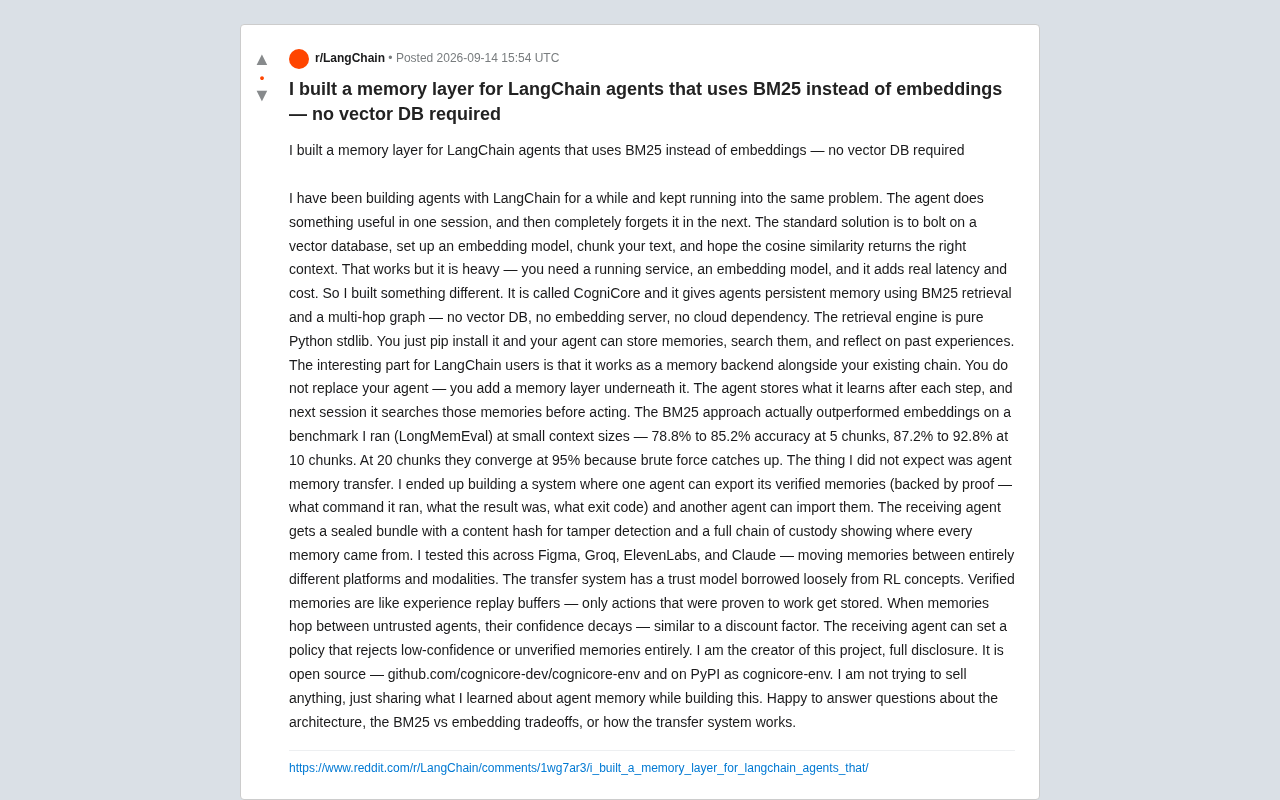
Ditch the Vector Database: Building a Memory Layer for LangChain Agents with BM25
CogniCore replaces vector databases with BM25 retrieval for LangChain agent memory, outperforming embeddings in small-context benchmarks with zero external dependencies.
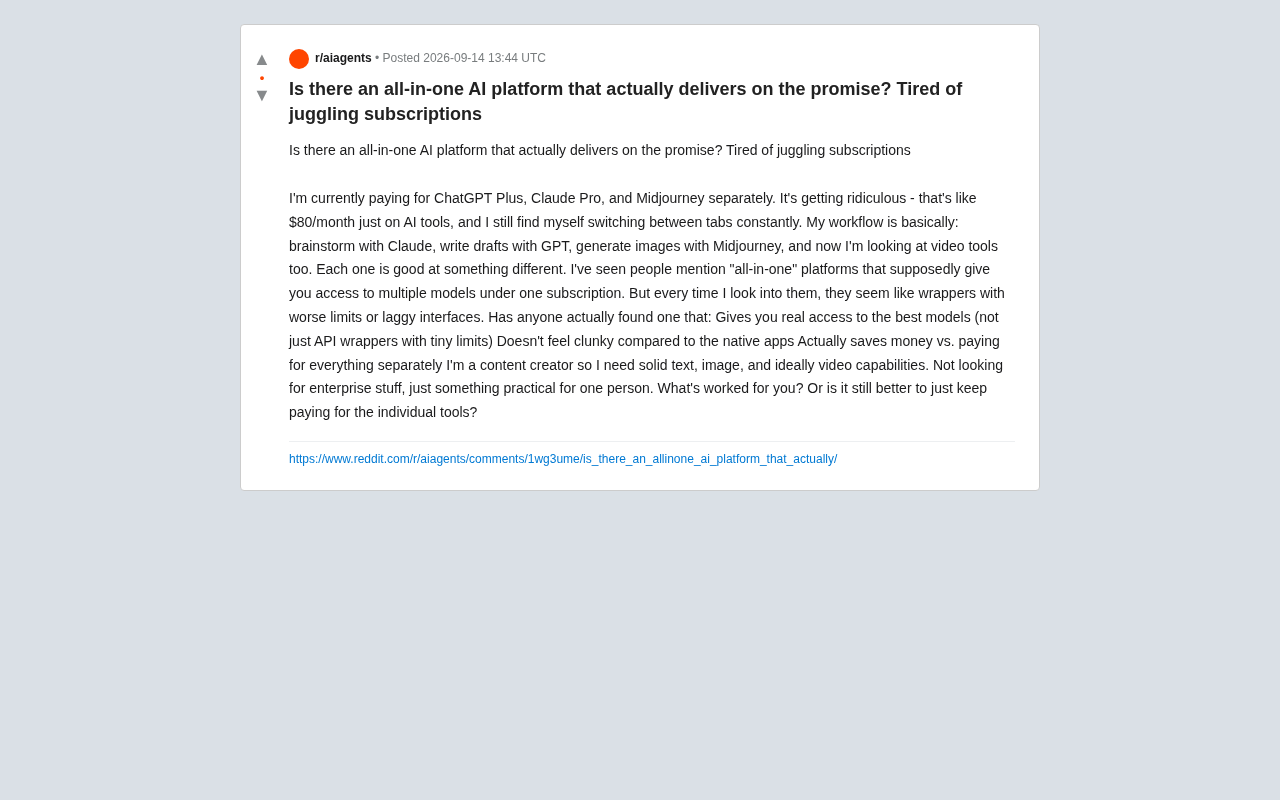
Are All-in-One AI Platforms Actually Worth It? A Practical Guide to Escaping Subscription Overload
Tired of paying for ChatGPT, Claude, and Midjourney separately? We break down whether all-in-one AI platforms are actually worth it — and what a smarter subscription stack looks like.
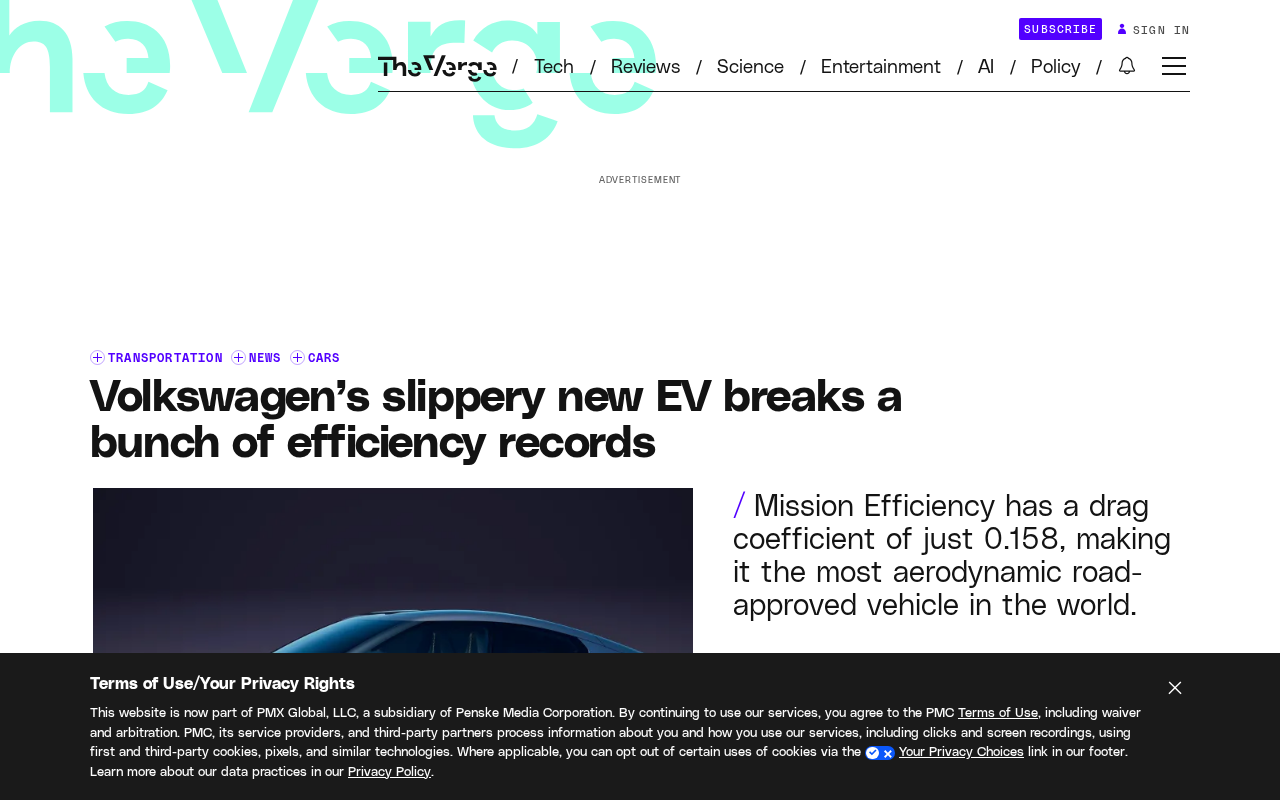
Volkswagen Mission Efficiency: The World's Lowest-Drag EV Breaks Multiple Efficiency Records
Volkswagen's Mission Efficiency prototype claims the world's lowest drag coefficient, built on MEB+ platform with ID. Polo and ID. Cross components. Here's what it means for EV efficiency.