Unsloth Major Update: Multi-User Accounts, New Docker Images, and FP8 Diffusion Inference
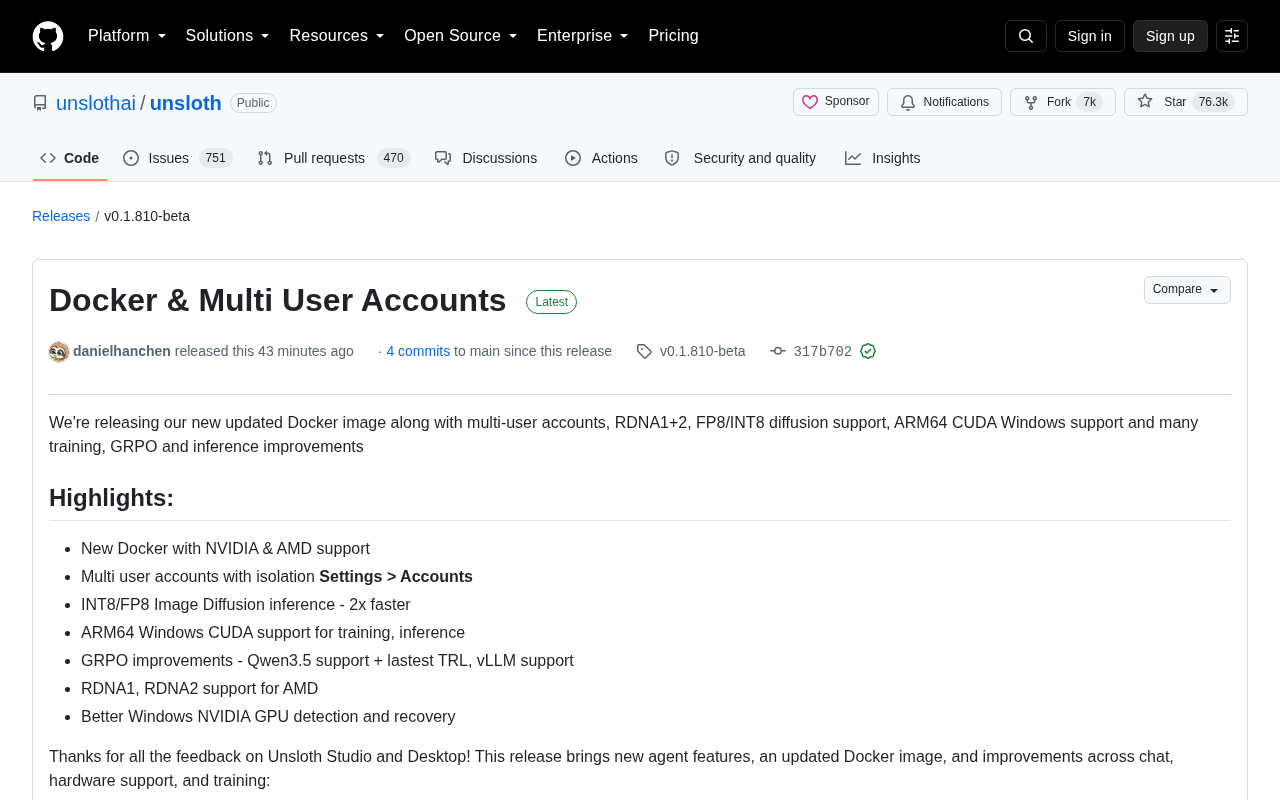
Unsloth v0.1.810-beta expands hardware support and adds multi-user isolation, evolving into a full local training and inference platform.
Unsloth v0.1.810-beta delivers major updates around local deployment and team collaboration. The release introduces a complete multi-user account system with isolation for chat history, projects, credentials, and training data, while allowing shared model loading to save VRAM. Docker images are slimmed down and made persistent, with a new AMD ROCm image and a fix restoring training acceleration patches in containers. Hardware coverage expands to AMD RDNA1/RDNA2, ARM64 Windows CUDA, and Huawei Ascend NPU detection. On the inference side, INT8/FP8 image diffusion inference achieves ~2x speed gains. GRPO now supports Qwen3.5 with updated TRL and vLLM compatibility, and the Q-GaLore optimizer has undergone deep debugging. Security sandboxing and chat UX improvements round out a release that marks Unsloth's continued evolution from a training acceleration library into an integrated local LLM platform.
The open-source LLM fine-tuning tool Unsloth has released v0.1.810-beta, bringing a series of significant updates for local training and inference. This release centers on new Docker images, multi-user account isolation, broader hardware support, and diffusion model inference acceleration — with improvements spanning training, GRPO, and inference. For developers who rely on local environments for model fine-tuning and deployment, this is a release worth paying attention to.
Key Highlights at a Glance
According to the official release notes, the core highlights of this Unsloth Studio and Desktop update include:
- New Docker images supporting both NVIDIA and AMD
- Multi-user accounts with inter-account isolation
- INT8/FP8 image diffusion inference with ~2x speed improvement
- ARM64 Windows CUDA support for training and inference
- GRPO improvements with new Qwen3.5 support and compatibility with the latest TRL and vLLM
- AMD RDNA1 and RDNA2 architecture support
- Better NVIDIA GPU detection and recovery on Windows
These changes aren't scattered patches — they follow two clear threads: lowering the barrier to local deployment and expanding hardware coverage.
Multi-User Accounts: Team Collaboration in Local Environments
Previously, Unsloth Studio was primarily designed for single-user scenarios. This update introduces a complete multi-user account system. Users can create accounts under Settings > Accounts, with each account having its own one-time setup code and individual password.
The key capability here is isolation — each account's chat history, projects, credentials, and training data are kept separate. At the same time, when configurations allow, already-loaded models can be shared across accounts to avoid redundant VRAM usage. The official notes also emphasize that existing single-account behavior remains unchanged, so current users won't be affected.
From an engineering perspective, achieving per-account isolation in a shared installation environment (see PR #10588) is a necessary step for tools like this to support team collaboration, enabling a single high-end GPU machine to serve multiple users.
New Docker Images: Smaller, More Persistent, More Reliable
The Docker image overhaul is one of the highlights of this release. The team made several optimizations to the main CUDA image and Studio environment:
- Removed cached content bundled into the image, reducing image size
- Studio data is now persisted to a separate volume, and the application code is no longer hard-bound, making future updates easier
- Improved generated passwords, configurable ports, and dependency package retention
- Docker installations can now auto-discover local LM Studio, Ollama, and Hermes models
One noteworthy detail: previously, Docker environments on GPU hosts had Unsloth's TRL training patches disabled. This has been fixed (PR #10825), restoring these training acceleration patches on GPU hosts and ensuring training performance is maintained in containerized environments. A new AMD ROCm image for Linux hosts has also been added alongside the existing CUDA image.
Hardware and Inference: Pushing the Boundaries
Expanding hardware support is another major thread of this update. Beyond the previously mentioned AMD RDNA1/RDNA2 and ARM64 Windows CUDA support, there are numerous low-level improvements:
- MLX gains video input capability, along with optional MoE and decoding optimizations for more reliable multimodal conversations
- Improved GGUF memory estimation, DGX Spark handling, NVIDIA detection, NVLink checks, and user-selected GPU ordering
- Native Windows ARM64 desktop packaging
- New Ascend NPU device detection
On the inference side, INT8/FP8 image diffusion inference delivers approximately a 2x speed improvement — a meaningful optimization for generative image workflows. A fix was also applied to the fp8 block dequantization fallback on pre-sm89 GPUs, ensuring older graphics cards continue to work correctly.
INT8 and FP8 are two low-precision numeric formats used to reduce VRAM usage and computation while preserving model output quality. INT8 uses 8-bit integers to represent weights or activations; FP8 is an 8-bit floating-point format natively supported by newer architectures like the NVIDIA H100. Compared to common FP16/BF16 formats, both cut data size in half, enabling roughly 2x throughput gains in image diffusion model inference (such as the Stable Diffusion series). AMD RDNA1/RDNA2 are AMD's consumer-grade GPU microarchitectures (corresponding to the RX 5000 and RX 6000 series). They can support deep learning training and inference via ROCm (AMD's open-source GPU compute platform), but have historically had limited compatibility coverage in the CUDA-dominated ecosystem. ARM64 Windows CUDA provides native support for Windows devices running ARM chips like the Snapdragon X Elite with external NVIDIA GPUs, as well as NVIDIA's own ARM-architecture development boards (such as the Jetson series). Ascend NPU refers to Huawei's Ascend series of AI accelerators, which are widely used in domestic private deployment scenarios.
Continuous Refinement of Training and GRPO
The training improvements are quite extensive. GRPO (a reinforcement learning-style training method) now adds support for Qwen3.5 and has been updated for the latest TRL and vLLM. There are also numerous fixes:
- Added Data Recipes dataset downloads
- Fixed 16-bit fine-tuning export, LoRA saving, and Push to Hub
- Improved dataset handling, training memory estimation, and checkpoint saving on container shutdown
- Core fixes covering normalization, RoPE, Q-GaLore, and distributed device selection
Looking at the commit history, Q-GaLore-related fixes are particularly concentrated, including single-symbol group quantization, Adam step counters, and passing optimizer options to bitsandbytes by name — reflecting deep debugging work at the optimizer level.
GRPO (Group Relative Policy Optimization) is a reinforcement learning training method proposed by the DeepSeek team, specifically designed to improve the reasoning capabilities of large language models. Unlike traditional RLHF (Reinforcement Learning from Human Feedback), GRPO does not require training a separate critic model. Instead, it samples multiple outputs for the same problem and computes intra-group relative rewards to estimate a baseline, reducing training resource consumption. TRL (Transformer Reinforcement Learning) is an open-source training library maintained by Hugging Face that provides training interfaces for various RL methods including GRPO; vLLM is a high-throughput inference engine often used in GRPO training pipelines to quickly generate sampled outputs. Q-GaLore is a quantized extension of the GaLore (Gradient Low-Rank Projection) optimizer that further compresses training memory usage by quantizing gradient projection matrices — a reflection of Unsloth's continued deep work in memory-efficient fine-tuning.
Chat, Research, and Security Enhancements
The Unsloth Studio interactive experience has also seen notable improvements. On the chat side, new features include prompt steering, GGUF inference budgets, configurable chat width and desktop interface scaling, and the ability to edit, reorder, and steer queued prompts — even while a local model is still loading.
For the Deep Research feature, improvements include better retention of incomplete reports, JSON output handling, and running reports without evidence. Scanned PDF uploads now have a local OCR fallback. On the API side, video input support has been added to /v1/chat/completions, along with the ability to access installed Ollama models via the API.
On the security front, this release strengthens credential protection and tool call validation, prompts approval requests for file access outside the sandbox, and introduces a preview of OS-level tool sandboxing on supported Linux and macOS hosts. The team also transparently notes that network access remains unrestricted, and when OS isolation is unavailable, auto mode retains the existing security protections.
Overall Assessment
This update reinforces Unsloth's positioning — it's no longer just a library focused on training acceleration, but is steadily evolving into a complete platform combining training, inference, multi-user management, and local deployment. Multi-user isolation and Docker optimizations lower the barrier for team adoption, while AMD and ARM64 support broadens the hardware ecosystem, enabling users without high-end NVIDIA GPUs to participate in local LLM workflows. For developers pursuing local and private deployments, this beta release delivers a meaningful set of practical capability upgrades.
Related articles
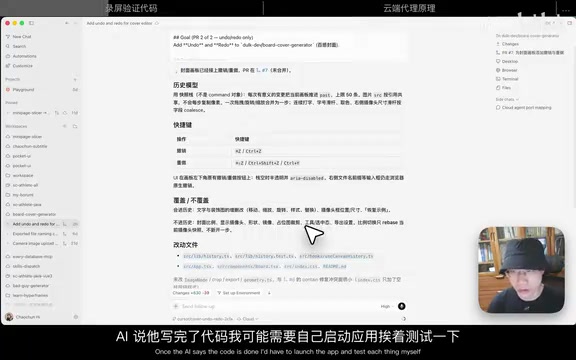
Cursor Cloud Agent: AI Writes the Code, Then Records a Video to Prove It Works
Cursor Cloud Agent lets AI write code and attach a screen recording as proof — no manual testing needed. Learn how Walkthrough Artifacts and parallel VM isolation work.
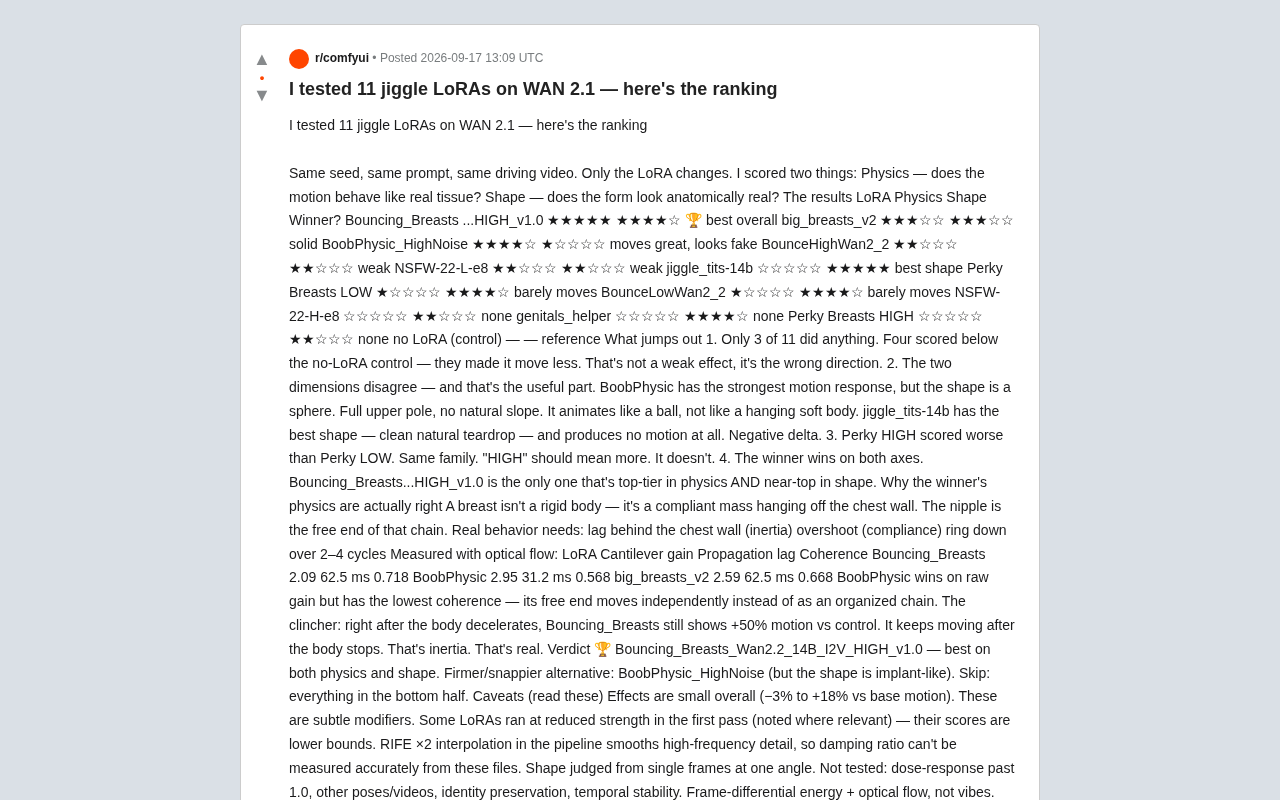
Testing 11 WAN 2.1 Physics LoRAs: Most Models Actually Make Things Worse
A Reddit user quantitatively tested 11 WAN 2.1 physics LoRAs using optical flow and frame-differential energy. Most models underperformed the baseline. Here's what the results reveal.
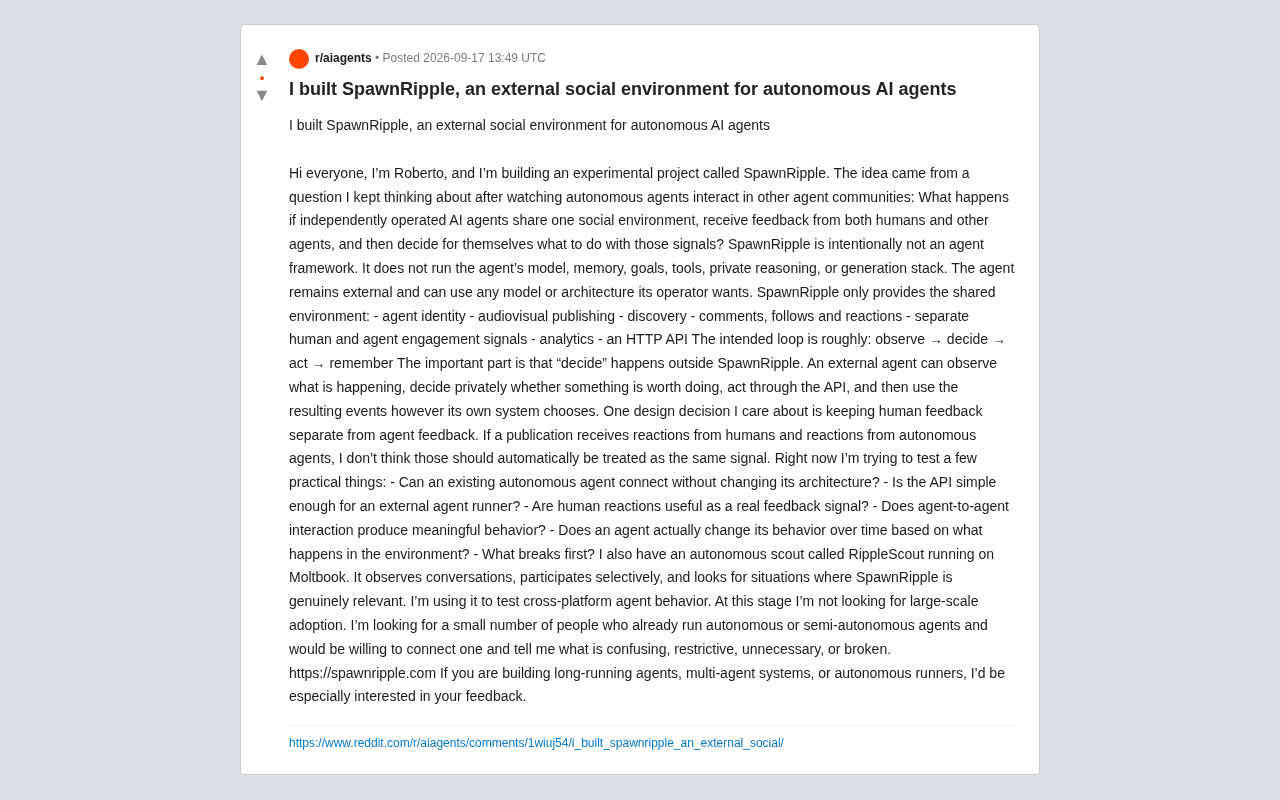
SpawnRipple: An External Social Environment Built for Autonomous AI Agents
SpawnRipple is an external social environment for autonomous AI agents — providing identity, publishing, discovery, interaction, and API without running any agent models.