Unsloth v0.1.71-beta Released: Core Improvements to the Fine-Tuning Acceleration Framework
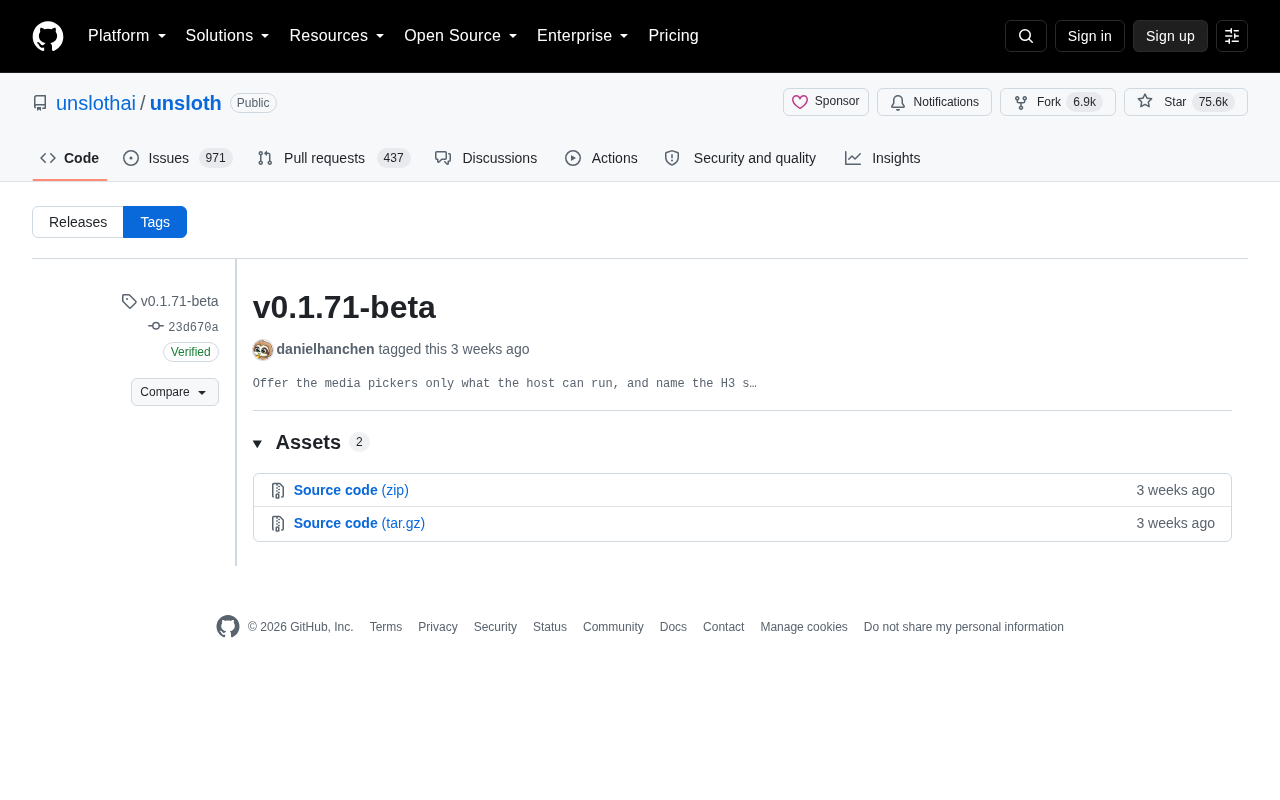
Unsloth v0.1.71-beta brings smart hardware adaptation and naming improvements to the fine-tuning framework.
Unsloth v0.1.71-beta introduces intelligent media capability adaptation that provides users only with media options their hardware supports, alongside naming convention optimizations. With 75.6k GitHub stars, Unsloth remains a leading fine-tuning acceleration framework, offering extreme memory efficiency and training speed through hand-written GPU kernels and QLoRA optimizations, enabling consumer-grade GPUs to handle tasks previously requiring expensive clusters.
Unsloth's Continuous Iteration
Unsloth, one of the most popular large model fine-tuning acceleration frameworks, recently released v0.1.71-beta. This beta version, tagged by GitHub user danielhanchen, continues the project's consistent rapid iteration pace. Currently, Unsloth has accumulated over 75.6k stars and 6.9k forks on GitHub, firmly holding a leading position in the AI fine-tuning tool ecosystem.
For developers focused on AI programming and model customization, Unsloth's core value lies in its ability to complete large language model fine-tuning with extremely low memory footprint and faster training speeds. Individual developers can now accomplish fine-tuning tasks on consumer-grade GPUs that previously required expensive clusters.
Understanding the Technical Background of Large Model Fine-Tuning
Large model fine-tuning refers to further training model parameters using domain-specific or task-specific datasets based on pre-trained large language models, making them perform better on target tasks. Compared to pre-training from scratch, fine-tuning requires only small amounts of data and computational resources. Current mainstream fine-tuning techniques include Full Fine-tuning and Parameter-Efficient Fine-Tuning (PEFT), with the latter represented by LoRA (Low-Rank Adaptation). LoRA introduces low-rank decomposition adapter modules into model weight matrices, training only a minimal number of new parameters to achieve results close to full fine-tuning. Unsloth has performed deep engineering optimizations on LoRA/QLoRA and other technical approaches, enabling these already efficient fine-tuning methods to run with even lower resource consumption.
Core Improvements in v0.1.71-beta
From the release information, the main commits in v0.1.71-beta focus on optimizations for media processing and runtime environment adaptation. The commit message mentions "Offer the media pickers only what the host can run," meaning it provides users with only the media options their host machine can support.
Smarter Hardware Capability Adaptation
While this change seems minor, it reflects the Unsloth team's deep consideration of user experience. As multimodal fine-tuning scenarios become increasingly common, different hardware configurations have significant differences in supporting media types like images and audio. By having the tool actively sense the capability boundaries of the host environment, it effectively prevents users from encountering errors or performance bottlenecks under incompatible configurations, significantly lowering the barrier to entry.
Multimodal fine-tuning refers to customized training of large models that can simultaneously process multiple input modalities such as text, images, audio, and video. With the emergence of multimodal large models like GPT-4V, LLaVA, and Qwen-VL, developers are no longer limited to pure text scenarios but hope to enable models to understand text-image mixed instructions, process medical images, analyze document layouts, and other complex tasks. However, multimodal fine-tuning has much higher hardware requirements than pure text fine-tuning—image encoders require additional memory and computational resources, while audio processing depends on specific decoding libraries. The improvement in v0.1.71-beta to "provide available media options based on host capabilities" addresses this complexity, preventing users from selecting incompatible multimodal training configurations when hardware doesn't support them.
Naming Convention Optimization
The commit also involves adjustments to H3-level naming. While specific details are limited, such normative improvements typically help enhance code readability and API consistency, laying a clearer structural foundation for future feature expansion.
Why Unsloth Deserves Developer Attention
Dual Optimization of Memory and Training Speed
Unsloth's core competitive advantage lies in its extreme pursuit of training efficiency. Through hand-written GPU kernels and deep optimization of the Transformer architecture, Unsloth can increase fine-tuning speed several times while significantly reducing memory usage without sacrificing precision. This is especially critical for individual developers and small to medium teams with limited hardware resources.
Hand-written GPU kernels refer to bypassing the general computation scheduling of high-level frameworks like PyTorch and directly writing parallel computation functions that execute on GPUs using OpenAI's Triton language. The Unsloth team has optimized key computational components in Transformers one by one, including attention mechanisms, cross-entropy loss functions, and RoPE positional encoding, directly controlling GPU memory access patterns and thread scheduling strategies to achieve higher computational throughput and lower memory usage on the same hardware. This is the technical foundation for Unsloth's claim of "2-5x training speed improvement with zero precision loss."
Combined with QLoRA (Quantized LoRA) technology, the power of this low-level optimization is further amplified. QLoRA is a method proposed by the University of Washington in 2023 that quantizes pre-trained model weights to 4-bit (such as NF4 format) before applying LoRA adapters for fine-tuning, allowing a 7-billion-parameter model to be fine-tuned with only about 6GB of memory, running on consumer-grade GPUs like RTX 3090 and RTX 4090. Unsloth has further engineered the QLoRA process, including reducing intermediate activation memory usage and optimizing gradient checkpoint strategies, further increasing the scale of trainable models and greatly lowering the hardware threshold for individual developers and small teams.
Broad Mainstream Model Compatibility
As a highly active open-source project, Unsloth continuously tracks and supports mainstream large models, covering popular model families like Llama, Mistral, and Gemma. This timely compatibility update makes it the preferred tool for many researchers and engineers when customizing models.
Differentiated Positioning in the Fine-Tuning Tool Ecosystem
The current large model fine-tuning tool ecosystem presents a multi-layered landscape. Hugging Face's Transformers + PEFT + TRL combination provides the most universal fine-tuning framework; Axolotl simplifies the combination of various fine-tuning strategies in a configuration-driven manner; LLaMA-Factory is known for its rich Web UI and Chinese community support. Unsloth's differentiated positioning lies in "low-level performance optimization"—it doesn't build a fine-tuning process from scratch but acts as an acceleration layer embedded in the existing Hugging Face ecosystem. Users only need to replace a few lines of code to gain significant speed and memory benefits. This minimally invasive design philosophy allows it to be used compatibly with the above tools rather than competing with them.
Strong Open-Source Community Support
Behind 75.6k stars is a highly active developer community. Frequent version releases (beta version number has iterated to 0.1.71) indicate that project maintainers respond extremely quickly to community feedback, with bug fixes and feature enhancements landing rapidly.
Beta Version Usage Recommendations
Note that v0.1.71 is a beta test version. For production environments pursuing stability, developers are advised to evaluate carefully before upgrading or test first in an isolated environment. For users hoping to experience the latest features and participate in community feedback, the beta version is an excellent window into understanding Unsloth's development direction.
This release includes 2 build artifacts (Assets) and has been signed through GitHub's verified signature (GPG key ID: B5690EEEBB952194), ensuring the trustworthiness of the download source. GPG (GNU Privacy Guard) signature verification is a digital signature mechanism based on asymmetric encryption used to confirm that a software release package was indeed signed by the claimed author and has not been tampered with during transmission. In today's era of increasingly frequent open-source software supply chain attacks (such as the 2024 XZ Utils backdoor incident), this verification mechanism is particularly important. When developers see the "Verified" mark on the release page, it means the commit or tag for that version was signed using a GPG key bound to the GitHub account, and GitHub has verified key ownership. This detail also reflects the project's standardized management in terms of security.
Summary
While Unsloth v0.1.71-beta is a relatively minor iteration, its optimization of media capability adaptation and naming conventions continues the project's consistent style of "attention to engineering details and rapid response to requirements." As demand for large model fine-tuning continues to grow, open-source fine-tuning frameworks like Unsloth that balance efficiency and ease of use are becoming indispensable infrastructure for AI application deployment. Continuously tracking its version evolution has practical reference value for every developer engaged in model customization.
Related articles
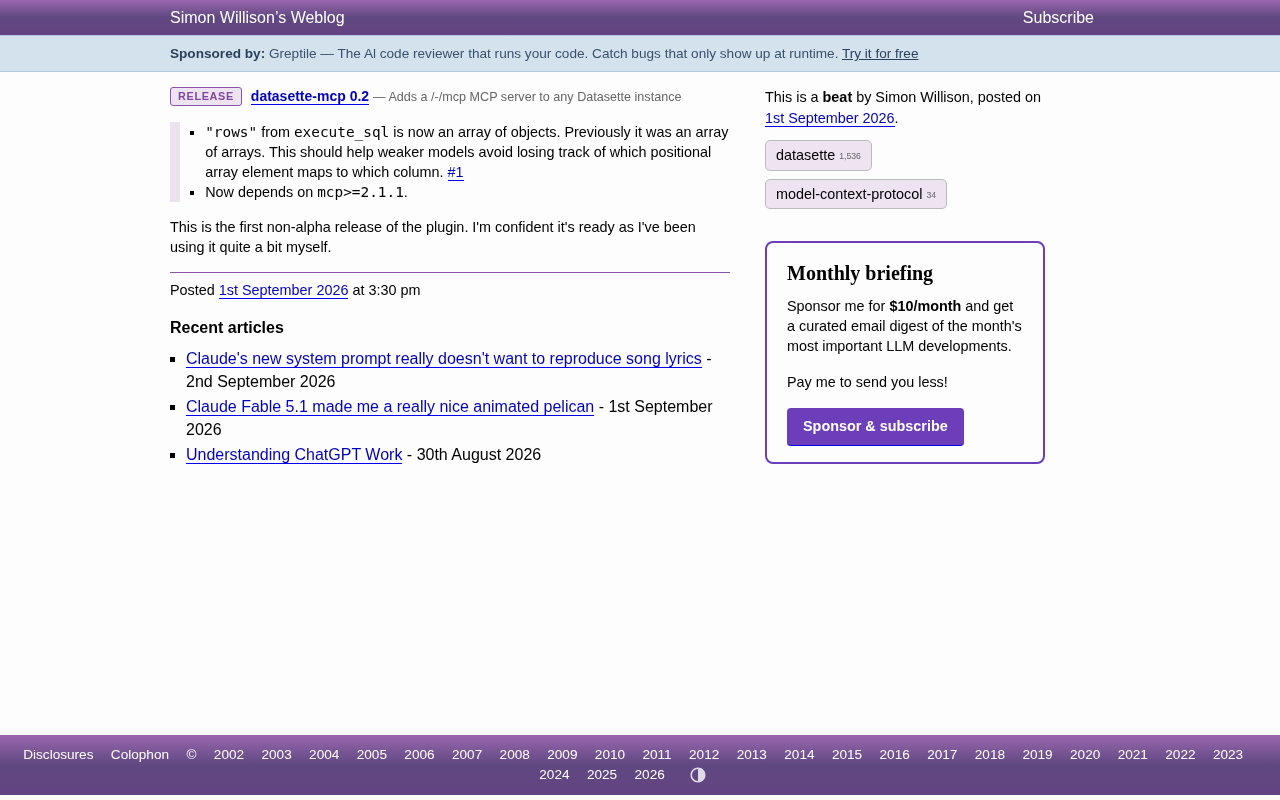
Datasette-MCP 0.2 Released: First Stable Version Brings SQL Return Format Optimization
Datasette-MCP 0.2 officially released, leaving alpha behind. Key updates include switching execute_sql to array of objects format and upgrading MCP dependency to 2.1.1, making AI database queries more reliable.

Abliteration.ai: Turning the Removal of AI Safety Guardrails into a Business — A Crisis for Open-Source Model Safety Alignment
Abliteration.ai commercializes removing AI safety guardrails by suppressing refusal vectors in LLMs. We analyze the technique, its controversies, and the deeper crisis facing open-source model alignment.
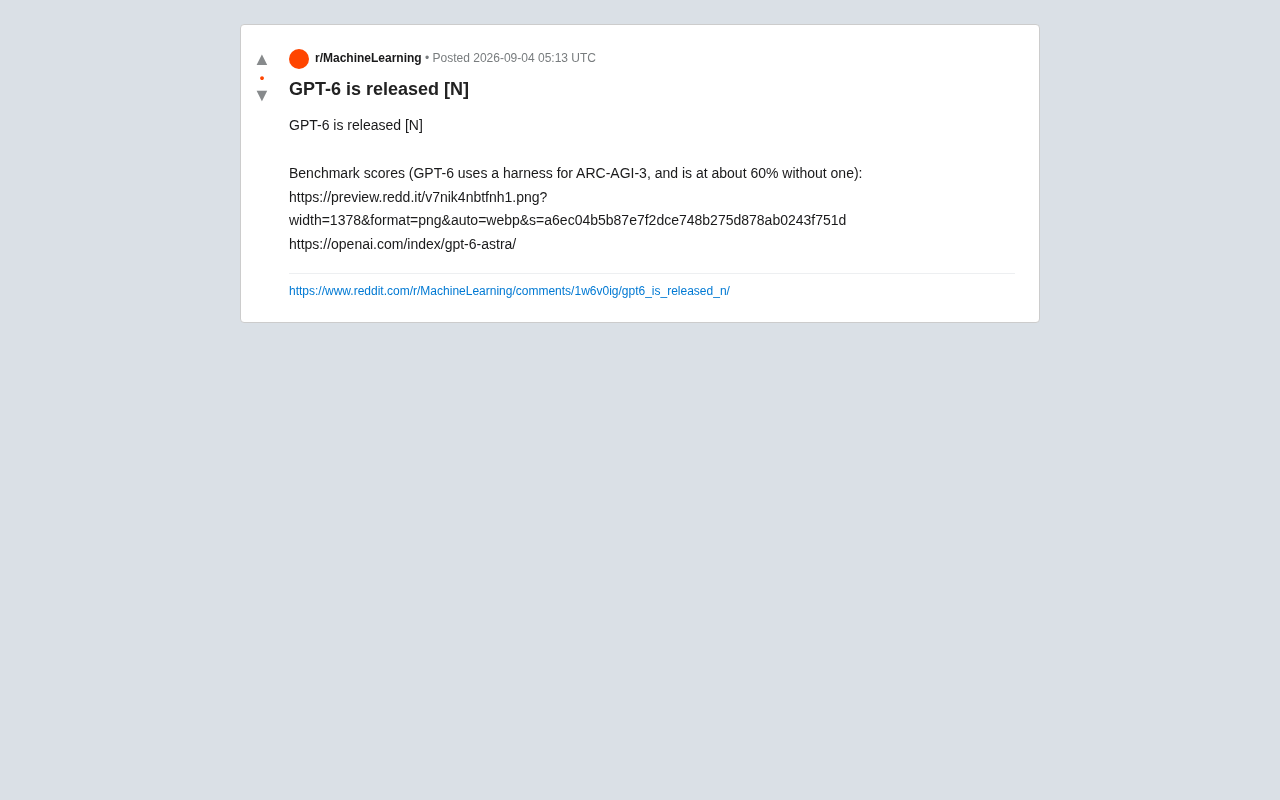
GPT-6 and the ARC-AGI Benchmark: A Substantive Leap in Abstract Reasoning
In-depth analysis of GPT-6's breakthrough on ARC-AGI benchmarks, the significance of a 60% bare-model score, the harness framework debate, and reasoning evolution from GPT-5 to GPT-6.