USB-C LTE Modem: Giving Computers a Phone Line

A USB-C LTE modem gives computers an independent phone line, bypassing mobile phones and VoIP software.
The Show HN section of Hacker News showcased a USB-C LTE modem project whose core function is not internet access but providing a computer with a "phone line" capable of directly making and receiving PSTN calls. The article analyzes its possible technical paths: relying on the modem's VoLTE capability to establish an IP voice channel, or falling back to circuit-switched domain via CSFB, with the host controlling dialing via AT commands and carrying audio streams through USB Audio Class. Use cases include fixed numbers for remote work, IoT voice terminals, and temporary office communications. The project is at an early stage with low engagement; carrier certification, voice pricing, and module permits are the main constraints, but its "peripheralizing cellular voice" idea offers a new direction.
A Hardware Project That Lets Computers "Make Calls"
In the Show HN section of Hacker News, a project titled "A USB-C LTE modem that gives my computer a phone line" attracted modest attention. According to the post, the author built a USB-C LTE modem whose core function is not the usual internet access, but rather providing a computer with a "phone line"—enabling the machine to make voice calls just like a traditional telephone.
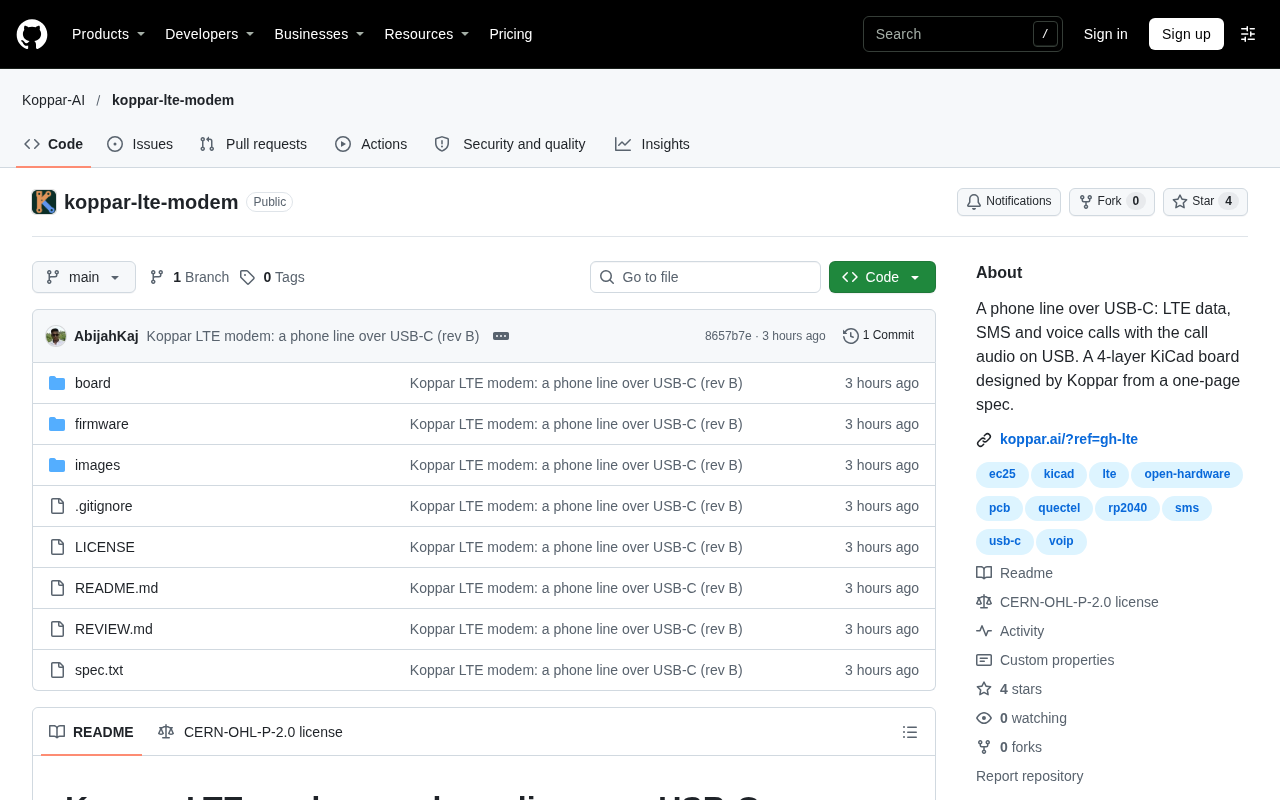
The project takes a rather unique angle. Today, with cellular networks having fully shifted to data services, voice calling seems to be an exclusive feature of mobile phones. On the PC side, users either rely on VoIP software or connect to a phone via Bluetooth. This "USB-C phone line" attempts to bring LTE's voice capability directly to computers, bypassing intermediate devices. Judging from the hardware form factor, it likely integrates an LTE baseband, SIM card slot, and USB-C interface, and may also include audio codec circuitry.
Technical Approach: How LTE Voice Is Implemented
To make a computer call through an LTE modem, there are several technical paths. The most common is to leverage the LTE network's CSFB (Circuit Switched Fallback) or VoLTE (Voice over LTE) capability. If the modem supports VoLTE, an IP voice channel can theoretically be established; if it only supports data, one would need the carrier's VoLTE service or a third-party SIP gateway.
The author did not detail the implementation in the post, but from the phrase "phone line," the goal is likely to give the computer a real phone number capable of making and receiving PSTN calls. This requires the modem to complete voice registration with the carrier network and the host side to provide corresponding audio routing and a dialing interface. The USB-C interface here not only supplies power and transfers data but may also carry audio streams, or disguise the modem as a sound card via the USB Audio Class protocol.
Hardware and Software Coordination
On the hardware side, the LTE modem needs to support voice functionality. Some Cat.1/Cat.4 modems on the market have VoLTE capability, but not all models expose voice interfaces. On the software side, the host needs drivers to recognize the modem's AT command set and implement control logic for dialing, answering, and hanging up. If the author provides open-source firmware or host software, this project would be quite attractive to DIY enthusiasts.
VoLTE (Voice over LTE) is a technology that transmits voice calls as IP data streams over LTE networks, without relying on traditional 2G/3G circuit-switched domains. It requires coordination among the terminal, base station, and IMS (IP Multimedia Subsystem) core network, with voice packets transmitted over QoS-guaranteed bearers to maintain call quality. Compared to the earlier CSFB (Circuit Switched Fallback), VoLTE connects faster and allows data connections to remain active during calls. For hardware modems, supporting VoLTE means the baseband needs an IMS protocol stack and must obtain the carrier's voice certification for that module—which is why many data-only LTE modems do not expose voice functionality.
CSFB (Circuit Switched Fallback) was a solution adopted in the early days of LTE commercialization to compensate for insufficient voice support: when a call is needed, the terminal falls back from the LTE network to the 2G/3G circuit-switched domain to complete the call, then returns to LTE after the call ends. This method has slower call setup, and data services are interrupted during the fallback. As 2G/3G networks are gradually being decommissioned, CSFB is no longer available in many regions, and VoLTE has become the mainstream path for cellular voice. For the project in this article, whether the modem supports VoLTE directly determines whether it can be used as a true "phone line."
AT command set is the most commonly used control interface between a host and a cellular modem. Modem manufacturers (such as Quectel and SIMCom) expose a set of AT commands via serial ports or USB virtual serial ports. The host sends commands such as dial (ATD), answer (ATA), and hang up (ATH) in sequence to control voice calls, and queries incoming calls and call status through specific commands. The voice path is usually independent of the control path: the modem can output uplink/downlink audio through a PCM interface to an external codec chip, or send audio directly to the host via USB Audio Class, in which case the operating system recognizes it as a sound card. Developers need to handle both AT control logic and audio routing to achieve a complete dialing and calling experience.
Use Cases and Potential Value
What can this "phone line" do? For remote workers who need a fixed phone number, it can serve as an independent communication terminal that doesn't rely on a mobile phone. For IoT developers, LTE modems with voice circuits can be used in scenarios such as remote device alerts and voice interaction terminals. Additionally, in temporary offices where mobile signal coverage is good but fixed-line connections are unavailable, this USB-C modem can quickly provide voice communication capability.
However, the actual experience is constrained by carrier policies. Factors such as VoLTE activation, voice pricing, and module network access permits all affect usability. The project is currently at the Show HN stage, still far from a mature product, but it demonstrates an idea of "peripheralizing" cellular voice capability—computers can gain phone functionality without a built-in cellular module.
Community Feedback and Follow-up Observations
The post received 6 points and 1 comment on Hacker News, indicating low discussion volume—typical of early-stage project showcases. The comment content is not reflected in the source material, so it's impossible to judge specific community questions or suggestions. Given the consistent style of technical communities, such hardware projects typically spark discussions about carrier certification, power consumption, and antenna design.
For developers focused on AI and edge computing, this project also offers an insight: as demand for AI voice assistants and real-time communication grows, adding an independent voice channel to computing devices may become a new hardware category. If USB-C LTE modems can be combined with AI voice processing, they might enable more natural interaction forms.
Currently, information about this project is limited. Those interested are advised to follow the author's subsequent updates or explore similar open-source LTE voice projects (such as VoLTE solutions based on Quectel modems).
Background Supplement
USB Audio Class (UAC) is a standard protocol that allows USB devices to be recognized by operating systems as audio devices without dedicated drivers. If an LTE modem implements its voice path as a UAC device, the computer can record and play audio without additional audio drivers, simplifying the barrier to using the "phone line." This design approach is already very mature in peripherals such as USB headsets and conference microphones. Applying it to cellular voice modems is one of the key ways this project may reduce host-side software complexity.
One-line Summary
A USB-C LTE modem gives computers an independent phone line, bypassing mobile phones and VoIP software.
Paragraph Summary
The Show HN section of Hacker News showcased a USB-C LTE modem project whose core function is not internet access but providing a computer with a "phone line" capable of directly making and receiving PSTN calls. The article analyzes its possible technical paths: relying on the modem's VoLTE capability to establish an IP voice channel, or falling back to circuit-switched domain via CSFB, with the host controlling dialing via AT commands and carrying audio streams through USB Audio Class. Use cases include fixed numbers for remote work, IoT voice terminals, and temporary office communications. The project is currently at an early showcase stage with low engagement; carrier certification, voice pricing, and module network access permits are the main constraints, but its idea of "peripheralizing cellular voice" offers a new direction for adding independent voice channels to computing devices.
Related articles

Breaking the AI Memory Wall: Five Stacked Memory Utilization Strategies
NVIDIA breaks down five ways to break the AI memory wall: NVFP4 quantization compresses weights to 4 bits, WideEP and NVLink distribute MoE experts, Dynamo reuses context, Vera CPU shortens tool-call idle time, and CMX enables cross-server context reuse—improving memory utilization across what to store, where to place it, and how much to reuse.

TED Speaker's Visual Secrets: When and How to Use Slides
TED speaking course reveals how to use visual aids effectively: when slides are needed, the three elements of strong visuals (revelation, explanatory power, aesthetic appeal), and how to avoid distraction for greater impact.

Windows 12 Is Taking Forever—What Is Microsoft Waiting For?
Microsoft didn't launch Windows 12 at the RTX Spark event. Growing frustration with Windows 11 and the muted response to Copilot Plus PCs turn anticipation for the next OS into a test of trust. This article analyzes why Microsoft needs "a bigger move."