Windows 12 Is Taking Forever—What Is Microsoft Waiting For?

Microsoft didn't release Windows 12, and the dashed expectations expose a trust crisis over the current Windows experience.
This article comments on Microsoft not announcing Windows 12 at the RTX Spark event, pointing out that what really deserves attention is why users are so eager for a system that doesn't exist. It analyzes two signals: growing user frustration with Windows 11 and the lukewarm market response to Copilot Plus PCs, indicating that Microsoft's bet on the AI PC narrative hasn't yet become a reason to upgrade. The author argues that "Microsoft needs a bigger move" can be understood as a major product form overhaul or deeper AI integration, and emphasizes that the original article is not a scoop and shouldn't be read as a signal that Windows 12 is imminent. The conclusion notes that the Windows 12 suspense is essentially a trust problem, and Microsoft needs to make users believe the next-generation system is worth waiting for.
In short: Microsoft didn't announce Windows 12 at the RTX Spark event, but what's more interesting than the "no announcement" is why everyone was so eager for a system that doesn't exist.
Why was a launch event without Windows 12 such a letdown?
At last month's RTX Spark event, Microsoft didn't bring Windows 12. According to the original report, the author "wasn't expecting Microsoft to announce Windows 12 at that event," yet plenty of people still hoped to see something genuinely new. Behind that dashed expectation lies an accumulation of user sentiment: frustration with Windows 11 is growing, and the response to Copilot Plus PCs has been fairly lukewarm. The original report put it bluntly—"Microsoft needs to make a change on a bigger scale."
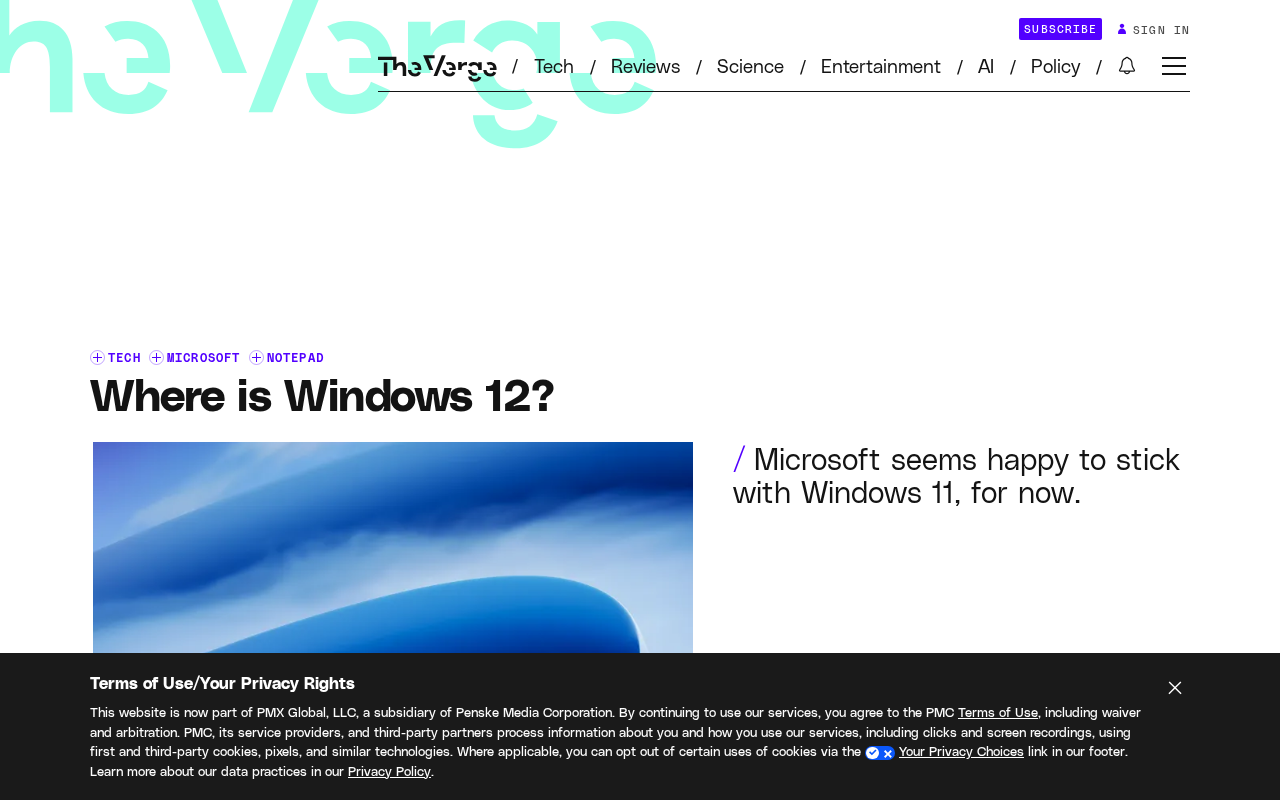
In other words, Windows 12 is no longer just a codename for "the next-generation operating system"—it has become an emotional outlet: users are projecting their disappointment with the current Windows experience onto a version that doesn't yet exist.
The Windows 11 predicament: why users are starting to "wait for the next generation"
Two signals mentioned in the report deserve a closer look.
Growing frustration with Windows 11
The original text only offers the qualitative description "growing frustration" without specific data. But looking at the product cadence, if an operating system keeps making users feel weary, they will naturally shift to a "wait for the next major version" mindset. This isn't unique to Windows, but for Microsoft it's a danger signal: when users no longer look forward to updates but instead look forward to "switching to a different system," it means the current version's iterations can hardly repair trust issues at the experience level.
The muted response to Copilot Plus PCs
Copilot Plus PCs are Microsoft's core vehicle for embedding AI capabilities into PCs, but the market reaction was described in the original as a "muted response." This means the "AI PC" narrative Microsoft bet on hasn't become a reason to upgrade as expected. If AI selling points at the hardware level don't translate into everyday experiences users can perceive, it's hard to sustain a new product category.
Copilot Plus PCs are a new PC category launched by Microsoft in 2024 in partnership with multiple OEMs. The core selling point is a built-in neural processing unit (NPU) and deep integration of local AI features such as Copilot, initially highlighting system-level AI experiences like live captions and Recall. Microsoft sees it as the key narrative to drive upgrades, trying to turn "AI PC" from a marketing concept into perceptible everyday features. However, one reason for the lukewarm market response is that these AI features were mostly nice-to-haves in the early days and didn't change users' core workflows like handling documents or browsing the web. In addition, some features (such as Recall) sparked privacy controversies, making it hard to convert NPU compute on the hardware into upgrade motivation. This also explains why "whether it has AI" alone is no longer enough to convince consumers to upgrade.
What does "a bigger move" mean?
The report's conclusion is that Microsoft needs to "go bigger." This can be understood in two ways:
One is a major overhaul of product form. Windows 11's UI and interaction framework have been in use for years. If Microsoft wants users to feel fresh again, it may need a redesign from interface to interaction logic, rather than continuing to pile features onto the existing skeleton.
The other is deeper AI integration. The problem with Copilot Plus PCs isn't "whether there's AI," but whether AI truly changes the way people use computers. If Windows 12 merely moves the Copilot button to a different spot, it will likely repeat the same mistake.
A detail worth noting: the original article doesn't provide any information about Microsoft's internal roadmap, nor does it confirm whether Windows 12 is in development. This article is essentially a commentary, not a scoop. So reading it as a signal that "Windows 12 is coming soon" is wrong; a more accurate reading is: users' patience is running out, and Microsoft's next-generation system needs to answer more questions than ever.
Editor's view: the Windows 12 suspense is essentially a trust problem
From a content creator's perspective, headlines like "Where is Windows 12" spread because they touch a real pain point: users don't simply want a new version number—they want a system that solves existing problems. The frustration with Windows 11 plus the lukewarm response to Copilot Plus PCs forms a clear signal—Microsoft's PC narrative in the AI era hasn't truly convinced users.
Whether Windows 12 will come and when—the original material doesn't provide an answer. But one thing is certain: if the next-generation system is just an "AI-enhanced version" of the current one and doesn't address users' dissatisfaction with the basic experience, then no amount of anticipation will last long. For Microsoft, more important than releasing Windows 12 is making users believe the next version is worth waiting for.
Background
To understand where "deeper AI integration" is difficult, it's necessary to distinguish system-level AI from feature-level AI. Feature-level AI means adding an assistant button or summary feature in an app, which users can ignore at any time. System-level AI requires the operating system to understand context across apps, invoke local models, and proactively complete tasks—which involves a whole set of engineering and ecosystem issues such as privacy boundaries, power scheduling, developer interfaces, and user trust. Copilot Plus PCs currently mostly stay at feature-level integration. If the next generation of Windows merely continues to add Copilot entry points without letting AI truly intervene in system backbones like file management, window scheduling, and search, users naturally won't perceive that they've "switched to a new computer." This is also the technical meaning behind the original article's emphasis on "a bigger move" rather than "more features."
One-line Summary
Microsoft didn't release Windows 12, and the dashed expectations expose a trust crisis over the current Windows experience.
Paragraph Summary
This article comments on Microsoft not announcing Windows 12 at the RTX Spark event, pointing out that what really deserves attention is why users are so eager for a system that doesn't exist. It analyzes two signals: growing user frustration with Windows 11 and the lukewarm market response to Copilot Plus PCs, indicating that Microsoft's bet on the AI PC narrative hasn't yet become a reason to upgrade. The author argues that "Microsoft needs a bigger move" can be understood as a major product form overhaul or deeper AI integration, and emphasizes that the original article is not a scoop and shouldn't be read as a signal that Windows 12 is imminent. The conclusion notes that the Windows 12 suspense is essentially a trust problem, and Microsoft needs to make users believe the next-generation system is worth waiting for.
Related articles

9 AI Subscription Plans Compared: The Real Cost Per 100M Tokens Revealed
Bilibili creator tests 9 AI subscription plans from Volcano, Alibaba, Tencent, Baidu, Zhipu, Xiaomi, MiniMax and more, converting them all to real cost per 100M tokens, breaking down fixed-quota vs. three-tier coefficient billing and how caching, time-of-day discounts, and window limits affect actual quota.
Vibe Coding for Beginners: Expressing Intent Instead of Handwriting Code
What is Vibe Coding? A 137-episode Bilibili course defines it: the core is expressing intent, not writing code. This article analyzes Vibe Coding's productivity logic, target audience, and entry expectations to help beginners decide if it's worth learning.

LangChain Beginner's Guide: An Agent Development Roadmap from LangGraph to Deep Agents
Clarify the encapsulation relationship among LangChain, LangGraph, and Deep Agents, and master the learning path and selection logic for agent development frameworks—suitable for beginners in large model development.