Using AI Agents for Foreign Trade Lead Generation: A Practical Guide to Building a Larger Client Pool

AI is an amplifier, not a lifeline — build your product value first, then scale your client pool with agents.
Drawing on a foreign trade practitioner's hands-on experience, this article outlines a methodology for using AI agents to systematically expand a lead pool. The core argument: AI is a lever that amplifies what you already bring to the table — without clear product positioning, even powerful AI has nothing to work with. The key to effective lead generation lies in breaking your product down into specific use cases, target markets, and customer types, giving the agent precise rules to work from. The agent then handles localized keyword expansion, multi-channel scraping, and deduplication automatically. The article also cautions that automation only improves top-of-funnel efficiency — data accuracy, cross-border compliance risk, and conversion still require human judgment.
Foreign trade professionals have spent the past couple of years gripped by a familiar anxiety: if you don't embrace AI, you'll be left behind. But treating AI as something you need to please is getting things backwards. The real question isn't "how do I cater to AI" — it's "what core value do I already have that AI can amplify?"
This article draws on insights shared by a foreign trade content creator on Bilibili, distilling a methodology for using AI agents to expand your client pool, with additional analysis of how it fits into a real-world lead generation workflow.
AI Is a Lever, Not Just a Tool
Most people think of AI as a fancy search engine or writing assistant — something you use and move on from. That framing undersells it. A more fitting analogy: AI is fundamentally a super-powered lever and amplifier.
Every lever needs a fulcrum — and in this case, that fulcrum is your own value and resources. If you have a clear product positioning and a well-defined target customer profile, AI can multiply those advantages many times over. But if you have nothing to start with, even the most powerful AI can't amplify zero.
So rather than worrying about whether to "learn AI," foreign trade professionals would be better served by first getting clear on: what problem does my product actually solve, and who genuinely needs it? Once you've worked that out, AI knows exactly what it's supposed to amplify.
The Foundation of Your Client Pool: Break Your Product Down to Use Cases
One point the original presenter kept coming back to: don't just describe a broad product category. This is a common mistake among newer exporters. Telling AI "I sell outdoor products" gives it almost nothing useful to work with.
The right approach is to get granular:
- Use cases: What specific environments and purposes is this product designed for?
- Target countries and regions: Where is demand strong, rather than incidental?
- Customer types: What kinds of buyers are best positioned to distribute your product?
- Exclusion list: Which types of customers should be filtered out immediately, so you don't waste effort?

The more detail you provide upfront, the more precisely AI can search and filter. In essence, you're programming a set of "rules for finding clients" — and the clearer those rules, the better the match quality of the candidates that come out the other end. The thinking you put into this step sets the ceiling for everything that follows.
From Keywords to Candidate Clients: The Automated Pipeline
The presenter described a custom-built skill set (referred to as the WYD self-developed skill), built around localized search. The workflow breaks down roughly as follows:
- Based on your product and target markets, expand into localized search terms — different countries often use different names and expressions for the same product
- Run continuous searches for candidate clients across multiple keywords and channels
- Automatically filter results against your predefined criteria
- Remove competitors, low-fit prospects, and duplicate companies

This pipeline tackles the most labor-intensive part of foreign trade lead generation. With traditional manual outreach, you might spend an entire day scrolling through a dozen websites, walk away with a handful of names and phone numbers, and still have to maintain your own spreadsheet, manually deduplicate, and assess each lead one by one. That kind of repetitive-but-necessary work is exactly where AI excels.
What makes an AI agent different from a regular AI tool? Autonomy. Rather than waiting for step-by-step instructions, an agent receives a goal and independently breaks it into subtasks, calls the tools it needs, executes, and reports back. In a foreign trade context, a single agent can chain together keyword generation, web search, information extraction, and deduplication — with no human intervention required at each step. A "self-developed skill" refers to a custom functional module built within an agent framework (such as AutoGen, Dify, or Coze) — essentially a reusable piece of logic that the agent calls on demand. Many low-code platforms now make this accessible to non-developers. But achieving precision rather than high-volume noise still comes down to the quality of the rules you define — not the platform itself.
The Efficiency Math: Manual vs. Agent
The presenter ran the numbers: with automation, consistently delivering 10 qualified leads per day adds up to 3,600 over the course of a year.

That figure sounds compelling, but it deserves a clear-eyed look. The 3,600 number rests on several assumptions: a well-defined product profile, a sufficiently localized keyword library, and strict filtering rules. Weaken any one of those, and the real count of genuinely qualified leads drops significantly.
More importantly, finding a client and converting a client are two different things. AI amplifies the efficiency of the discovery phase — it keeps feeding candidates into your pipeline — but how many you actually close still depends on your product's competitiveness, your pricing, and your follow-up capability. AI makes the pool bigger; catching fish still takes skill.
A Few Grounded Observations for Foreign Trade Professionals
The value of this methodology lies in systematizing and streamlining lead generation, replacing a great deal of repetitive manual work with defined rules. But a few caveats are worth keeping in mind:
- Search quality depends on data sources: Customer information scraped from public channels needs human verification for accuracy and freshness
- Compliance risk: Bulk collection of contact information raises data privacy concerns in many jurisdictions — cross-border marketing requires particular care
- Commoditization of outreach: As more competitors adopt similar tools and draw from the same public sources, the "fish" in the pool may start to look very similar across the industry
Returning to the original point — AI as lever rather than tool. That framing holds up. But a lever amplifies your strengths and your weaknesses. The right sequence is to sharpen your product value proposition and customer understanding first, then use AI to scale it.
For foreign trade professionals who currently have little to no systematic lead generation in place, using AI agents to build and expand a client pool is genuinely worth trying. The key is not to treat the tool as a silver bullet, but as a means of amplifying value you've already built.
On data compliance risk — some specifics: The EU's General Data Protection Regulation (GDPR) requires a clear legal basis to send commercial emails to individuals in Europe. Bulk-scraping personal contact details from public websites and using them for direct marketing fails to meet compliance requirements in most scenarios, with potential fines running into the millions. The U.S. CAN-SPAM Act and Canada's Anti-Spam Legislation (CASL) also impose clear restrictions on commercial email practices. If your AI-built client pool is intended for email outreach, it's worth distinguishing between the legal environments of your target markets — prioritizing corporate procurement contacts over personal email addresses, and always including a clear unsubscribe option in your emails — to meaningfully reduce compliance exposure.
Related articles
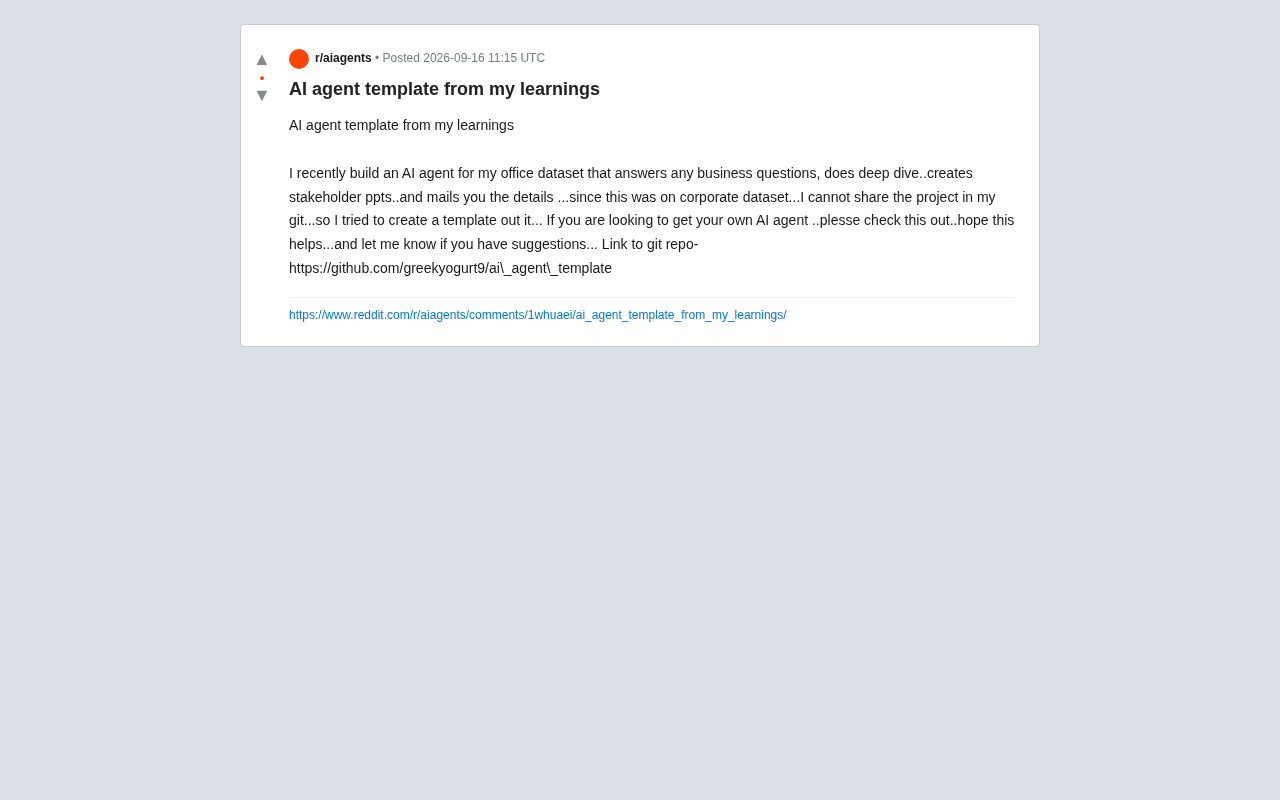
From Enterprise Practice to a Reusable Template: Lessons from Building an AI Agent
A developer shares an open-source AI Agent template built from an enterprise project, covering natural language data Q&A, analysis, auto-generated PPTs, and email distribution.

Nintendo's Open-World Design Evolution: Breaking Down Fire Emblem Fortune's Weave
Nintendo brings the open-world design philosophy of Breath of the Wild to Fire Emblem with the massive Switch 2 title Fortune's Weave. Here's what it means.
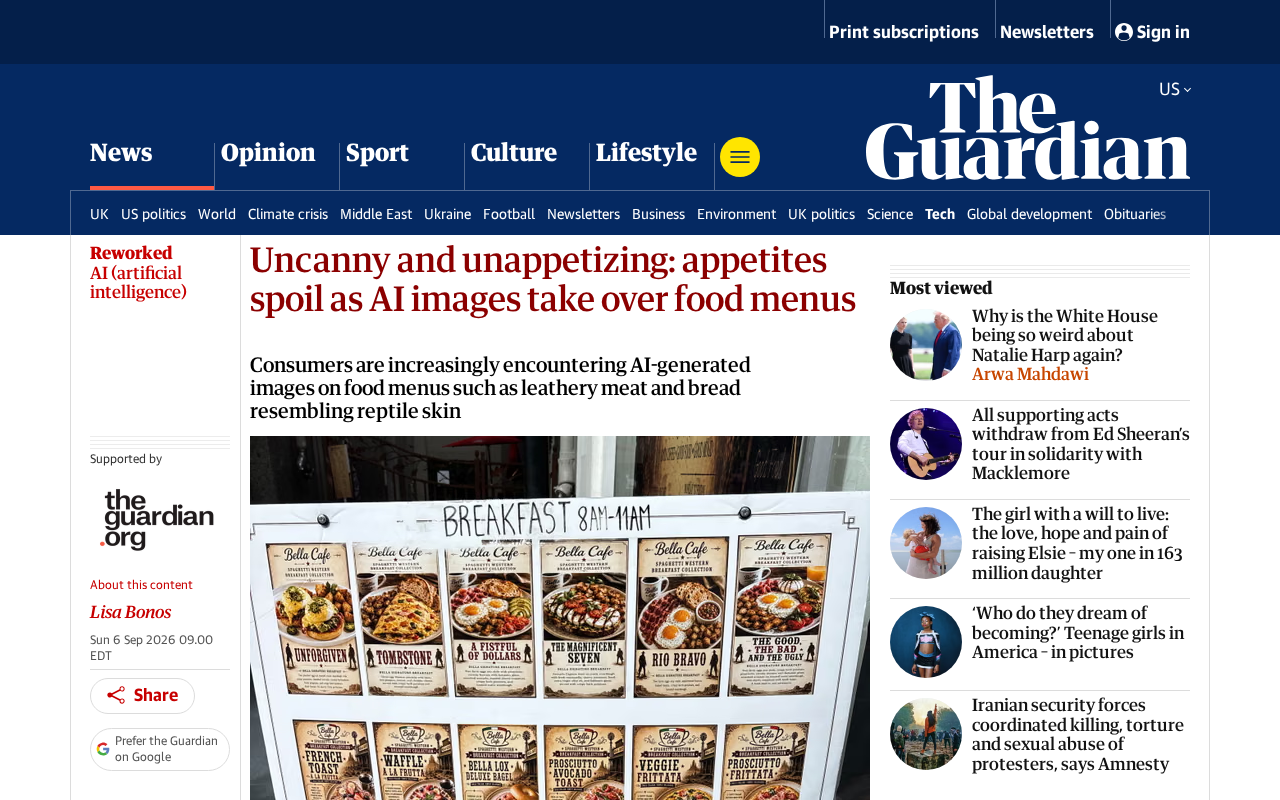
AI-Generated Food Photos Are Ruining Menus: How the Uncanny Valley Kills Appetite
AI-generated food images are flooding restaurant menus and delivery apps, but uncanny details kill appetite instead of sparking it. Here's why the uncanny valley effect hurts brands.