From Enterprise Practice to a Reusable Template: Lessons from Building an AI Agent
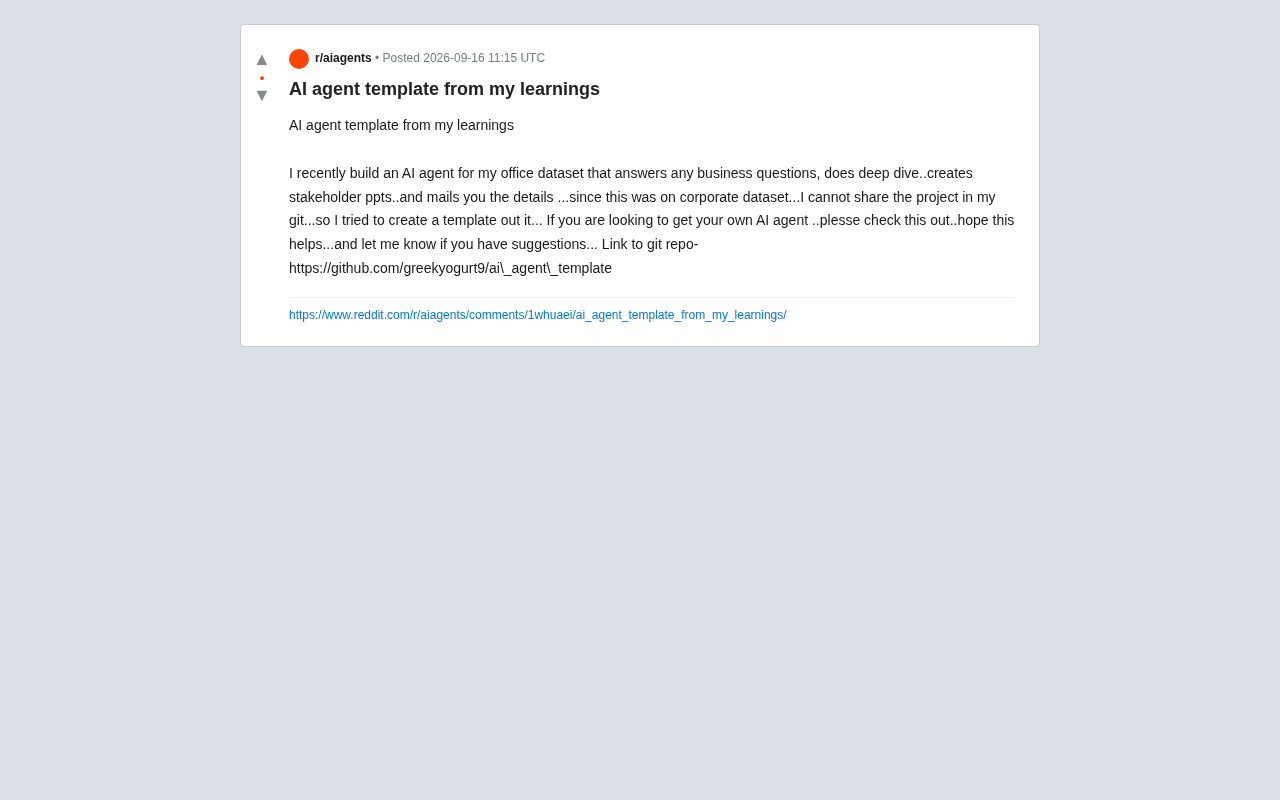
A developer open-sources an enterprise AI Agent template covering data Q&A, analysis, PPT generation, and email delivery.
A developer distilled an internal enterprise AI Agent into a reusable open-source template. The Agent handles natural language data queries and deep analysis, auto-generates stakeholder PowerPoint presentations, and distributes results via email — forming a complete input-to-delivery loop. Unable to open-source the original due to compliance constraints, the author extracted the architecture and design patterns instead, preserving maximum reuse value while avoiding data risks. The article highlights that pairing LLM conversational capabilities with traditional automation tools like PPT and email is often more practical than chasing model intelligence alone.
How an Enterprise-Grade AI Agent Came to Be
A developer recently shared their hands-on experience building an AI Agent on Reddit. Originally designed to work with an internal company dataset, the Agent could answer business questions, perform in-depth data analysis, automatically generate stakeholder-facing PowerPoint presentations, and even compile results into emails for distribution.
Because the original project relied on proprietary internal data and couldn't be open-sourced for compliance reasons, the author abstracted it into a general-purpose template and published it on GitHub (ai_agent_template) — a reference point for anyone looking to build something similar.
The value of this kind of sharing isn't in the complexity of the code itself — it's in what it reveals about how an AI Agent can actually be deployed in a real business context, from data Q&A all the way to automated deliverables, forming a complete end-to-end workflow.
What Problems Does This Agent Actually Solve?
Based on the author's description, the Agent addresses several high-frequency, time-consuming tasks in enterprise data work:
Business Q&A and Deep Analysis
The core capability is enabling non-technical users to query datasets using natural language. In the traditional workflow, a business user poses a question, a data analyst writes SQL or runs a script, and results get passed back — a back-and-forth process with high communication overhead. The Agent compresses this chain into a conversational interface and can proactively perform "deep dives," going beyond surface-level answers to uncover underlying trends and anomalies.
This capability is technically referred to as Text-to-SQL or NL2SQL — where an LLM translates a user's natural language question into an executable SQL query and returns results in a readable format. The deeper "deep dive" analysis is typically implemented using the ReAct (Reasoning + Acting) framework: the Agent first reasons about what data it needs, then calls tools to retrieve it, and then decides on next steps based on the results — forming a multi-turn think-act loop. This architecture allows the Agent to behave more like an analyst: decomposing problems and validating hypotheses step by step, rather than simply answering one-off questions.
Automated Report Generation
What truly elevates this project from a "chatbot" to a "productivity tool" is its ability to automatically generate stakeholder PowerPoint presentations. The final mile of data analysis is often packaging conclusions into a reportable format — a step whose effort is frequently underestimated. By producing slide decks directly, the Agent demonstrates an understanding of the purpose behind data analysis, not just the data itself.
PPT generation is typically implemented via python-pptx (a Python library) or Office-related APIs. The LLM handles content structure and copy, while the code layer writes the actual slides. This "LLM + tool call" pattern is one of the core paradigms in modern Agent engineering: the model doesn't directly manipulate files — it outputs structured instructions, and deterministic code handles the execution. This division of labor leverages the LLM's semantic understanding while keeping file generation controllable and stable.
Result Distribution
The email-sending feature closes the automation loop. Once analysis is complete, results are automatically pushed to relevant stakeholders, allowing the entire workflow to run unattended.
The Abstraction Approach: From Project to Template
The author's approach is worth noting: faced with an enterprise data project that couldn't be made public, they stripped out the reusable architecture and logic to create a "data-free" template. This sidesteps data compliance risks while preserving the most valuable part of the project — the engineering structure and design patterns.
For anyone looking to build their own AI Agent, a template's real value is providing a battle-tested starting point rather than a blank slate. An Agent capable of handling the full "query → analyze → generate → distribute" pipeline involves coordinating multiple modules: data ingestion, LLM call orchestration, document generation, and email service integration — exactly where beginners are most likely to run into trouble.
In AI Agent engineering, this "query → analyze → generate → distribute" pipeline involves several modules that need to work in concert: a data ingestion layer (database connections, schema reading), an LLM orchestration layer (prompt management, tool registration, multi-step reasoning), a tool execution layer (SQL execution, document generation), and an output distribution layer (email client integration). Commonly used orchestration frameworks include LangChain and LlamaIndex, which provide out-of-the-box abstractions for tool calling, memory management, and Agent loops — significantly reducing the complexity of building a multi-module Agent from scratch. Familiarity with these frameworks helps you quickly understand the design intent behind open-source templates like this one.
A Few Observations on Building AI Agents
This case reflects several broader trends in AI Agent deployment. Repetitive knowledge work inside organizations is where Agents can create value first, because these tasks have well-defined inputs and outputs and clear success criteria.
Combining the LLM's conversational capabilities with traditional automation tools (PPT generation, email sending) is often more practical than chasing raw model intelligence. What users actually need is a fully delivered result — not just a text reply.
One important caveat: the author is providing a template, not a production-ready product. Its maturity, code quality, and documentation completeness are all things users need to evaluate for themselves. Personal open-source contributions like this are typically at an early stage — well-suited as a learning reference or a starting point for further development, but should be thoroughly tested before any production use.
Summary
This is a real-world AI Agent experience distilled from an actual enterprise context. There's no flashy technical gimmick here — its strength lies in how closely it aligns with genuine business needs: driving data analysis through natural language, and automatically handling reporting and distribution. For developers exploring how to get AI Agents running in their own organizations, this open-source template offers a practical, reference-worthy path. Interested readers can head to the GitHub repository to learn more.
Related articles
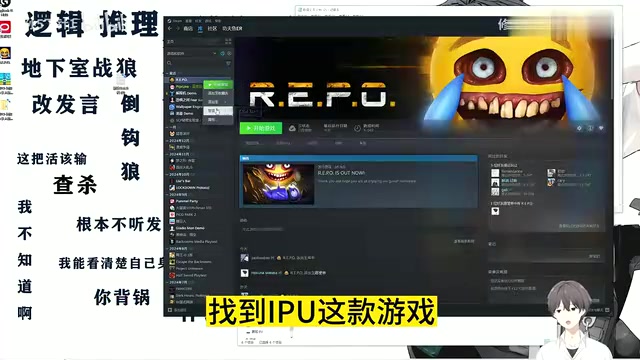
R.E.P.O Chinese Localization Guide: Install the Patch in Three Simple Steps
A beginner-friendly R.E.P.O Chinese localization guide: browse local files, paste the patch, and verify in three steps. Includes troubleshooting tips and backup advice.
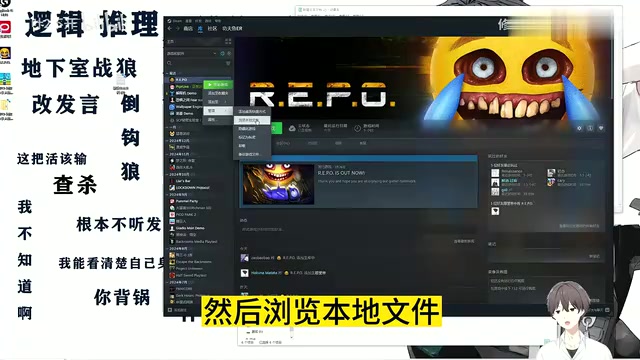
R.E.P.O Chinese Localization Patch Installation Guide: Step-by-Step Full Chinese Interface
Step-by-step guide to installing a Chinese localization patch for R.E.P.O. From browsing local files to Ctrl+V overwrite — get a full Chinese UI in minutes.
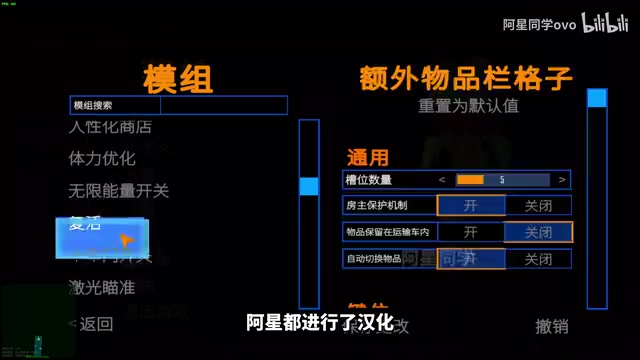
REPO Game 60+ Mod Pack Breakdown: Dancing, Localization, and Save Protection All in One
A complete breakdown of the REPO game 60+ mod pack: dancing, Chinese localization, item shrinking, shared upgrades, password skip, and F7 save protection — with easy install guide.