AI-Generated Food Photos Are Ruining Menus: How the Uncanny Valley Kills Appetite
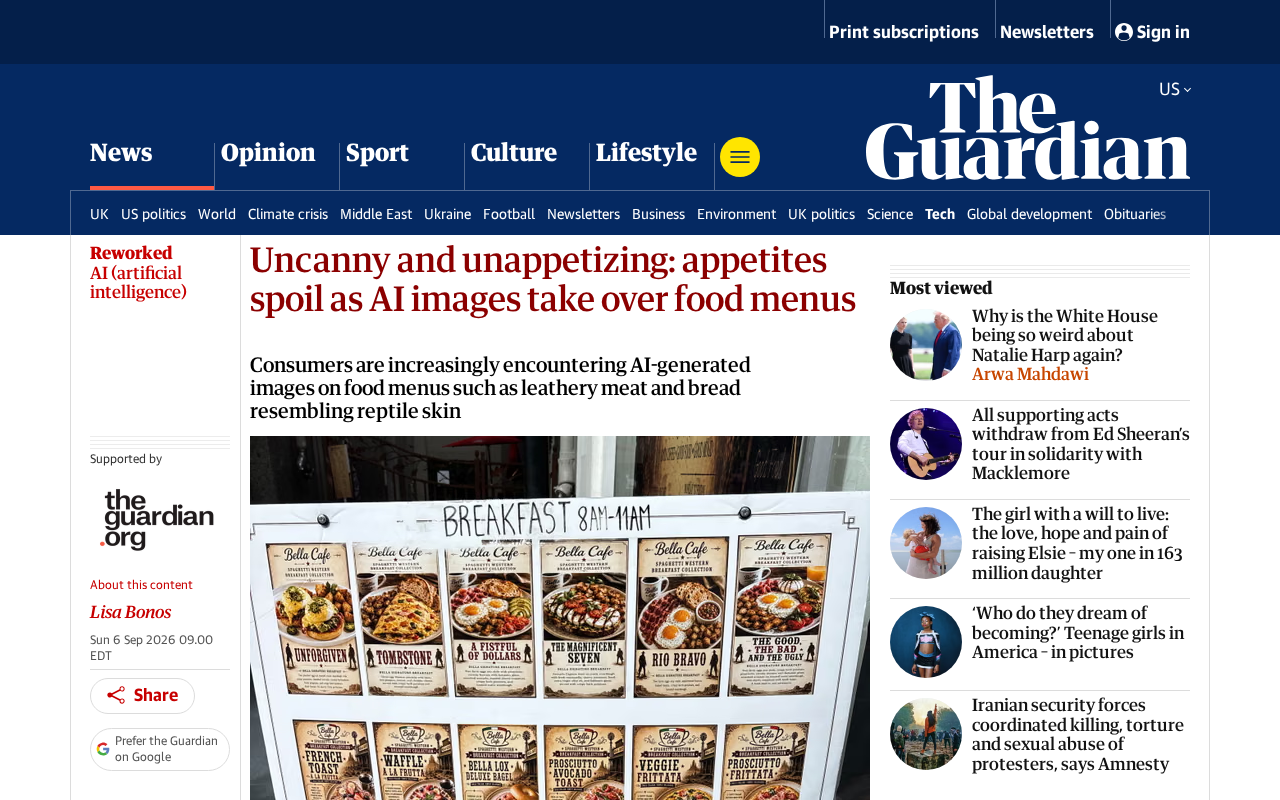
AI food photos trigger the uncanny valley effect, killing appetite and quietly eroding brand trust.
Restaurants and delivery platforms are replacing costly professional food photography with AI-generated images, attracted by near-zero marginal costs. But the strategy is backfiring: subtle distortions in AI food imagery — warped utensils, unnatural textures, plastic-looking sheens — trigger an uncanny-valley-like rejection response that kills appetite. More deeply, food photos are a visual promise to consumers; when images bear no relation to real dishes, brand credibility collapses. The article warns that short-term savings may cause lasting reputational damage, and predicts that "real photography, no AI" could become a meaningful brand differentiator.
When AI Images Invade Restaurant Menus
The restaurant industry is undergoing a quiet visual revolution — one that diners may not welcome. A growing number of restaurants, food delivery platforms, and consumer brands are replacing traditional food photography with AI-generated images. In theory, this cuts costly shoot expenses, food stylist fees, and post-production time. In practice, the results often backfire — images meant to stimulate appetite end up killing it instead.
The phenomenon has been described as "uncanny and unappetizing." AI-generated food images tend to contain hard-to-articulate errors: extra sesame seeds, distorted utensils, sauce that defies the laws of physics, or a steak with an unmistakably plastic sheen. These subtle wrongnesses accumulate and trigger an alarm in the human perceptual system.
Why AI Food Images Kill Appetite
The Taste Version of the Uncanny Valley
The famous "uncanny valley" theory in psychology typically explains why humanoid robots or CG characters make us uncomfortable — when an image closely resembles reality but contains subtle deviations, humans experience a strong sense of rejection. The same logic applies to food imagery. An AI-generated burger photo may look convincing at first glance, but a closer look reveals unnaturally textured buns, lettuce edges that blur like melting wax, and cheese with a sheen that looks like digitally rendered rubber.
Appetite is a highly intuitive physiological response. When the brain senses something is "off" about a food image — even without being able to articulate why — it instinctively pulls back. This is the core reason AI food images so reliably backfire: the harder they try to mimic reality, the more their flaws undermine the viewer's trust.
The concept of the "Uncanny Valley" was introduced by Japanese roboticist Masahiro Mori in 1970. He observed that as robots or virtual characters become more human-like, people's positive feelings generally increase — but at a threshold just before full realism, those feelings plunge sharply into a valley of discomfort and even revulsion, before recovering as similarity approaches 100%. This non-linear reaction is thought to stem from an evolved human instinct to detect "abnormal individuals" — subtle anomalies in nature often signal disease, death, or deception.
Extending this theory to food perception, researchers have found that humans are equally sensitive in their visual assessment of food. When determining whether something is edible, the brain rapidly scans for details like color, texture, sheen, and shape. AI-generated images tend to be statistically "correct" — an averaged, idealized version of what food should look like — yet they lack the randomness and imperfections of real food. It is precisely this "too-perfect unnaturalness" that triggers an uncanny-valley-style rejection response.
The Spread of a Trust Crisis
At its core, a food photo is a promise — it signals to consumers, "This is what your order will look like." When an image is clearly AI-generated, that promise loses credibility. Consumers begin to wonder: if a restaurant won't even bother showing a real photo, how much care can they possibly put into the food itself?
This erosion of trust is slow but far-reaching. Traditional food photography, however polished, is at least grounded in actual food. An image conjured purely by algorithm may bear no relationship whatsoever to what eventually arrives at the table.
The Cost Temptation and the Brand Price Tag
The motivation for food and consumer brands to turn to AI images is obvious: cost. A single professional food shoot can run thousands of dollars, involving photographers, food stylists, locations, and props. AI tools can generate dozens of "passable" images in minutes at near-zero marginal cost.
For small restaurants on tight budgets, or delivery platforms that need images at massive scale, this temptation is hard to resist. But short-term cost savings may come with long-term brand damage. When consumers begin associating AI images with "cheap," "inauthentic," or even "deceptive," the reputational slide can far outstrip whatever was saved on photography.
Professional food photography commands high prices because presenting an appetizing dish involves a highly specialized division of labor. Food stylists keep ingredients looking their best — sometimes using hairspray to hold cheese pulls in place, motor oil to simulate the gleam of meat juices, or cotton balls to stand in for steam. Photographers must precisely control light direction and color temperature to render authentic texture. Post-production removes blemishes and unifies brand visual standards. A single shoot can cost anywhere from several thousand to tens of thousands of dollars.
The demand from delivery platforms is especially acute. A mid-sized platform may need to manage images for tens of thousands of merchants and hundreds of thousands of menu items — traditional photography is simply not scalable at that level. This is the structural reason AI image generation tools have penetrated this sector so quickly. It isn't purely about cutting corners; it's a genuine scalability problem that the industry faces.
What This Trend Reveals
This phenomenon reflects a broader dilemma in commercial AI applications: what the technology can do isn't always what it should do. AI image generation has real value in concept design, ideation, and mood boarding — but in consumer-facing contexts where trust and sensory experience are at stake, its limitations are glaring.
Food photography is just one example. As AI-generated content floods advertising, e-commerce, and social media, authenticity is becoming a scarce resource. It's not hard to imagine a future where "shot by a real photographer" and "no AI used" become brand selling points in the same way "organic" and "handcrafted" are today.
For those in the restaurant industry, the lesson is clear: when appetite is at stake — something that depends deeply on a sense of realness — technological shortcuts can lead to dead ends. An honest, slightly imperfect real photograph will almost always do more to win over a diner than a flawless but fabricated AI image.
Related articles
R.E.P.O Chinese Localization Guide: Install the Patch in Three Simple Steps
A beginner-friendly R.E.P.O Chinese localization guide: browse local files, paste the patch, and verify in three steps. Includes troubleshooting tips and backup advice.
R.E.P.O Chinese Localization Patch Installation Guide: Step-by-Step Full Chinese Interface
Step-by-step guide to installing a Chinese localization patch for R.E.P.O. From browsing local files to Ctrl+V overwrite — get a full Chinese UI in minutes.
REPO Game 60+ Mod Pack Breakdown: Dancing, Localization, and Save Protection All in One
A complete breakdown of the REPO game 60+ mod pack: dancing, Chinese localization, item shrinking, shared upgrades, password skip, and F7 save protection — with easy install guide.