Using AI to Run Doom on Samsung TVs: Playing Classic FPS with a Remote Control
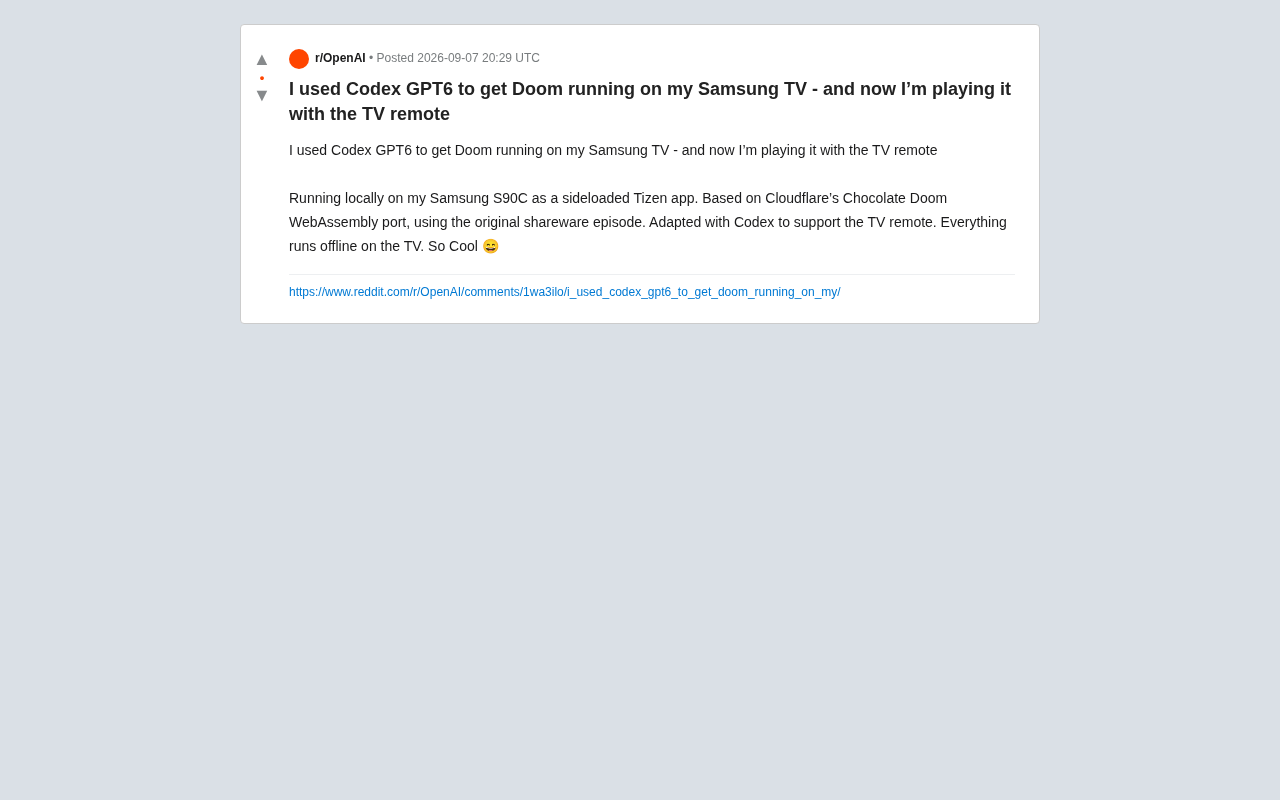
Developer ports Doom to Samsung TV using AI assistant Codex and WebAssembly technology
A Reddit developer used AI assistant Codex to port the classic 1993 game Doom to Samsung smart TV, playable via remote control. Built on Cloudflare's Chocolate Doom WebAssembly port and Tizen's web-based platform, the project runs entirely offline. It showcases WebAssembly's cross-platform power, AI's role in democratizing development, and underutilized smart TV computing potential.
When Classic Games Meet Smart TVs
A Reddit developer recently showcased a project embodying true geek spirit: with the help of AI programming assistant Codex (GPT series), they successfully ported the classic 1993 first-person shooter Doom to their Samsung S90C smart TV and made it playable using just the TV remote control.
This project once again validates the long-standing meme in the developer community—"Can it run Doom?" This meme originated when id Software released Doom in 1993 with partial source code, which became fully open-source in 1997, spawning a massive porting community. Doom became the "portability litmus test" due to its technical characteristics: minimal requirements of just a 386 processor and 4MB RAM, clear modular code architecture, and no complex external dependencies. To date, Doom has been ported to over 100 devices, including ATMs (2014), digital cameras (2020), pregnancy test displays (2020, actually using an external Raspberry Pi), and John Deere tractor displays (2022). From calculators and printers to pregnancy tests, Doom has been ported to virtually every imaginable device. This time, Samsung's high-end OLED TV joins that lengthy list—except this time, AI played a crucial role.
Technical Implementation: Combining WebAssembly with Tizen
WebAssembly-Based Porting Solution
The entire project didn't involve writing a game engine from scratch but rather stood on the shoulders of giants. The core foundation is Cloudflare's Chocolate Doom WebAssembly port. Chocolate Doom itself is an open-source Doom engine fork that faithfully recreates the original experience, and by compiling it to WebAssembly (Wasm), it can run in any environment supporting modern web standards.
WebAssembly (Wasm for short) is a low-level bytecode format designed for the web, becoming a W3C standard in 2017. Initially driven jointly by Mozilla, Google, Microsoft, and Apple, it aims to solve JavaScript's limitations in performance-intensive applications. Wasm's core advantages include near-native execution speed, memory safety, and cross-platform characteristics. Developers can write code in C, C++, Rust, and other languages, compile it to Wasm, and run it in any supported environment with typically only 10-20% performance overhead compared to native code. This enables game engines, image processing, video codecs, and other compute-intensive applications to run efficiently in browsers while providing standardized cross-platform execution environments for smart devices.
Samsung smart TVs use the company's proprietary Tizen operating system, whose application layer is essentially built on web technology stack (HTML/CSS/JavaScript). Tizen is an open-source operating system led by Samsung, based on the Linux kernel and using web technology stack as its application development framework. Since its inception in 2012, it has become the core system for Samsung smart TVs, smartwatches (Galaxy Watch series), and some IoT devices. Unlike traditional Android TV, Tizen applications are primarily developed using HTML5, CSS3, and JavaScript, packaged in .wgt format. The system provides the Samsung Smart TV SDK and supports sideloading of unlisted applications. As of 2024, Samsung smart TVs hold over 30% global market share, making Tizen the second-largest smart TV system after Android TV. Its web-based characteristics provide natural ground for WebAssembly execution. The developer packaged the game as a sideloaded Tizen application, bypassing the official app store to install and run directly on the TV.
Game Content and Offline Operation
The project uses Doom's original shareware episode, namely the free chapter "Knee-Deep in the Dead." This choice both avoids copyright issues and ensures complete playable content.
Particularly noteworthy is that everything runs offline on the TV. Game logic, rendering, and input processing all execute on the TV's local hardware without connecting to any cloud servers or external computing resources. For a game born 30 years ago, modern smart TV computing power is more than sufficient.
The Critical Role of AI Programming Assistant Codex
The most noteworthy aspect of this project lies in the practical application value of AI programming tools. The developer explicitly stated they used Codex to adapt TV remote control input support.
OpenAI Codex is a code-specialized variant of GPT-3, released in August 2021, trained on billions of lines of public code from GitHub. It can understand natural language instructions and generate code in multiple programming languages, and was once the underlying engine for GitHub Copilot. After 2023, OpenAI gradually integrated Codex functionality into more powerful multimodal models like GPT-4. The core capabilities of such AI programming assistants include: code completion (generating subsequent code based on context), problem diagnosis (identifying bugs and providing fixes), API adaptation (automatically finding and calling unfamiliar library functions), and code refactoring.
Solving Input Mapping Challenges
Adapting a PC game requiring WASD keyboard movement and mouse aiming to be controlled with just a TV remote is itself a significant engineering challenge. TV remotes have limited buttons (directional pad, confirm, back, number keys, etc.), so mapping these limited inputs to Doom's required actions—moving forward/backward, turning, shooting, opening doors, etc.—requires careful interaction design and substantial code adaptation work.
AI programming assistants like Codex demonstrate unique advantages in such tasks: developers can describe requirements in natural language (such as "map the remote's up/down keys to forward/backward movement, left/right keys to turning"), and the AI generates corresponding event listening and key mapping code. In input mapping scenarios, developers need only describe 'map remote directional keys to game movement controls,' and the AI can generate complete code including event listening, keycode recognition, and game command conversion, significantly reducing the learning curve for platform-specific development. This dramatically lowers the barrier for cross-platform adaptation and enables individual developers to quickly complete otherwise tedious porting work in their spare time.
Practical Insights from AI-Assisted Development
This seemingly "hobbyist" project actually reflects how AI programming tools are changing software development. In the past, porting a game to niche platforms (like smart TV's Tizen system) required developers to master specific SDKs, APIs, and input models—a costly learning process. Now, with AI's code generation and problem diagnosis capabilities, even developers unfamiliar with a particular platform can quickly get up to speed through conversational interaction and bring ideas to life.
Three Layers of Value in This Project
On the surface, this is just another "run Doom on weird devices" entertainment project. But looking beyond the phenomenon to its essence, it sends at least three signals:
Universality of web technology stack. WebAssembly is becoming the universal foundation for cross-platform execution—from browsers to smart TVs and IoT devices, as long as there's a web runtime, code can run. This provides a realistic path for write-once, deploy-everywhere software.
AI programming is democratizing technical barriers. Individual developers using tools like Codex can accomplish cross-platform adaptations that previously required professional teams. Lower technical barriers mean more ideas can be realized.
Smart TV computing potential is underestimated. Modern high-end TVs come equipped with respectable processors and memory but are often only used for video playback and running a few apps. This project reminds us that these devices are actually underestimated general-purpose computing platforms.
Perfect Combination of Technology and Fun
Playing Doom with a remote control on a Samsung TV may not be an industry-changing technical breakthrough, but it's a vivid case study: it demonstrates the possibilities that emerge when open-source porting (Chocolate Doom), universal runtime (WebAssembly), web-based operating system (Tizen), and AI programming assistant (Codex) combine.
The technical value of these porting projects lies in: validating new platforms' computing capabilities, testing interaction feasibility of non-standard input devices, and driving cross-platform toolchain development. Each successful port proves the power of open-source ecosystems and standardized technology stacks (like today's WebAssembly). Technology's charm sometimes lies precisely in the pure joy of turning a seemingly absurd idea into reality. And the addition of AI tools makes this joy within reach. For developers, this is not only an interesting experiment but also real-world validation of AI-assisted development capabilities.
Related articles

Knockin': AI Business Cards That Make Your Personal Bio Intelligent
Knockin' transforms traditional bios into interactive AI business cards where visitors can chat to learn about your expertise and book meetings directly.

Intel CPU Price Increase of 10%: Strategic Transformation and Market Impact Analysis
Intel plans to increase PC processor prices by ~10%, shifting from market share competition to profit-focused strategy. Analysis of price increase drivers, impact on consumers and OEMs, AMD competitive dynamics, and industry trends.
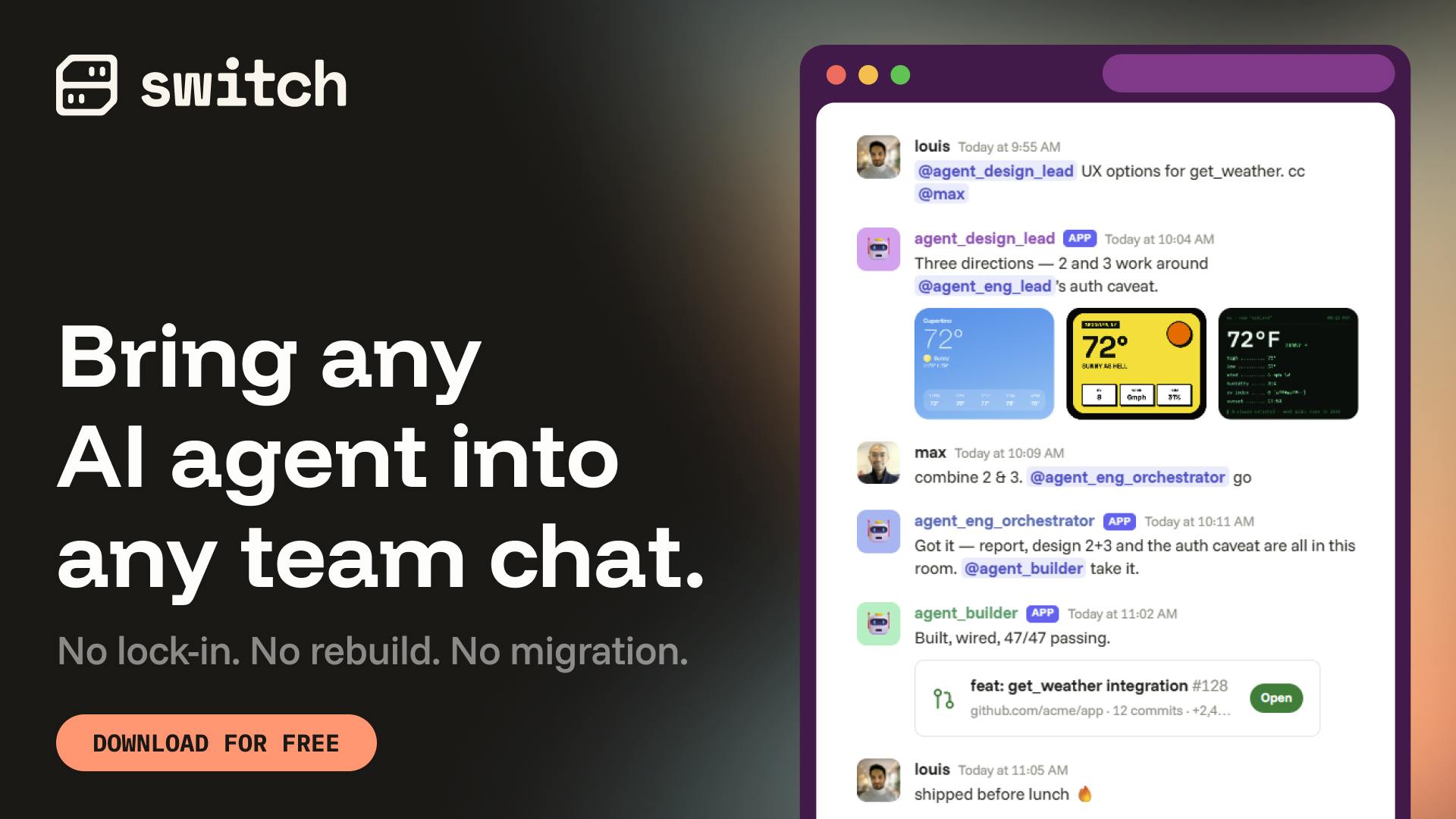
Switch Open Source Tool: Bringing AI Agents into Team Collaboration Platforms
Switch is an open source tool that integrates AI Agents as named participants into Slack, Teams, Discord, and other collaboration platforms, supporting multi-framework compatibility and self-hosted deployment. It reached #1 on Product Hunt.