Valve Steam Frame Headset: Memory Price Surge Disrupts Pricing Plans
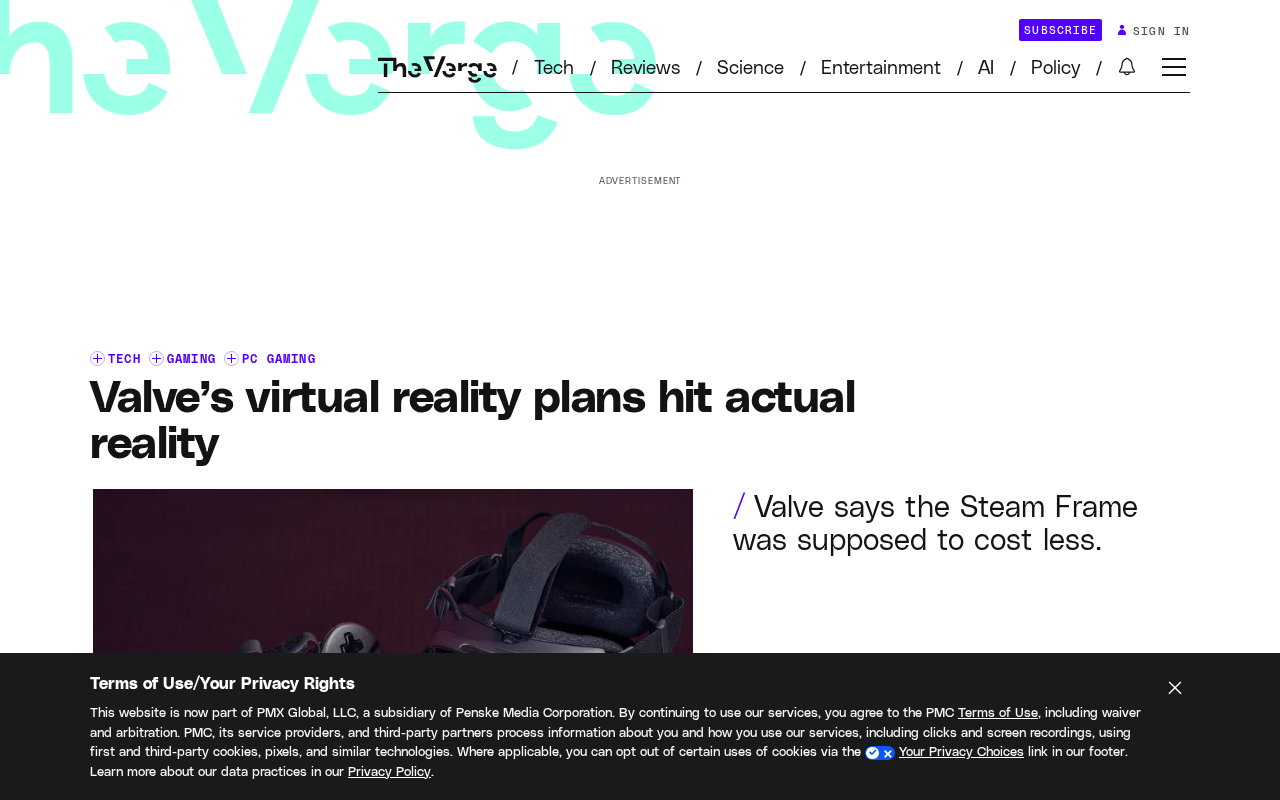
Valve's Steam Frame exceeded its $1,059 price target as AI-driven memory and storage cost hikes ripple through consumer hardware.
Valve's Steam Frame VR headset launched above its planned $1,059 price ceiling, with the company citing surging global RAM and flash storage prices — driven by explosive AI computing demand — as the cause. This cost pressure isn't unique to Valve; it represents a structural challenge sweeping the entire consumer electronics supply chain. Because memory and storage are non-negotiable performance requirements for VR devices, manufacturers have little room to cut corners, leaving price pass-through to consumers as the primary option. The episode highlights how the upstream shift of component supply toward AI infrastructure is narrowing pricing flexibility for consumer hardware makers and adding new friction to VR's path to mainstream adoption.
Valve's VR Ambitions Meet Reality
Valve's Steam Frame headset has finally been unveiled, but the price tag has become the most talked-about aspect of the launch. According to the company, the device was originally intended to cost less than $1,059 — a target it ultimately couldn't hit due to rising costs.
"We wanted to ship something more affordable, but the global memory market and storage market hit us the same way it hit everyone," Valve explained when addressing the pricing issue. That statement captures a struggle shared across the entire consumer electronics industry right now.
Memory and Storage Price Hikes: A Cost Storm Sweeping the Industry
Valve attributes the price increase primarily to volatility in global RAM and storage markets. In recent years, surging demand from data centers and AI computing has dramatically shifted the supply-demand balance for memory and flash storage, directly pushing up the bill-of-materials cost for consumer hardware.
For VR headsets — devices that place significant demands on both memory and storage — rising component costs are nearly impossible to avoid. Headsets require substantial memory to handle image rendering and streaming, along with storage to house apps and content. When both of these core components increase in price simultaneously, manufacturers must either absorb the hit to their margins or pass the cost on to consumers. Valve clearly chose the latter.
Notably, Valve emphasized that this impact "hit everyone," signaling that this isn't an isolated problem for one company but a structural challenge facing the entire consumer electronics supply chain. From gaming consoles to PCs, smartphones to VR devices, the pressure from component price increases is propagating through every layer of the market.
Looking at the supply structure, the global DRAM and NAND flash markets are heavily concentrated among a handful of players — Samsung, SK Hynix, and Micron chief among them. Since 2023, the explosion of generative AI applications like ChatGPT has caused data centers to dramatically ramp up demand for HBM (High Bandwidth Memory) and high-capacity server DRAM. This has led leading manufacturers to prioritize production capacity for higher-margin AI memory products, tightening supply for the consumer-grade DRAM and NAND that powers everyday devices. At the same time, once the excess inventory built up during the pandemic was worked through, overall supply flexibility diminished. For VR headsets specifically, memory requirements go beyond sheer capacity — latency and bandwidth matter too, and budget memory often can't meet the performance threshold for real-time rendering. This further limits manufacturers' ability to cut costs by downgrading specs.
What Steam Frame's Pricing Dilemma Means for the Market
Price has always been one of the key barriers to VR adoption. When Valve launched the Index headset at a premium price point, it locked out a significant portion of potential buyers. The Steam Frame was expected to be more accessible — but thanks to external market forces, it has ended up exceeding the anticipated price point, which is bad news for anyone hoping Valve's ecosystem would help drive mainstream VR adoption.
The deeper issue is the delicate balance between hardware pricing and market penetration. Pricing too high suppresses sales, and without sufficient sales volume, it becomes difficult to build the positive feedback loop that sustains a content ecosystem. As the steward of the Steam platform, Valve's hardware strategy typically serves the broader goal of growing its software ecosystem. Whether the market accepts the Steam Frame's price will directly shape Valve's long-term position in VR.
The Valve Index launched in 2019 at $999, a price point widely understood to target enthusiasts rather than mainstream consumers. Pre-launch signals around the Steam Frame suggested Valve was aiming to undercut that range — attempting to replicate the path Meta's Quest line took in rapidly expanding its user base through relatively accessible pricing. The Meta Quest 3 launched in 2023 starting at $499, effectively setting the price anchor for mainstream standalone VR headsets. If the Steam Frame lands significantly above that range, it will face direct competitive pressure from Meta, which currently holds a commanding lead in both content ecosystem depth and user base size.
Industry Lessons from Supply Chain Pressure
The Steam Frame pricing story is, at its core, a microcosm of what's happening across the tech hardware industry right now. As the AI wave drives surging demand for upstream components, downstream consumer hardware manufacturers are finding their cost-control room increasingly squeezed.
This is a reminder to industry watchers that consumer electronics prices may face broad upward pressure for the foreseeable future. The "ideal price" manufacturers set during product planning may well be forced upward by supply chain fluctuations by the time a product actually ships. Valve's candid response is, in some ways, also laying the groundwork for the industry to justify price increases more broadly.
For consumers, understanding the supply chain logic behind hardware pricing helps put price changes in a more rational perspective. For manufacturers, finding the right balance between cost pressures and market acceptance will be the defining challenge ahead.
Related articles
RTX 5090 Stock Crisis: Why Third-Party Sellers Are Charging $9,500
NVIDIA's RTX 5090 has vanished from U.S. online retail, with third-party sellers asking up to $9,500. Here's how AI compute demand is driving GPU prices to extremes.
Apple Siri May Support Swapping in Claude and ChatGPT — Code Already Shows Signs
Leaked code shows Apple is developing third-party AI model integration for Siri, potentially allowing users to swap in Claude or ChatGPT under EU DMA pressure.

EPA Moves to Scrap Power Plant Greenhouse Gas Emission Standards Amid Surging AI Energy Demand
The EPA plans to eliminate all power plant greenhouse gas emission standards, just as AI, EVs, and manufacturing drive electricity demand higher — making U.S. power potentially far dirtier.