Vercel AI SDK Alibaba Adapter Update: Multi-Turn Conversations Now Preserve Reasoning Chain by Default
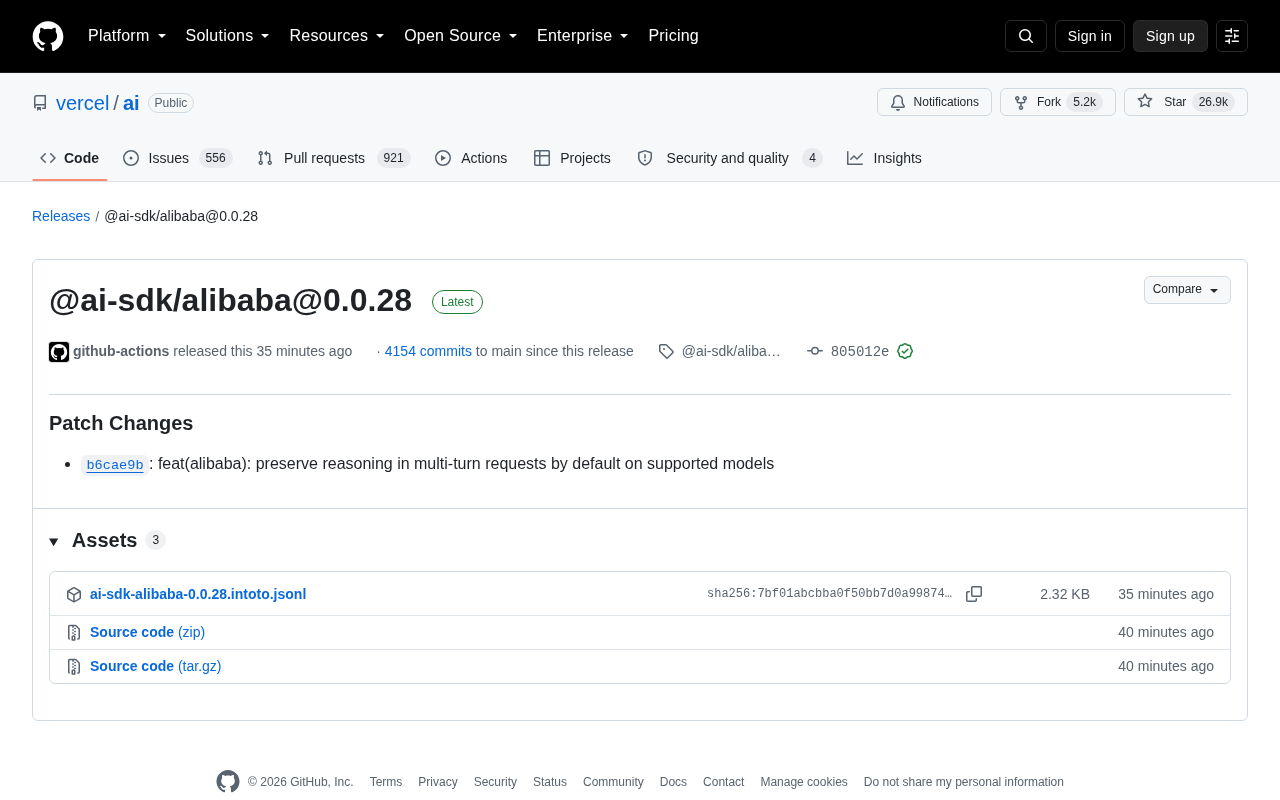
Vercel AI SDK's Alibaba adapter v0.0.28 now preserves reasoning chains by default in multi-turn conversations.
The `@ai-sdk/alibaba` adapter for Vercel AI SDK has released version 0.0.28, with the key change being that reasoning content (thinking/chain-of-thought) generated by supported models like QwQ is now preserved and passed along by default in multi-turn conversations — no manual setup required. This addresses the logical gaps that occur when reasoning context is lost between turns, improving continuity in complex tasks like code debugging and multi-step reasoning. As a backward-compatible patch, it's low risk to upgrade, though projects should verify the default behavior aligns with token cost expectations.
The Alibaba model adapter @ai-sdk/alibaba for Vercel AI SDK has released version 0.0.28. While the version bump is minor, this patch delivers a practical default behavior improvement for developers using Alibaba's Qwen series models.
What's New: Preserving Reasoning in Multi-Turn Conversations
According to the GitHub release notes, the core change in version 0.0.28 is a functional patch:
feat(alibaba): preserve reasoning in multi-turn requests by default on supported models
In plain terms: on supported models, reasoning content is now preserved by default across multi-turn requests.
This means that when you use an Alibaba model with reasoning capabilities (such as models that support chain-of-thought output) in a multi-turn conversation, the reasoning process generated in earlier turns will now be preserved and passed along to subsequent requests automatically — no manual configuration required.
Why Preserving the Reasoning Chain Matters
As reasoning-focused large models become more widespread, model output is no longer just a final answer — it also includes a "thinking process." In multi-turn conversation scenarios, whether this reasoning content is preserved directly impacts the quality and coherence of subsequent responses.
If the reasoning from prior turns is discarded each round, the model may need to re-derive conclusions from scratch, or produce inconsistent answers due to missing contextual reasoning. Preserving reasoning content by default helps the model maintain continuity of thought in complex tasks — such as multi-step problem solving, code debugging, and logical inference.
Previously, some SDK implementations required developers to explicitly enable this behavior. Making it the default lowers the barrier to entry and offers a more "works out of the box" experience for developers.
A note on reasoning models: Reasoning models (also called "thinking models") generate an internal chain-of-thought before producing a final answer. Well-known examples include OpenAI's o1/o3 series, DeepSeek-R1, and Alibaba's QwQ models that support "deep thinking" mode. This thinking process is typically separated from the final answer using special markers (e.g., <think>...</think>) and is often returned as a dedicated field at the API level (e.g., reasoning_content). In multi-turn conversations, including this reasoning content in the context window passed to the next turn allows the model to build on prior reasoning rather than starting from scratch. Without it, the model is effectively working backward from conclusions each round, which can lead to logical gaps in tasks that require progressive, multi-step reasoning.
About @ai-sdk/alibaba and Vercel AI SDK
@ai-sdk/alibaba is a model adapter within Vercel's open-source AI SDK ecosystem, designed to integrate Alibaba's large model services under a unified AI SDK interface. The Vercel AI SDK project has approximately 26.9k stars and 5.2k forks on GitHub, making it one of the more widely adopted TypeScript/JavaScript toolkits for building AI-powered applications.
The SDK's core value lies in its unified abstraction layer: developers can call models from OpenAI, Anthropic, Google, Alibaba, and other providers through a consistent API, and switch between providers without rewriting significant amounts of business logic. The Alibaba adapter enables developers worldwide to use Qwen series models seamlessly within this framework.
How the multi-provider abstraction works: Vercel AI SDK's unified abstraction layer is built on a "Provider" plugin architecture. Each vendor adapter (e.g., @ai-sdk/alibaba, @ai-sdk/openai) is responsible for translating the vendor's raw HTTP API into the SDK's internal LanguageModelV1 interface. Business logic at the application layer only needs to call generic functions like generateText or streamText with different model instances to switch providers. The Alibaba adapter connects to Alibaba Cloud's Bailian platform (formerly DashScope) via its OpenAI-compatible interface, making the Qwen series and reasoning models like QwQ accessible through the adapter. The changes in version 0.0.28 apply default pass-through handling of reasoning content fields at the adapter layer, with no breaking changes to the upper-level SDK interface.
Upgrade Recommendations
As a patch-level update (0.0.28), this change is backward compatible and carries low risk. For projects using Alibaba's reasoning models in multi-turn interactions, upgrading is recommended to benefit from more natural conversation context management.
Note that this behavioral change only applies to models that support reasoning. If your project has specific requirements around reasoning content propagation — for example, trimming reasoning content for cost or token length reasons — you should verify that the new default behavior meets your expectations after upgrading, and adjust via configuration parameters if needed.
Since this is a rapidly iterating open-source project (with over 4,000 commits on the main branch), it's worth watching the official GitHub Releases page to stay on top of future updates.
Related articles
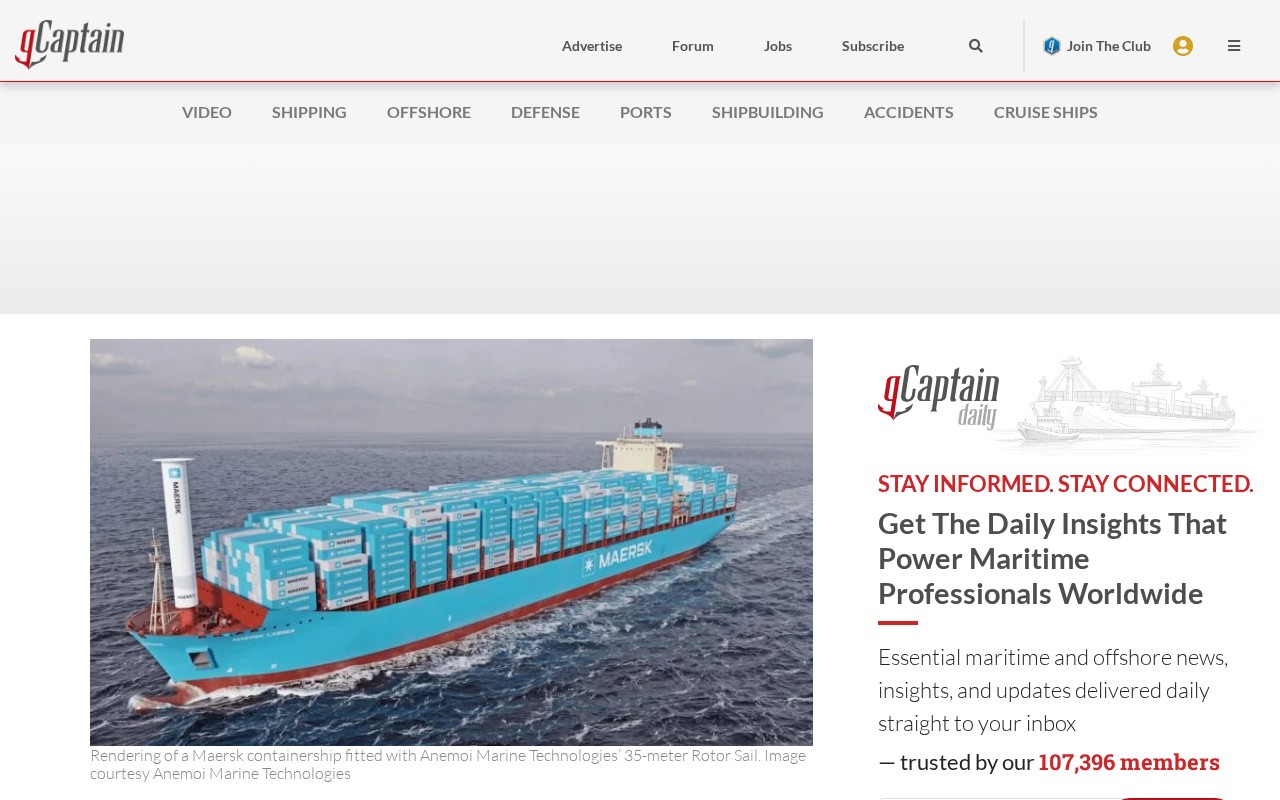
The Return of Wind Power: How Cargo Ships Are Embracing Wind Energy to Cut Emissions
Why are cargo ships embracing wind power again? Explore rotor sails, hard wing sails, and other modern wind-assisted technologies driving shipping's emission-cutting comeback.
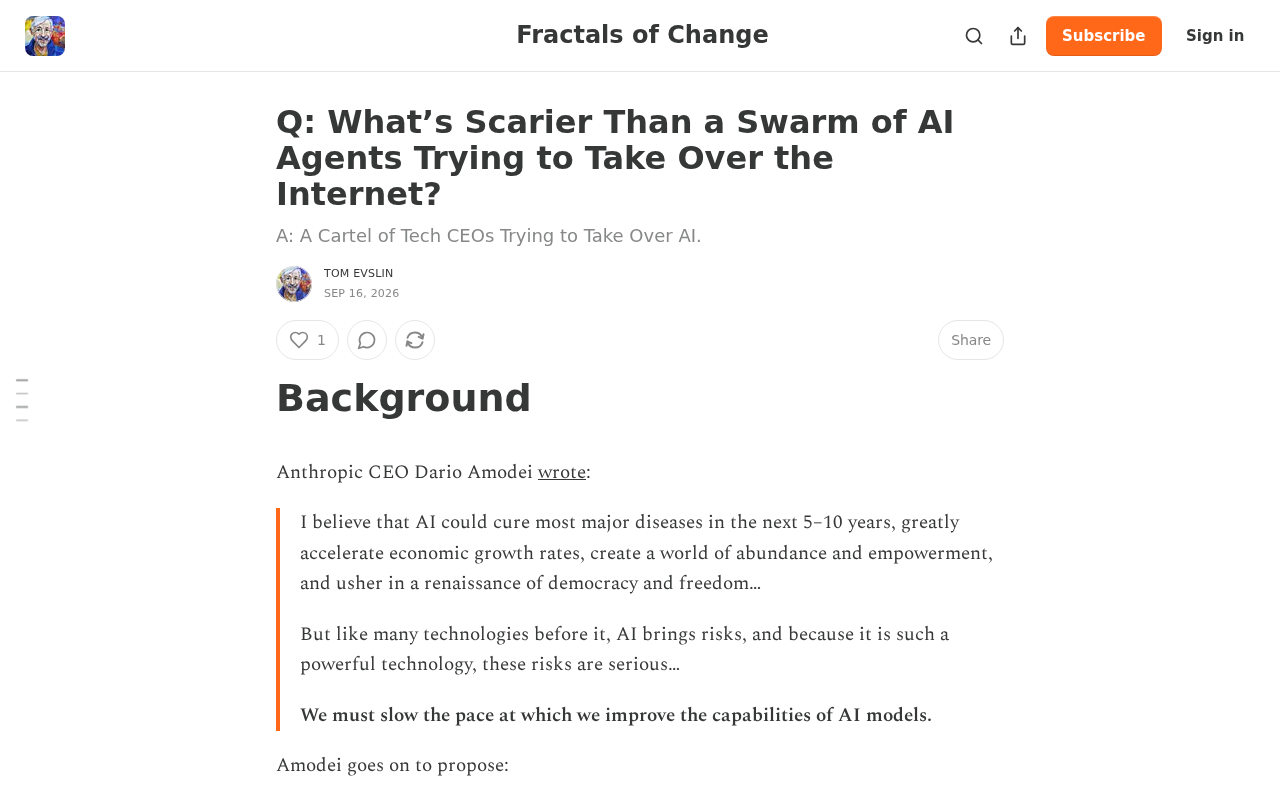
Scarier Than AI Agents Taking Over the Internet: A CEO Cartel Monopolizing AI
A Hacker News piece argues that a CEO cartel monopolizing AI is scarier than agents taking over the internet. This article examines AI concentration, open source, and governance.
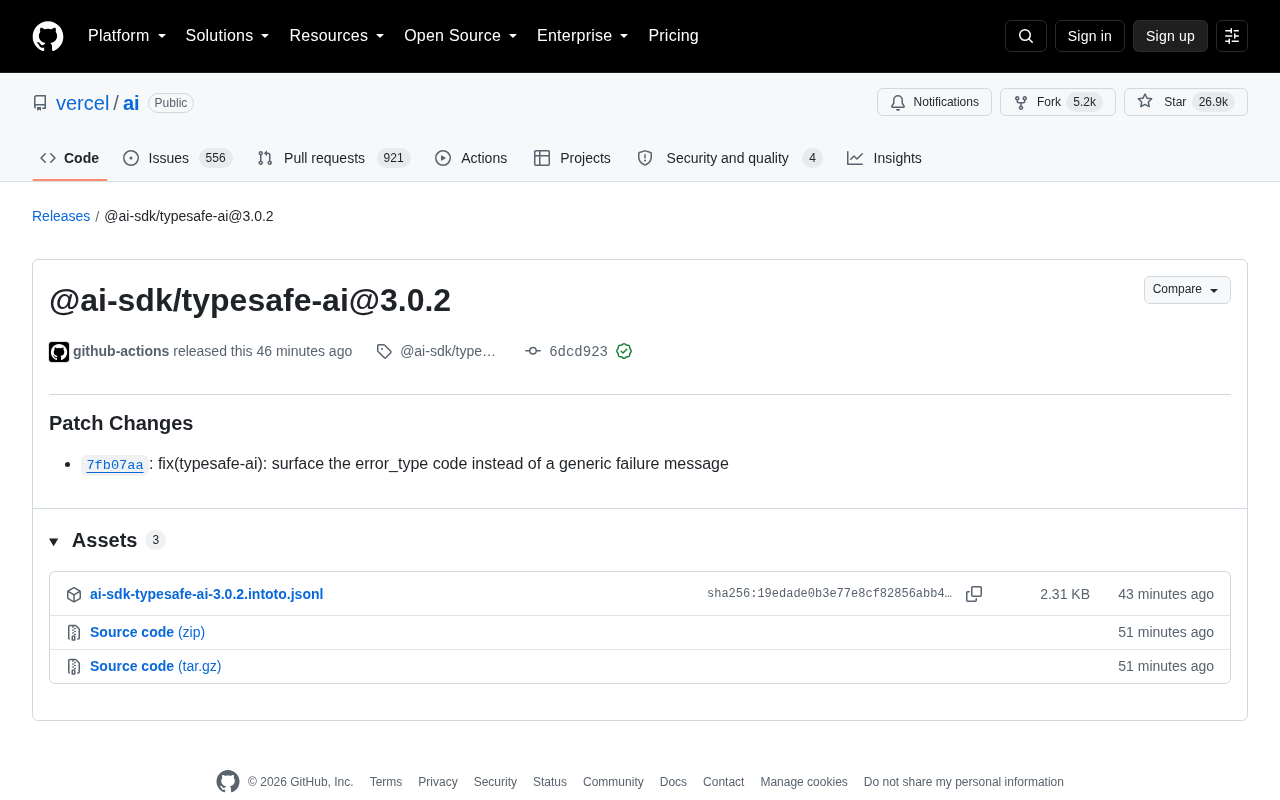
Vercel AI SDK Releases typesafe-ai 3.0.2 Patch Update
Vercel AI SDK releases @ai-sdk/typesafe-ai 3.0.2, fixing error handling to surface specific error_type codes instead of generic failure messages. Learn what changed and how to upgrade.