Vercel AI SDK Integration with Zhipu GLM: A Complete Guide to @ai-sdk/zai
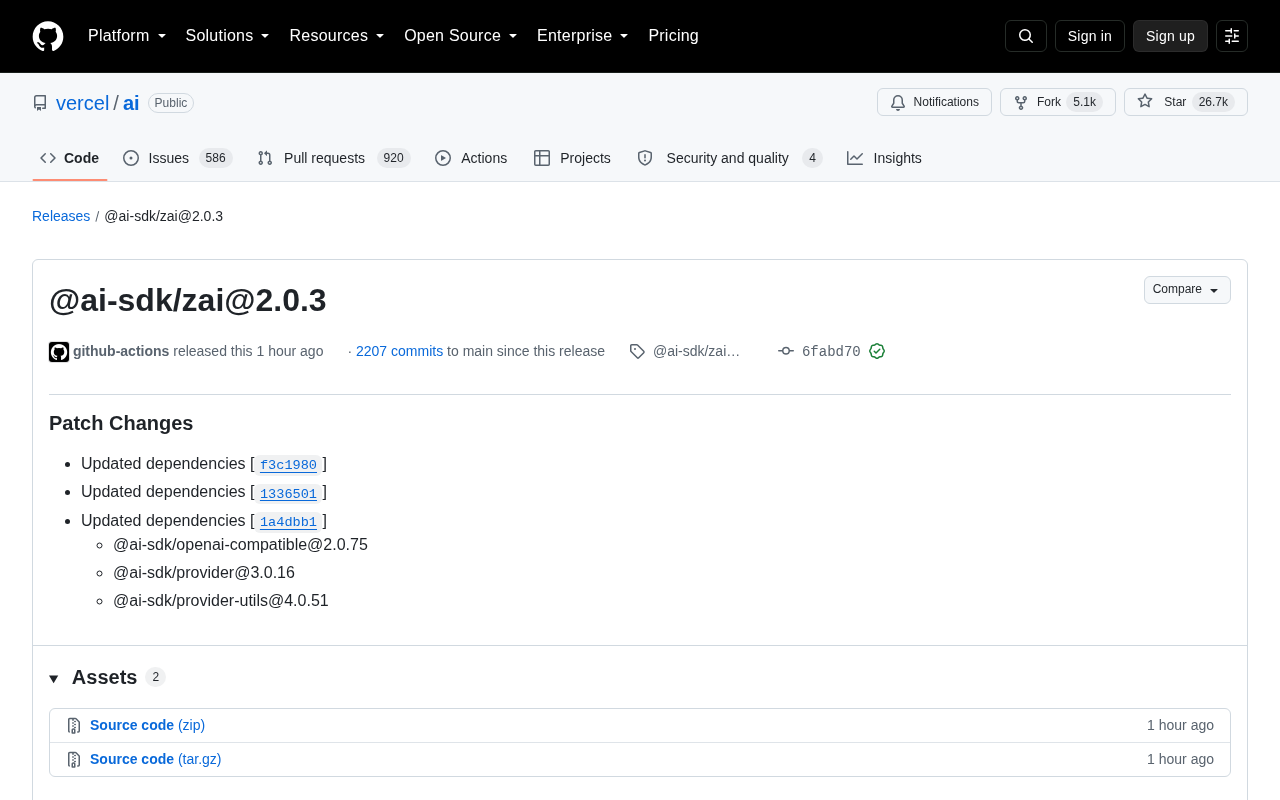
A comprehensive guide to Vercel AI SDK's @ai-sdk/zai package for integrating Zhipu GLM models.
This article explores Vercel AI SDK's @ai-sdk/zai package, the official Provider for Zhipu AI's GLM models. It examines the latest 2.0.3 patch update, explains the layered Provider architecture built on OpenAI-compatible interfaces, and discusses how this design enables seamless multi-model integration. The piece also covers streaming output, semantic versioning best practices, and why this matters for developers building AI applications.
Introduction: Another Piece of the AI SDK Ecosystem Puzzle
Vercel's AI SDK recently released @ai-sdk/zai@2.0.3, a patch version. While this is a routine patch update, it reflects a noteworthy trend: Vercel AI SDK is rapidly expanding its model Provider ecosystem, bringing large language models from an increasing number of vendors under a unified development interface.
@ai-sdk/zai is the official Provider package from Vercel AI SDK for Zhipu AI's model family (such as the GLM series). Zhipu AI is an artificial intelligence company incubated from the Knowledge Engineering Group (KEG) at Tsinghua University. Founded in 2019, it was one of the earliest companies in China to explore large language models. Its core product, the GLM (General Language Model) series, adopts a unique autoregressive blank-filling pre-training paradigm that differs from the purely autoregressive approach used by the GPT series. The GLM series has evolved from the early GLM-130B to today's GLM-4 family, demonstrating strong performance in Chinese comprehension, reasoning, and generation tasks — particularly excelling in conversational quality and knowledge coverage within Chinese-language contexts. Zhipu AI pursues both open-source and commercial routes: its open-source ChatGLM series has gained enormous attention on GitHub, while its commercial API services are offered through an open platform supporting text generation, multimodal understanding, code generation, and more. For developers looking to quickly integrate Chinese-developed LLM capabilities into web applications, this integration significantly reduces engineering complexity.
This Update: A Typical Dependency Sync
According to the release notes, @ai-sdk/zai@2.0.3 is a Patch Changes update. Its core content isn't about new features but rather a synchronized upgrade of underlying dependencies:
@ai-sdk/openai-compatible@2.0.75@ai-sdk/provider@3.0.16@ai-sdk/provider-utils@4.0.51
These three dependency packages serve distinct roles: openai-compatible provides an adapter layer for OpenAI-compatible interfaces, provider defines the standard Provider abstraction, and provider-utils encapsulates common utility functions. This layered design is central to the Provider architecture pattern employed by Vercel AI SDK — combining the classic Strategy Pattern and Adapter Pattern from software engineering. The SDK's core layer defines a set of abstract interfaces that are agnostic to specific models (the responsibility carried by the @ai-sdk/provider package), including standardized operations like text generation, embedding computation, and tool calling. Each Provider (such as @ai-sdk/openai, @ai-sdk/anthropic, @ai-sdk/zai, etc.) is responsible for mapping these abstract interfaces to a specific vendor's API implementation. This architectural philosophy is widely used in cloud computing — similar to Terraform's Provider system and Kubernetes' CSI/CNI plugin mechanisms. Its advantages are clear: business code depends only on the abstraction layer, so switching models doesn't affect upstream logic; onboarding a new model only requires adding a new Provider implementation without modifying the core framework.
Why Depend on openai-compatible?
Here's an interesting detail: @ai-sdk/zai depends on @ai-sdk/openai-compatible, indicating that Zhipu GLM's API interface is largely compatible with OpenAI's calling conventions. This is a widespread phenomenon in the current LLM industry — many vendors proactively align with OpenAI's API format to lower migration costs for developers.
In fact, the Chat Completions API format established by OpenAI in 2023 has become the de facto standard for the LLM industry. This interface defines a request format centered around a messages array (containing roles like system, user, and assistant), along with standardized protocols for streaming SSE (Server-Sent Events) responses, tool calling (function calling / tool use), and more. Numerous vendors both domestically and internationally — including Zhipu AI, Moonshot/Kimi, Baichuan Intelligence, DeepSeek, Mistral, Together AI, and others — have designed their APIs to be compatible with or highly similar to the OpenAI format. This trend is analogous to the database industry's adherence to the SQL standard: although underlying implementations differ, a unified interface specification greatly reduces migration costs for developers and adaptation complexity for toolchains.
For Vercel, this design yields significant engineering benefits: by maintaining just one compatibility layer, they can onboard a large number of model services that follow the OpenAI specification at relatively low cost. @ai-sdk/zai is a direct product of this strategy.
Core Advantages of the Vercel AI SDK
With 26.7k Stars and 5.1k Forks on GitHub, Vercel AI SDK has become one of the mainstream tools for frontend and full-stack developers to integrate AI capabilities. Its core value lies in abstraction:
Unified Calling Interface
Whether developers are using OpenAI, Anthropic, Google, or Zhipu GLM, they can make calls through a nearly identical API. Switching models often requires only replacing the Provider initialization code, without rewriting the entire business logic.
Streaming Output and UI Integration
Vercel AI SDK is deeply integrated with frontend frameworks like React and Next.js, with built-in support for modern LLM features such as streaming responses and tool calling. This makes building chat-style or generative UIs straightforward and efficient.
Streaming output is a crucial interaction pattern in modern LLM applications. Since LLMs use autoregressive generation — predicting the next token one at a time — generating a complete response can take several seconds or even tens of seconds. Waiting for the entire response before returning results would result in a terrible user experience. Streaming output uses HTTP Server-Sent Events (SSE) or WebSocket protocols to push each generated token to the client in real time, creating a "typewriter effect" where text appears character by character. This not only reduces the user-perceived Time to First Byte (TTFB) from seconds to milliseconds, but also allows users to start reading existing content during generation and even cancel unsatisfactory outputs midway. Vercel AI SDK's React Hooks like useChat and useCompletion encapsulate the complete lifecycle management of streaming responses, including connection establishment, incremental data parsing, state updates, and error handling — freeing frontend developers from dealing with low-level streaming protocol details.
Frequent Version Iterations
As seen from the release records, the repository has accumulated 2,207 commits since its main branch was created. This high update cadence means the SDK can quickly keep pace with API changes and new features from major model vendors — which is especially important in the rapidly evolving AI field.
Practical Implications for Developers
For the Chinese-speaking developer community, the continued maintenance of @ai-sdk/zai is a positive signal. The Zhipu GLM series is competitive in Chinese-language contexts, and by integrating through Vercel AI SDK, developers can:
- Flexibly compare multiple models within the same project, including both mainstream international models and Chinese-developed models
- Leverage a unified engineering paradigm to reduce learning and maintenance costs
- Enjoy the stability that semantic versioning provides — as a patch version, 2.0.3 only syncs dependencies without introducing breaking changes, making the upgrade risk extremely low
Recommendations for Version Upgrades
For production projects, this type of patch version can generally be upgraded with confidence, as it follows the Semantic Versioning (SemVer) specification — primarily fixing dependency issues without altering the public API.
Semantic Versioning is a version numbering specification proposed by GitHub co-founder Tom Preston-Werner, formatted as MAJOR.MINOR.PATCH. A MAJOR version change indicates incompatible API modifications, a MINOR version change indicates new backward-compatible features, and a PATCH version change includes only backward-compatible bug fixes. In the case of @ai-sdk/zai upgrading from 2.0.2 to 2.0.3, the PATCH increment clearly signals to developers that this update contains no public API changes or new feature additions — only internal fixes or dependency updates. This convention enables automated dependency management tools (such as Dependabot and Renovate) to safely auto-merge patch-level updates, greatly improving dependency maintenance efficiency for large projects.
However, developers are still advised to verify dependency tree consistency in a test environment to avoid potential issues caused by version mismatches across multiple @ai-sdk/* packages. It's worth noting that SemVer's reliability depends entirely on how diligently maintainers adhere to it, so for critical production environments, it's still recommended to use lockfiles and CI testing to ensure upgrade safety.
Conclusion: The Ongoing Evolution of Ecosystem Integration
@ai-sdk/zai@2.0.3 is an inconspicuous patch update in itself, but it reflects a major trend in AI application development: model capabilities are being standardized and encapsulated in modular ways, continuously reducing the coupling between developers and underlying models.
For teams looking to build AI applications, choosing an SDK with an active ecosystem, timely updates, and multi-model support is often more important than fixating on any single model. Vercel AI SDK and its ever-expanding Provider family represent exactly the kind of infrastructure worth keeping a long-term eye on.
Related articles
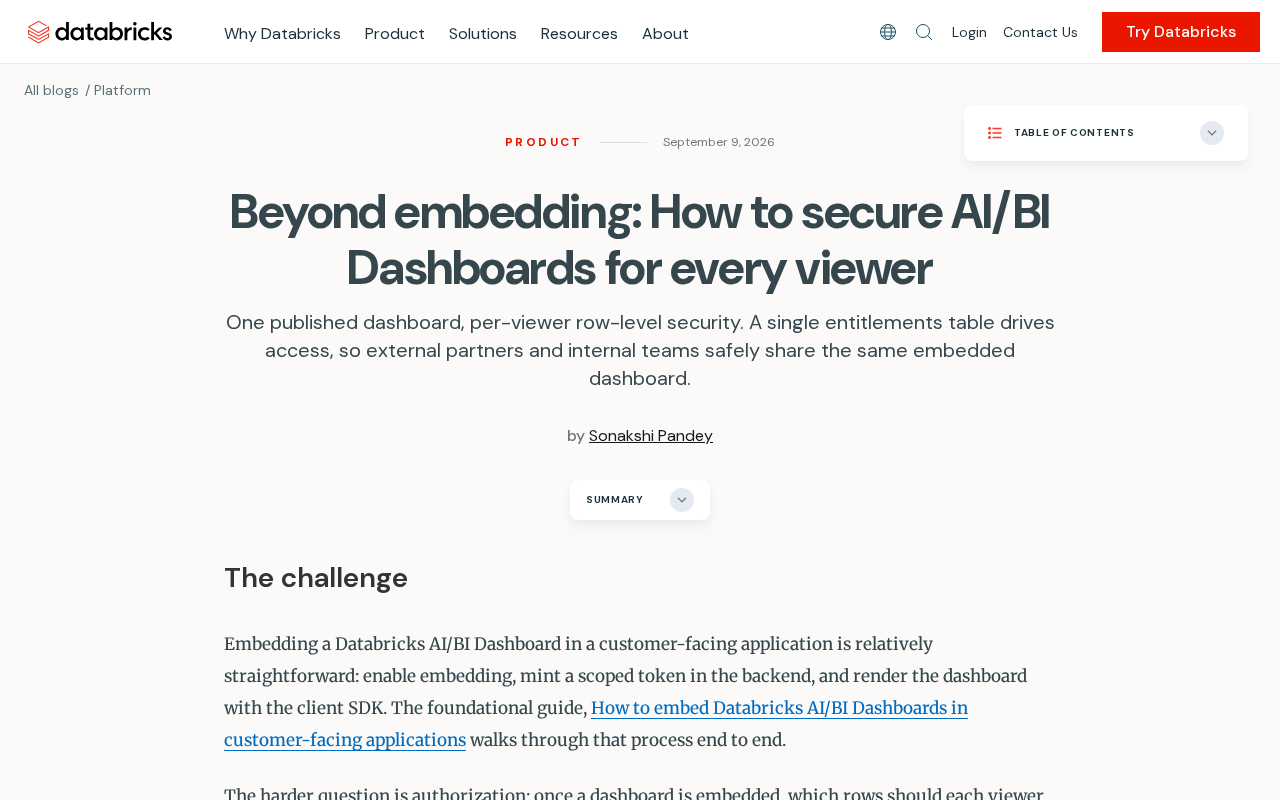
Security Guide for AI/BI Dashboard Embedding: Multi-Tenant Data Isolation and Access Control in Practice
Explore security challenges in AI/BI dashboard embedding, covering multi-tenant data isolation, row-level security, identity propagation, and defense-in-depth architecture for embedded analytics.

Xbox Classic Startup Animations Return: Personalization and Cloud Gaming Experience Get Major Upgrades
Microsoft rolls out classic console startup animations, badge customization, cloud gaming background downloads, and more for Xbox Insiders. Remote Play quality and voice chat also improved.
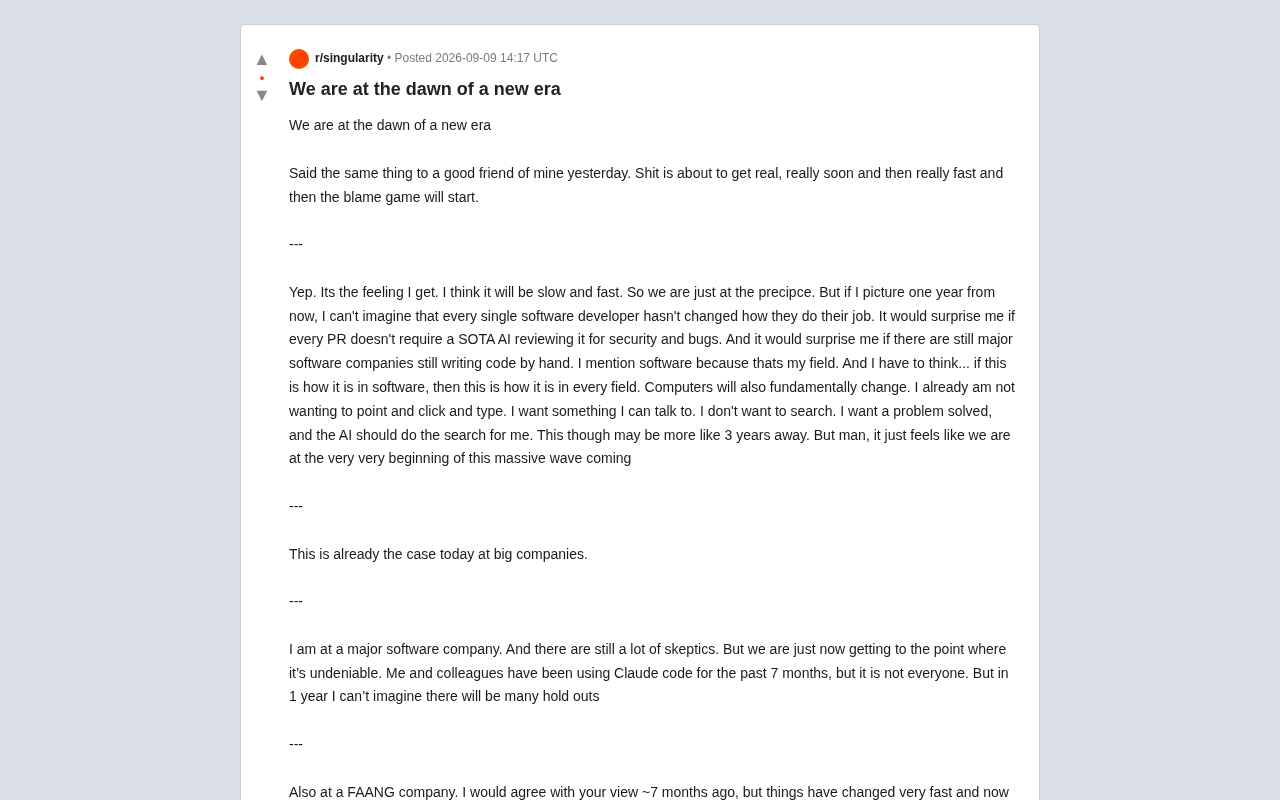
AI-Assisted Programming Goes Mainstream: A Paradigm Shift in Software Development
How AI tools are reshaping software development: from FAANG adoption to workflow transformation. Explore AI coding assistants, intelligent code review, and the future of human-AI collaboration.