Vercel AI SDK Releases @ai-sdk/togetherai@3.0.51 Patch Update
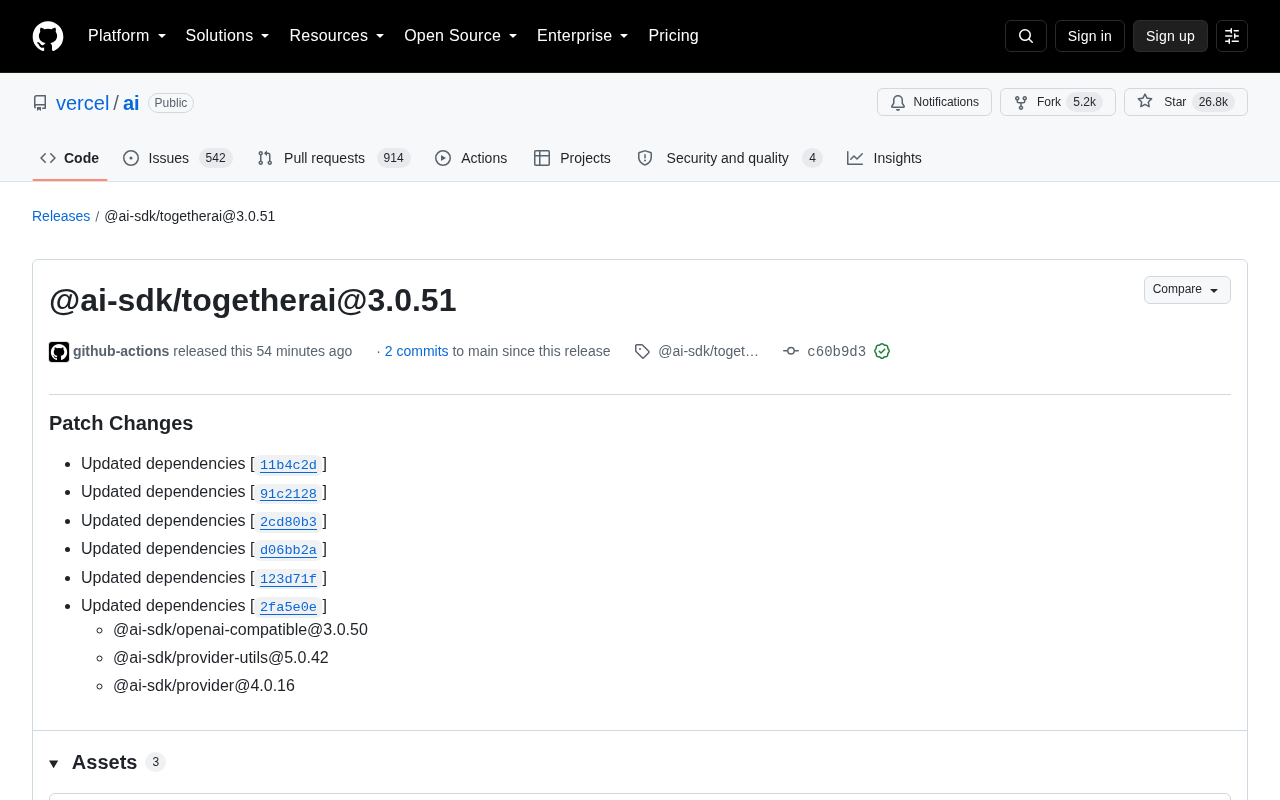
Vercel AI SDK releases @ai-sdk/togetherai@3.0.51, syncing three core dependencies with no breaking changes.
@ai-sdk/togetherai@3.0.51 is a minor patch release in the Vercel AI SDK ecosystem, primarily upgrading three underlying dependencies: `@ai-sdk/openai-compatible`, `@ai-sdk/provider-utils`, and `@ai-sdk/provider`. This stems from the AI SDK's monorepo architecture — when shared core libraries are updated, all dependent provider packages publish corresponding patch releases to maintain ecosystem-wide dependency consistency. For developers already integrating Together AI, the upgrade risk is minimal: simply run your package manager's update command and validate with your existing test suite, with no business logic changes required.
Vercel's open-source AI SDK ecosystem has recently released @ai-sdk/togetherai@3.0.51, a patch-level release focused primarily on dependency updates. While the scope of this update is modest, it keeps the entire AI SDK dependency chain synchronized and stable for developers using Together AI as their model provider.
What's Changed
@ai-sdk/togetherai@3.0.51 is a patch release with changes concentrated on dependency upgrades — no breaking changes are included. According to the release notes, this update synchronizes several underlying dependency packages:
@ai-sdk/openai-compatible@3.0.50@ai-sdk/provider-utils@5.0.42@ai-sdk/provider@4.0.16
These packages cover the OpenAI compatibility layer, provider utility functions, and core provider interface definitions respectively. Since the Together AI adapter is built on top of the OpenAI-compatible protocol, updates to the openai-compatible package directly affect the behavioral consistency of this provider.
What a Patch Update Means
Under Semantic Versioning (SemVer), incrementing the patch version (e.g., from 3.0.50 to 3.0.51) typically indicates backward-compatible bug fixes or internal improvements. For developers, these updates are generally safe to apply without modifying existing code.
The core value of this update lies in dependency synchronization. The AI SDK uses a monorepo architecture, where various provider packages (OpenAI, Anthropic, Together AI, etc.) share a common set of underlying utility libraries. When a core library receives a fix or optimization, each provider package publishes a corresponding patch release to ensure version consistency across the entire ecosystem. This design prevents subtle bugs caused by mismatched dependency versions.
What is a Monorepo? A monorepo (monolithic repository) is an engineering practice of managing multiple related packages or projects within a single Git repository. Vercel AI SDK follows this architecture, meaning that packages like
@ai-sdk/openai-compatibleand@ai-sdk/provider-utilslive in the same repository as provider packages (togetherai, anthropic, etc.), with releases coordinated by a unified CI/CD pipeline. The advantage is efficient cross-package refactoring and coordinated fixes — but it also means that a fix in one foundational package triggers synchronized new releases for all dependent packages, even if those packages have no code changes of their own. The 3.0.51 release is a direct example of this mechanism.
About Vercel AI SDK
Vercel AI SDK is one of the more popular AI application development libraries in the JavaScript/TypeScript ecosystem, with approximately 26,800 stars on GitHub and over 5,200 forks, reflecting a highly active community. It provides a unified abstraction interface that lets developers call large language models from different providers — including OpenAI, Anthropic, and Together AI — in a consistent way.
@ai-sdk/togetherai is an official provider package that integrates Together AI's model capabilities into the AI SDK's unified calling system. Together AI offers hosted inference services for a wide range of open-source models, and through this provider, developers can conveniently access those models within their own applications.
About Together AI: Together AI is a platform focused on cloud-based inference for open-source large language models, offering API access to popular open-source models such as Llama, Mistral, and Qwen. Its key selling points are low latency and pay-as-you-go pricing, targeting developers and enterprises who want to use open-source models without managing their own inference infrastructure. Its API design is highly compatible with the OpenAI interface — which is precisely why
@ai-sdk/togetheraican be built on top of the@ai-sdk/openai-compatibleadapter layer, significantly reducing the cost of switching between model providers.
Upgrade Recommendations
For teams already using @ai-sdk/togetherai in their projects, upgrading to version 3.0.51 is recommended to get the latest fixes from the underlying dependencies. Since this is a patch release, the upgrade risk is low:
npm install @ai-sdk/togetherai@3.0.51
After upgrading, it's advisable to run your existing test suite to verify everything works as expected. You can also keep an eye on the AI SDK's official repository Release page to stay informed about updates to other provider packages and core libraries. Keeping your dependency chain reasonably up to date contributes to long-term maintenance stability.
It's worth noting that this release contains limited information and does not disclose specific details about what was fixed. If you need a more precise understanding of the changes, you can review the underlying dependency change records associated with the referenced commits (e.g., 11b4c2d, 91c2128, etc.).
Related articles
Automattic Executives Signed Reciprocal Severance Agreements During Mullenweg's Brief Ouster
Automattic's CFO and General Counsel signed reciprocal severance agreements during Matt Mullenweg's brief ouster, covering one year's salary and accelerated equity vesting, raising corporate governance concerns.
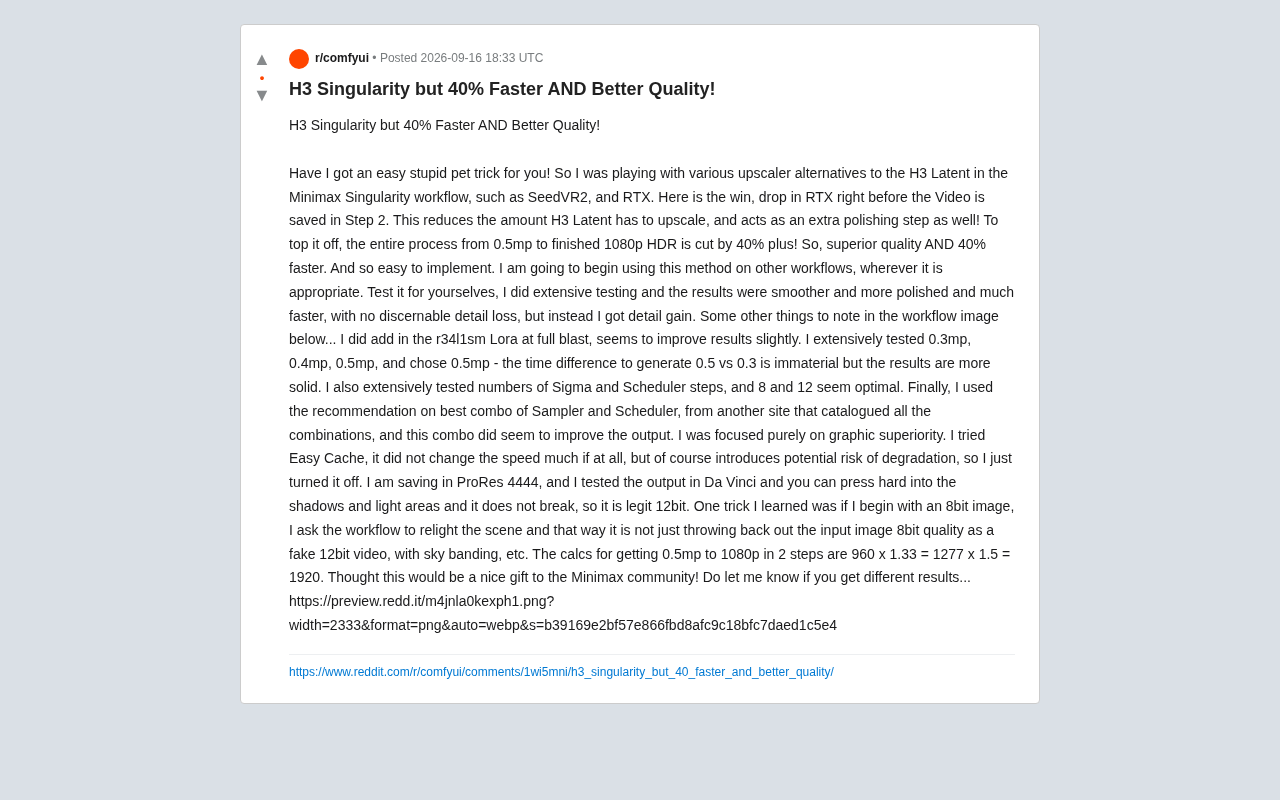
H3 Singularity Optimization: 40% Speed Boost With Better Image Quality
A Reddit user's Minimax Singularity workflow tip: insert an RTX upsampler before H3 Latent for 40%+ speed gains and better quality. Covers parameters, 12-bit output, and more.
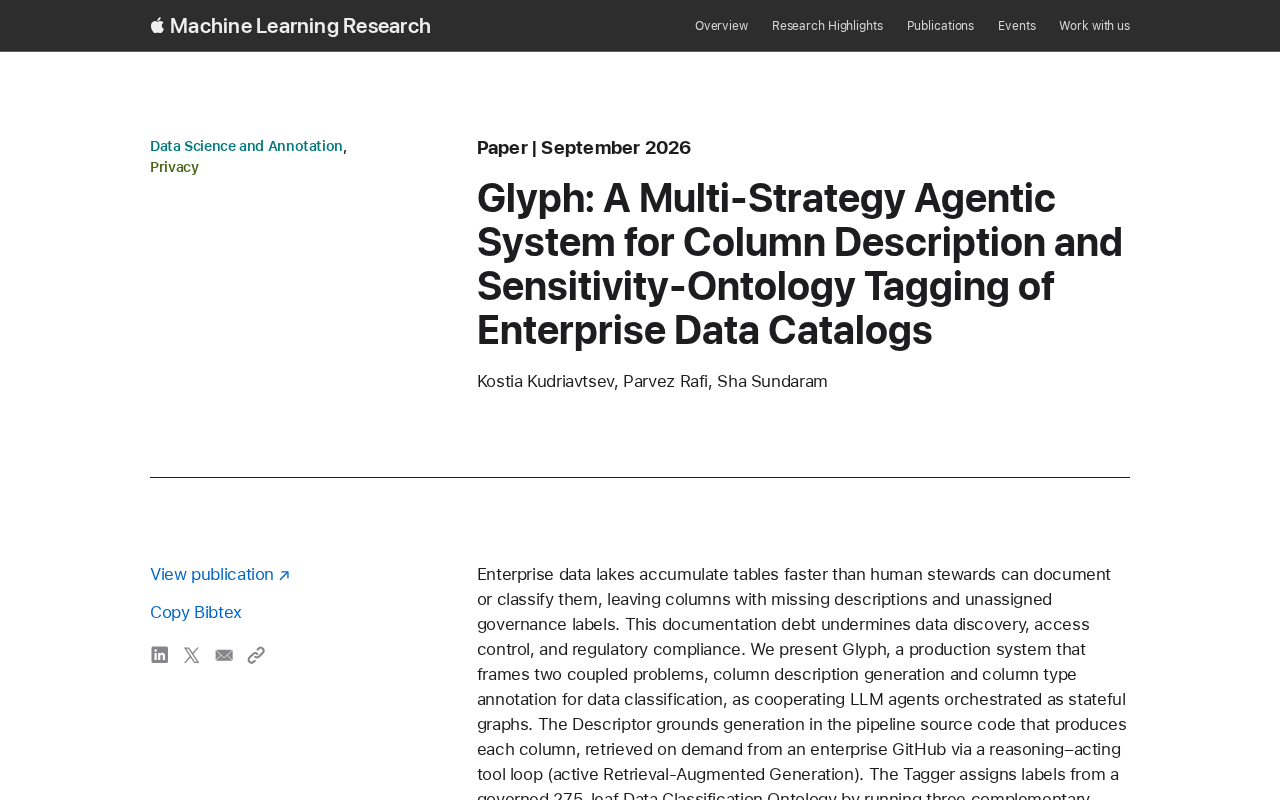
Glyph: A Multi-Strategy Agent System for Automated Enterprise Data Catalog Annotation
Glyph is a multi-strategy LLM agent system for enterprise data catalogs that automates column description generation and sensitivity ontology tagging, grounding outputs in pipeline source code to improve accuracy.