Vercel AI SDK Releases @ai-sdk/workflow 2.0.31 Patch Update
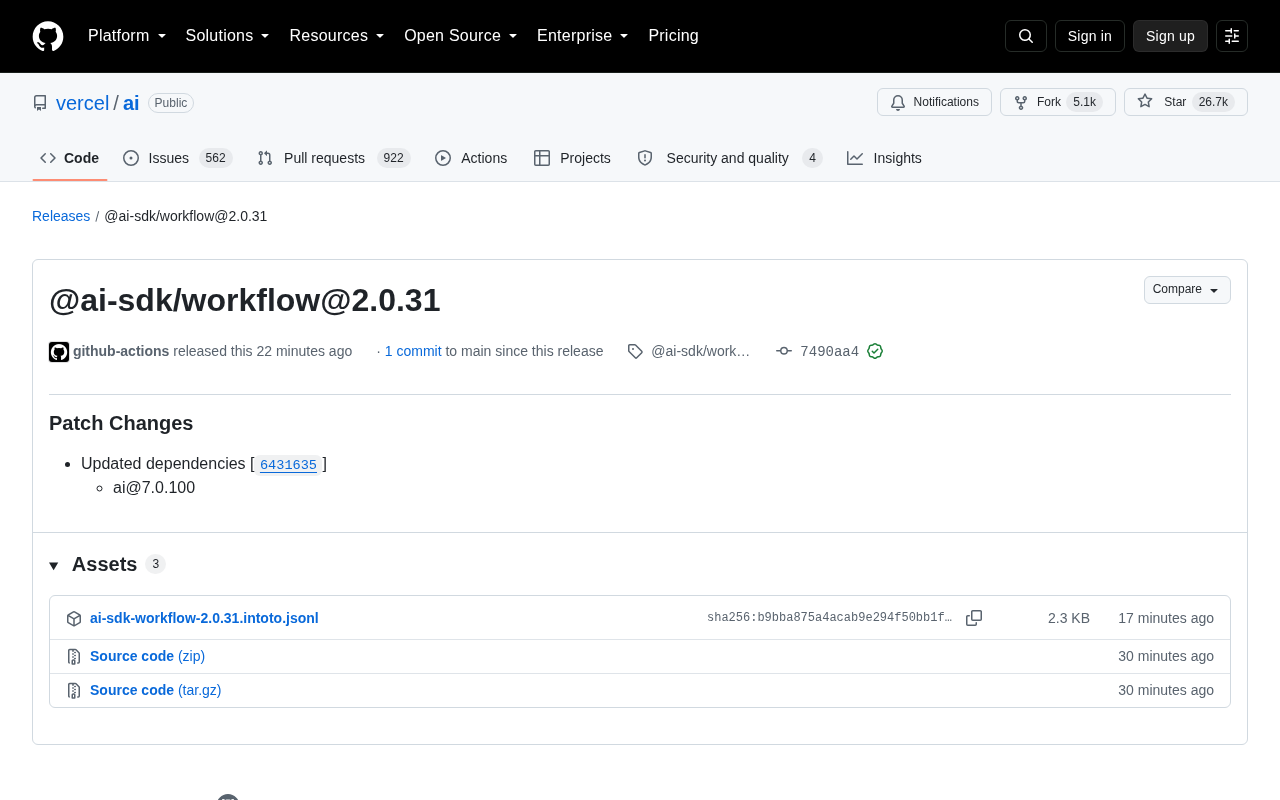
Vercel AI SDK releases @ai-sdk/workflow 2.0.31, a maintenance patch syncing the ai dependency to v7.0.100.
`@ai-sdk/workflow@2.0.31` is a routine maintenance patch with a single change: bumping the internal `ai` dependency to version `7.0.100`. No new features or breaking changes are included. The module handles complex AI task orchestration within the Vercel AI SDK ecosystem, supporting multi-step reasoning and task decomposition. This release reflects the tight version coupling across SDK modules and was published via official CI with a verified GitHub signature, following supply chain security best practices. Developers can upgrade safely after validating in a test environment.
Vercel's AI SDK project has released @ai-sdk/workflow version 2.0.31. This is a patch-level update focused primarily on dependency synchronization. For developers building workflow applications with the Vercel AI SDK, minor version upgrades like this may not grab headlines, but they play an important role in keeping projects running smoothly.
What's in This Update
According to the official release notes, @ai-sdk/workflow@2.0.31 falls under Patch Changes. The core change is an internal dependency update, bumping the ai package to version 7.0.100. This means no new features have been introduced and there are no breaking changes — the primary goal is to stay in sync with the upstream core library.
Looking at the version number, the incremented last digit in 2.0.31 aligns with the Semantic Versioning (SemVer) definition of a patch release — used for backwards-compatible bug fixes and dependency synchronization. Developers can generally upgrade with confidence, without worrying about API-level compatibility issues.
What Is @ai-sdk/workflow
@ai-sdk/workflow is a sub-module within the Vercel AI SDK ecosystem, designed for scenarios that require orchestrating complex AI task pipelines. It helps developers organize multiple AI call steps into structured workflows, handling needs like multi-step reasoning, task decomposition, and state management.
The Vercel AI SDK (repository: vercel/ai) is a widely popular AI integration library for frontend and full-stack development, with approximately 26,700 GitHub Stars and over 5,100 forks — a testament to its active community. The entire SDK follows a modular design, where packages like workflow and the core ai package each serve distinct roles while collaborating through dependency relationships.
From an architectural standpoint, AI workflow orchestration addresses complex scenarios that a single LLM call can't cover. Typical use cases include: having a model analyze user intent, routing to different sub-task chains based on that intent, invoking models independently along each chain, and aggregating the results. @ai-sdk/workflow provides a declarative API to describe these directed task graphs, sparing developers the need to manually manage async call ordering, intermediate state passing, and error retry logic. It's conceptually similar to LangChain's Chain/Agent model, but more deeply integrated with Vercel's runtime and streaming response system — making it especially well-suited for server-side workflow orchestration in full-stack environments like Next.js.
Why Dependency Synchronization Matters
This update bumps the underlying ai package to 7.0.100, reflecting the tight version coupling between modules in the Vercel AI SDK. When the core ai package changes, sub-modules that depend on it — like workflow — need corresponding updates to ensure functional consistency and stability.
For production projects, keeping up with patch updates like this offers several practical benefits: gaining access to upstream fixes, avoiding build conflicts caused by dependency version fragmentation, and laying a solid foundation for future major version upgrades. Developers are encouraged to review the full changelog — especially the core ai package's change history — before upgrading, in order to understand any indirectly introduced changes.
Semantic Versioning (SemVer) defines version numbers as a three-part MAJOR.MINOR.PATCH structure: MAJOR version changes indicate backwards-incompatible breaking changes; MINOR version changes indicate new backwards-compatible features; PATCH version changes are reserved for backwards-compatible bug fixes or internal adjustments (such as dependency synchronization). In a monorepo-structured SDK, sub-packages often have peer dependencies or direct dependencies on each other, so triggering a sub-package sync release when the core package receives a PATCH update is standard practice. This explains why @ai-sdk/workflow needed a new release even without any logic changes of its own — precise version alignment is the foundation that package managers rely on for consistent dependency resolution.
Upgrade Recommendations
To upgrade, run the appropriate command for your package manager — for example, npm install @ai-sdk/workflow@2.0.31, or the equivalent pnpm or yarn command. Since this is a patch update, the upgrade process is smooth in most cases, though it's still advisable to verify in a test environment before deploying to production.
Worth noting: this version was automatically published on GitHub via the official CI (github-actions) and includes a GitHub Verified signature, guaranteeing the trustworthiness of the release artifacts. This is a common supply chain security practice among mature open-source projects.
Summary
@ai-sdk/workflow@2.0.31 is a typical maintenance patch release, with the sole change being a sync to ai@7.0.100. There are no new features or breaking changes. While the update is small in scope, it reflects the Vercel AI SDK team's commitment to continuous maintenance and rapid iteration. For developers relying on this toolchain, keeping module versions in sync is a healthy habit that contributes to long-term project stability.
Related articles

RTX 5090 Stock Crisis: Why Third-Party Sellers Are Charging $9,500
NVIDIA's RTX 5090 has vanished from U.S. online retail, with third-party sellers asking up to $9,500. Here's how AI compute demand is driving GPU prices to extremes.
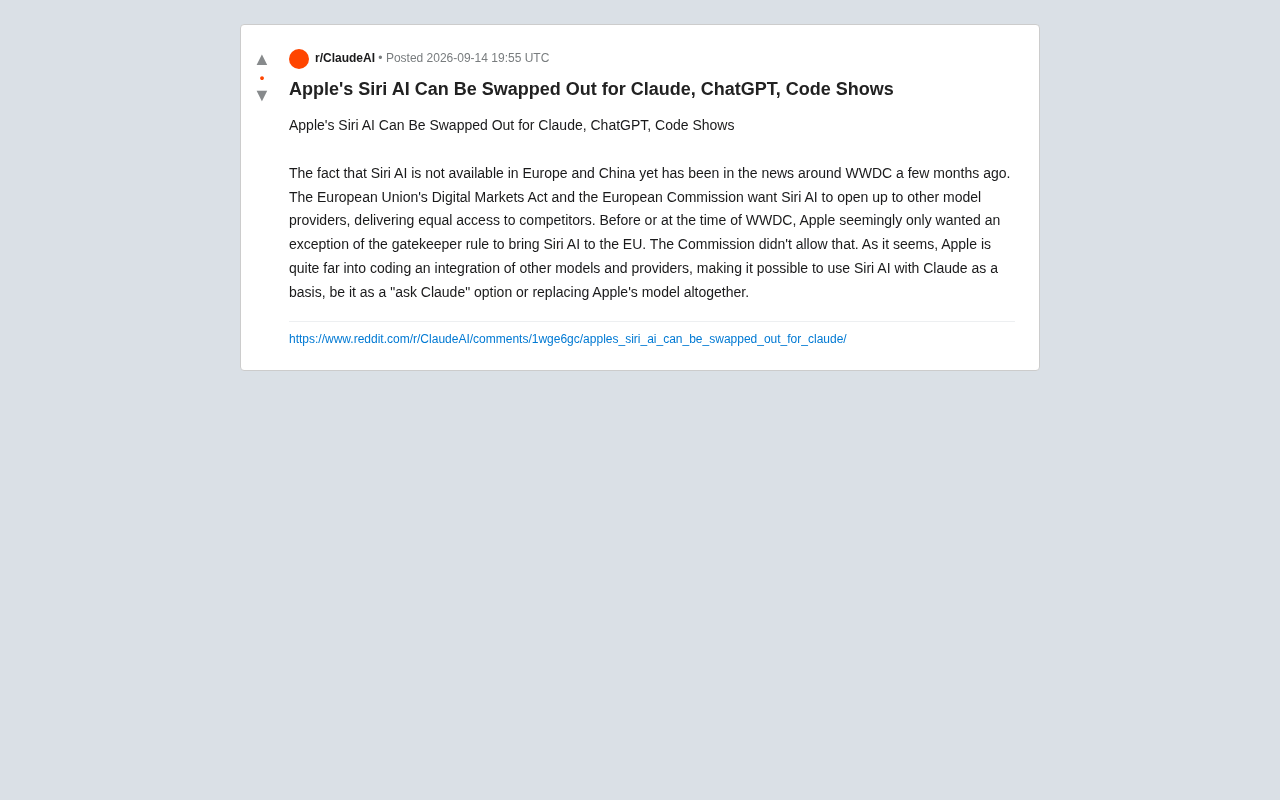
Apple Siri May Support Swapping in Claude and ChatGPT — Code Already Shows Signs
Leaked code shows Apple is developing third-party AI model integration for Siri, potentially allowing users to swap in Claude or ChatGPT under EU DMA pressure.
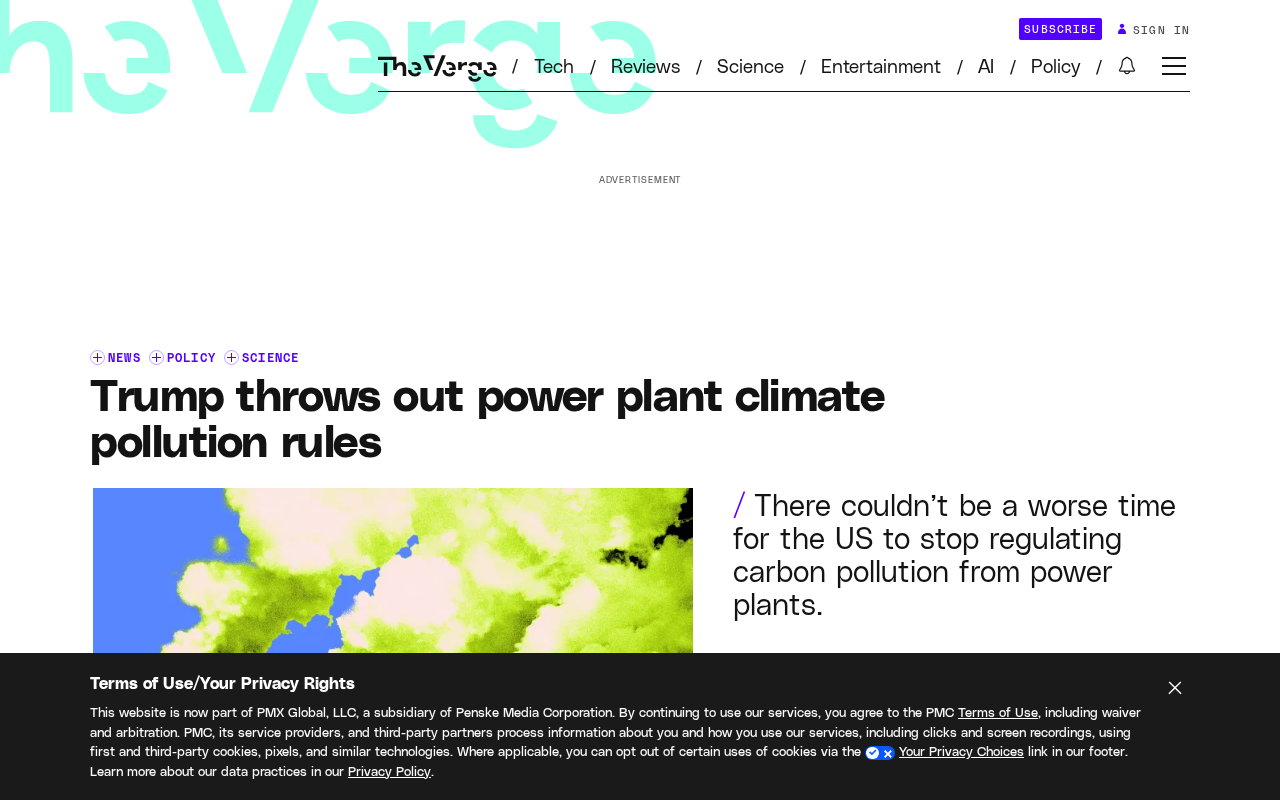
EPA Moves to Scrap Power Plant Greenhouse Gas Emission Standards Amid Surging AI Energy Demand
The EPA plans to eliminate all power plant greenhouse gas emission standards, just as AI, EVs, and manufacturing drive electricity demand higher — making U.S. power potentially far dirtier.