Vercel AI SDK Releases @ai-sdk/workflow 2.0.33 Patch Update
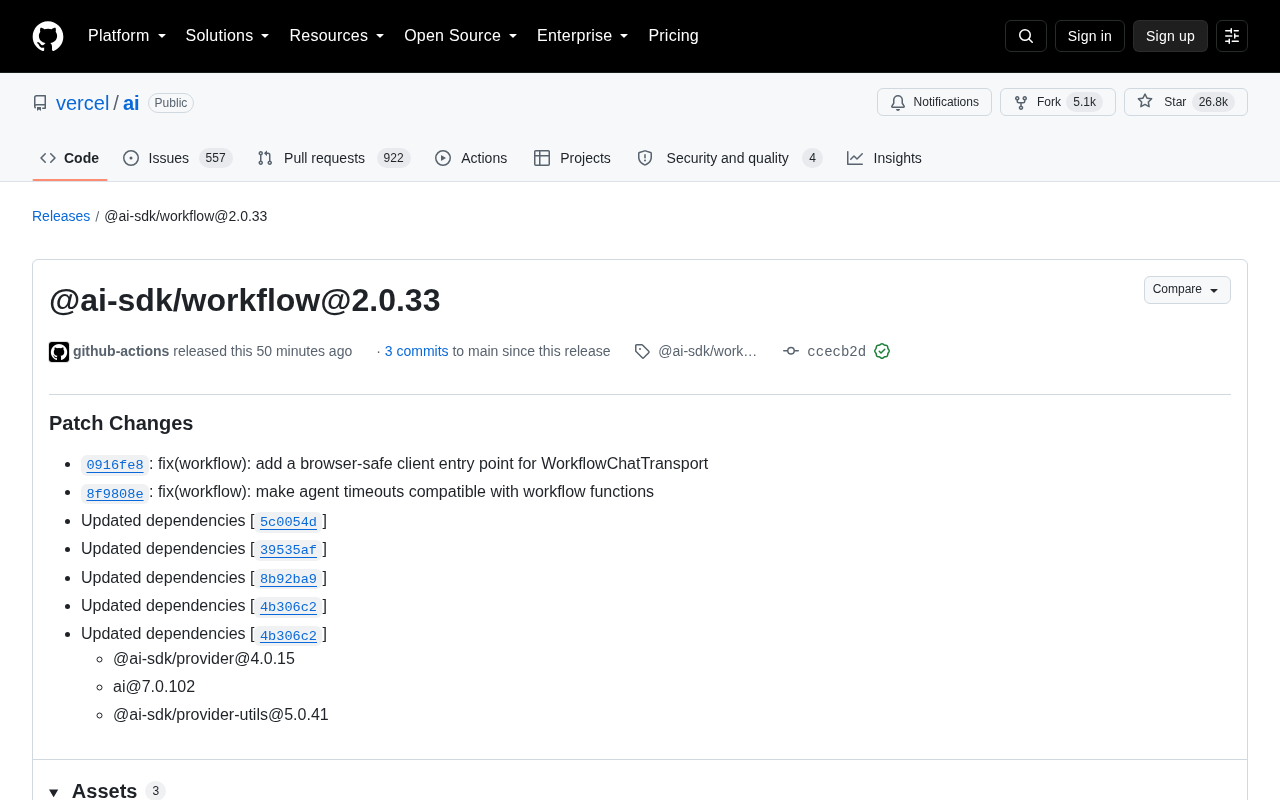
Vercel AI SDK patches @ai-sdk/workflow 2.0.33 with browser entry point and agent timeout fixes.
`@ai-sdk/workflow` 2.0.33 is a small but practical patch update with two core fixes: a browser-safe client entry point for `WorkflowChatTransport` that resolves frontend bundling issues caused by Node.js-only dependencies, and a bug fix ensuring agent timeout configurations work correctly with workflow functions. The release also bumps `@ai-sdk/provider`, `ai`, and `@ai-sdk/provider-utils`. A full upgrade is recommended, with regression testing advised for workflow chat and timeout-related code paths.
Vercel's AI SDK ecosystem has received a minor patch update, with @ai-sdk/workflow releasing version 2.0.33. While the version bump is patch-level, it addresses real-world compatibility issues developers have encountered, making it worth noting for projects that rely on this module to build AI workflows.
What's New in This Update
According to the GitHub Releases page, @ai-sdk/workflow@2.0.33 is a Patch Changes release containing two key fixes:
- Added a browser-safe client entry point (commit
0916fe8): A browser-safe client entry point has been added forWorkflowChatTransport. This means using the workflow chat transport in browser environments no longer pulls in Node.js server-only dependencies, reducing bundle size and avoiding potential runtime errors. - Fixed compatibility between agent timeouts and workflow functions (commit
8f9808e): Agent timeouts now work correctly alongside workflow functions. Previously, setting agent timeouts inside workflow functions could result in inconsistent behavior — this fix resolves that issue.
In Semantic Versioning (SemVer), a Patch release represents a backward-compatible bug fix, following the MAJOR.MINOR.PATCH format. Unlike Minor updates that introduce new features or Major updates with breaking changes, Patch updates are theoretically safe to apply without modifying existing code. The Vercel AI SDK uses a monorepo structure to manage multiple sub-packages, each with independent versioning but linked via workspace protocols — so a patch release in one sub-package often triggers version alignment updates across its dependency chain.
Dependency Updates
Alongside the fixes, this release also synchronizes a set of related dependencies to maintain consistency across the AI SDK ecosystem:
@ai-sdk/provider@4.0.15ai@7.0.102@ai-sdk/provider-utils@5.0.41
These coordinated dependency bumps typically signal improvements at the core provider interface and utility layer as well. For projects using @ai-sdk/workflow alongside the main ai package, upgrading all together is recommended to ensure the best compatibility and avoid interface mismatches between versions.
What This Means for Developers
@ai-sdk/workflow is the Vercel AI SDK module designed for orchestrating complex AI task pipelines, allowing developers to compose multiple steps, agent calls, and conditional logic into maintainable workflows. The browser-safe client entry point fix reflects an ongoing push to improve usability in frontend scenarios — particularly for apps that need to expose workflow chat capabilities directly to the client.
The agent timeout compatibility fix speaks more to production stability. In real-world AI applications, timeout controls are a critical mechanism for preventing requests from hanging indefinitely and ensuring a good user experience. Having timeout configurations work correctly inside workflow functions helps developers build more robust error handling and fallback logic.
WorkflowChatTransport in @ai-sdk/workflow is the transport layer abstraction that connects workflows to chat interfaces, responsible for passing message streams between client and server. Prior to this fix, the entry point mixed in references to Node.js native modules (such as stream and http), causing frontend build tools like Vite or webpack to throw module-not-found errors or pull in unnecessary polyfills. The browser-safe client entry point leverages the exports field in package.json to differentiate between browser and node conditions, allowing build tools to automatically select the version that only contains Web API-compatible code — a standard practice for modern JavaScript packages that need to support full-stack usage scenarios.
Upgrade Recommendations
Projects currently using this module can upgrade directly via their package manager. Since this is a patch-level update, it theoretically contains no breaking changes, making the upgrade low-risk. That said, given the coordinated updates to multiple dependency packages, it's advisable to run regression tests on code paths involving workflow chat transport and agent timeouts after upgrading, to confirm that frontend bundling and runtime behavior meet expectations.
As an active open-source project with 26,800+ stars, the Vercel AI repository moves at a fast iteration pace — frequent small-version fixes like this one reflect its responsiveness to developer feedback. Keeping up with these updates helps maintain healthy and secure dependencies in production environments.
Related articles
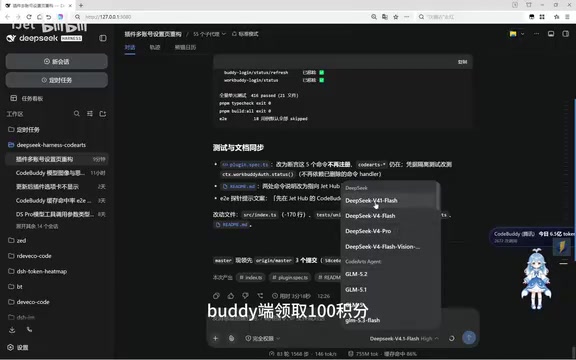
Free DeepSeek V4.1 Flash via DSH: Bulk Point Collection & International WorkBuddy Tested
DSH project update tested: WorkBuddy now offers 100 points per claim, rate limits raised beyond 80M tokens with faster resets, and international WorkBuddy supports free Hunyuan 4 and DeepSeek V4.1 Flash.
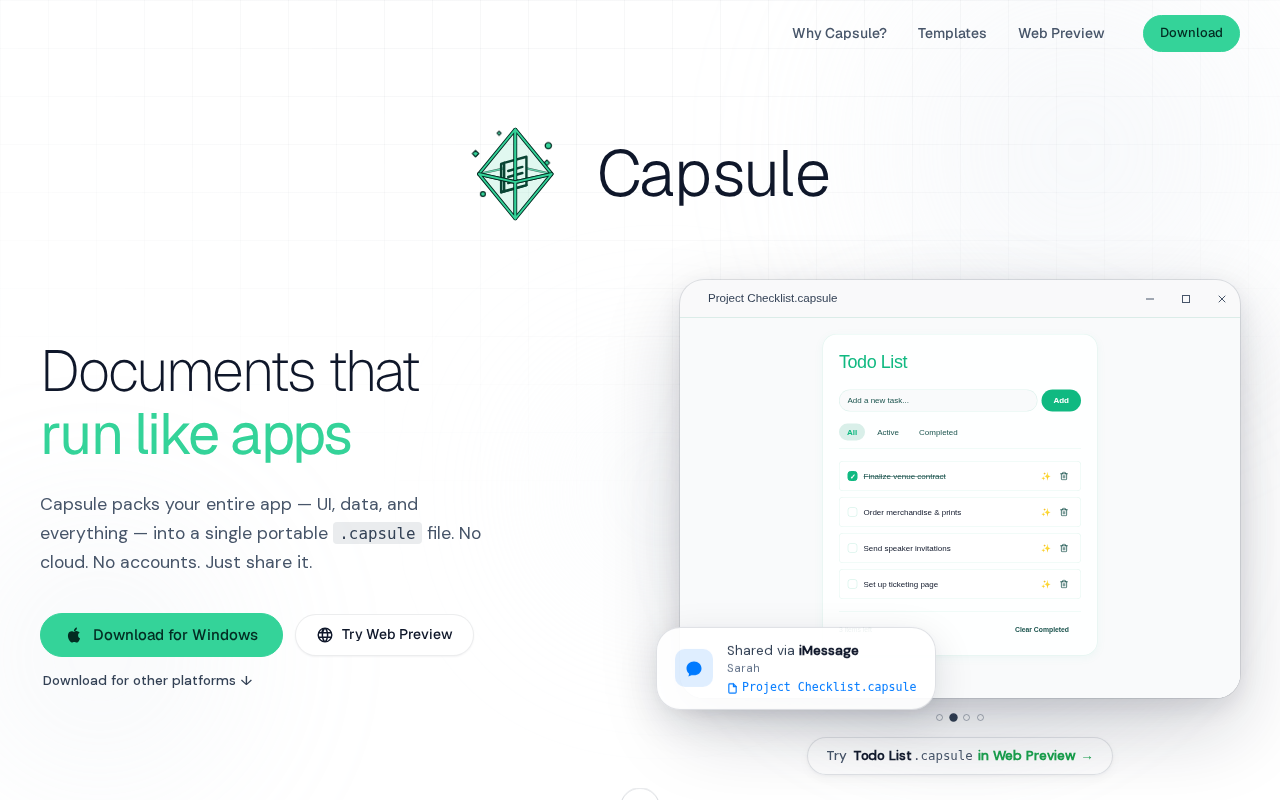
Capsule: Pack Web Apps and Data into a Single SQLite File
Capsule is a Rust/Tauri 2.0 tool that packs HTML web apps and data into a single SQLite file — privacy-first, local storage, portable sharing, with AI support.
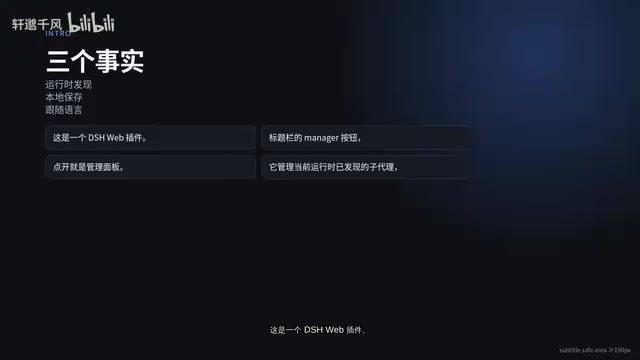
DSH-SUBAGENT-UI Plugin: The Ultimate Sub-Agent Manager for DeepSeek Harness
DSH-SUBAGENT-UI is a DeepSeek Harness browser plugin offering sub-agent overview, search, local categorization, and completion snapshots — install with one command.