Vercel AI SDK Releases workflow-harness 1.0.113 Patch Update
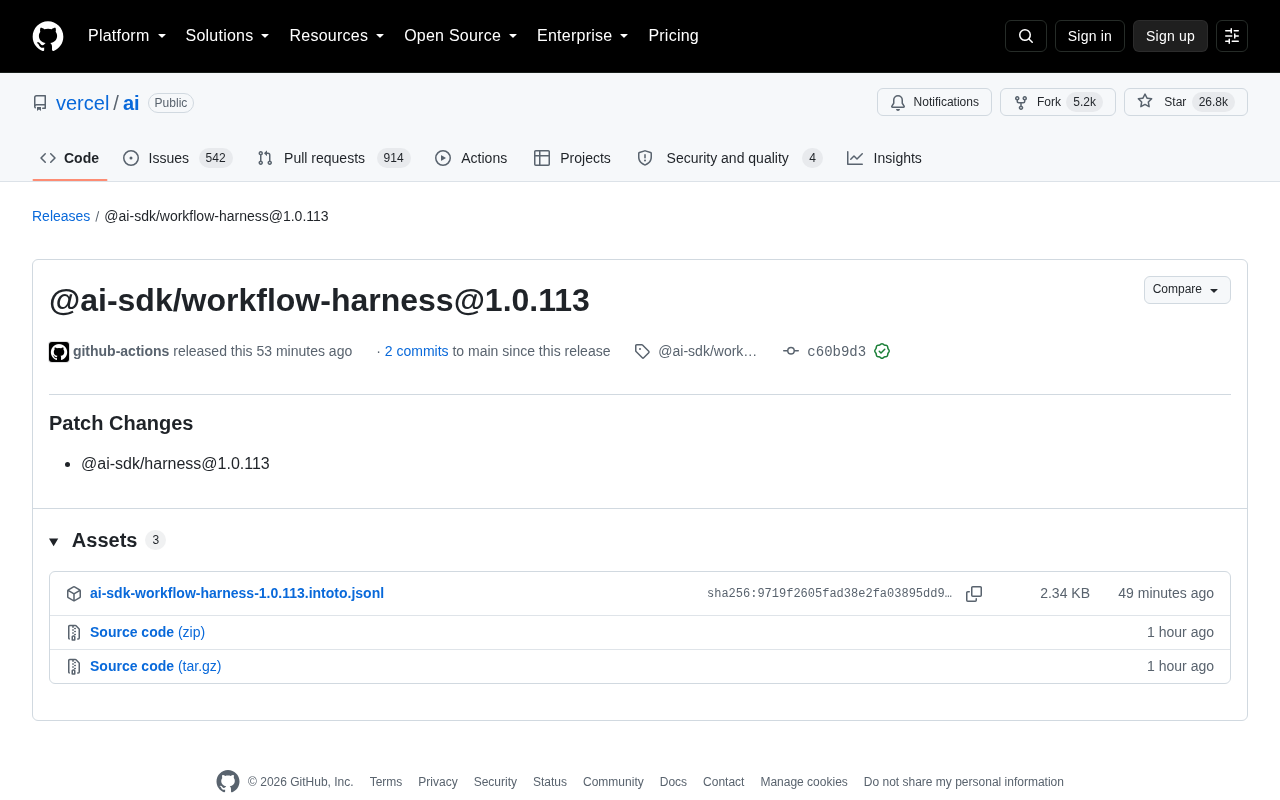
Vercel AI SDK releases workflow-harness 1.0.113 patch, syncing internal test dependency with no breaking changes.
Vercel AI SDK has released `@ai-sdk/workflow-harness@1.0.113` as a patch update, with the primary change being a synchronized upgrade of the internal `@ai-sdk/harness` dependency to the same version. Published via GitHub Actions with GPG signature verification, this is a trusted routine release. The workflow-harness packages serve as testing scaffolding and workflow validation infrastructure within the SDK. With version numbers now at 1.0.113, the project maintains a high-frequency patch cadence. This is a non-breaking Patch update that developers can safely adopt, while keeping both packages version-aligned and leveraging CI lockfiles for smooth rollout.
Vercel's AI SDK ecosystem has received a routine release on GitHub: @ai-sdk/workflow-harness@1.0.113. This is a patch-level update, accompanied by a synchronized upgrade of the internal dependency @ai-sdk/harness@1.0.113.
What's in This Release
According to the GitHub Releases page, this version was published by the github-actions automation pipeline at commit hash c60b9d3, and has passed GitHub's verified signature check (GPG key ID: B5690EEEBB952194), making it a trusted, verified release.
Based on the version bump (1.0.112 → 1.0.113) and the listed Patch Changes, this is a minor iteration focused on fixes and dependency synchronization. The primary change is upgrading the internal package @ai-sdk/harness to 1.0.113. Patches like this typically introduce no breaking changes, making them safe for existing users to adopt directly.
The Role of workflow-harness in the AI SDK
Vercel AI SDK is one of the more popular TypeScript libraries in the current ecosystem, with over 26.8k stars and 5.2k forks on GitHub — a clear sign of strong community engagement. The workflow-harness and harness packages are typically used for testing, workflow orchestration, and internal validation within the SDK.
In software engineering, a "harness" refers to a set of supporting code used to drive, isolate, and verify the behavior of components. For a rapidly iterating project like the AI SDK, a stable harness is critical infrastructure for preventing regressions as the core codebase continues to evolve. That's why even these low-profile patch packages play an important role in the overall quality assurance chain.
Vercel AI SDK follows a monorepo architecture for package management, with dozens of interrelated sub-packages in a single repository. @ai-sdk/harness and @ai-sdk/workflow-harness are among those responsible for internal testing infrastructure. In a monorepo setup, internal dependency versions often need to stay tightly aligned — so when a lower-level package like harness changes, the higher-level workflow-harness follows suit, even if no business logic has changed. This explains why both packages share the exact same version number in this release. For developers familiar with monorepo toolchains like Changesets or Turborepo, this kind of "cascading patch" pattern is a well-established version management practice.
What This Means for Developers
For teams building applications on top of Vercel AI SDK, the high frequency of these patch releases signals an actively maintained project — with version numbers already at 1.0.113, the release cadence is clearly quite intensive. Frequent patch releases have their trade-offs: on one hand, issues get fixed quickly; on the other, teams need to stay on top of dependency management to avoid version fragmentation.
Recommendations for developers using these packages:
- Keep an eye on version alignment between
@ai-sdk/harnessand@ai-sdk/workflow-harness— both are now synchronized at1.0.113; - Pin versions or use semantic version ranges in your CI pipeline to ensure patch updates land smoothly;
- Since this is a Patch update with no breaking changes, it's safe to include in your next dependency upgrade.
Semantic Versioning (SemVer) is the core convention governing these dependencies: version numbers follow the MAJOR.MINOR.PATCH format, where a PATCH increment (e.g., 1.0.112 → 1.0.113) promises no breaking changes — only backward-compatible bug fixes. Using a range like ^1.0.0 in your package.json will automatically accept all MINOR and PATCH updates within the same MAJOR version, meaning this upgrade can be resolved automatically by your package manager (npm/pnpm/yarn) during install without any manual version changes. For teams using lockfiles in CI environments, you'll need to explicitly run an update command and commit the new lockfile to propagate deterministic dependency versions across all environments.
Summary
This release carries limited new information on its own — it's a routine patch in Vercel AI SDK's continuous iteration cycle. Its value lies not in new features, but in demonstrating the project's stable, high-frequency maintenance cadence. For developers following the AI SDK ecosystem, keeping track of updates like this helps you stay ahead of how the toolchain is evolving.
Related articles
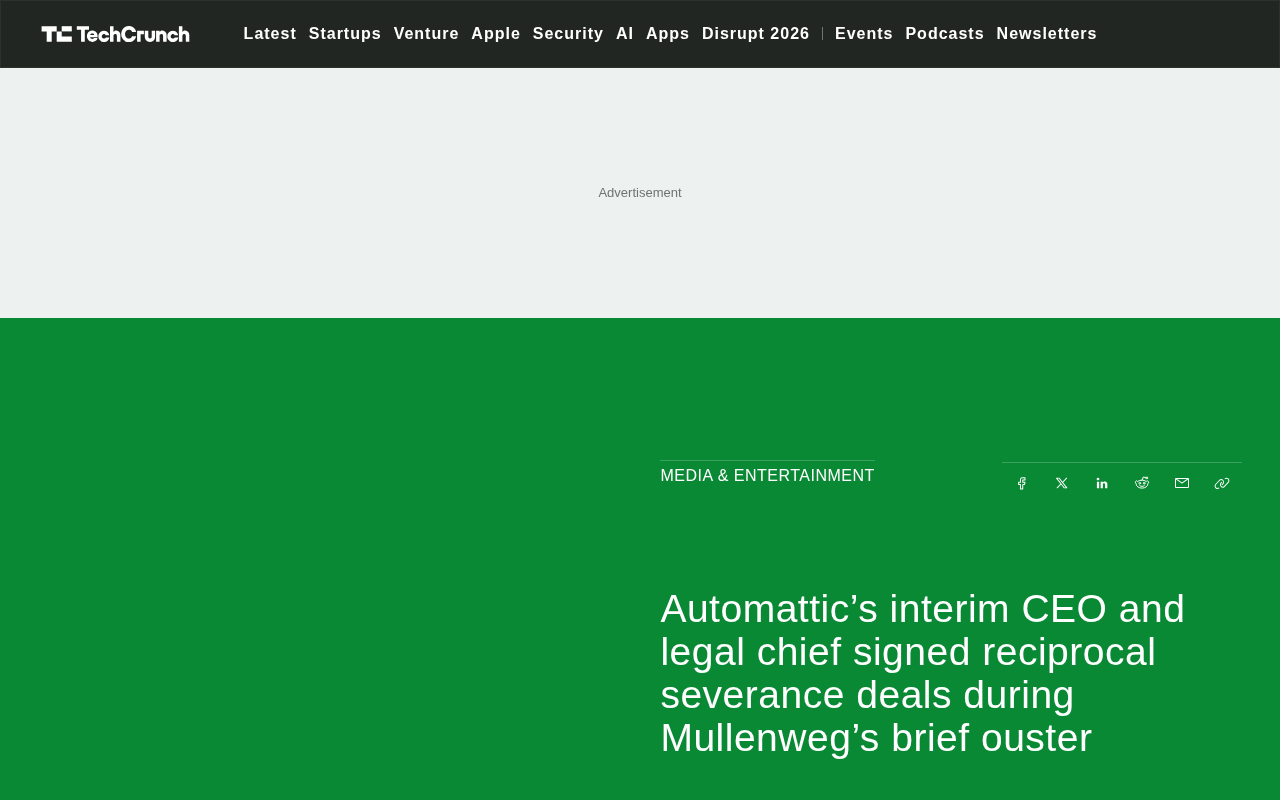
Automattic Executives Signed Reciprocal Severance Agreements During Mullenweg's Brief Ouster
Automattic's CFO and General Counsel signed reciprocal severance agreements during Matt Mullenweg's brief ouster, covering one year's salary and accelerated equity vesting, raising corporate governance concerns.
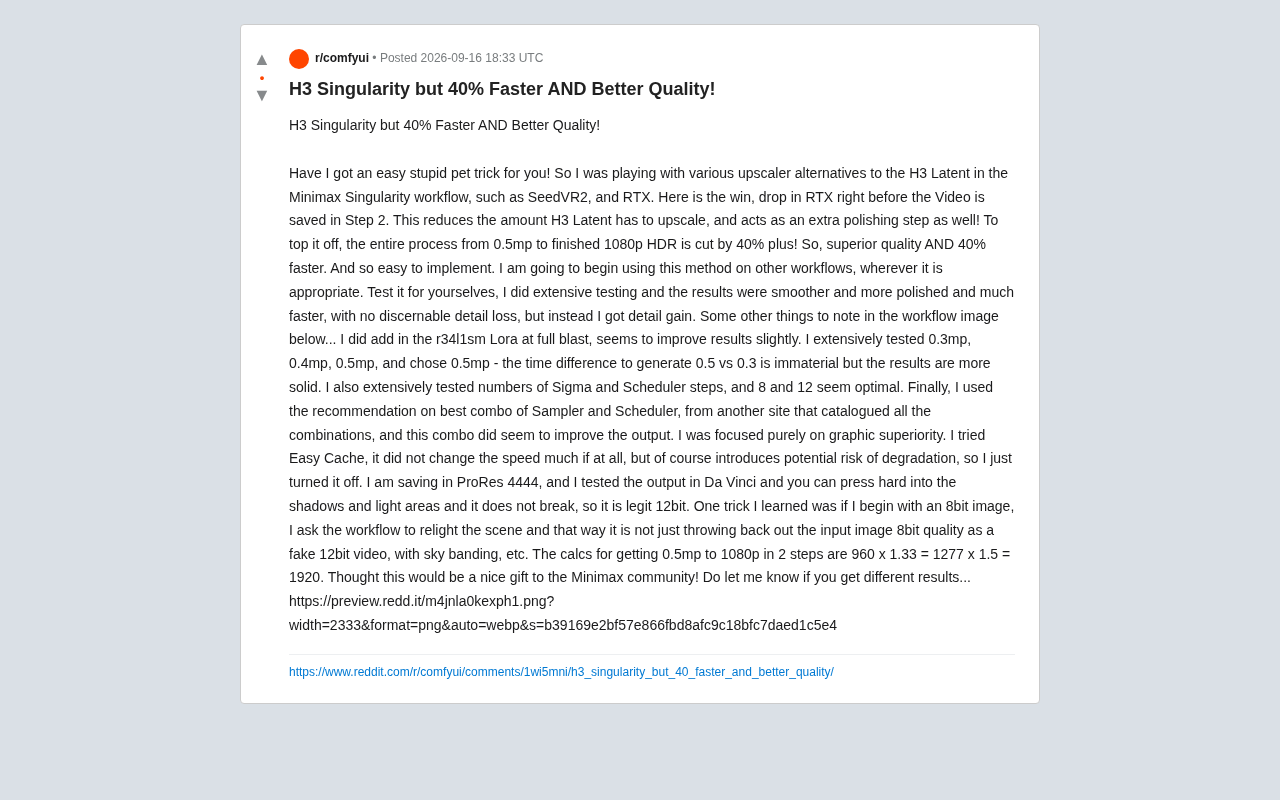
H3 Singularity Optimization: 40% Speed Boost With Better Image Quality
A Reddit user's Minimax Singularity workflow tip: insert an RTX upsampler before H3 Latent for 40%+ speed gains and better quality. Covers parameters, 12-bit output, and more.
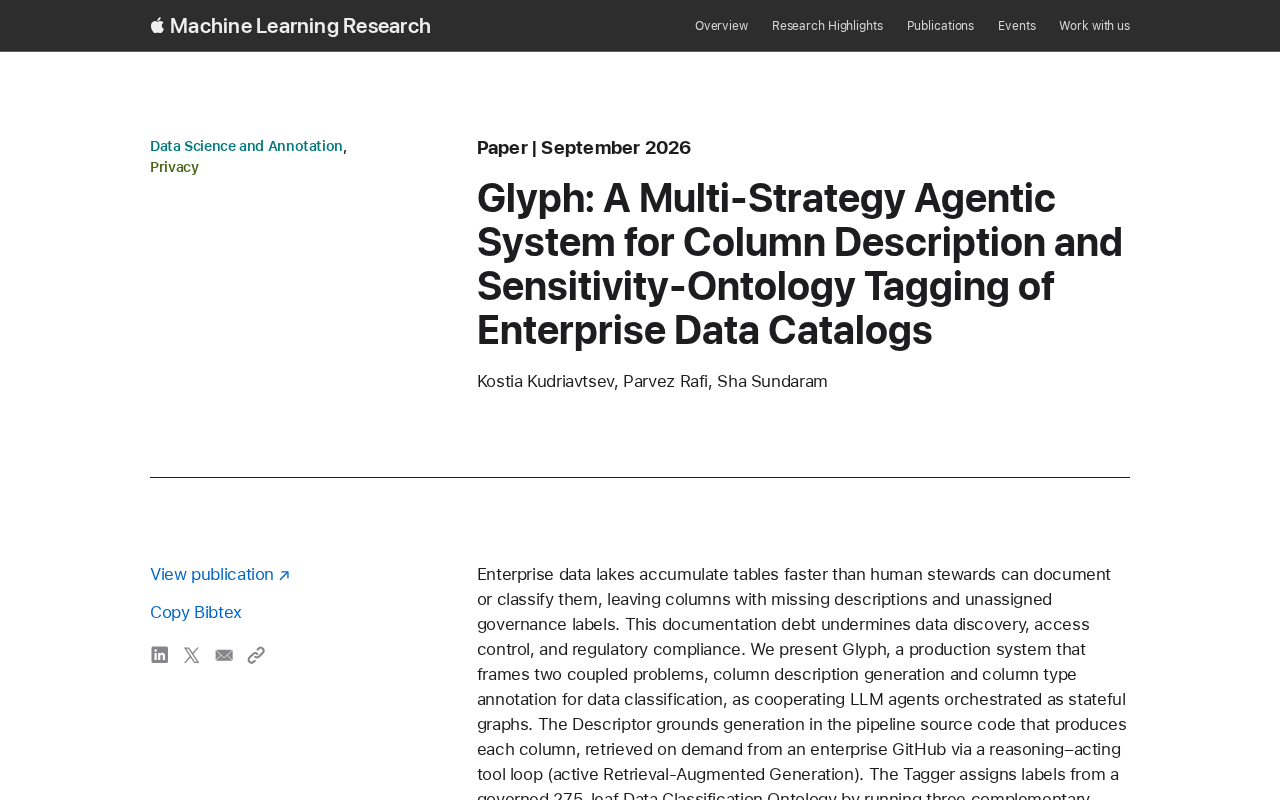
Glyph: A Multi-Strategy Agent System for Automated Enterprise Data Catalog Annotation
Glyph is a multi-strategy LLM agent system for enterprise data catalogs that automates column description generation and sensitivity ontology tagging, grounding outputs in pipeline source code to improve accuracy.