Vercel AI SDK Releases workflow-harness 1.0.119 Patch Update

Vercel AI SDK releases workflow-harness 1.0.119 patch to sync internal dependencies — a low-risk update.
Vercel AI SDK released `@ai-sdk/workflow-harness@1.0.119`, a patch update whose sole change is syncing the internal dependency `@ai-sdk/harness` to the matching version — a routine version alignment operation in a monorepo architecture. The `workflow-harness` package serves testing and workflow orchestration within the AI SDK ecosystem and is generally not referenced directly by end users. The release was built by GitHub Actions and carries a GPG verified signature. With ~26.9k stars and a patch number already at 119, the project reflects a highly active iteration cadence. This low-risk patch can be safely adopted; managing dependencies via lockfile and validating upgrades in CI is recommended.
Release Overview
Vercel's popular AI SDK project recently released @ai-sdk/workflow-harness@1.0.119. This is a patch-level release focused primarily on a dependency update. The build was completed and signed on September 22nd via GitHub Actions automation, with a GitHub verified GPG signature (key ID: B5690EEEBB952194).
The version number 1.0.119 indicates a patch update under the Semantic Versioning (SemVer) system, which typically involves no breaking changes and is used for bug fixes or internal dependency syncs. For developers already using this toolchain, the upgrade cost is minimal and the update can be safely adopted.
What's Changed
The core change in this release is a single Patch Changes entry: updating the internal dependency @ai-sdk/harness@1.0.119 (corresponding to commit 125f493).
This means workflow-harness has been kept in version alignment with the underlying harness package. In a monorepo architecture, multiple sub-packages within Vercel AI SDK often follow a unified version-bumping strategy — when a core lower-level package is updated, dependent packages above it will publish corresponding patch versions to ensure compatibility.
The Role of workflow-harness
workflow-harness is a utility package within the AI SDK ecosystem oriented toward testing and workflow orchestration ("harness" commonly refers to a test or runtime framework). These packages typically serve the SDK's internal build, testing, or workflow validation processes, helping ensure the core AI SDK runs reliably across different scenarios. While this update is small, it contributes meaningfully to the overall robustness of the toolchain.
Monorepo and Version Alignment Strategy is a common engineering practice in large open-source SDK projects. Vercel AI SDK uses Turborepo or similar tools to manage multiple sub-packages within a single repository, where each sub-package can be published to npm independently while sharing a common build pipeline and versioning strategy. When a lower-level package (such as @ai-sdk/harness) changes, dependent packages (such as @ai-sdk/workflow-harness) need to publish a new version to update the dependency declaration in package.json — even if their own code hasn't changed — so that users get a consistent dependency tree when installing via a package manager. This "cascading patch" pattern is common when patch numbers grow rapidly; it doesn't necessarily indicate substantive code changes but rather reflects the mechanism by which the toolchain maintains internal consistency.
Harness in software engineering refers to a "test harness" or "runtime framework" — a metaphor for placing the system under test into a controlled environment to drive and observe its behavior. The @ai-sdk/harness family of packages typically handles: providing a unified integration testing framework for the AI SDK's various providers (such as adapters for OpenAI, Anthropic, Google, etc.), simulating HTTP requests and responses, and verifying the correctness of core features like streaming output and tool calling before release. workflow-harness builds on this foundation by focusing specifically on orchestration and validation of multi-step AI workflows. While end users typically don't reference these infrastructure packages directly, their stability directly impacts the overall release quality and reliability of the SDK.
Vercel AI SDK's Ecosystem Influence
Vercel's ai repository currently has approximately 26.9k stars and 5.2k forks, making it one of the most widely followed open-source libraries for building AI applications today. It provides developers with a unified interface for calling various large language models, with support for streaming responses, tool calling, workflow orchestration, and more — widely used in Next.js and various frontend AI application development.
The high-frequency versioning cadence (patch number already at 119) reflects the project's active maintenance pace. For teams depending on AI SDK, continuous small-step updates mean faster bug fixes and better long-term stability, but also require developers to establish proper dependency management and upgrade validation workflows.
Semantic Versioning (SemVer) defines version numbers in a MAJOR.MINOR.PATCH structure: MAJOR changes indicate incompatible breaking API changes, MINOR indicates backward-compatible new feature additions, and PATCH indicates backward-compatible bug fixes or internal adjustments. The patch number of 119 in 1.0.119 reflects the high-frequency, small-step iteration pace the Vercel team has maintained since the 1.0.0 release — this is especially common in the AI toolchain space, where underlying model capabilities evolve rapidly. The SDK needs to continuously sync new provider features and fix edge cases without bumping the MINOR version (which would signal "new features to learn" to users). For projects depending on this SDK, patch-level updates can typically be received automatically via semver ranges like ^1.0.0 without manual intervention.
Developer Recommendations
For developers using Vercel AI SDK day-to-day, here's the recommended approach when dealing with patch versions that are purely dependency updates:
- Use a lockfile to manage versions uniformly and avoid sub-package version mismatches
- Validate behavior after upgrading in your CI pipeline, especially for features related to workflows and testing
- Monitor GitHub Releases changelogs to distinguish between patch, minor, and major version differences
This 1.0.119 update is low-risk. Following the main version upgrade as normal is sufficient — no special migration work is required.
Related articles
DeepSeek Open-Sources DeepInfer: What Is an Inference Framework Actually For?
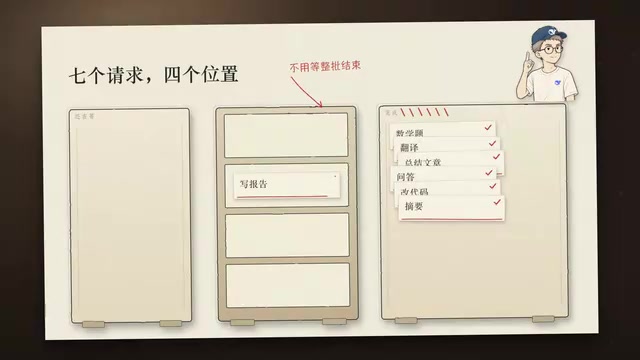
DeepSeek open-sources its inference framework DeepInfer under Apache 2.0, supporting DeepSeek V4.1 Flash offline inference. This article explains its request scheduling, FlashMLA/DeepGEMM compute optimization, DSPark speculative verification acceleration, and what it means for developers and ordinary users.
Open-Source AI Learning Agent: A Full Workflow Experience from Topology Graphs to Exam Generation
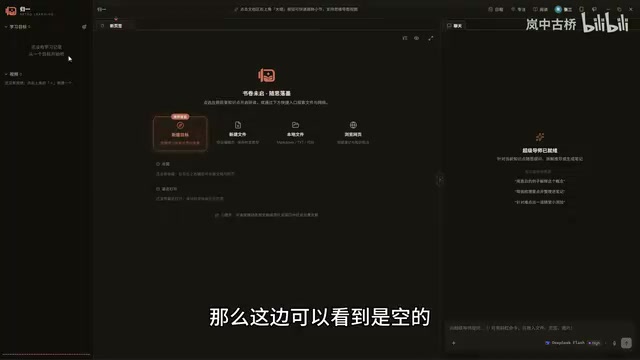
Explore an open-source AI learning agent: built on DeepSeek API, it constructs knowledge systems via topology graphs, with automatic document generation, notes, super documents, and exams. Learn about its Agent workflow and design highlights.

DeepSeek Whale Girl Open-Source MV Meme: AI Industry Coded Slang About Pivoting to Closed Source
Bilibili's DeepSeek Whale Girl rap MV uses fictional memes to tease the AI open-source vs. closed-source debate, with lyrics full of industry slang. This article explains the meme culture, the Whale Girl symbol, and the open/closed tension.