Vercel AI SDK ZAI Provider 1.0.3 Update Breakdown
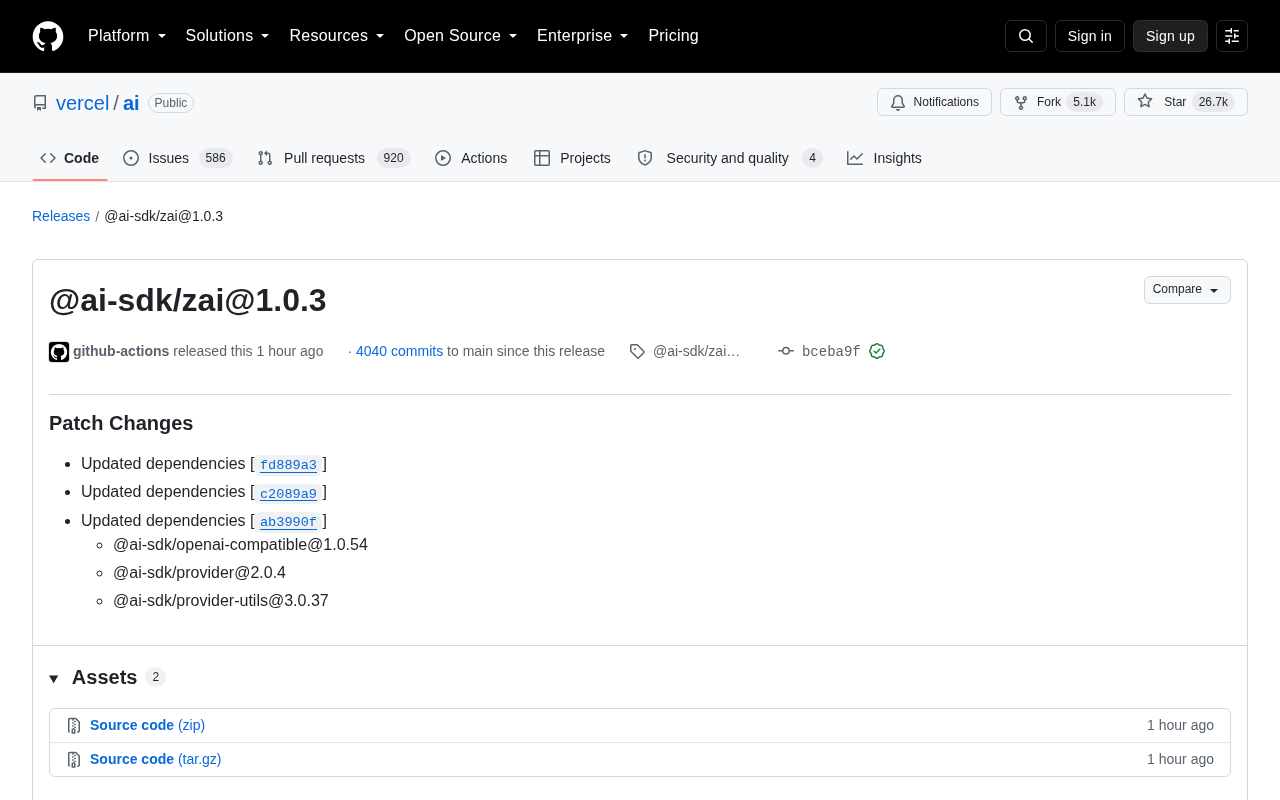
Vercel AI SDK ZAI provider 1.0.3 brings dependency upgrades for better stability and compatibility.
Vercel released ZAI provider v1.0.3 for the AI SDK, a patch update focusing on dependency upgrades including @ai-sdk/openai-compatible (v1.0.54), @ai-sdk/provider (v2.0.4), and @ai-sdk/provider-utils (v3.0.37). Built on the OpenAI-compatible layer, ZAI leverages the SDK's unified Provider pattern to simplify multi-model integration. The update introduces no breaking changes and is safe to adopt immediately.
A New Member of the Vercel AI SDK Ecosystem: ZAI Provider Update
On September 9th, Vercel officially released patch version 1.0.3 of the ZAI provider within the AI SDK. As an important component of the Vercel AI SDK ecosystem, this update primarily involves dependency upgrades, further enhancing multi-model provider support.
The Vercel AI SDK (also known as AI SDK) is an open-source TypeScript toolkit developed by Vercel, specifically designed for building AI-powered applications. Its core design philosophy is to provide a unified abstraction layer so that developers don't need to write different integration code for each AI service provider. Before the AI SDK, developers who wanted to integrate multiple large language models (such as OpenAI's GPT series, Anthropic's Claude, etc.) into a project typically had to learn each vendor's SDK and API specifications separately — not only increasing development costs but also making model switching difficult. The AI SDK solves this problem through a Provider pattern — each AI service is encapsulated as a standardized Provider plugin, and developers only need to focus on a unified interface.
Core Dependency Upgrades Explained
Version 1.0.3 is a patch update that follows the Semantic Versioning (SemVer) specification. In SemVer, the version number format is "major.minor.patch" — a major version change indicates incompatible API changes, a minor version change indicates new backward-compatible features, and a patch change indicates backward-compatible bug fixes or minor improvements. Therefore, 1.0.3 as a patch version means this update won't introduce any breaking changes, and existing projects can safely upgrade.
This update primarily focuses on synchronized upgrades of underlying dependencies:
- @ai-sdk/openai-compatible upgraded to version 1.0.54, enhancing integration with OpenAI-compatible APIs
- @ai-sdk/provider updated to version 2.0.4, optimizing core provider interfaces
- @ai-sdk/provider-utils upgraded to version 3.0.37, improving the utility function library
These three packages each serve a specific role in the AI SDK architecture: @ai-sdk/provider defines the core interface contracts that all providers must implement, including standardized definitions for capabilities like text generation (generateText), streaming output (streamText), and tool use; @ai-sdk/provider-utils provides a set of common helper functions such as request retry mechanisms, response parsing, error handling, and token counting; and @ai-sdk/openai-compatible serves as the adaptation layer for services compatible with the OpenAI protocol. This layered architecture makes the cost of adding a new AI provider extremely low — developers only need to implement the interface contracts and reuse the utility functions to complete the integration. This also explains why Vercel can release provider updates at such a high frequency.
The coordinated update of these dependencies shows that Vercel is maintaining the entire AI SDK ecosystem in a unified manner, ensuring compatibility and stability across all components.
Technical Positioning of the ZAI Provider
As one of the model providers supported by the Vercel AI SDK, ZAI gives developers greater flexibility in model selection. The Vercel AI SDK adopts a unified Provider interface design, drawing on the classic Strategy Pattern and Adapter Pattern from software engineering, allowing developers to easily switch between different AI service providers without modifying core business logic.
From a technical architecture perspective, the ZAI provider is built on the @ai-sdk/openai-compatible package, meaning it follows the OpenAI-compatible API specification. An OpenAI-compatible API refers to a third-party service that follows the API interface specification defined by OpenAI. Since OpenAI's ChatCompletion API has become the de facto standard in the large language model industry, many AI model providers (including numerous vendors both domestically and internationally) choose to implement the same request and response formats as OpenAI. This means developers only need to master one set of API calling conventions to interface with multiple different model services. By building on this compatibility layer, ZAI significantly reduces the learning curve and migration difficulty for developers.
Upgrade Recommendations
Although this is a minor version update, projects currently using the ZAI provider are advised to upgrade promptly to benefit from:
- Better stability: Dependency updates typically include bug fixes and performance optimizations
- Feature alignment: Staying in sync with the AI SDK mainline ensures access to the latest features
- Enhanced security: Timely patching of potential security vulnerabilities
Since this is a patch version update, the upgrade risk is extremely low and won't introduce any breaking changes. Developers can upgrade using package managers like npm or yarn:
npm install @ai-sdk/zai@1.0.3
# or
yarn add @ai-sdk/zai@1.0.3
Vercel AI SDK Ecosystem Strategy
The Vercel AI SDK has currently earned 26.7k stars and 5.1k forks, establishing itself as a key toolchain in the AI application development space. It supports multiple providers including OpenAI, Anthropic, Google, and ZAI, simplifying the complexity of multi-model integration through a unified abstraction layer.
This ZAI provider update reflects Vercel's ongoing commitment to a diversified model ecosystem. As AI technology evolves rapidly, developers need to choose the most suitable model for specific scenarios — for example, selecting a particular model for scenarios requiring strong reasoning capabilities, or another model for scenarios demanding low-latency responses. The AI SDK's multi-provider support strategy is designed precisely for this purpose, turning model selection into a configuration concern rather than an architectural one.
For development teams building AI applications, keeping up with the Vercel AI SDK's release cadence helps you stay on top of technological trends and adopt new features to enhance your application experience in a timely manner.
Related articles
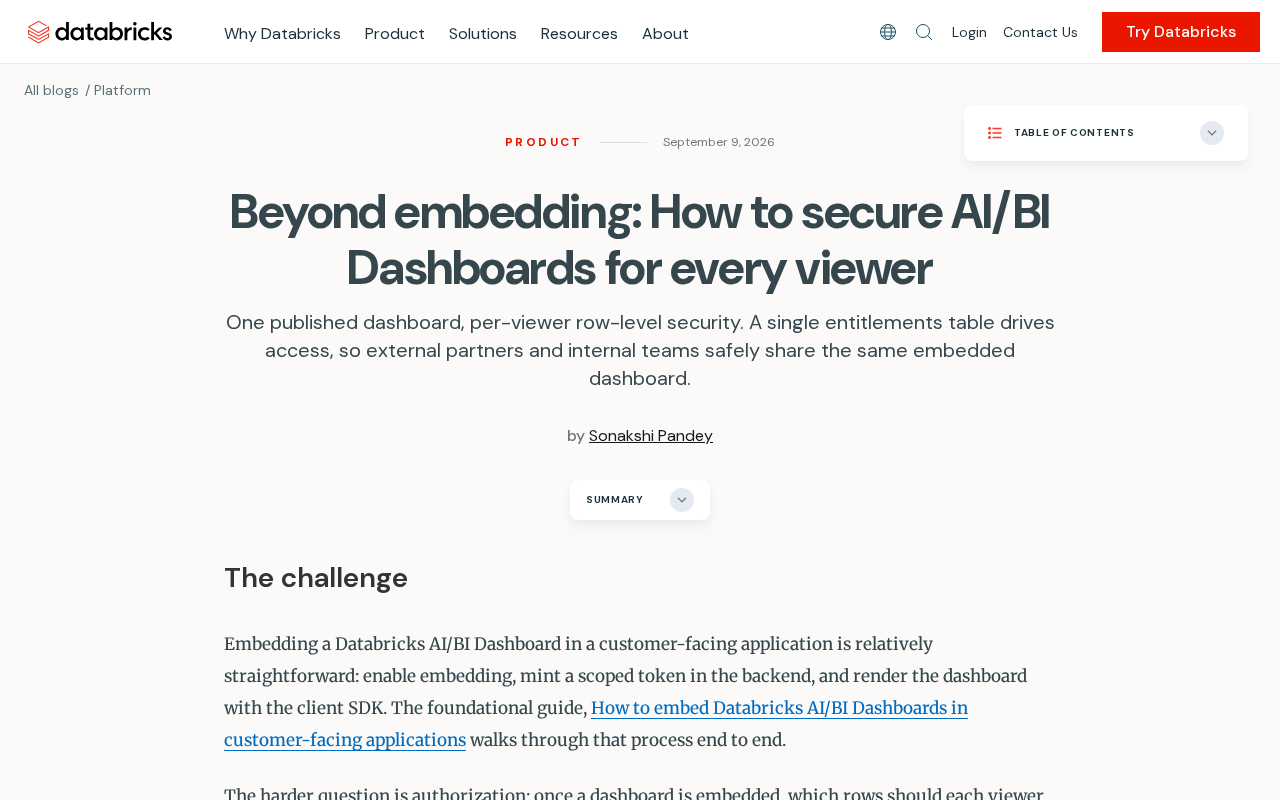
Security Guide for AI/BI Dashboard Embedding: Multi-Tenant Data Isolation and Access Control in Practice
Explore security challenges in AI/BI dashboard embedding, covering multi-tenant data isolation, row-level security, identity propagation, and defense-in-depth architecture for embedded analytics.

Xbox Classic Startup Animations Return: Personalization and Cloud Gaming Experience Get Major Upgrades
Microsoft rolls out classic console startup animations, badge customization, cloud gaming background downloads, and more for Xbox Insiders. Remote Play quality and voice chat also improved.

AI-Assisted Programming Goes Mainstream: A Paradigm Shift in Software Development
How AI tools are reshaping software development: from FAANG adoption to workflow transformation. Explore AI coding assistants, intelligent code review, and the future of human-AI collaboration.