Versine: An MCP Solution That Gives AI Agents Payment Capabilities

Versine uses MCP to connect payment capabilities to AI agents, balancing automation and financial security with passkey and trusted contact mechanisms.
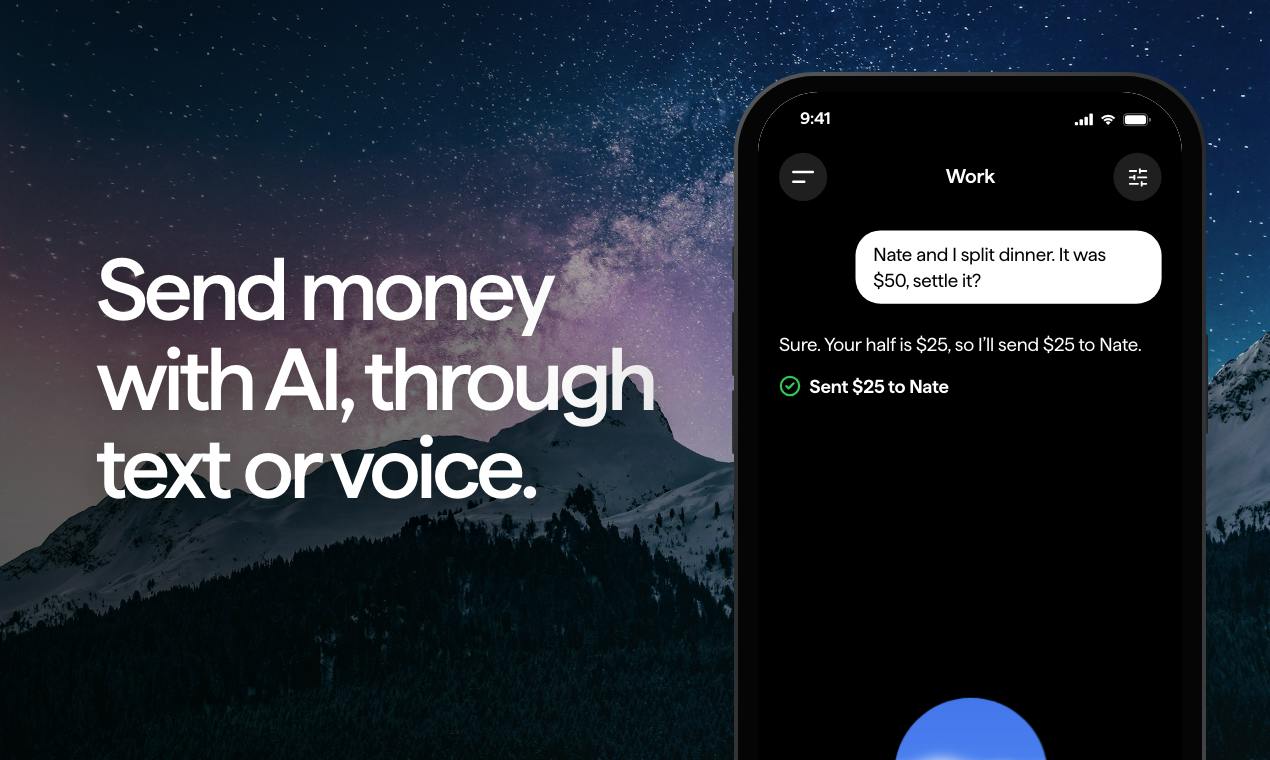
Versine is a new product ranked #5 on Product Hunt, positioned as "Venmo for agents," enabling AI agents like ChatGPT and Claude to send and receive money via the MCP protocol. Its core design is two-tier permission control: every transfer requires passkey manual approval by default, while autonomous execution is allowed for pre-configured trusted contacts, balancing automation with financial security. Recipients can withdraw to bank without registering an account, reducing friction on the receiving end. The article argues that deep integration with MCP positions Versine as potential payment infrastructure for the agent economy, though compliance, anti-fraud, and dispute resolution capabilities remain unproven. Short-term users are developers and small teams needing automated settlement by agents; the psychological barrier for consumer scenarios remains high.
When AI Agents Start Managing Money
AI agents can help you write emails, book flights, and write code, but they get stuck when it comes to paying — they can't actually complete a transfer. Versine, a new product ranked #5 on Product Hunt, tries to solve this problem with a straightforward tagline: "Let your AI send and receive money — we're Venmo for agents."
Its core approach is to connect payment capabilities to ChatGPT, Claude, Instinct, Muse, or user-built agents via MCP (Model Context Protocol). Transfers can be manually approved via passkey, or executed autonomously for pre-configured trusted contacts. Recipients don't need to register a Versine account and can withdraw directly to their bank.
Key Design for Agent Payments: Permissions and Trust
In its product description, Versine emphasizes two layers of control: every transfer requires passkey approval by default; for "trusted contacts," the AI is allowed to initiate transfers autonomously. This design directly addresses the most sensitive issue in agent payments — how to balance automation with financial security.
Traditional payment products treat the user as the sole operator, while agent payments introduce a "software entity acting on the user's behalf." Versine's solution is to make trust relationships explicitly configurable: which parties can autonomously send and receive payments, and which must be manually confirmed, are set in advance by the user. This model is closer to real-world financial scenarios than a simple API key.
Another notable point is that recipients don't need to register. This means Versine positions itself as a payment channel rather than a social wallet, reducing friction on the receiving end. For payments initiated by AI agents (such as automatically settling API fees or purchasing data), this design can eliminate a significant amount of coordination overhead.
Passkey is a passwordless authentication technology based on the WebAuthn standard that uses on-device biometrics (fingerprint, face) or a PIN code in place of traditional passwords. The private key is stored in the secure chip of the user's device, and the server only stores the public key, so there is no risk of password leakage or phishing. In Versine's scenario, each transfer approval is completed via passkey, meaning the confirmation action is bound to the user's own physical device. An AI agent cannot forge or bypass this step — it's essentially a hardware-level human gate added to an autonomously running agent.
The Payment Piece in the MCP Ecosystem
Versine is not a general-purpose payment gateway; its differentiation lies in deep integration with the MCP protocol. MCP is becoming one of the de facto standards for connecting AI agents to external tools, and Versine's choice to do payments at this layer means that any agent framework supporting MCP can theoretically integrate with it.
This also explains why it lists ChatGPT, Claude, and multiple vertical agent products simultaneously. Rather than building yet another payment app, Versine wants to become the infrastructure of the agent economy — the first interface that comes to mind when an agent needs to spend money.
Of course, the challenges are equally obvious. Agent payments involve compliance, anti-fraud, and dispute resolution, which in traditional payments are handled through KYC and manual review — tasks that become far more difficult in autonomous agent scenarios. What Versine currently demonstrates is a product concept and early-stage form; its actual risk control capabilities remain to be seen.
Model Context Protocol (MCP) is an open protocol proposed by Anthropic in late 2024 to standardize how AI models connect to external tools and data sources, often compared to "the USB-C port for AI applications." It abstracts tool invocation into a unified client-server structure: the agent acts as the client and discovers and invokes capabilities exposed by external services through the protocol. For payment products, this means that implementing a single MCP server allows integration with all MCP-compatible agent frameworks, without the need to build SDK adapters for each platform separately. Versine leverages this layer of abstraction to package "transfers" as a standard tool that agents can discover and invoke.
KYC and anti-fraud challenges in agent payments: Traditional payment KYC (Know Your Customer) targets real-name individuals or businesses, where the entity being reviewed and the entity performing the fund operation are the same. In agent payments, however, the software entity initiating the operation is separate from the user bearing legal responsibility. This creates two problems: first, the agent may initiate transactions at times, amounts, or to recipients the user did not anticipate, making traditional behavior-pattern-based risk models difficult to apply; second, when disputes or fraud occur, liability must be divided among the user, the agent developer, and the payment channel. Current industry explorations include setting per-transaction and cumulative amount limits, whitelisted recipients, and delayed transaction confirmation windows — all essentially constraining the agent's autonomy within auditable boundaries.
Who Needs This Product
In the short term, Versine's use cases are concentrated among developers and small teams: those who need agents to automatically procure resources, settle service fees, or embed payment steps into agent workflows. For ordinary consumers, the psychological barrier to letting AI manage money remains high, even with passkey safeguards.
But the direction is worth watching. As agents evolve from "advisors" to "executors," payment capabilities will become standard. Versine's "trusted contact autonomous transfer" mechanism may become a foundational interaction paradigm for this category.
Related articles

Prompt Engineering for Beginners: From Writing Prompts to Engineering Thinking
Starting from the essence and four functions of prompts, this article systematically explains the six-step process, four success criteria, learning value, and practical limitations of prompt engineering to help you build a complete understanding.

Anthropic Launches Nasdaq IPO: AI Giant's Listing and Risk Disclosures
Anthropic officially launches its Nasdaq IPO under ticker ANT, with market valuation expected to potentially exceed SpaceX's record. The prospectus devotes nearly 100 pages to AI risks, while first-half revenue grew over 14x but net losses widened sharply, reigniting the AI bubble debate.

Rust cURL Clone Uses 4,832 unsafe Blocks—Is the Memory Safety Myth Broken?
A Rust cURL clone uses 4,832 unsafe keywords, challenging Rust's memory safety narrative. We analyze what unsafe really means, compare Fil-C, and examine rewrite motives.